electrocd

Blog

93 results
  • 8
  • 9
  • 10
  • 11
  • 12
  • 13
  • 14
  • 15
  • 16
  • Transformations in Revue & Corrigée

    “Critique”, Jérôme Noetinger, Revue & Corrigée, no. 31, March 1, 1997
    Saturday, March 1, 1997 Press

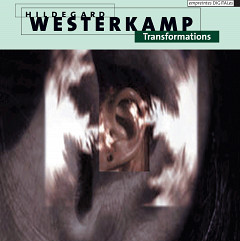
    Membre elle aussi de la Communauté électroacoustique canadienne (CEC), Hildegard Westerkamp s’intéresse aux sons de l’environnement et à l’écologie acoustique. On retrouve très bien ces preoccupations dans Cricket Voice (1987) ou Beneath the Forest Floor (1992). Elle réussit parfaitement à créer des paysages sonores imaginaires à partir d’environnements sonores réels comme le désert ou la forêt. Des pans entiers d’espaces dissimulés s’ouvrent à nous. Nous y plongeons ou sommes happés au passage d’un oiseau ou du chant d’un criquet. C’est la même chose avec A Walk Through The City (1981) sauf qu’ici les sons proviennent d’un environnement urbain agité et agressif. Dans son travail Hildegard Westerkamp se situe par rapport au monde dans lequel elle vit et nous fait découvrir sa dimension sonore.

    Elle réussit parfaitement à créer des paysages sonores imaginaires…

    Forêt profonde in Revue & Corrigée

    “Critique”, Jérôme Noetinger, Revue & Corrigée, no. 31, March 1, 1997
    Saturday, March 1, 1997 Press

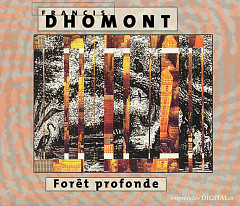
    Treize ans après, Francis Dhomont continue son cycle avec Forêt profonde (1994-96) basé sur des textes de Bruno Bettelheim. Aujourd’hui le son et son façonnage ont changé, ainsi que les outils de sa réalisation (et il en découle un plus grand lissage de l’ensemble), mais le propos reste le même. Cependant il me semble moins fortement atteint que dans la pièce précédente. Ici nous avons affaire à un trop de texte qui donne une dimension presque didactique. D’autre part, une absence de gravité.

    Sous le regard d’un soleil noir in Revue & Corrigée

    “Critique”, Jérôme Noetinger, Revue & Corrigée, no. 31, March 1, 1997
    Saturday, March 1, 1997 Press

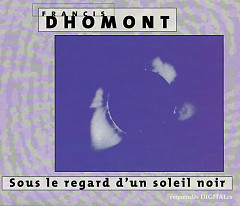
    De Francis Dhomont on connaissait déjà le Cycle de l’errance et Les dérives du signe sortis en double CD (IMED 9107/08). Ils sont de nouveau disponibles et cette fois-ci séparément. Réédition également d’une pièce maîtresse de l’œuvre du compositeur franco-québécois, Sous le regard d’un soleil noir sorti à l’origine en LP (Ina-GRM 9109) en 1982. Nous sommes plongés dans la premiére partie du Cycle des profondeurs qui repose sur des réflexions psychanalytiques (textes de Ronald D Laing). Francis Dhomont évoque parfaitement, illustre même parfois, toutes ces fragmentations, ces divisions de l’individu en superpositions de couches, de profondeurs. Par l’utilisation d’exemples de cas cliniques, il amène une dimension réellement bouleversante. On se sent touché au plus profond de notre étre. Franchement, c’est la seule musique qui, à chaque écoute, me fait peur!

    Franchement, c’est la seule musique qui, à chaque écoute, me fait peur!

    Filmusique-Filmopéra in Revue & Corrigée

    “Critique”, Jérôme Noetinger, Revue & Corrigée, no. 31, March 1, 1997
    Saturday, March 1, 1997 Press

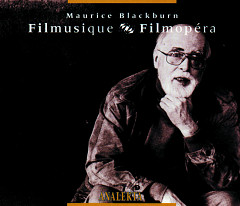
    Blinkity Blank, ça vous dit quelque chose? C’est un film de Norman McLaren réalisé en 1955, sans caméra, directement sur la pellicule, et la musique (des sons gravés directement sur la piste optique de la pellicule) est une réalisation de Maurice Blackburn. Ce double CD présente ses musiques pour le cinéma et l’opéra. Il y a même un portrait sonore du compositeur réalisé par Yves Daoust.

    … des sons gravés directement sur la piste optique de la pellicule…

    Forêt profonde, Francis Dhomont in Vital

    “Review”, MP, Vital, no. 69, March 1, 1997
    Saturday, March 1, 1997 Press

    Forêt profonde (which sadly translates as “Deep Forest” — remember that abysmally beige and blandish semi-Gnu Age array of ethnic samples and drum machines with the same name released three or so years ago?) is fabulous. Forêt profonde is the second part of, what is till now, a diptych (preceded by [Sous le regard d’un soleil noir]). A third part is imminent.

    Styled an acousmatic melodrama, Forêt profonde is based on the fascinating book The Uses of Enchantment by Bruno Bettelheim, and it has gradually taken shape as a composition over fifteen years, culminating in two years’ final production. It is, like Bettelheim’s book, a guided tour of the childhood soul, which itself is nothing more than a return to the initiatory world — both cruel and reassuring — of fairy tales. The composition is divided into 13 sections (6 of which are purely instrumental) all of which contain some form of quotation from Schumann’s op.15: Scenes From Childhood. Texts by Hans Christian Andersen, Dante, Those Grimm Brothers, Shakespeare and of course Bettelheim himself are used in the piece.

    The recurring theme in fairy tales of being lost in a forest (it’s up to you to work out the psychological parallels here) is reiterated here too. To anybody who has heard fairy tales, this image is unforgettable. As Bettelheim says, “… without fantasies to give us hope, we do not have the strength to meet the adversities of life. Childhood is the time when fantasies have to be nurtured.” Actually, this is probably the best CD I have heard so far this year. Monstrous. Unpredictable. Hallucinatory. It plays on the memories we all have that we connect to specific sounds. It is an intriguing voyage into familiar and dangerous territories where branches snap for no reason, where long shadows flit between the tree trunks and the passing breeze carries traces of wolf-breath. It’s the place where trapped birds are princesses, where the lure is golden, where banished sons become kissable frogs. Magickal slumber, castles and caves, locked rooms (with the key left in the lock, of course) and the endless growth of entangling vegetation…

    … an intriguing voyage into familiar and dangerous territories…

    Sous le regard d’un soleil noir, Francis Dhomont in Vital

    “Review”, MP, Vital, no. 69, March 1, 1997
    Saturday, March 1, 1997 Press

    Francis Dhomont was born in 1926 and studied under, amongst others, Nadia Boulanger and Charles Koechlin. His theoretical texts and essays are regularly published in various international journals, he lectures regularly and is the author of many radio programmes for national Canadian radio. He has received numerous prestigious awards and now divides his time between Québec and France, teaching electroacoustic composition and theory. These two releases are part of the same group of works titled “Cycle of Depths” (Cycle des profondeurs), which is comparable to his previous “Cycle of Wanderings” (Cycle de l’errance), not only available on empreintes DIGITALes but also on BVHAAST, a Dutch label partly lorded over by Willem Breuker.

    Sous le regard d’un soleil noir or “Under The Glare of A Black Sun” to folks like you and I was originally produced in 1979-80, completed in 1981 and since then has won a bunch of awards for electroacoustic composition. It was inspired by the works of British psychoanalyst Ronald D Laing (author of The Politics of Experience and The Divided Self and one of the first in his profession to explore the potential of LSD in analysis), and tells the story of a slow descent into madness. The spoken texts are quoted from the works of Laing, Plato, Kafka and Buchner. The piece makes us share the anxiety, anguish and solitude of the schizophrenic, attempting to present us with a sonorous image of a (mostly) inaccesible world. Laing himself once said “I cannot experience your experience, or vice versa.” Dhomont presents the experience he thinks they (schizophrenics) have, constructing a more general myth through which the ‘normal’ man may discover his own schizoid traits. Sous le regard d’un soleil noir tells us about ourselves, about the terrifying solitude that faces every man, as if we are sitting at the end of a cavern capable only of looking ahead. There is certainly an element of underlying danger here — not from external forces but rather from those sharp, shiny, sterile, surgical razors with which we perform psychological surgery on ourselves as we lay on a ramshackle operating table constructed out of our belief systems which itself is placed in a dimly lit corner of a huge reverberant space. Bats in the belfry. Too many toys in the attic. No room to spare in this warehouse where ominous chords pace the staves… This is the domain of archetypes.

  • 8
  • 9
  • 10
  • 11
  • 12
  • 13
  • 14
  • 15
  • 16