electrocd

Blog

201 results
  • 22
  • 23
  • 24
  • 25
  • 26
  • 27
  • 28
  • 29
  • 30
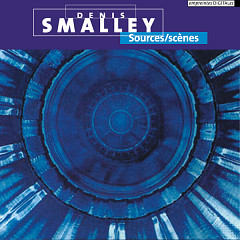
  • Sources / scènes in The Wire

    “Classical”, Andy Hamilton, The Wire, no. 206, April 1, 2001
    Sunday, April 1, 2001 Press

    The disc by New-Zealand born Smalley, student of Messiaen and GRM, shows the same oscillation between electroacoustic and soundscape traditions as Jonty Harrison. Base Metals abstract from the resonances of a family of metal sounds sculptures while Empty Vessels transforms recording of air resonating in large garden pots while also capturing environmental sounds. An enjoyable addition to empreintes DIGITALes acousmatic series.

    An enjoyable addition to empreintes DIGITALes acousmatic series.

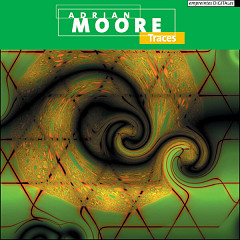
    Traces in The Wire

    “Classical”, Andy Hamilton, The Wire, no. 206, April 1, 2001
    Sunday, April 1, 2001 Press

    A witty, frothy collection by Adrian Moore, associate of BEAST and student of Jonty Harrison. Study in Ink takes the single sound of a marker pen on whiteboard and develops it amusingly, while Foil-Counterfoil rehears tinfoil recorded with a close microphone. Junky is ‘electroacoustic Ambiant,’ and the album concludes with the ‘radiogenic’ and entertaining Sieve wich overloads information on the listener, forcing him/her to make connections between the different sound sources — vocal, mechanical and environmental.

    A witty, frothy collection…

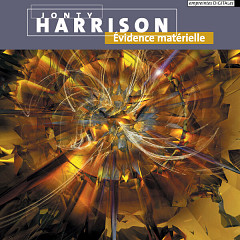
    Évidence matérielle in The Wire

    “Classical”, Andy Hamilton, The Wire, no. 206, April 1, 2001
    Sunday, April 1, 2001 Press

    Jonty Harrison is director of BEAST (Birmingham ElectroAcoustic Sound Theatre) and has worked with GRM and Ircam. His pieces appear on both sides of what he calls the “Schaeffer/Schafer division” — acousmatic music wich abstracts musical data from sound objects “without reference to their provenance in any anecdotal way” (as representd by Pierre Schaeffer) and soundscapes wich use natural sound art rather than purely musically (Canadian composer R Murray Schafer). Klang is an engaging example of the former, wich creates abstract structures with sounds from casserole dishes ground together. Sorties, in contrast, is a soundscape of door-slamming and other exits. Other pieces oscillates between the two approaches in what is a rewarding survey.

    … a rewarding survey.

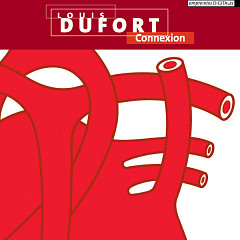
    Connexion in The Wire

    “Classical”, Andy Hamilton, The Wire, no. 206, April 1, 2001
    Sunday, April 1, 2001 Press

    The most coherent of the three empreintes DIGITALes discs reviewed here, and — a sign of times — the only one by a composer who’s not an academic. It’s also the only one with any suggestion of a groove — in this case industrial. Louis Dufort divides his time between composing for a contemporary danse company, and producing works of “unbridled musical experimentation,” such as these four dazzling dramatic compositions from 1996-2000.

    … four dazzling dramatic compositions…

    Connexion in Flux Europa

    “Review”, Stewart Gott, Flux Europa, April 1, 2001
    Sunday, April 1, 2001 Press

    A recording that kicks off with shrill tinkling comparable to Maryanne Amacher’s Sound Characters and comes to a dramatic conclusion reminiscent of Come to Daddy period Aphex Twin clearly knows no barriers. From classical, to noise, to avant-garde mouth music, to drum ’n’ bass, the genres and sub-genres are all represented here, thick and fast on each other’s heels in a glorious welter of exquisitely produced sound.

    The young Canadian composer Louis Dufort has a fascination with cinema and a history of involvement with contemporary dance that in part explains the extraordinarily visual nature of his work. This is nowhere more true than the remarkable Pointe-aux-Trembles, the second of the four pieces presented here, which gives a vivid picture of Montréal oil refineries glittering against the night sky. A marvellous sense of movement and depth is given in the exhilarating shifts from noise to silence and back again. This is industrial music at its best, demanding total concentration. Elsewhere Zénith sounds like Edgar Varèse on acid, all billowing sheets of electronics and feverish incantations, uneasy and ethereal. Transit thumps and nags in disjointed throbs that come together cogently. Décap, with its Stimmung gabbles, its furious shouts and growls, its Wagnerian bluster, its frenetic rhythms that drop over an abyss into edgy silences, is totally unnerving.

    An education for the ears and a tonic for the mind, a chance to see clear visions with your eyes shut tight.

    An education for the ears and a tonic for the mind…

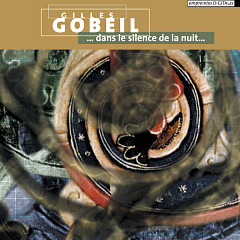
    … dans le silence de la nuit… in All About Jazz Italy

    “Recensione”, Luca Pagani, All About Jazz Italy, April 1, 2001
    Sunday, April 1, 2001 Press

    Raccolta che potremmo dire più letteraria che strettamente musicale. Si parte infatti con un viaggio in terra d’Italia, vedendo il pozzo etrusco di Perugia, i vaporetti di Venezia, la cattedrale di Torcello, la chiesa di Santa Maria della Salute. Certo, per chi non ha la possibilità di leggere le note dell’autore è un tantino complesso identificare le immagini sonore di Derrière la porte la plus éloignée… con quei luoghi turistici, tuttavia un’atmosfera e un ambiente ben preciso sono evocati all’interno della narrazione sonora. Gilles Gobeil non intende costruire la composizione tramite elementi né realistici né concreti: l’autore intende proporre invece un immaginario delle proprie sensazioni dalla vista dei paesaggi, dal ricordo che ne ha, ma in nessun caso si propone una descrizione realistica o fotografica degli avvenimenti. Solo per la cronaca, la composizione è stata presentata per la prima volta al Festival FIMAV (Festival International de musique actuelle) di Victoriaville (Canada).

    La seconda traccia, Projet Proust è una rilettura personale (la voce narrante è di Marc Béland) delle prime pagine del romanzo Du coté de chez Swann (in italiano “La strada di Swann”) dello scrittore francese Marcel Proust. Alla narrazione si sovrappongono assemblaggi di varia natura, canti gregoriani mischiati ai rumori che più sovente vengono utilizzati in questi ambiti, ovvero i bruits delle stazioni ferroviarie. Il metodo nel comporre i suoni che è stato utilizzato in questo caso ricorda il “Ritratto di città” realizzato da Luciano Berio e Bruno Maderna. Il tono della narrazione in un certo senso dimesso, la musica che tende a sottolineare gli aspetti “psicologici” del racconto, sono elementi che legano l’opera di Gilles Gobeil al citato lavoro dei due compositori italiani.

    Da questo punto in poi la raccolta parte verso i territori della letteratura fantascientifica con l’adattamento musicale e l’interpretazione “libera” di The Time Machine (in italiano “La macchina del tempo”), romanzo dello scienziato-scrittore Herbert George Wells. Point de passage si svolge con tratti più discontinui rispetto alle precedenti tracce anche a causa delle innumerevoli fonti sonore da cui la composizione prende spunto. Ancora una volta rumori catturati dagli ambiti ferroviari, ma anche dall’ambiente naturale (tuoni e pioggia) accompagnate da un maggiore utilizzo delle elaborazioni elettroniche (drones di media durata, rumori manipolati a tal punto da assomigliare al suono di un synth).

    Si giunge così alla fine del percorso con la visione dei mondi sotterranei di Voyage au centre de la terre (“Viaggio al centro della terra”) di Jules Verne. Come è facile immaginare i suoni che l’autore utilizza in Nuit cendre sono talvolta praticamente inudibili (frequenze bassissime), talvolta vere e proprie “esplosioni”, cornici e contorni. È abile ancora una volta Gobeil ad rileggere l’opera, a renderla “sua”, attuale e — cosa più difficile — a trasporla dalla letteratura all’ambito sonoro. Anche per questo motivo siamo riusciti nella difficile impresa di scriverne.

    Valutazione: ★★★★

    ★★★★
  • 22
  • 23
  • 24
  • 25
  • 26
  • 27
  • 28
  • 29
  • 30