electrocd

Blog

366 results
  • 22
  • 23
  • 24
  • 25
  • 26
  • 27
  • 28
  • 29
  • 30
  • Bleak 1999 in Ici Montréal

    “Compact!”, François Couture, Ici Montréal, August 28, 2003
    Thursday, August 28, 2003 Press

    La popularité de Tomas Jirku a-t-elle surpris ce dernier à ce point qu’il se voie contraint de recycler du vieux matériel? Quoi qu’il en soit, on ne lui en voudra pas s’il tire de ses cartons des galettes aussi bien léchées que celle-ci. Achevé en 1999 et demeuré inédit, Bleak 1999 est un assemblage de techno minimaliste d’une grande sensualité. À rattacher au côté plus rythmé de Jirku, ce disque n’en demeure pas moins abstrait, les mélodies étant distillées jusqu’au résidu vaporeux. Le mouvement est langoureux, invitant à se prélasser dans le sofa tout en gardant l’oreille attentive et la cheville active. Concert-lancement le dimanche 31 aoput à la Casa del popolo. 8/10

    Le mouvement est langoureux, invitant à se prélasser dans le sofa tout en gardant l’oreille attentive et la cheville active.
    8

    All Your Dreams Are Meaningless, Coin Gutter in The Georgia Straight

    “Coin Gutter Creates an Orgy of Sounds”, John Keillor, The Georgia Straight, August 27, 2003
    Wednesday, August 27, 2003 Press

    Noise artists Emma Hendrix and Graeme Scott seem at home in the Barfly-esque Astoria Hotel, an offbeat hangout for an out-of-the-ordinary duo that emulates neither dance culture nor the classical tradition.

    In Coin Gutter’s work, beats are rare. Likewise absent is the contemplative, whooshy blip-bloop sound associated with the electroacoustic composers of academe. Both members admire popular and classical music but are not pulled in either direction, as listeners will hear in the pair’s concert at the Scotiabank Dance Centre.

    Typically, Coin Gutter compositions feature electronic sounds improvised around samples, creating shadowy, ominous narratives.

    “I put my guitar down one day and started fiddling with a cheap, crappy sampler back in 1999. That was like opening Pandora’s box,” says Scott. “It was like walking into an orgy, a big free-for-all where you could sample everything and everybody.”

    “Before then, we were playing music,” continues blond, angular Hendrix, “but when we pooled our gear and started making noise together, we created dialogues. It seemed stupid to attach these dialogues to some art tradition or disco. What’s the point of making something [original] and then pussying out by attaching it to something familiar?

    “In the novel Trainspotting, the dialogue’s vernacular is strange to most readers,” Scott says by way of example. “But as these unfamiliar words are repeated in different intonations and contexts, they acquire meaning for the reader. We try and set up the same kind of discovery process with noise.”

    “Noise is traditionally unwanted sound,” says Hendrix. “It’s mentally discarded. But if people concentrate on organized noise, it intrigues.”

    “We’ve never intentionally put up barriers,” Scott argues. “Compared to the loudness of the Japanese noise bands, we’re quite polite.”

    Polite in terms of volume perhaps, but a scrappiness pervades Coin Gutter’s material. In Timewise, from its latest recording, All your dreams are meaningless, a woman’s voice repeats the words “he’s gone” as Hendrix and Scott improvise around the quote with electronic noise.

    The listener’s focus is made to shift gradually from anxiety over the missing man to concern for the speaker herself.

    Hendrix and Scott’s nuanced soundscapes range from subtle to calamitous. In another Coin Gutter track, Lullaby, a recorded song by Czech composer Bohuslav Martinu seems caught in a whirlwind of aural waste, flying from the mix’s background to foreground, compromised by crackle and hiss. The song itself now rages in a cyberpunk mode that Martinu could never have envisioned.

    Each Coin Gutter piece has its own edginess, as does the Astoria. It’s late. A sunburned man tries to sell us a power drill. I pay and leave. Hendrix and Scott remain, acclimatized and comfortable.

    Hendrix and Scott’s nuanced soundscapes range from subtle to calamitous.

    Podweek in Somamag

    “Tonträger”, Von Falk, Somamag, August 26, 2003
    Tuesday, August 26, 2003 Press

    Oeuf Korreckt aka Frédérick Blouin, tagsüber Internetprogrammierer, des nachts Computermusiker, aus Quebec City war mir irgendwie sofort symphatisch, schon alleine, weil er wie meiner einer aus der Tracker-Szene kommt, und dieser wohl auch heute noch sein Hauptwerkzeug darstellt.

    Mit Podweek präsentiert er uns sein erstes volles Album, welches einer ganzen Reihe von Online-Releases auf No Type folgt. Es enthält 15 Tracks aus seinem bisherigen musikalischen Fundus, sozusagen seine persönlichen „Greatest Hits” — allesamt zeitlos, einprägsam und faszinierend. Mit geradezu genialer Einfachheit und einer gesunden Portion Humor vereint Oeuf Korreckt Elemente aus IDM, Synthypop, Rock und Happy Hardcore — kein Wunder, reichen doch seine musikalischen Einflüsse von Orbital, Aphex Twin und Autechre über „klassischen” Techno und Rotterdam Hardcore a la „Thunderdome” bis hin zu Kraftwerk. Oeuf Korreckt versteht es, sich auf angenehm lässige Art von High End-Software, Perfektionismus und überkandidelten Produktionsweisen loszusagen, und Tracker-Skeptiker eines besseren zu belehren — frei nach dem Motto: „Weniger ist mehr”.

    Télépathie in Splendid E-Zine

    “Review”, Walt Miller, Splendid E-Zine, August 26, 2003
    Tuesday, August 26, 2003 Press

    Imagine two painters working on the same canvas: two visions and two different palettes result in a finished work, with no communication in preparation or during the process. It’s hard to picture a movement built around collaborative improv for visual arts, but what would be the point? The beauty in a painting is the finished work, whereas listening to music as it’s conceived and put to tape can be incomparably more satisfying. Obviously, jazz is a prime example, but experimental/noise music, with its rule-breaking, anything-goes uniqueness, holds extra appeal for many.

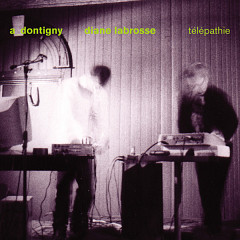
    Aimé Dontigny and Diane Labrosse are unlikely collaborators given their histories. Dontigny is known for his underground solo work, as well as his releases with free-noise collective Napalm Jazz and electronic duo morceaux_de_machines. Labrosse is possibly more on the establishment tip, having landed commissioned work ranging from theatre, dance and cinema to more recent events sponsored by various Canadian arts councils. Musical background be damned; Dontigny and Labrosse — both improv enthusiasts — gel wonderfully on this rare meeting, recorded live on April 20, 2002.

    From the onset of Télépathie’s four tracks, the mood is darkly cinematic and unsettling, with Dontigny and Labrosse delivering succulent sounds plucked and chosen with inventive reasoning — but don’t even bother trying to tell who’s doing what. The underwater experience of t.s.f. is encapsulated in suffocating classical strings, pitched down in shark tank acoustics with the morass of industrial noise and oxygen bubble escapement filling the vacuum. Despite the piece’s near-beatlessness, the duo gets off to an aggressive start, assaulting you with enough sonic imagery that you’ll fear drowning. By the time the droning strains of antenne parabolique introduce themselves, Télépathie has established itself; you will travel down this weightless track — which features a company of wailing, chain-rattling digital banshees and the chatter of hungry android rats building to crescendo — with morbid curiosity and anticipation. photo satellite brings more drones — the first half slathered with a racket wrought of static, and puking turntables (Merzbow would be proud), the second half built around low frequencies, harsh buzzes and percussive noise pinging off the walls like a superball. média tactique holds the disc’s closest moment to rhythmic intent, with crunchy, chopped up beats that sound like all of Autechre’s gear short-circuiting at once. It’s a fitting album closer, offering a peek at a more conventional — and thus more commercial — direction that the duo could follow if they tried.

    It would be nice if Dontigny and Labrosse formed a recurring project, but there’s no suggestion that this will happen. Likely, this collaboration is one of a kind — a shame, in a way. One thing is certain: as a duo, they have an intuitive connection that enhances the bone-chilling tunes they’ve recorded for Télépathie.

    … they have an intuitive connection that enhances the bone-chilling tunes they’ve recorded…

    Jeu d’ombres in Touching Extremes

    “Review”, Massimo Ricci, Touching Extremes, August 25, 2003
    Monday, August 25, 2003 Press

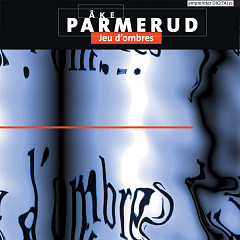
    Born in 1953, Parmerud is already a major electroacoustic composer and Jeu d’ombres confirms his status without a doubt. The six pieces contained here run across a big rangy arc, spanning from the nice “analog vs digital” contrast of the spacey Renaissance to the almost violent character — like it was a sound shootout — of Stringquartett, where samples of strings are treated in way of percussive hits, electric chattering and environmental menace. The only pure tape piece is the final Repulse, a track based on sound placing and textural transformation more than pitches; on the other hand, Retur is Parmerud’s idea of jazz analysis and a sort of delayed homage, as it’s based upon a Charlie Parker phrase that Stockholm Saxophone Quartet chew and spit out — with the composer’s help of course. While Les flûtes en feu, with its flute spectral modification and timbral scanning, is great listening in itself, the most intense and beautiful piece for your reviewer is the initial Strings & Shadows, where the basic sound is harp: its alternative between fairy tale and nightmare, life and death, security and fear is fundamental in the creation of a masterpiece of unresolving tension.

    … a masterpiece of unresolving tension.

    Aparanthesi in Touching Extremes

    “Review”, Massimo Ricci, Touching Extremes, August 25, 2003
    Monday, August 25, 2003 Press

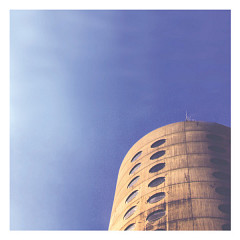
    It’s useful thinking about the extreme contrasts in John Oswald’s output. Famous for his “Plunderphonics,” a multidimensional musical-genre kind of studio schizophrenia; concretely active as a sax improviser in various new music settings. Yet in Aparanthesi the Canadian composer stretches forms, lights and dynamics out of a single pitch, forcing ears to be constantly in full-receptivity mode and tuning any event to that ‘big note’: a piano chord, a thunderstorm, frequencies that bats would hear better than humans. This concept is fully described and discussed by the author in the CD booklet, which I encourage you to read carefully; what remains to be said is that this is music at the highest depth and introspection levels: its ‘one’ note is at the same time a signal, a promise, a mirror room, an expectation, a blood pulse, those small signs our body transmits at night when silence surrounding us becomes unbearable. Listening to this record is like watching the sun complete its cycle through the day: firm-looking, it actually moves and radiates incessantly and — before disappearing under the horizon — it reminds you another day has passed by and you’re still another little point in that universe you thought you were the centre of. A major milestone in acousmatics history, this work confirms there’s no need to talk too much to get to the point. Yes — you need SILENCE to listen to Aparanthesi.
    A major milestone in acousmatics history…
  • 22
  • 23
  • 24
  • 25
  • 26
  • 27
  • 28
  • 29
  • 30