electrocd

Blog

272 results
  • 1
  • 2
  • 3
  • 4
  • 5
  • 6
  • 7
  • 8
  • 9
  • Puzzles, Robert Normandeau in Matériaux pour Médée (Sybillines)

    Robert Normandeau: Le metteur en son”, Stéphane Lépine, Matériaux pour Médée (Sybillines), October 19, 2004
    Tuesday, October 19, 2004 Press

    Électron libre de la scène musicale montréalaise, acousmaticien féru d’expérimentations sonores, Robert Normandeau, qui compte parmi les pionniers de l’électro québécoise et de la conquête audio, suit depuis près de vingt ans une trajectoire rigoureusement oblique qui l’a porté à la pointe des musiques chercheuses et a composé pour le théâtre de véritables longs métrages sonores, à la fois tragiques, ludiques, virtuoses et parfaitement jubilatoires. Il y a chez cet éclaireur buté un côté définitivement énigmatique et insaisissable, décourageant tous ceux qui ne goûteraient que les gibiers marqués, faciles à traquer. Il y a aussi chez lui quelque chose d’un peu intimidant même, dans cette attitude résolument distanciée vis-à-vis des modes et des autres courants plus ou moins constitués/institués du moment et la nonchalance désinvolte avec laquelle il les emprunte pourtant à l’occasion, jouant sa singularité moins dans une exploration forcenée des marges et des «avant-gardes» que dans une très maîtrisée traversée libre des genres et des styles. Faut-il donc voir dans cette démarche spontanément rétive aux protocoles de l’époque – et aux servitudes volontaires qu’ils induisent – la marque d’un militantisme? Pas le moins du monde. Plutôt la rémanence d’un chant libertaire, harmonisé à la seule musique des désirs. Ainsi Robert Normandeau n’en fait-il qu’à sa tête et pioche-t-il alentour et tous azimuts (musiques savantes, improvisation libre, machines et instruments, tout le monde des sons), en une attitude parfaitement non alignée, de quoi fonder un univers affranchi de tout présupposé esthétique, de plus en plus personnel et, partant, parfaitement insituable.

    Aujourd’hui, après des années d’aventure musicale aux quatre coins de l’électrosphère et de la planète (sa musique est en effet diffusée partout dans le monde), depuis ses premières armes dans le prolongement de l’œuvre du grand maître Francis Dhomont jusqu’à sa participation active aux univers de Brigitte Haentjens, Robert Normandeau, porté par le désir de créer jusqu’au bout son propre univers, aligne les chefs-d’œuvre de musicalité et d’intelligence formelle: synthèse idéale entre l’exigence d’authenticité et d’engagement émotionnel dont il se réclame et la sophistication toujours plus affirmée d’une écriture à la fois rigoureuse et ludique. Au théâtre, où il a signé depuis Quartett (1996) de Heiner Müller une dizaine de musiques uniquement pour la metteure en scène Brigitte Haentjens (Électre, Antigone, Mademoiselle Julie, Malina, Farces conjugales, L’Éden Cinéma, La Cloche de verre, Hamlet-machine et aujourd’hui Médée-Matériau), cette originalité foncière, Robert Normandeau la fonde principalement sur une vraie réflexion sur la relation musique/représentation théâtrale. Partant de sa propre expérience d’électroacousticien, il propose pour le théâtre des œuvres joyeusement impures, qui deviennent souvent ensuite des œuvres de concert(*) et qui ne cessent, comme en négatif, d’en interroger les fondements théoriques et de les transgresser, cela en ne se refusant aucune hérésie.

    (*) Malina (2000), née de la musique de scène conçue pour Malina et Érinyes (2001), née de la musique pour la production d’Électre, deux œuvres disponibles sur étiquette Empreintes digitales; Chorus (2002), née de la musique pour Antigone, StrinGDberg (2001-03), née de la musique pour Mademoiselle Julie, Puzzle (2003), née de la musique pour les Farces conjugales, Éden (2003), née de la musique pour L’Éden Cinéma et Hamlet-Machine with Actors (2003), née de la musique pour Hamlet-machine: cinq œuvres qui sont publiées sur le cinquième disque solo de Robert Normandeau chez empreintes DIGITALes, Puzzles.

    «La musique de théâtre n’est pas à mes yeux un sous-genre musical, comme on peut le croire parfois en écoutant certaines œuvres écrites spécifiquement pour la scène. Mais je me rends compte que j’ai vraiment beaucoup de chance de travailler avec une femme comme Brigitte Haentjens, précise Robert Normandeau. J’entreprends tous mes projet avec elle comme si je démarrais une nouvelle composition. Je ne le savais pas à l’origine, mais la musique pour Malina a été vraiment déterminante sur ce point. N’oublions pas qu’il s’agissait seulement de ma seconde collaboration avec Brigitte et que c’était en fait la première musique originale que je faisais pour elle, Quartett, qui l’avait précédé, étant une série de réarrangements de mes musiques déjà endisquées. Je travaille toujours très longtemps et intensément sur un projet en adoptant une attitude quelque peu schizophrénique car je pense en même temps et parallèlement aux développements théâtral et musical. Pour Malina, Erinyes, Puzzle et Hamlet-Machine with Actors, les deux projets sont très proches, la version concert prenant alors en charge une gestion temporelle autonome débarrassée des contingences du jeu. Pour StrinGDberg, Éden et Chorus, les musiques de concert sont plus éloignées de la musique pour la pièce de théâtre dans la facture, mais pas dans l’esprit.»

    De ce point de vue, ses œuvres destinées d’abord au théâtre se présentent aux auditeurs/spectateurs comme d’authentiques laboratoires formels mettant en branle d’infernales petites machineries sonores, explorant avec virtuosité les vertus évocatrices des voix réelles (celles des acteurs d’Électre par exemple), des sons réels (provenant d’une gare de triage pour Hamlet-machine) et alors des instruments traditionnels (la flûte shakuhachi pour Malina, la vielle à roue pour Mademoiselle Julie) pour les transmuer en matériau sonore puissamment (et souvent violemment) poétique. C’est précisément dans son rapport à la spatialité (espace théâtral/espace sonore) que Robert Normandeau innove singulièrement aujourd’hui, concevant dorénavant sa musique non pas tant comme une collection d’objets sonores individuels que comme l’espace d’une dramaturgie. Du coup, l’omniprésente musique de Malina (évoquant à la fois un espace industriel et le départ des trains vers les camps de la mort, l’espace intérieur fracturé d’une femme et les échos d’une échappée possible hors de son cachot mémoriel), les instantanés amusés et joyeusement déglingués des Farces conjugales de Feydeau ou alors la masse sonore étouffante conçue pour Hamletmachine dessinent l’espace d’un conflit, métaphorisent en quelque sorte le lieu de son énonciation. Du coup, dans son rapport au temps, dans sa façon d’agencer les morceaux non comme autant de séquences, mais bien plutôt comme une série de palimpsestes se superposant et dialoguant entre eux, dans son art du montage, à l’intérieur du plan pour ainsi dire (où les images sonores se recouvrent l’une l’autre), avec toutes ces sources sonores imbriquées qui créent de la profondeur de champ, mais aussi d’un plan à l’autre, avec sa science consommée du déroulement, l’œuvre pour le théâtre de Normandeau fonctionne très précisément comme une suite de films sonores, tantôt atmosphériques, tantôt expérimentaux, tantôt ludiques, toujours liés intimement à la matière dramatique. Robert Normandeau, avec ces œuvres follement sophistiquées dans leur processus d’élaboration et extrêmement limpides dans leur relation directe à la vie et à l’émotion de l’auditeur/spectateur, semble bien avoir trouvé là la place la plus juste et plus évocatrice de la musique au théâtre.

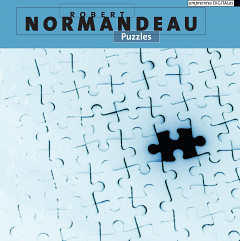
    … œuvres follement sophistiquées… et extrêmement limpides dans leur relation directe à la vie et à l’émotion de l’auditeur…

    Radio Roadmovies in Musicworks

    “Prize-winning Sound Art”, Anna Friz, Musicworks, no. 90, October 1, 2004
    Friday, October 1, 2004 Press

    The myth of the open road is still a potent one in North America. The classic American road trip as immortalized by everyone from Kerouac to whoever wrote Thelma and Louise represents an escape from social expectations and restrictions into the flow of the immediate, nomadic life full of adventure, danger, and possibly transcendence. Road movies conjure images from Super-8 films, hastily shot in the green light of nighttime truckstops or at eccentric landmarks like the worid’s largest western boot. Though inspired by these tales, extensive travels in Canada have a distinctly different flavour from the discoveries and disappointments of this mobile American dream. Fewer roads, smaller roads (even the mighty Trans Canada is only three lanes wide in parts of the Prairies), fewer people. Nonhuman characters take precedence — we note birds, insects, animals; and the weather looms large. Mountain and plain, ocean and stream, wind in the grass, thunder in the afternoon. Of course there are memorable people encountered along the way, particularly if hitchhiking, but outside of cities, people do not dominate the landscape to the same extent as south of the border.

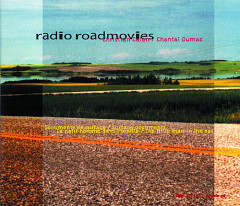
    Veteran Montréal sound artists Christian Calon and Chantal Dumas spent two months on the road from Montreai west to the Pacific and north to the Arctic Circle in the Yukon in the summer of 1999. They stuffed their minivan with “recording equipment, tools, DAT cassettes, tent, Coleman burner, sleeping bags and cooking apparatus, spare tires, beer and camera, boots, and maps,” and set off to hear what they could hear. The results are newly available in a double CD set, the first entitled Le petit homme dans l’oreille, the second Documents de surface. Each was originally produced for Radio-Canada and Deutschland Radio respectively, and though episodic, they also flow as complete pieces. Le petit homme dans l’oreille functions as an audio travelogue with particular narratives of place, while Documents de surface unites sound material from very different places under themes of waterways, trains, prairie wind, and wilderness night. With nods to electroacoustic composition and rural radio, Radio Roadmovies invite the listener away from cities and suburbs to the less populated areas on the map. These are captivating testaments to summer on the land, of tape rolling while on the highway, and of time spent motionless, crouched in forest and fen, with ears and microphones pricked.

    The most notable feature of these works is the clarity and richness of the field recordings. Though theywere designed for the fickle fidelity of radio, Calon and Dumas’s works stand up to intent headphone listening. Ravens, trains, rain, ocean; these ail present unique challenges to the recordist and composer, but it is especially difficult to convey the aural complexity of the wind without it degenerating into white noise. Calon and Dumas are fond of wind and excel at capturing it: Le petit homme… begins with a rush of wind in the trees in Manitoba, and by the end of the piece we have returned to the prairies where the Saskatoon wind in the cornfields sounds more like an earthquake, like the creaking of cornstalks magnified to what might be apprehended by a beetle digging in the earth beside so giant a plant. Other gems include an especially haunting train and its whistle as heard in the distance from within a cedar forest, and frogs chirping on the Magdalene Islands.

    Calon and Dumas take liberties with Le petit homme… to include themselves in the recording, so we really do feel that we’re along for the ride with them. Calon takes on the role of the little man with his introductory “broadcast” from the tent of the “princess of the stars,” where the princess (Dumas) has just awakened at the stampede in Austin, Manitoba. Sometimes Dumas is the little man, introducing us to the Pacific Ocean and mile zero of the Trans-Canada highway. We can easily imagine ourselves squeezed into the van, lumbering up the Dempster highway north of Dawson City to the Arctic Circle, with friends playing recorder and singing songs about sweet potatoes, while the landscape outside is shrouded in fog. Our hosts take us from vast open spaces to the intimacy of tents and camping, of sleeping bags zipping up and pork chops sizzling on the stove. With Le petit homme… Calon and Dumas also indulge in processing and editing to accentuate the activities recorded, such as the looped and equalized stamped announcer’s voice, a looping conversation about bears, or a collage of radio overheard on the road to Inuvik. The end of the piece is ominous and sudden: night by a lake plagued by mosquitoes, Dumas curses and flails about, shutting off the tape. Oh yeah, the unromantic reality of camping in Canada includes the infernal bugs.

    Working with field recordings always leads to the dilemma of how much to process or meddle with the material, especially with extremely clear and detailed stereo recordings such as these. Much as I enjoyed many of the compositional and editing choices on Le petit homme…, by the end, I was also hungry to hear longer stretches of material without self referentiality, and so the more abstract treatment on Documents de surface was a very satisfying second course.

    Documents… is devoid of human voices, being instead a phenomenology of non-human actors such as animals, machines, ocean, and weather. Cows in a field groan like constipated old codgers, a raven croaks and caws, a loon calls, a dog barks on a First Nations reserve, frogs thrum in the wetlands. The train returns again and again, finally grinding to a halt on the tracks in front of us. These voices, some rendered so cliché by Heritage Canada ads and the tourism industry, nonetheless speak to history and reflect on the passage of time, both in historical and circadian terms. A herd of buffalo gallop past only to be replaced by the train — a telling collage when we remember that the buffalo were exterminated from the prairies in part by hunters paid to shoot at the stampeding herds from the train. A tumultuous thunderstorm subsides and the frogs chorus anew. Rhythms emerge from two months of material that are subtle and vast.

    Le petit homme dans l’oreille and Documents de surface are both humorous and contemplative. As a double CD set, Radio Roadmovies comprises two different but complementary approaches to soundscape work that showcase Calon and Dumas’s considerable aural and poetic talents. Le petit homme dans l’oreille won the Phonurgia Nova prize in 2001.

    Radio Roadmovies comprises two different but complementary approaches to soundscape work that showcase Calon and Dumas’s considerable aural and poetic talents.

    Gathering in Musicworks

    “Peebles Plus”, Tilman Lewis, Musicworks, no. 90, October 1, 2004
    Friday, October 1, 2004 Press

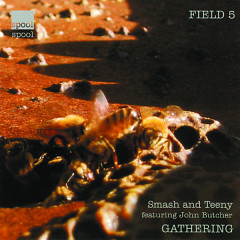
    Composer Sarah Peebles is active as a performer of computer assisted music, often in unconventional settings such as temples and parks, in the ensembles Smash and Teeney (with Nilan Perera on prepared electric guitar) and Cinnamon Sphere (with Perera and calligrapher Chung Gong). She is also the host of Toronto radio station CIUT’s Audible Woman. She has spent extended periods studying in Japan, learning its classical and contemporary music and collaborating with Japanese artists. Three recent CDs show different aspects of Peebles’ exotic explorations. […] Gathering is a two-CD offering of the duo known as Smash and Teeny (Sarah Peebles on laptop and de-tuned shô, Nilan Perera on prepared electric guitar). The first CD features a “best of” Smash and Teeny, 2001-2003, performing in the U.S. and Canada. On the second CD, they are joined in a studio by the sound explorations of saxophonist John Butcher. And on a 1999 video segment, Cinnamon Sphere (Peebles, Perera and calligrapher Chung Gong) performs Kalador Kodex, in a farm field. Gong applies his thick Korean brush and black ink to canvases standing in the open airto the live accompaniment of Smash and Teeney and the nearby lowing of cows.

    Together, Peebles and Perera improvise magical textures. Peebles’sustained, languorously unfolding washes and drones serve as a cushion overwhich Perera coaxes out unlikely, ethereal timbres. He prepares his instrument with inserted plastic drinking straws, paper clips, and metal brushes and places it across his lap. Then in a spirit of discovery, he delicately bows, strokes, and plucks it.

    The voice of Peebles’ beloved insect realm is again heard in this collection. Stridulation Nation uses the high-pitched, excited buzz of (1 believe) a beehive, first as a gentle underpinning of sound, and then building, with the slow but relentless pace of a jet plane grinding to a halt, to a strident insistency. Puzzling titles like Ox Tendon Enigma or Table Setting for Snow reflect the through-the-looking-glass æsthetic this duo practices.

    On the second CD, the duo’s sound is nicely complemented by the multiphonics, growling and flutter-tonguing of London saxophonist John Butcher. A leading figure in free improvisation, his presence adds another layer of depth to their rattle and hum.

    Together, Peebles and Perera improvise magical textures.
  • 1
  • 2
  • 3
  • 4
  • 5
  • 6
  • 7
  • 8
  • 9