electrocd

Blog

143 results
  • 9
  • 10
  • 11
  • 12
  • 13
  • 14
  • 15
  • 16
  • 17
  • Études pour Kafka in Paris Transatlantic

    “Review”, Massimo Ricci, Paris Transatlantic, May 5, 2010
    Wednesday, May 5, 2010 Press

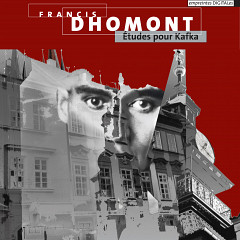
    These studies, says Francis Dhomont, are “self-standing compositions prefiguring Le cri du Choucas, a long work on the world and character of Franz Kafka initiated twelve years ago.” As such, they constitute a good opportunity to enter a riveting universe of disquieting sonorities that reveal a portion of the magnificent mental picture of this 83-year old visionary, born in France but equally present and active in Québec. This is strikingly disturbing music that you wouldn’t want to give as a birthday present to an inexperienced friend. Premières traces du Choucas, dedicated to composer Hans Tutschku, starts with baffling electronic spirals. It soon turns into an even more obscure dramatization, morphing drones and modified vocal elements cooperating in an aggravating soundscape that can’t decide between idiosyncrasy and hopeful anticipation, alternating nearly immobile tendencies and samples in perennial turnaround that imply omniscience while recalling the turmoil of a psychotic brain. Brief an den Vater, based on the text of Kafka’s unsent letter to his father written in 1919, uses voices (Tutschku again plus actor Martin Engler’s) to augment the listener’s perceptivity amidst fragments of forlorn non-harmony and cacophonous injections, transforming the listening environment into an entanglement of different thoughts, most of them negative. The official commentary of this mayhem (the above-mentioned Engler) appears as a faceless, German-accented grave tone symbolizing the end of all hope, directly connected to the impossibility of knowing what the future will bring. In terms of spectacular affirmations, the conclusive À propos de K is the record’s highpoint, snippets of church choir and elongated bell resonances introducing a mixture of brutish utterance and divine stasis, bizarre units (including liquid matters, orchestral openings, human steps and ping-pong balls) becoming visible throughout. Yet it’s the black-hole quality of Dhomont’s chosen materials — instability generated via waveringly imprecise harmonies — that leaves a definitive mark on the mind. Overall, a hard to swallow but outstanding release. Headphones are a must.

    … outstanding release. Headphones are a must.

    Ubiquité in Sonoloco Record Reviews

    “Review”, Ingvar Loco Nordin, Sonoloco Record Reviews, May 1, 2010
    Saturday, May 1, 2010 Press

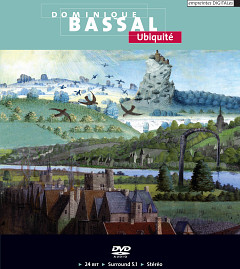
    It was an interesting surprise to receive this issue for reviewing from Empreintes DIGITALes on a high-quality dvd audio, since I got this set from the composer a few years ago, in an earlier guise on a home-burnt cdr. I provide my text for this earlier version here in extenso, albeit with a few omissions of statements that have fallen for the axe of time, and with a few additions brought on by the reviewer’s hopefully extended experience and the revisions I believe the composer will have rendered his works in those years between 2001 and 2009. The pieces were presented in a different order in the earlier, private version as well, but here they are seen as they come on the audio dvd.

    I usually don’t take much notice of a composer’s detailed descriptions or explanations of their works, or at least try not to let them color my own impressions too much, and I don’t do it here either — but I regard Bassal’s experience of the sounds as one possible experience out of innumerable variations. This goes for all art, or anything at all, really.

    Intro from Bassal’s homepage in the early 2000s:

    While studying music in Montréal at Concordia University in the late 70s, Dominique Bassal discovered (with a little help from Kevin Austin) a personal resonance with the aesthetics and techniques of electroacoustic music. He was especially interested in the ‘concert of loudspeakers’ idea of sound diffusion, which frees a composer from non-musical, often histrionic, expectancies linked to a staged instrumental performance.

    His long Road to Damascus (lasting 20 years) through the universe of commercial music production provided a strong technical background while allowing him, since 1999, to devote himself almost exclusively to electroacoustic composition. An award winner in the 2002 electroacoustic competition JTTP (Jeu de Temps / Time Play), he then became a jury member for the same competition in 2003, 2004 and 2005. His document The Practice of Mastering in Electroacoustics has been published in the CEC electronic magazine, eContact! 6.3, as well as on the Mac Music Website.

    Browsing the liner notes it is obvious that Monsieur Bassal is a serious gentleman, not quite satisfied with the commonplace lingo of the art of liners! I like that! There’s always so much more, if you just stop to ponder, give yourself the opportunity to sweep below the reflecting upper layers of what seems to be, to find out what… might be! We will see if Bassal’s sound art is on the level with the composer’s verbal brilliance. I’m providing Bassal’s notes in connection with my thoughts on the works.

    Track 1. Rites d’oiseaux pensants (2001, 2008) [14:40]

    Bassal, from the earlier presentation:

    A tropical atmospheric allegory, loosely inspired — after the fact — from a distant sci-fi work by Olaf Stapledon, Star Maker, in which a telepathic community of small winged beings represents, after the pathetic failure of mankind, the quintessence of creation.

    The introduction to this piece is a radio foreshadowing, and thus lamenting — the main theme. In between there is along spatial drift, made of concentric waves. This portion represents the icy traversal of a temporal vortex over millions of years. The emergence into an ideal future is destabilizing: this is a feverish, vaguely oriental delirium, at odds with the serene image one has of perfect utopia. Radical disorientation, possibly mocking and insulting, confirmed by an ending which unites biological jumble and mathematical cruelty: severed from his foundations, stripped of edifying content, the listener is abandoned, all his dreams ignored, on a rocky shore…

    A language spoken in long and winding, jellylike serpentines, is overheard in an eavesdropping manner, as if through a wall, or rather from inside a large clay pot, in which you hide with all your life, i.e. a body full of memories of the outdoors, the open spaces of your past, now confined within this sphere of clay, only your stubborn desire for survival to sustain you — and hide you from those alien fingers of lingering linguistics that creep across the outer rim of your vessel… ready to pull your mind, your sense of I, out of your immediacy, to disperse it among the stars, neutrino for neutrino, string for string — a seriously fragmented existence… or maybe just a way to become one with the All, in a homeopathic sense…

    The music talk-winds its way in glowing evening clouds, under which sharp, piercing silver seeps in, severing your eardrums… as railway crossings fly by in red shift swings, the planet jagged with up-turned rails pointing into space in rising curves, as if the interior of this celestial body has exploded violently…

    A gliding mass of sound, thick as an Alaskan mudflow in the wake of a gigantic quake, piles up and collapses, again and again, as the planet remodels its appearance.

    The moment wears steel-beads that jingle as the world goes down into the star-crushing machine at the edge of the horizon of events, and everything you hear hereafter in the here-after is just recollections, remembrances — because the misunderstanding you called time has stopped…

    Track 2: Noyade-en-Magma (2001, 2008) [10:00]

    Bassal’s words about this piece, from the early century introduction:

    At first, the goal was to use only high quality electroacoustic material designed through my experience in mastering and audio production. I worked without any pre-established formal structure, but rather more exclusively from prepared sound blocks. The blocks were then rearranged as ‘compositions’. Eclectic arrangements of these blocks would follow specific criteria of acceptance or refusal. Some of these criteria are ‘production-minded’: richness, fluidity and variety of frequency content, integrity of transients and dynamics, balanced spatial organization, general sensation of ease and clarity. Other criteria are ‘listener-minded’: triggering of fascination, maintenance of focus, dialogue between established climates and elements of surprise, etc.

    The sound immediately forms samurai swords that cut past your face diagonally in blinding stellar reflections off of the cutting edges. This is sharp dude audio; brilliance and delicacy at work; at masterwork! This is a modern electroacoustician at its best, all in a deeply French tradition; shadings and nuances out of the GRM, out of the GMVL and Studio Celia. Inside the glaring utterances of sonic tools a modality is sensed — until a mimicry of growling netherworld cats gather round in fluffy, warm anatomies, whiskers tickling your cheeks, your nose, your forehead.

    A long, sweeping sonicity embraces small, close-up involuntarities that screw by and shoot off like tumbling Van Allen paraphernalia into timelessness.

    I feel like something turned upside down and in and out and read from right to left in a bewildering hall-of-mirrors frame of mind. I’m riding the artist’s brush. I’m contaminated into his painting. I’m lost in an imagined world of oil, bound for crackles 400 planetary years from now.

    Track 3. L’inénarrable Nout (2002, 2009) [18:53]

    Bassal, from his first presentation of 2002:

    Nout is the goddess of the night in the Egyptian mythology. This piece metaphorically describes one single night, lived in an awakened state, gazing at the stars, which are in fact painted on Nout’s naked, dark body. But it is also a deep sleeping experience, complete with moments of euphoria, astral travel and confused, recurring dreams (at 4:09 and 15:05). The last 45 seconds are either a sudden sunrise in front of the observer, or the awakening of a parallel self

    Bassal enters my listening in embellished, dark nuances, softly but ominously bending my world into a state of curving time. The darkness of the audio’s rock bottom allows for grainy, glittering clouds of screws and bolts to dance at a distance, sometimes closing in, little needle points of pain traveling your face; tiny incisions opening the skin for ruby-colored droplets of blood: within/without in a cloudscape of threats and promises. There’s no promise without a threat. The promise and threat is an alien one, if alien is possible as a concept. Alien is just a lack of knowledge, of course, since the universe is our home, and since we are the universe, it’s sensing fingertip intelligence, pondering itself. Not only is the Earth — GAIA — a being in itself… but the Universe is a being. The Universe isn’t alien. The Universe is everything that is, perhaps considering the innumerable universes it is a part of! That’s not bad! But is it expanding?

    Bassal’s piece dissolves into my senses like good medicine, a cure for spiritual indigestion, seeping into my veins and finally into the magnificent worlds of my cells, lighting them up from within in a purple hue that isn’t uncomfortable, changing me in some little but significant way. The dynamics of living at work!

    As the music moves on — not in a linear way, it seems — smaller sounds are allotted more attention, moving up trajectories of hidden dimensions in whispering glissandi, in the dancing movements of an artist’s brush in a Paris loft, tooth-ache whining and jingling along the beltway, traveling faster and faster around existence as such, which itself bores deeper, ever deeper into an inner world that proves emptier and emptier; life as a white hole!

    Track 4: Mont des Borgnes (2001, 2009) [12:52]

    Bassal from his words of 2001:

    This is a highly critical representation of a religious/cultist experience. The piece begins with missionary zeal: a hard and cold technological context, marked with silliness and superficiality (0:00 to 1:16). But the serenity of the newborn convert is short-lived (1:17 to around 4:00): he now has to climb a huge sacred mountain, soon accompanied by caricatured, preposterous chanting, beginning at 6:40. As he approaches the end of his pilgrimage, he begins to see, around 9:00 that, masked by a grotesque Ersatz of mysticism there lies a deeply corrupt, decomposed and cynical ”operation”. Kicked out at 10:29 by the community for his clear-sightedness, the lost soul now must return to his solitude, feeling more cold and helpless than ever.

    The beginning of this work is quite traditional, if you think of French electroacoustics from the late 1980s; a full measure of cranky spoils of Day falling on tilted planes in a geometrical world of mathematical hypothesis; clear, Photoshopped visions of steel and marmalade, jelly and phosphorus! The screws and bolts of a Cagean preparation break loose and sail through the mind like dissociated thoughts of turned-away souls in Greystone Hospital, which Allen Ginsberg can tell you about in Kaddish.

    When the falling is over, a revolving, slowly turning might render life inaccessible, hard to handle, albeit with the beauty of solid loss and true despair. The sense of motion is dizzying, but it is tough to understand whether it is you or the giant, purple sphere that is in motion. The grating of a train breaking to a halt at a station in your memory pierces your head — as Bassal slowly melts down into an early La Monte Young drone of simple, layered overtone beauty that washes your pride and fear away, leaving a pure light of appreciation and bold gratitude in your midst, where the swarms of pettiness used to reign. Free at last, God Almighty, I’m free at last! [M L K] (Are birds free of the chains of the skyway?) [B D] The bliss is deafening, tremendous, like an ice cream Abrams tank with chocolate layering slowly exploding on Christmas morn.

    The shuffling soaring and wheezing of swarms of bees round up the stray s, and as the music comes to its conclusion, so do you, your thoughts all resting in one of the letters of the word GLIMPSING within brackets on page 92 of the Tibetan Book of the Dead. (ISBN 0-19-500223-7)

    This is sharp dude audio; brilliance and delicacy at work; at masterwork! This is a modern electroacoustician at its best, all in a deeply French tradition; shadings and nuances out of the GRM, out of the GMVL and Studio Celia.

    Ubiquité in De:Bug

    “Four Works, All Tasty Morsels”, De:Bug, no. 142, May 1, 2010
    Saturday, May 1, 2010 Press

    Not the slightest overtone remains unaffected. No sound tableau remains unmanipulated, everything is passed through a labyrinth of communicating vessel mobiles, when it isn’t the result of a blend of cutting edge analogue and FM synthesis technologies, and flows into mystical apocalyptic astral travel and worldly pilgrimage. Sound drama is indeed on the programme. Four works, all tasty morsels, that were composed in the early part of this decade and later expanded to 7.1 surround, revised in some cases. With these pieces, Bassal returned to the field of electroacoustics he originally studied after many years of advanced studio production in the pop world. His goal since that time of achieving the highest standards in sound quality — both in his role as mastering engineer for the label and on his own debut release — is perfectly reflected here, also on the æsthetic level: transparent, highly crafted layers penetrate the aural space, and although there is a lot happening here, everything fits together. This release is a picture-perfect example of the familiar yet somehow still foreign sound world that this field has to offer. [Translation shirling & neueweise, May 2010]

    This release is a picture-perfect example of the familiar yet somehow still foreign sound world that this field has to offer.

    trans_canada in De:Bug

    “Kritik”, De:Bug, no. 142, May 1, 2010
    Saturday, May 1, 2010 Press

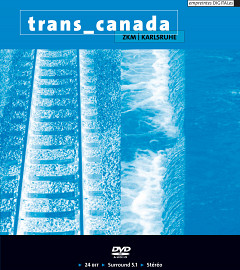
    Im Februar 2005 stellte das ZKM in Karlruhe im Rahmen eines Festivals eine lebendige Szene elektroakustischer bzw. akusmatischer Komponisten vor, die in Kanada zuhause ist und gab dafür auch eine Reihe Arbeiten in Auftrag, die direkt am Ort entstanden. Mit einer Zusammenstellung dieser Werke feiert jetzt das Label-Flaggschiff empreintes DIGITALes sein zwanzigjähriges Bestehen. So unterschiedlich die sich zum Teil anhören mögen: Besonderen Wert legen alle auf räumliche Ausgestaltung, weshalb das Label meist wie hier das Format DVD-Audio nutzt und die Stücke in besonderer Klangqualität und auch mit 5.1-Surround-Option anbietet; wegen der Überlänge (zweieinhalb Stunden Musik, keines der acht Stücke unter einer Viertelstunde) hat man diesmal auf MP3-Zugaben verzichtet. Als ein weiterer thematischer Fokus (neben Raum) speziell dieser Compilation zeigt sich jedoch auch ein prominenter und äußerst vielfältiger Umgang mit der menschlichen Stimme als Ausgangsmaterial, teils in textlichen Inspirationen angelegt (Burroughs, Kafka, Rilke), aber auch ganz abstrakt bis hin zu im Klangergebnis nicht mehr entschlüsselbaren Verfremdungen. Nicht zuletzt in dieser Länge ist das nicht immer einfache, oder besser: bequeme Kost; dazu drehen sich einige Stücke zu sehr um besondere und extreme Bewusstseinszustände. Unter der hochkarätigen Besetzung (Bernier, Copeland, Dhomont, Dufort, Gobeil, Normandeau, Truax und Westerkamp) räumt denn auch letztere mit ihrer wunderschönen, so intensiven wie beruhigenden Meditation über Rilkes “Liebesgedicht” ab.

    Études pour Kafka in Mouvement

    “CD de la semaine”, Laurent Catala, Mouvement, April 30, 2010
    Friday, April 30, 2010 Press

    En rapprochant son univers acousmatique de celui, tout aussi trouble et intériorisé, de Franz Kafka, Francis Dhomont conduit un intrigant parallèle entre deux œuvres artistiques aux champs d’investigation convergents. Une expérience de travail, sur la durée et sur l’expressivité au sens large, qui traduit chez le compositeur une attirance pour l’ambiguïté toujours renouvelée.

    Depuis les années 1940, le compositeur québécois [d’origine française] Francis Dhomont explore méticuleusement le champ des possibles sonores à partir d’une écriture sur supports magnétiques très personnelle. Une véritable exégèse acousmatique qui a conditionné l’intégralité de sa carrière musicale depuis le milieu des années 1960, et qui s’attache principalement à révéler les ambiguïtés entre les sons projetés et les impressions — fugitives et contradictoires, suggestives ou plus imposantes — qui en résultent. Dans cette traçabilité du conflit sonore qui l’anime, Francis Dhomont n’en finit plus de chercher des clefs, des pistes, des éléments de révélation d’une intrigue qui se noue et se dénoue sans fin, sans qu’une quelconque logique ne vienne en dicter les modalités. Nul doute que dans ce contexte empirique, des points d’accointance se manifestent avec d’autres créateurs qui poursuivaient, à leur manière, une recherche équivalente sur des lignes expressives ou comportementales, et notamment sur leur aspect paradoxal ou leur non-sens.

    L’écrivain Franz Kafka fait partie de ses auteurs qui ont toujours fasciné Francis Dhomont par l’acuité avec laquelle ils traquent leur environnement jusque dans ses replis les plus psychologiques. Et en ce sens, cet Études pour Kafka s’assimile autant à un hommage qu’à une ligne de convergence méthodologique. Les trois pièces qui composent ce disque, publié sur le label québécois Empreintes Digitales — Francis Dhomont partage sa vie entre la France et Montréal — s’inscrivent donc autant dans la durée que dans la construction d’un véritable processus artistique. Le compositeur en convient lui-même: «Les œuvres d’envergure, comme … mourir un peu, Sous le regard d’un soleil noir ou Forêt profonde, me demandent toujours une longue période de réflexion — des années parfois — et de multiples études qui explorent les thématiques, testent les matériologies et annoncent l’œuvre finale. Elles en sont les prolégomènes. Cependant, celles proposées ici ont dépassé, par leur forme achevée, le niveau de l’esquisse et constituent des compositions autonomes qui préfigurent Le cri du choucas, une longue œuvre, entreprise depuis douze ans, sur l’univers et la personnalité de Franz Kafka.» Premières traces du choucas, Brief an den Vater et À propos de K, les trois pièces proposées ici, sont donc des épreuves sonores autonomes, mélange des habituelles recherches du musicien et des thématiques kafkaïennes (la solitude, la peur, l’incompréhension face au caractère impersonnel et complexe de la société et des choses qui entourent l’individu). La mise en son se révèle ainsi particulièrement impressionniste, à l’image de l’introductif Premières traces du choucas, qui balaie l’espace sonore d’harmonies fusantes se délitant progressivement dans des congestions d’organismes malingres. Ponctuées de textes lus en allemand, Brief an den Vater induit un climat encore plus nauséeux, baigné de volutes sonores enveloppant, submergeant et modifiant la narration. Enfin, avec ses contrepoints entre accords suspensifs et turbulences auditives exfiltrées, À propos de K délimite d’étonnantes lignes de démarcation entre clarté et confusion dans un jeu de faux-fuyant lunatique. Un exercice de rapprochement intrigant entre deux œuvres artistiques qui, serait-on tenté de dire, se découvrent et s’explorent sans retirer totalement le voile de mystère qui va si bien à chacune d’entre elles.

    Un exercice de rapprochement intrigant entre deux œuvres artistiques…
  • 9
  • 10
  • 11
  • 12
  • 13
  • 14
  • 15
  • 16
  • 17