electrocd

Blog

85 results
  • 4
  • 5
  • 6
  • 7
  • 8
  • 9
  • 10
  • 11
  • 12
  • Voyages in Vital

    “Review”, Frans De Waard, Vital, no. 1037, June 20, 2016
    Monday, June 20, 2016 Press

    As far as I recall the only other time the name Jonty Harrison came up in Vital Weekly was when I reviewed a release by a student of his, Peter Batchelor (Vital Weekly #929). Much of the work composed by Harrison is simply not designed to be played on a stereo system, but to be experienced in places; places where they have a whole bunch of speakers, anything from a couple more than two up to an immense lot. Harrison is aware himself of the problem that presents this when reducing it to stereo for a CD release. Joseph Anderson suggested to use Ambisonics, which “is a full-sphere surround sound technique: in addition to the horizontal plane, it covers sound sources above and below the listener” (and you can read lots more on wiki, I’d say). Much of Harrison’s work deals with field recordings and ever since the 90s he’s been carrying around devices to do these recordings, usually when traveling. On this release we have two pieces. The fourteen-minute Espaces cachés and the one-hour long Going / Places. The first piece seems to be overlapping field recordings together, so that multiple sounds come together and create a new place; one recognize some of the sounds, and sometimes we don’t. There are cicadas, city sounds, farmyard and nature recordings — and no doubt lots more. It seems to be having mild processing, but surely it hasn’t.

    The other piece, Going / Places contains [twenty-three] separate pieces of music, which create the sense of journey. There is lots of railway stations, tourists, harbours, boats in here, along with a geothermal pool in both Iceland and New Zealand, crickets, people playing music, a call for prayer and many more. Here too some of it is cut together, but then sounds that are from a similar group, like the aforementioned pools, or bells from various countries at the same time. It makes indeed a wonderfully [sound journey], across continents, from cities to nature and back. Sometimes it seems there is some kind of processing going on but I’m sure there is none. This release works best when one uses a pair of headphones in order to hear this ambisonics work best; in a more normal situation with speakers it worked a bit less in that respect.

    It makes indeed a wonderfully [sound journey], across continents, from cities to nature and back.

    Morphogenèse in Musique Machine

    “Review”, Martin P, Musique Machine, June 16, 2016
    Thursday, June 16, 2016 Press

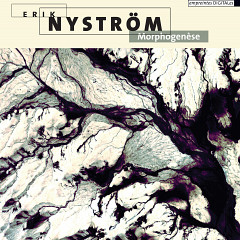
    Here’s an unusually packaged CD, wrapped in layers of entangled card inlays. Pulled apart, they reveal an outer card slipcase, an inner card inlay — both covered in texts and largely abstract imagery — and an odd little piece of card that holds the CD itself. The texts reveal recording details, as well as annotating the pieces themselves, of which there are five. The tracks, all recorded between 2008 and 2012, vary in length from around twelve minutes to over twenty. All five are rigorous, ‘hard-boiled’ electroacoustic works.

    I’m not going to pretend to remotely encapsulate what goes in Morphogenèse; given the lengths of the individual pieces, and the sheer amount packed into them, I will instead offer up some highlights and more general thoughts. As I said above, the album compiles five serious electroacoustic works, constantly shifting and developing. The first track, Catabolisms, doesn’t start off too staggeringly; however, before long, it establishes a very nice drone. This disappears into a section that sounds simultaneously like a sci-fi spaceship, and something more organic — rocks and water. The sci-fi atmosphere is also found in the ominous drones that underpin some of the tracks, as well as the ‘digital’ feel that pervades most of the album. Later, near the close of the track, the sounds quickly combust/rot to a deathly hush — it’s a really nice transition between sections. Latitudes, the second piece, is perhaps best represented by the snaking, strained, whistling drone that dominates the early sections. The next track, Lucent Voids, begins with a soundscape that seems to summon water movements and bird-song, before adding bell-like sounds and hard, spacey tones. After the 16-minute mark, there’s a sudden, outbreak of near-melodicism, with a section that lurches like court music from some alien civilisation. In the context of the album as a whole, this is quite a startling moment for the ear, and all the better for it. The fourth piece, Cataract, is perhaps more low-key, less showy in tone than it’s previous counterparts, often burbling along quite quietly. Though there are still points of darkness and near-whiteout. Far-from-equilibrium, the final piece (and oldest), might be my favourite track on Morphogenèse. It seems to carry a more visceral, even aggressive, selection of sounds than the other pieces. It also has sounds that are much less processed, even near-raw, and these add great colour in terms of texture and movement. There are some fantastic moments where Nyström pulls sounds inside out, tearing and straining them — it’s compelling and beautiful.

    Like I said above, Morphogenèse is not a release suited to a short review — it’s arguably not really an album that I’m overly ‘qualified’ to give much insight to, given it’s clear academic designs. However, there is a wealth of material here to digest and peruse, all of which demands close listening. I’ll admit that the prevailing ‘digital’ feel to the sounds is not to my particular tastes, but Far-from-equilibrium, where this effect is less pronounced, more than makes up for this. This was very enjoyable, and the kind of album that will always reward another listen.

    This was very enjoyable, and the kind of album that will always reward another listen.
    Voyages in ambientblog.net

    “Review”, Peter van Cooten, ambientblog.net, June 11, 2016
    Saturday, June 11, 2016 Press

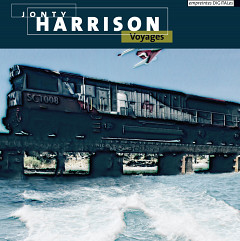
    If ‘music is organised sound’, then this new album by Jonty Harrison is far more than a collection of seemingly unrelated field-recordings. It is a composition (or two, actually) in its own right, created by selecting sounds from a variety of locations, spaces, places, scenes and vistas ‘which we may or may not have experienced, but which we somehow recognise’.

    The first piece of this acousmatic electroacoustic collection, Espaces cachés, is a 14-minute ambisonic trip created from the original 30-track commission from Maison des arts sonores.

    The second piece, called Going / Places is a one hour journey divided into 23 parts. The recordings come from all over the world and are often combined in such a way that they could never have existed on one location simultaneously.

    The scenes, ‘one implying imminent motion, the other more restful and tranquil’, take you all over the world — unpredictably jumping between Europe, Iceland, Australia, North America, North Africa and parts of Asia.

    “Sounds reach us as they would in everyday life, as if we were ‘there’: from multiple locations in different positions and at different heights and distances. In this sense we are closer to reality; but even the bounds of reality can be stretched by the agencies of motion and memory — unreality, surreality and hyper-reality are but steps along the route that can be taken by the imagination…”

    Save yourself an expensive holiday this year: buy this album, put on a quality headphone, close your eyes — and let professor Jonty Harrison guide you to some unexpected corners.

    … buy this album, put on a quality headphone, close your eyes…

    Nécropolis in Nowamuzyka

    “Recenzje”, Łukasz Komła, Nowamuzyka, June 3, 2016
    Friday, June 3, 2016 Press

    Zaglądamy do katalogu kanadyjskiego labelu empreintes DIGITALes, gdzie ukazał się nowy album szwedzkiego kompozytora Åke Parmeruda.

    W 2014 roku pisałem o zupełnie innym wydawnictwie z tej wytwórni, a dokładnie o płycie Davida Berezana — Allusions sonores. Należy dodać, że firma empreintes DIGITALes powstała w 1990 roku w Montréalu i jest jedną z najważniejszych oficyn na świecie, która specjalizuje się w promowaniu muzyki elektroakustycznej i akuzmatycznej.

    Åke Parmerud tworzy muzykę eksperymentalną od końca lat 70. oraz porusza się w świecie sztuki multimedialnej, teatru, filmu i tańca. Choć początkowo kształcił się w kierunku fotografii (1972-74). Jednak później ukończył Konserwatorium Muzyczne w Göteborgu. Od wielu lat kreuje wszelkiego rodzaju interaktywne instalacje wideo, a także wchodzi w skład Szwedzkiej Królewskiej Akademii Muzycznej.

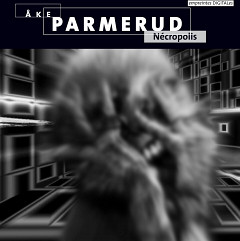
    15 maja Parmerud opublikował swój trzeci solowy krążek, pt. Nécropolis, będący zbiorem akuzmatycznych kompozycji z lat 2005-2011. Na stronie empreintes DIGITALes można posłuchać fragmentów tego albumu.

    empreintes DIGITALes […] jest jedną z najważniejszych oficyn na świecie, która specjalizuje się w promowaniu muzyki elektroakustycznej i akuzmatycznej.
  • 4
  • 5
  • 6
  • 7
  • 8
  • 9
  • 10
  • 11
  • 12