electrocd

Blog

48 results
  • 1
  • 2
  • 3
  • 4
  • 5
  • 6
  • 7
  • 8
  • Limaçon in Gonzo Circus

    “Kritiek”, Gonzo Circus, no. 176, July 1, 2023
    Thursday, July 13, 2023 Press

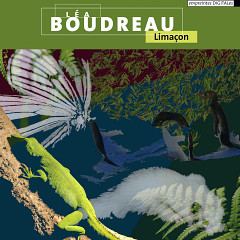
    Onheilspellende zang, gebrom als neerstortende vliegtuigen, gefluit van kreupele vogels: op Recovery, dat qua geluid een vreemde middenweg bewandelt tussen turbulentie en sereniteit, gaat het over de lange, moeizame weg van mentaal en fysiek herstel. Léa Boudreau, een multidisciplinaire kunstenaar uit Montréal, schreef het stuk al in 2018, maar nu pas krijgt het op het album Limaçon op empreintes DIGITALes een onderkomen. Het duurt soms even voordat alles weer op z’n plek valt.

    Recovery, which strikes a strange middle ground between turbulence and serenity in terms of sound

    Hymnes sans paroles in Revue & Corrigée

    “Chronique”, Pierre Durr, Revue & Corrigée, June 20, 2023
    Tuesday, June 20, 2023 Press

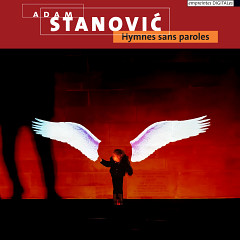
    Présent sur plusieurs compilations dédiées aux musiques électroacoustiques, le compositeur Adam Stanović nous propose ici, après Ténébrisme, un premier album paru il y a 5 ans chez l’éditeur canadien Empreintes Digitales, six nouvelles pièces créées depuis 2017-2018. Et il délivre, en particulier avec les quatre premières pistes, une musique futuriste expressive, faite de rafales de vent, de grondements, d’explosions sonores, de paysages oniriques traversés de fracas, de déflagrations, comme mue par une machinerie implacable, telle Baltazar’s Adventure through The Great Machine, sans doute sa pièce emblématique, qu’il a pu présenter en public plus d’une douzaine de fois aussi bien en Angleterre (où il officie), qu’en Écosse, en Europe continentale (France, Suisse, Pologne, République tchèque, Suède) qu’en Asie (Kobé, Séoul), en Amérique du Sud (Chili, Brésil), et dont la source d’inspiration provient de machines exposées au musée Kelham Island de Sheffield. C’est toutefois un univers sonore quelque peu différent qu’il adopte avec ses deux dernières propositions. Si dans Goodnight, Tin Hau, sa pièce la plus récente (2021), il conserve certains aspects de ce déroulement mécanique, de ces bruissements machinaux, mais à travers des rythmes plus proches de l’horlogerie, il y introduit des variantes par l’adjonction de sonorités plus proches du field recording, d’esquisses de voix témoignant de son passage à Hong Kong, rendant la pièce moins abrupte. Enfin, net changement de registre avec Hymn Without Words, réalisation un peu brumeuse, plus méditative et presque reposante, dédiée à son collègue Dale Jonathan Perkins, en pastichant le titre d’un de ses enregistrements, Voice Without Words.

    … une musique futuriste expressive, faite de rafales de vent, de grondements, d’explosions sonores, de paysages oniriques traversés de fracas, de déflagrations, comme mue par une machinerie implacable…

    Espaces éphémères in The Sound Projector

    “Transient Spectral Bursts”, Ed Pinsent, The Sound Projector, June 4, 2023
    Monday, June 5, 2023 Press

    Ambrose Seddon is an English composer who studied at Goldsmiths and currently holds a chair at Bournemouth University; his academic work was supervised by Denis Smalley. He’s achieved an international reputation in his career and has worked in the areas of electronic, electroacoustic, and acousmatic music. His Espaces éphémères presents six of his recent compositions.

    Reading his notes here, which are very lucid, I’m warming to his work as it seems to be inspired by practical and everyday things, yet also allows some room for speculation about the bigger issues, such as ageing and the passing of time. Some pieces are directly inspired by his own family, his children and his parents. My favourite piece here is The Nowness of Everything, which has a connection to his parents’ house as well as the work of playwright Dennis Potter; apparently created from the sounds made by ordinary objects, very heavily treated and disguised, and what comes across is something of the mental process of Seddon, as he reflects and ruminates on aspects of mortality. I shan’t say that he’s created a direct, emotionally-laden work, but there’s an oddness to the sounds and a general mysterious aura to the music which is appealing.

    In keeping with the overall title Espaces éphémères, Seddon seems to be acutely aware of the fleeting joys of life, which seem to pass by far too quickly for all of us; this is reflected in his work, along with a reminder to keep paying attention, and remember that life is not a rehearsal.

    In keeping with the overall title Espaces éphémères, Seddon seems to be acutely aware of the fleeting joys of life, which seem to pass by far too quickly for all of us; this is reflected in his work, along with a reminder to keep paying attention, and remember that life is not a rehearsal.

    Figures de son in The Sound Projector

    “Transient Spectral Bursts”, Ed Pinsent, The Sound Projector, June 4, 2023
    Monday, June 5, 2023 Press

    Patrick Ascione was a French composer who studied at the Groupe de musique expérimentale de Bourges (GMEB) in the 1970s and later was drawn into the study of computer music at Ircam. He may have done some work as a facilitating technician in the GMEB institution and also taught electroacoustic music in Cherbourg. Interestingly, he’s another composer who saw the potential of electroacoustic music to realise the idea of “colour”, and in the 1970s thought of his own work as a form of sound painting, even including colours as part of his titles, for instance his “yellow lemon” [Métamorphose d’un jaune citron] piece which surfaced on [the Cinéma pour l’oreille label produced by] Metamkine in 1995.

    The pieces here on Figures de son are not the colour pieces, but a lively survey of his works from around 1998 to 2012. A good introduction — I never heard his work before, but there’s a lot of drama and excitement. I’m personally drawn to his Ascionerie no 6: Fantaisie diabolique from 2011-12, which I’m content to interpret as a typically Gallic vision of Hell populated with lively horned devils and grinning skeletons, much like those French postcards you used to get in the 19th century. Ascione conjures up a babble of treated voices cackling and jabbering in a swirling mess of tape noise, along with a lumbering disco beat — what’s not to like? It seems the composer was trying to make some point about market forces and capitalism, but I prefer my version with skulls and red capes.

    Remainder of the disc is strong too, with the fast-moving chattering and timbral changes of Divertissement, and the crazy apocalyptic synth-swipes of Et puis l’oubli…, which is intended as a metaphor for the “end of all things”. I’m finding plenty of musical drama and content in the music of Patrick Ascione, even if it might stand guilty of a certain over-emphasis and swagger, like an actor strutting on the stage with many hand-gestures, exaggerated posture, and facial contortions. Which might not be wide of the mark, if we translate the French “figures” as “faces”. I’ve tried reading his explanatory notes in the package, but his artistic intentions and ideas, as expressed in words, are more or less incomprehensible to me; far better in this case just to listen to the music.
    Remainder of the disc is strong too, with the fast-moving chattering and timbral changes of Divertissement, and the crazy apocalyptic synth-swipes of Et puis l’oubli…
  • 1
  • 2
  • 3
  • 4
  • 5
  • 6
  • 7
  • 8