electrocd

Blog

31 results
  • 1
  • 2
  • 3
  • 4
  • 5
  • 6
  • Écraser l’autre in The Sound Projector

    “Unbiased Reportage”, Ed Pinsent, The Sound Projector, March 30, 2026
    Tuesday, March 31, 2026 Press

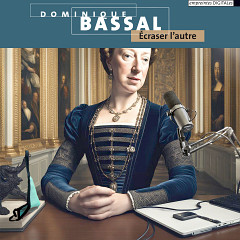
    Dominique Bassal (born Cairo, now living in Montréal) started out with an academic training, but cut his teeth in the commercial world as an engineer and studio genius working on various pop music productions, apparently applying avant-garde methods to these genres. He’s also something of a “house engineer” for this particular label, with multiple mastering credits to his name.

    He has released his own compositions before, such as Ubiquité in 2009, but today declares he wishes to move beyond the “allegories” that used to characterise his early work. This new get-tough “tell it how it is” attitude is reflected in the title of this album and the six tracks which make direct reference to the rise of various historic dictators and or other instances of human rights abuses, taking in everything from the KKK to Rwanda, by way of the Deir Yassin massacre, Adolf Hitler, and even Joe McCarthy. “We have let a handful of hallucinated prophets convince us to turn the other cheek,” is his hard-hitting warning, “unsurprisingly, the psychopathic minority seized the opportunity to take control of the world.” Stirring words — and it doesn’t take much effort to read between the lines and apply this lesson to our contemporary global situation.

    He’s also got some harsh words for the genre of modern electroacoustic music itself, which he regards as being driven by a “geek complex”, apologising for the generally poor music, and dismissing a large corpus of work as “infinite variations of the most insipid and predictable sonic material”. One problem might be that composers have simply forgotten how to communicate with an audience, deliberately draining their work of any emotional content or any element that might be mistaken for “story-telling”, in favour of the purity of abstraction. To hear Bassal’s attempt to redress this balance, tune into these six pieces, which contain plenty of exciting shifts in timbres, exotic spice and flavours, and near-cinematic grandeur in their narrative sweeps.

    While I find myself caught up in the thrill of the moment more than once, I’m also feeling a slight sense of sprawl — no real beginning or end to these colourful lakes of sound. The emotional register throughout is somewhat gloomy and pessimistic, given the themes he has taken on, and while there’s much to admire in his feisty spirit, the actual music isn’t quite as incisive or forthright.

    … tune into these six pieces, which contain plenty of exciting shifts in timbres, exotic spice and flavours, and near-cinematic grandeur in their narrative sweeps.

    Du noir tout autour in Revue & Corrigée

    “Critique”, Pierre Durr, Revue & Corrigée, no. 147, March 1, 2026
    Tuesday, March 31, 2026 Press

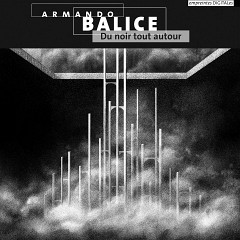
    Les titres des trois pièces de ce recueil suggèrent l’idée d’un paysage sonore dévolu aux jardins — mais ici, point de jardin des délices, ni de jardin pharaonique, ni même de jardin privé. Et si ces trois titres semblent orienter l’auditeur vers trois environnements différents, il n’en est rien. Le titre de l’ensemble, c’est bien Du noir tout autour, et du noir, il y en a dans chacune des propositions: dans Black Garden forcément, mais aussi dans Empty Garden et Light Garden. Armando Balice, franco-italien, directeur et cofondateur (avec Livia Giovaninetti) d’une structure dédiée à l’acousmatique et aux arts sonores, Alcôme, réalise ici son premier enregistrement. Les titres de deux compilations antérieures auxquelles il participa confirment son obsession du noir: Mes yeux sont des flammes noires (Singularities, 2017), Le Crépuscule fané du phénix noir (Studio Forum, 2018). L’auteur traite l’obscurité comme une matière, une substance propre à chacun qui se doit d’être explorée. Silence et bruits, générés ou non (croassement de corbeaux, sons environnementaux, touches d’instabilité du violoncelle de Lola Malique) tissent dans la première pièce une toile interrompue par le noir. Empty Garden, tout en reprenant certains des éléments sonores de Black Garden, se veut plus inconfortable, hantée par le néant, matrice de la création, et parcourue de pas, de roulements, de déflagrations et d’emphase. Et la lumière du troisième volet, Light Garden pourrait être, en termes sonores, celle d’un SoulagesLe noir de l’étoile? Fracturation des sonorités synthétiques, effets d’orages, dislocation des sons, mais aussi un continuum plus apaisant, rythment ce dernier volet. L’ensemble est bien loin d’autoriser une écoute apaisée: c’est plutôt un sentiment trouble qui peut animer l’auditeur, sans doute en introspection.

    The piece is far from inviting a peaceful listening experience; rather, it evokes a sense of unease in the listener, who is likely drawn into introspection.

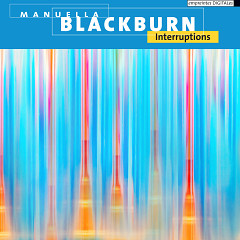
    Interruptions in The Sound Projector

    “Find the Right Time of Day”, Ed Pinsent, The Sound Projector, March 28, 2026
    Monday, March 30, 2026 Press

    Another strong release from this gifted English electro-acoustic composer, whose discography to date shows the clarity of her ideas, each composition focused on one object or concept at a time, and seeing through the plan to completion. She’s also unafraid of telling stories, a rare thing in this genre.

    On this survey of recent pieces (2018 to 2023) I somehow detect a very “modern” sound, made by a creator informed by glitch, techno, ambient and related developments in our field since around 1999 onwards. The “interruptions” of the title manifest themselves as micro-edits and dramatic timbral shifts, making each track an excitement of fizz and texture. There’s also plenty of interruptions on the opener Home Truths, which expresses her own exasperation at trying to get things done at home, without being continually distracted. It may start out as a sonic treatise on domestic objects, but the abstractions of the piece successfully delineate a restless mind and the way that her thought processes work. Microplastics doesn’t have quite the same urgency as that powerful visualisation, but it has an ecological message — it started life as a search for plastic bottles as a sound source and soon became a critique of the “colossal mountains of rubbish” we’re producing in our consumerist society.

    After those two well-informed observations, Farewell Fairlight arrives as a more benign centrepiece to the album; well, she got her hands on a Fairlight machine, the sampling keyboard so beloved of Peter Gabriel, Kate Bush, Trevor Horn and many others, and uses it to create something wholly unexpected. She did use some of the pre-loaded sounds on the floppy disc, but created her own samples of sounds produced by some of the machine’s internal mechanisms — e.g. powering it up, the light pen touching the screen, even the sound of the fans. Events not reckoned as music or even desirable artefacts of the Fairlight. Yet from her notes, it’s clear she knows more about 1980s pop production than the entire staff of BBC Radio One, and it’s both ingenious and entertaining how she’s spliced all this knowledge and innovative sampling methods together with the strictures of formal musique concrète composition. Top marks for this layered and wonderful rainbow symphony which dazzles and brings joy in less than 13 mins.

    Also here, Cupboard Love, a virtual exploration of her own mental memory as manifested in wooden cabinets full of photos and papers; and Landline, based on happy memories of an old dial phone from her family home. You can probably guess at the audio texture of this telephone piece, but it’s still a delight and far from clichéd. If there’s a pattern running through these five selections, it’s as much to do with her own personal exploration of her past, as well as devising and applying compositional methods that are entirely aligned with the objects at the centre, in a very sympathetic manner. Besides being full of creative energy, Manuella Blackburn is one of the more altruistic and accessible composers on this label.

    Besides being full of creative energy, Manuella Blackburn is one of the more altruistic and accessible composers on this label.

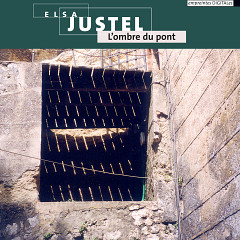
    L’ombre du pont in The Sound Projector

    “Tea Dialogue”, Ed Pinsent, The Sound Projector, March 12, 2026
    Monday, March 16, 2026 Press

    Third collection of music on this label from this Argentinean composer, following on from 2019’s Yegl, and this one surveys her works from 1995 up to 2020. Although she began her studies in Rosario and Buenos Aires, she also served her time in France with Horacio Vaggione in 1988, and had a teaching role there (as well as academies in her home country and in Spain).

    Many of these eleven compositions are tributes or “hommages” to some of the big Kahunas in this field — perhaps they are personal friends, or have acted as mentors to Justel — including Bayle, Parmegiani, Ferreyra, Ferrari, and other names such as Gonzalo Biffarella and Annette Vande Gorne. It’s good to see this personal and friendly dimension, reaching out to her fellow composers instead of seeing them as competitors, and the listener will be glad to hear she’s not producing pastiches or slavish copies of their techniques. Indeed one of the pieces Dialogo con Ana is explicitly structured as a musical conversation, produced by swapping tape recordings with the improvising pianist Ana Foutel. Elsewhere, we see evidence of more familiar concerns that thrive in this genre, such as taking the listener into “virtual and imaginary worlds”, and reworking tapes from the archives of GMEB and GES Vierzon in France.

    Elsa Justel may, for me, lean a little too heavily on the formal practices and techniques of tape composition, but who can resist a composer who describes one of her earliest pieces as “brown and liquid like tea,” a 10-minute piece full of “blurry” and “dripping” textures. Such phrases have an immediacy and idiosyncrasy that is just priceless.

    … who can resist a composer who describes one of her earliest pieces as “brown and liquid like tea,” a 10-minute piece full of “blurry” and “dripping” textures.

    New Notice to Our Customers Residing in the USA

    Tuesday, February 24, 2026 General

    Starting February 24, 2026, the United States of America government will levy a 10% customs duty (Section 122) on the value of some imported goods(such as vinyls and SACDs) you place in your shopping cart. This 10% customs duty may be added to the total value of the goods of your order and paid directly to the United States Customs and Border Protection (CBP) through the intermediary chosen by Canada Post. We are monitoring the situation closely and we will adjust our shop’s behaviour accordingly.

    Digital products are not subject to this customs duty.

    Cartografía interior in Chain DLK

    “Review”, Vito Camarretta, Chain DLK, February 19, 2026
    Monday, February 23, 2026 Press

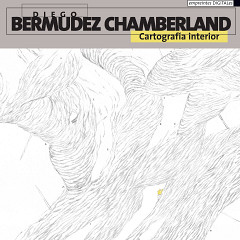
    There is a particular kind of composer who does not simply write music but builds worlds and then invites you to get lost in them. With Cartografía interior, his first solo release on empreintes DIGITALes (IMED 25200), Diego Bermudez Chamberland does precisely that: he drafts a private cosmogony and hands us the map — though not without erasing the legend first.

    Composed between 2020 and 2023 and revised in 2025, this 44-minute acousmatic triptych draws inspiration from Scandinavian mythology as recounted in Prose Edda by Snorri Sturluson. But let’s be clear: this is not programmatic folklore with surround-sound Vikings. Bermudez Chamberland is not illustrating sagas; he is metabolizing them. The mythic scaffolding becomes an energetic principle rather than narrative content. Yggdrasil may hover in the background, yet what we encounter is less a tree than a network of forces.

    Online responses to the album have often highlighted its sculptural quality — and rightly so. Bermudez Chamberland, trained at the Conservatoire de musique de Montréal and shaped by years of dialogue with figures such as Martin Bédard and Louis Dufort, approaches sound as a malleable substance. His studio becomes both laboratory and observatory. Field recordings of natural elements, instrumental gestures from collaborators, and a battery of synthesis techniques are fused into a fixed stereo medium that feels anything but static. The “2.0” format might suggest limitation; the listening experience suggests vertigo.

    The opening movement, Chronomundo, operates at a planetary scale. It unfolds like a slow rotation of cosmic matter, with dense textural strata that seem to drift across enormous distances. Spatial depth is not decorative here; it is structural. One senses tectonic shifts, orbital sweeps, the almost comical audacity of trying to sonify something as grand as cosmology. And yet, the piece resists bombast. Instead of thunderous clichés, we get evolving masses and microscopic fissures within them. Time feels stretched, elastic, as if the listener were perched somewhere between geological patience and stellar combustion.

    If Chronomundo maps the macrocosm, Destin // Trouble zooms in on turbulence. The double slash in the title becomes audible as montage logic: call-and-response fragments, sudden anticipations, sonic behaviors that appear, scatter, regroup. Bermudez Chamberland personifies nature without anthropomorphizing it. Woody timbres sprout and dart; iterative flutters evoke insect wings clustering around a light source; storms accumulate not as Hollywood drama but as layered agitation. The movement is playful in its complexity — one can almost imagine the composer smiling while coaxing chaotic systems into temporary alliances.

    What stands out is the music’s vitality. Reviews circulating online frequently note how alive the material feels, how it refuses to settle into static drones. Even when textures sustain, something is always mutating at the edges. Energy here is not merely volume or density; it is behavioral. Sounds behave like entities with impulses, hesitations, and collisions.

    The final movement, Punto maximal, turns inward — or downward — toward the infinitely small. If the first movement surveyed mythic vastness and the second dramatized conflict, this one examines intimacy. The microscopic becomes epic. Tiny iterative “points” punctuate the sonic field, suggesting cellular or particulate life. The humor, perhaps unintended, lies in the realization that the smallest gestures can feel as overwhelming as galaxies. Bermudez Chamberland treats the micro-world with the same grandeur he afforded the cosmic, collapsing scale into perception.

    It is tempting to describe Cartografía interior as immersive, but that word has grown tired from overuse. What makes this work compelling is not immersion alone, but its elasticity of perspective. The composer revisited and revised the piece in 2025, reinserting materials, rebalancing energies — effectively bending his own past into the present. The album becomes a meditation on time not only thematically, but structurally. Past, present, and speculative future coexist in the studio’s layered memory.

    There is also something tender beneath the mythological ambition. The project’s genesis traces back to youthful readings of Nordic lore, encouraged by a mother who nourished imagination with books. That detail matters. Beneath the sophisticated sound design and conceptual architecture lies a child enthralled by infinite worlds and cosmic trees. Cartografía interior is, in a sense, a grown-up answer to that early wonder.

    And perhaps that is its quiet achievement: it reminds us that mythology was never about gods alone. It was about scale — about locating oneself between the titanic and the microscopic. Bermudez Chamberland does not give us a literal Valhalla or a faithful sonic Yggdrasil. He gives us thresholds, energies, morphologies. He gives us a universe that feels invented yet strangely familiar.

    In the end, the “inner cartography” of the title is less about mapping territory than about mapping attention. The record suggests that every listener carries a cosmogony inside — vast, turbulent, teeming with unseen life. This album simply hands you the coordinates and says: explore.

    This album simply hands you the coordinates and says: explore.
    ★★★★
  • 1
  • 2
  • 3
  • 4
  • 5
  • 6