electrocd

Blog

2899 results
  • 36
  • 37
  • 38
  • 39
  • 40
  • 41
  • 42
  • 43
  • 44
  • Haïkus in Musik an sich

    “Kritik”, Wolfgang Kabsch, Musik an sich, December 21, 2020
    Monday, December 21, 2020 Press

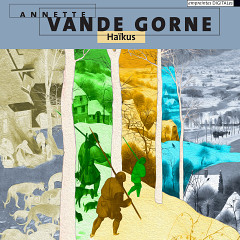
    Annette Vande Gorne ist eine 1946 geborene aus Belgien stammende Künstlerin im Bereich der Elektroakustischen Kunst und des Fieldrecordings sowie der modernen Klassik. Sie hat bereits einige Werke komponiert, aber erst sehr wenige Ihrer Werke auch auf Tonträger gebracht. Nun erscheint mit Haikus Ihr fünftes Album. Unterstützt hat sie dabei der ebenfalls aus Belgien stammende Poet Werner Lambersy (inzwischen zum zweiten Mal).

    Haiku ist eine japanische Art der Poesie und das Album besteht laut der Künstlerin aus fünf Teilen und insgesamt 17 Haiku’s. Nun, da das Album überwiegend ohne Worte auskommt (ein paar gesampelte Wortfetzen bilden die Ausnahme), hat sie wohl einen musikalischen Weg gefunden, diese umzusetzen. Fak ist, das die 17 Stücke des Albums mit sehr vielen elektronischen Geräuschen und eingespielten Fieldrecordings daherkommt, es aber trotzdem schafft, diese wie klassische Kompositionen klingen zu lassen. Dabei haben einige Stücke die Leichtigkeit eines Debussy. Allerdings werden auch Contemporary Klänge, aus der Elektronik ebenso wie von echten Instrumenten erzeugt, eingesetzt, aber selbst diese wirken in dem Gesamtkontext nicht wie Fremdkörper. Dies liegt an einem scheinbar permanent präsenten Grundsound, der das Rückgrat für die Komposition ist.

    Man merkt dem Album die Erfahrung der Künstlerin an, denn hier klingt nichts nach sinnlosem Geräusch, nein alles fügt sich zu einem Ganzem. Und in diese abstruse Welt kann sich der Hörer wunderbar hineinziehen lassen und seinen eigenen Film dazu ablaufen lassen. Vermutlich wird es ein Film Noir oder ein früher Murnau oder Fritz Lang Film sein. Eventuell aber auch ein Horrorfilm neuerer Prägung.

    Wie auch immer, die unglaublich vielfältige Klangwelt auf diesem Werk macht eine Mischung aus Fieldrecording, Klassik und Contemporary zu einem wirklichen Hörerlebnis, das man tatsächlich auch als Ganzes durchhören kann. Ein Referenzwerk. 19 / 20.
    A reference work.

    Espaces éphémères in Chain DLK

    “Review”, Stuart Bruce, Chain DLK, December 18, 2020
    Friday, December 18, 2020 Press

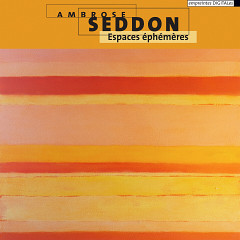
    Espaces éphémères is a collection of six standalone pieces from electroacoustic artist Ambrose Seddon, each with their own rationale and, according to the sleeve notes at least, without any overt linking theme or approach. Despite this, and despite the pieces dating from between 2005 and 2017, there is a sonic consistency here that makes it hang together nicely as a 73-minute listening experience.

    With the sparse, gritty washes of Traces Of Play, pulling apart the percussive sounds and electronic bleeping of toys and wallowing in extremely deep and extensive reprocessing and sonic twisting, and the similar approach to reworking everyday ambience in The Nowness Of Everything, there’s a persistent sense of space and flow that makes you question your usual level of background sonic radiation. Very mild noises, gently glitched and stretched in time, stuttering like echoes from more energetic electronica, roll like textures in mostly very sparse atmospheric frames — none more so than 2005’s Fouram.

    Despite its sombre accompanying notes, time seems to be treated somewhat more playfully in 10_35_70 with its gradual ramping and abrupt drops. While many of the pieces involve the expression of long, sea-like waves, Fleeting Strands is reportedly the only piece that’s overtly coastal, based on recordings of Norfolk and Devon. Of course it’s unlike any other audio postcard you’re likely to hear of the area, yet somehow the sense of holiday still persists, despite it also feeling like the tensest piece on this release thanks to some long metallic strung-out notes with subtle horror connotations.

    It’s a sombre and at times glacially slow set of pieces, but with a nuanced texture that really draws the ear in and helps you to appreciate the small sounds and details. Though essentially a collection of old works, for many it may strike a chord with 2020 lockdown and the newfound senses of slow and distant that have been forced onto many of us. It’s not revolutionary, but it’s gently powerful.

    … it’s gently powerful.

    Haïkus, Illusion in Amusio

    “Bassin ouvert”, Stephan Wolf, Amusio, November 25, 2020
    Wednesday, November 25, 2020 Press

    In gewohnt makellos attraktiver Aufmachung präsentiert das frankokanadische Speziallabel empreintes DIGITALes mit zwei neuen CDs das Schaffen der maßgeblich von Pierre Schaeffer und Pierre Henry inspirierten Elektroakustikerin/Akusmatikerin Annette Vande Gorne. Dabei hat sie — sowohl auf Haïkus als auch auf Illusion — wie schon des Öfteren in mittelbarer Kooperation mit dem belgischen Lyriker Werner Lambersy höchst plastisch anmutende Interpretationen und Erwiderungen zu dessen Poesie (Wortgewalt) formuliert.

    1946 zu Charleroi geboren, gehört Annette Vande Gorne zu den wichtigsten Protagonisten der (belgischen) Klang-Avantgarde. Ihre Werkkatalog erweist sich als entsprechend umfangreich und multi-operational. Es sei an dieser Stelle nur an die Oper Yawar Fiesta (2006/07) erinnert.

    Die Haïkus vermitteln in 17 Sätzen ein Erscheinungswelten umspannendes Panakustikon im Kreis der vier Jahreszeiten: 15 jeux, eingefasst von Ausklang — Feux d’artifice (d’après Debussy) — und Neujahr. Tatsächlich erwirken die Ereignisdichte sowie die expressive Vielfalt den Eindruck als habe die Komponistin 365 Tage in einer knappen Stunde hinreichend zusammengefasst. Ohne willentlich mit jener Lakonie zu reüssieren, die das Haiku vorschreibt. Auch wenn sich Annette Vande Gorne numerisch an den 17 Lauteinheiten der japanischen Gedichtform orientiert, vermag ihre Klangsprache ein „Mehr“ aufzufächern, das selbst noch im Nachhall Bedeutungsebenen einzieht und geradezu ungebunden frei etabliert.

    Die vier Tracks von Illusion (die dortigen Faisceaux gibt es in zwei Versionen: pur sowie von Ana Cláudia de Assis um Klavier erweitert) hinterlassen hingegen einen eher hermetisch gewichtigen Eindruck. Weniger zugänglich (und verspielt) wie Haïkus, und nicht zuletzt durch den omnipräsent durchdringendem Klang von Röhrenglocken etc. sakrale Anmutungen streuend, vollzieht sich hier ein gedachtes Libretto aus Devotion und Aufruhr: Kontemplation aus hoch aufgelöster Anmut sowie entkategorisierter Strenge: Au-delà du réel, jedoch wie in einem „Bassin Ouvert“ gefasst, wo die brillante Transparenz der Produktion (Ur-) Grund und Oberfläche nicht nur vertikal ineinandergreifen lässt. Selbst die samt Schrei und Spoken Word ins Horrende driftenden Déluges et autre péripéties rütteln kaum an der Kohärenz. Und — auch im Rahmen dieser Illusion erweist sich Annette Vande Gorne als Verfechterin einer Musikalität, die sich eben nicht damit brüstet, ihr traditionell zugestandenes Gut gewaltsam zu unterlaufen. Wer will, der kann auch: entdecken.

    … hat sie – sowohl auf Haïkus als auch auf Illusion – […] höchst plastisch anmutende Interpretationen und Erwiderungen zu dessen Poesie (Wortgewalt) formuliert.

    Haïkus, Illusion by François Bayle

    “Note”, François Bayle, November 15, 2020
    Sunday, November 15, 2020 Press

    La comparaison de l’écoute en stéréo des Haïkus et de leur agrandissement en octophonie — le travail de dentelle spatiale, les «sonorités opposées», la progression des couleurs — ouvre un éventail de techniques, provoque une variété d’impressions musicales dont j’ai — trop succinctement — noté les nuances [plus bas].

    Mais comme si ce n’était pas suffisant, ce fut aussi — avec Illusion — un autre monde sensationnel, avec la même acuité, d’autres émotions. Le plaisir de retrouver les Déluges et autres péripéties — un grand souvenir de L’Espace du son 2015 — une magnifique cantate symphonique, un beau déluge de sonorités inspirées. Avec — et en plus — le très joli Au-delà du réel, ainsi que la comparaison des deux Faisceaux, qui forment ensemble un bouquet d’émotions!

    Bravo deux fois, chère Annette


    Les Haïkus d’Annette Vande Gorne … quelques brèves notations au fil de l’écoute

    Une «kaleidophonie» d’impressions fugitives…

    D’abord l’espace joyeux! (1- Jour de l’an). Décor festif dans les crépitements, traversés de discrètes réminiscences (Debussy), qui en préparent d’autres…

    Printemps (2 à 4). Jeux-surprises: la délicatesse des tapisseries spatiales, ses pépiements moirés (2). Puis cette matière mobile (3), puis ces traces / cris / oiseaux parmi les réminiscences (4).

    Plus dynamique, la série Été (5 à 8) introduit la lumière, zébrée de raies d’ombre (5). Une longue écharpe colorée s’enroule autour d’un pôle (6), qui se prolonge en lignes agitées (7). Une rupture (8) projette l’écoute dans un paysage fragmenté, plus agité encore.

    Dans la troisième série, Automne (9 à 12) l’espace va s’obscurcir C’est le temps des orages (9) et des brouillages (10)? Mais aussi des contrastes colorés en myriades d’éclats et de flammèches debussystes (11). Un arpège d’itérations rugueuses surgit et surprend; jeux d’éventail ouvert / fermé, fumées filtrées aux couleurs indiennes de sitar (12).

    La série Hiver (13 à 16) débute par des pas glissés, sur d’épaisses résonances (13). Les vapeurs doucement irisées émanent d’un paysage flou (14), calme, horizontal.

    Un rideau de pluie s’interpose en granulations obliques aux couleurs vocales et raies colorées (15). Le silence s’installe, en grappe de résonances glacées, nuances de froid, tempo lent, sommeil glacé (16).

    Survient un effet de gamelan, éclaté dans l’espace et la profondeur. Soulèvement central. Vaste élargissement résonant… C’est le 17 – l’autre Jour de l’an!

    … le travail de dentelle spatiale, les «sonorités opposées», la progression des couleurs…

    Oscillations planétaires in Neural

    “Review”, Aurelio Cianciotta, Neural, October 21, 2020
    Monday, October 26, 2020 Press

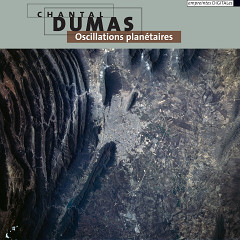
    Oscillations planétaires is the first solo album by Chantal Dumas, referencing geological phenomena and processes. Dumas seems to suggest that field recording and electroacoustic sound might have a strong correspondence with cosmic activities. The release is from Empreintes Digitales, a Montréal based label, which the German radio show Deutschlandfunk Kultur designated for this production. Dumas’ focus is mostly addressed towards geological and tectonic movements and vibrations happening on different time scales, physical events that are irregular, ethereal and subterranean. The album offers a meticulous analysis of these sounds, and highlights some of the hidden phenomena of such events. Only a limited number of these emissions are actually known, such as earthquakes and geysers. Other audio recordings are more immaterial, not exactly recognizable, and follow a series of associations that are aesthetically meaningful and outside the typical approach of the documentary form. Crackles, liquid modular recordings, heavy movements of physical masses, memories of vintage space-age are all elements of the album. Hisses, beats, minimalist and synthetic melodies: this is the sonic background Dumas plays, and she is very good at integrating the sounds with suggestion, the audio recordings with some bizarre treatments. The sonic landscape here is definitely unconventional, even if not so unusual in this musical scene, but the peculiar element is a highly controlled aesthetic result, a vibrant musicality full of low frequency oscillations, ripples and echoes, beating breaks and airy resonances. The whole ecosystem of the planet in movement is evoked here, the way the tectonic plates get in touch, or move away, the seething of magma and the underlying bubbles, the movement of the sea and the electricity the mountains hold at certain heights. Time, space, earth, listening: these themes are definitely not new for Dumas, but here she greatly broadens her range to something fascinating but difficult to capture.

    … here she greatly broadens her range to something fascinating…

    Oscillations planétaires in RNE3: Atmósfera

    “Crítica”, RNE3: Atmósfera, October 11, 2020
    Thursday, October 8, 2020 Press

    Oscillations planétaires es el primer álbum en solitario de la artista sonora afincada en Montréal Chantal Dumas con Empreintes DIGITALes, un sello creado en 1990, considerado uno de los sellos líder mundial en electroacústica y acústica.

    Oscillations planétaires evoca a la geología. En todas las capas que lo componen, desde su núcleo hasta su superficie, el Planeta Tierra está habitado por movimientos ondulantes de escalas temporales extremadamente variadas. Algunos están inscritos en un marco de tiempo geológico, mientras que otros siguen un ciclo diario. Este conjunto oscilatorio contribuye a los mecanismos que gobiernan la dinámica de la Tierra.

    En este trabajo se referencian diferentes fenómenos como lo terremotos que se cuentan entre 800.00 y 1.000.00 cada año en todo el mundo. La mayoría de estos temblores son demasiado débiles para sentirse u ocurrir en áreas deshabitadas.

    O las placas tectónicas de la placa antártica que se mueven entre sí, fenómeno al que hace referencia el tema que escuchamos ahora. La placa antártica se mueve lentamente a una velocidad de unos pocos milímetros a dos centímetros por año, dependiendo de sus zonas de contacto con la docena de placas y microplacas enganchadas a su perímetro.

    Oscillations planétaires evokes geology. In all the layers that compose it, from its core to its surface, Planet Earth is inhabited by undulating movements of extremely varied time scales.
  • 36
  • 37
  • 38
  • 39
  • 40
  • 41
  • 42
  • 43
  • 44