electrocd

empreintes DIGITALes

99 results
  • 3
  • 4
  • 5
  • 6
  • 7
  • 8
  • 9
  • 10
  • 11
  • April 1 – 30, 2004: empreintes DIGITALes in April 2004 in Lille, France

    Wednesday, April 14, 2004 General

    For the “Monde parallèle Montréal 45°N//” event, organized by Lille — Cultural Capital of Europe, label empreintes DIGITALes presented a portrait of Montréal’s electroacoustic creation since 1971 through 24 works by 21 Montréal composers: Serge Arcuri, Yves Beaupré, Christian Bouchard, Ned Bouhalassa, Christian Calon, Micheline Coulombe Saint-Marcoux, Yves Daoust, Francis Dhomont, Paul Dolden, Louis Dufort, Gilles Gobeil, Monique Jean, René Lussier, Robert Normandeau, Arturo Parra, Mario Rodrigue, Stéphane Roy, Alain Thibault, Jacques Tremblay, Marc Tremblay, Roxanne Turcotte. Electroacoustic label empreintes DIGITALes, new media and electronic art festivals Elektra and Mutek with the collaboration of the Society for arts and technology (SAT) all teamed up to present the best of Montréal’s electronic music and video.

    Fractures, Bruits, Cycle du son, Sous le regard d’un soleil noir, Connexion, La mécanique des ruptures, Le contrat, Figures, Bruit-graffiti, Christian Bouchard, Yves Daoust, Francis Dhomont, Gilles Gobeil, Robert Normandeau, empreintes DIGITALes in electrocd.com

    “Electroacoustics, the Quebecois Way”, François Couture, electrocd.com, March 22, 2004
    Monday, March 22, 2004 Press

    The grass is always greener on the other side of the fence, right? Wrong — at least when it comes to electroacoustics, the beautiful province of Quebec compares very well to any other region of the world. Call me chauvinistic, I don’t care: Quebec is home to several composers of tremendous talent and influential professors.

    My goal is not to turn this article in an analytical essay, but, as a music reviewer and unstoppable listener, I am convinced that there is such a thing as Québécois electroacoustics. Despite the stylistic variety among our composers, I detect a Québécois “sound,” something that sounds to me neither British nor French or German; something that calls to me and speaks to me in a language more immediate and easier to understand.

    This “unity in diversity” is probably, at least in part, due to the lasting influence of a small number of key composers whose academic teachings have shaped our younger generations. I am thinking first and foremost of Francis Dhomont and Yves Daoust. So let’s begin this sound path with a Frenchman so Québécois at heart that he was awarded a prestigious Career Grant from the Conseil des arts et lettres du Québec. I can sincerely recommend all of Dhomont’s albums: his graceful writing, his narrative flair and his intelligence turn any of his works into fascinating gems. I have often publicly expressed my admiration for Forêt profonde (including in my first Sound Path, so I will skip it this time), but Sous le regard d’un soleil noir, his first large-scale work, remains an international classic of electroacoustic music, and his more recent Cycle du son shows how close to perfection his art has grown — the piece AvatArsSon in particular, my first pick for this Sound Path.

    If Dhomont’s music is often constructed following large theoretical, literary and sociological themes, Yves Daoust’s works lean more toward poetry and the anecdote. Most of his pieces betray his respect for the abstractionist ideals of the French school, but his seemingly naive themes (water, crowds, a Chopin Fantasia or a childhood memory) empower his music with an unusual force of evocation. His latest album, Bruits, also displays a willingness to grow and learn. One is tempted to hear the influence of his more electronica-savvy students in the startling title triptych.

    To those two pillars of Quebec electroacoustics, I must add the names of Robert Normandeau and Gilles Gobeil. Normandeau is a very good example of what I consider to be the “typical” Québécois sound: a certain conservatism in the plasticity of sounds (the result of the combined influence of the British and French schools); great originality in their use; and an uncanny intelligence in the discourse which, even though it soars into academic thought, doesn’t rob the listener of his or her pleasure. My favorite album remains Figures, in part because of the beautiful piece Le Renard et la Rose, inspired by Antoine de Saint-Exupéry’s novel Le Petit Prince – and also because of Venture, a tribute to the Golden Age of progressive rock (a pet peeve I share with the composer, might I add). As for Gobeil’s music, it is the wildness of wilderness, the turmoil of human passions, the sudden gestures, the copious splashes of sonic matter thrown all around. If La mécanique des ruptures remains an essential listen, his most recent album Le contrat, a collaboration with guitarist René Lussier, stands as his most accomplished (and thrilling!) work to date.

    These four composers may represent the crème de la crème of academic circles, but empreintes DIGITALes’ catalog counts numerous young composers and artists whose work deeply renew the vocabulary of their older colleagues.

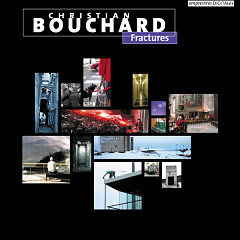
    I would like to mention Fractures, the just released debut album by Christian Bouchard. His fragmented approach seems to draw as much from academic electroacoustics as from experimental electronica. Thanks to some feverish editing and dizzying fragmentation, Parcelles 1 and Parcelles 2 evoke avant-garde digital video art. I also heartily recommend Louis Dufort’s album Connexions, which blends academic and noise approaches. His stunning piece Zénith features treatments of samples of Luc Lemay’s voice (singer with the death-metal group Gorguts). I am also quite fond of Marc Tremblay’s rather coarse sense of humor. On his CD Bruit-graffiti he often relies on pop culture (from The Beatles to children’s TV shows). His piece Cowboy Fiction, a “western for the ear” attempting to reshape the American dream, brings this Sound Path to a quirky end.

    Serious or facetious, abstract or evocative, Québécois electroacoustic music has earned a place in the hearts of avant-garde music lovers everywhere. Now it is your turn to explore its many paths.

    Québécois electroacoustic music has earned a place in the hearts of avant-garde music lovers everywhere…

    empreintes DIGITALes in Octopus

    “empreintes DIGITALes”, Philippe Robert, Octopus, no. 27, March 1, 2004
    Monday, March 1, 2004 Press

    C’est pendant qu’il enseignait à l’université Concordia à Montréal que Jean-François Denis, fondateur et premier président de la Communaute électroacoustique canadienne, toucha du doigt pour la première fois l’extraordinaire vivier que représentait la somme des œuvres pour bandes accumulée par sa terre natale: les compositions, pour la plupart indisponibles sur disque, auxquelles il avait alors accès émanaient pourtant d’artistes reconnus dans le monde entier grâce à des prix remportés dans des concours internationaux consacrés au genre. De là est venue l’idée de mettre sur pied DIFFUSION i MéDIA, en 1989, avec le musicien Claude Schryer, qui depuis n’en fait plus partie: une structure née à Montréal, dédiée à la diffusion des arts médiatiques, montée parallèlement aux labels empreintes DIGITALes (consacré à l’électroacoustique) et SONARt (axé sur les musiques instrumentales et les créations radiophoniques). Servi par la qualité graphique et musicale des productions, empreintes DIGITALes rencontre rapidement un certain succès. Au point que le spectre des musiques diffusées va s’élargir de façon cohérente à la musique électro-instrumentale, interactive et concrète, et à des compositeurs venus d’ailleurs que du Canada. Ainsi seront éditées (parfois méme rééditées) des œuvres de Robert Normandeau (dont un disque a été depuis sorti par Aphex Twin), Francis Dhomont (qui passionne DJ Spooky ou Jack Dangers) et Gilles Gobeil. Mais aussi Jon Appleton (qui a enregistré avec Don Cherry), Michel Chion, Michèle Bokanowski ou Hildegard Westerkamp, dont on parle beaucoup aujourd’hui depuis sa participation à la réalisation de la bande originale du film Elephant de Gus Van Sant.

    Servi par la qualité graphique et musicale des productions, empreintes DIGITALes rencontre rapidement un certain succès.

    Isostasie, Rhizomes, Évidence matérielle, Traces, Jeu d’ombres, Sources / scènes, Tao, La limite du bruit, Jonty Harrison, Åke Parmerud, Denis Smalley, Annette Vande Gorne, empreintes DIGITALes in electrocd.com

    “An Itinerary Through Northern Europe”, François Couture, electrocd.com, February 9, 2004
    Monday, February 9, 2004 Press

    This is a casual listening path, an invitation to travel — not a guided tour per se, more of an itinerary, akin to Romantic-era travel literature. So this will be a listening itinerary, an invitation to discover a highly subjective selection of electroacoustic composers from a specific corner of the world. Our destination: Northern Europe.

    France reigns over European electroacoustic music like a despotic queen. The persisting influence of Pierre Schaeffer’s work — even more than 50 years after the invention of what he has called “musique concrète” — and the gravitational pull of the Ina-GRM tend to hide from the rest of the world the work being accomplished elsewhere in Europe.

    So let’s start our journey in one of France’s neighbors, Belgium. The country owes much of its electroacoustic activity to Annette Vande Gorne, the indefatigable animator of the Musiques & Recherches center. Her music displays a strong sense of serenity, something rare in the field of tape music. Tao, a cycle about the five base elements (air, earth, metal, fire and water), remains a classic. In it she explores every possible transformation of the sounds associated to these elements with an uncommon level of artistry and poetry. A student of Vande Gorne, Stephan Dunkelman has picked up on her grace, a grace he transmutes into movement. Often the result of a collaboration with choreographers, his works are driven by an inner force that substitutes the sensuality of movement to Vande Gorne’s philosophical — almost mystical — depth. His pieces Rituellipses and Thru, Above and Between, released on the album Rhizomes, deserve your attention.

    A jump across the Northern Sea and we set foot on English ground. Birmingham has become an important creative node in electroacoustic music, thanks to the work of composer Jonty Harrsison and his Birmingham ElectroAcoustic Sound Theatre (better known as BEAST), a laboratory for experimentation and sound diffusion that has helped many talented composers in developing their art. Harrison’s music is an essential listen. His piece Klang (released on Évidence matérielle) ranks among the best-known electroacoustic works of the last 25 years. His precise sound constructions and his distinctive way of compressing sound matter into streams of energy put him up there with Pierre Henry, Francis Dhomont and Bernard Bernard Parmegiani. One can follow the traces of his techniques into the works of Adrian Moore, one of his students, especially in the latter’s fondness for putting simple sound sources (marker on a white board, tin foil) through complex transformations. Sieve, from the album Traces, uses a catchy playfulness to make this transformative process transparent.

    Denis Smalley was born and raised in New Zealand, but he has been living in the UK since the mid-‘70s. His contributions to the acousmatic corpus and to the development of sound diffusion make him not only the contemporary but in a sense the acolyte of Harrison. Furthermore, the two composers share a similar interest in form and in the choreographed displacement of abstract sound objects through space and time. Wind Chimes (on Impacts intérieurs) and Base Metals (on Sources/Scènes) are good illustrations of the slightly cold yet fascinating beauty of his music. John Young, one of his students — and another New-Zealander who studied and now teaches in England), follows a similar approach, although he replaces Smalley’s elemental sound sources with more emotionally charged images. The works featured on his CD La limite du bruit offer to the listener several occasions to dive into his or her own memories, the sound of a squeaky swing or a creaky door turning into avatars of Proust’s madeleine. Time, Motion and Memory is a choice cut.

    Scandinavian electroacoustic music is still too largely ignored on our side of the Atlantic, but empreintes DIGITALes’ catalog allows us to make a short stop to round up our peregrinations. Natasha Barrett has studied with Harrison and Smalley and has been involved in BEAST, but since 1998 she has elected Norway as her base camp. There, she has stepped away from the style of her teachers and has sought inspiration in the Nordic cold. Her Three Fictions, released on Isostasie, deserve many listens. And let me bring this listening path to an end with one of the key composers in electroacoustic music today, the Swedish Åke Parmerud, whose Renaissance (on Jeu d’ombres) pays tribute to the analog synthesizer without resorting to nostalgic tricks.

    Jean-François Denis, empreintes DIGITALes in Voir

    “Phénomène électro”, Réjean Beaucage, Voir, no. 876, February 5, 2004
    Thursday, February 5, 2004 Press

    Jean-François Denis est un pilier important de la communauté électroacoustique montréalaise. On discute avec lui des séries de concerts MusMix (2) et Rien à voir (15), présentées ce mois-ci par l’organisme Réseaux.

    Il ne se passe pas grand-chose du côté de la scène électroacoustique montréalaise sans que Jean-François Denis y soit pour quelque chose. Directeur de la maison de disques empreintes DIGITALes, seule étiquette québécoise qui ne fasse paraître que des disques de musique électroacoustique, il dirige aussi DIFFUSION i MéDIA, la porte d’entrée chez nous d’un bon nombre d’étiquettes étrangères du même genre. Le disque Jalons, de Francis Dhomont, qui remportait le 25 janvier dernier le prix Opus du «Disque de l’année — Musiques actuelle, électroacoustique», c’est empreintes DIGITALes qui l’a publié; une étiquette qui célébrait ses 14 ans le 31 janvier dernier. Jean-François Denis est aussi membre, avec les compositeurs Gilles Gobeil et Robert Normandeau, de la société de concerts Réseaux, qui présente ce mois-ci deux importantes séries: MusMix, une collaboration avec le Nouvel Ensemble Moderne (NEM) et le Centre de création musicale Iannis Xenakis (CCMIX), et Rien à voir, dont la 15e édition sera aussi la dernière.

    MusMix: Si vous lisez ces lignes le jour de leur publication, il ne reste qu’un concert à la série MusMix. Jean-François Denis explique: «Le projet est assez précis. Il s’agit d’un événement biennal qui présente des musiques mixtes de compositeurs canadiens. On sait que le Québec est internationalement reconnu en ce qui concerne la musique électroacoustique, mais la musique mixte reste quelque chose de moins courant. Par ailleurs, ce sont surtout les compositeurs de musique instrumentale qui font de la musique mixte; alors, même si ces concerts peuvent attirer un public amateur de musique électroacoustique, il s’agit souvent de compositeurs qui lui sont moins connus. Mélanger l’instrumental et l’électronique, ça donne peut-être le genre de musique le plus délicat à mener à bien». Mais comme le programme est le fruit d’un appel d’offres largement diffusé et pour lequel les organisateurs reçoivent de nombreuses propositions, la sélection proposée offrira le meilleur des deux mondes. Avec l’expertise de Réseaux en matière de diffusion de musique électroacoustique et avec celle du NEM dans l’interprétation des musiques contemporaines, les conditions optimales sont réunies pour une soirée réussie. On y présentera deux créations, de Martin Bédard et Alcides Lanza, qui participaient déjà à la première édition il y a deux ans et dont les œuvres avaient été remarquées par un représentant du CCMIX qui a invité les compositeurs à venir travailler sur une nouvelle œuvre à Paris. Aussi au programme: Andrew Staniland, Kotoka Suzuki, John Oliver, Farangis Nurulla-Khoja et Monique Jean. (Le 6 février, 20 h, Salle Beverly Webster-Rolph du Musée d’art contemporain.)

    Rien à voir: Ce mois de février 2004 nous amène du même souffle la 15e et dernière édition de la série de concerts Rien à voir, qui célèbre depuis 1997 la musique acousmatique (diffusée, dans la pénombre, par un orchestre de 24 haut-parleurs encerclant le public). «Réseaux est en repositionnement au sujet de la façon de présenter ses concerts, explique Jean-François Denis. Bien sûr, présenter huit concerts en cinq jours, c’est économique et efficace, mais c’est dur pour le public qui voudrait tout suivre, alors on cherchera une meilleure façon de faire. Idéalement, ce serait plutôt quelque chose comme un concert par mois, mais c’est une tout autre histoire, notamment au niveau budgétaire…» Ce genre de projet serait possible dans un lieu dédié à ce type de diffusion, c’est pourquoi Réseaux est partenaire avec le NEM et les Productions SuperMusique dans un projet visant à mettre sur pied une «maison» regroupant les activités des trois organismes. Un lieu où seraient réunies musiques actuelle, contemporaine et électroacoustique. On croit rêver. «On y travaille, acquiesce Jean-François Denis, mais c’est un gros projet qui se développe lentement.» D’ici là, c’est à l’Espace Go que l’on ira entendre Randall Smith, Hildegard Westerkamp, Andrew Lewis et Yves Daoust, du 11 au 15 février.

    … un pilier important de la communauté électroacoustique montréalaise.

    empreintes DIGITALes Turns 14, Offers a 14% Online Rebate For 14 Days!

    Wednesday, January 14, 2004 General

    14 years ago, on January 30, 1990, empreintes DIGITALes launched its very first CD. To celebrate this 14th anniversary, we are making a special offer to all our Internet customers: a 14% rebate for 14 days from Monday, January 19 to Monday, February 2, 2004 on all empreintes DIGITALes titles!

  • 3
  • 4
  • 5
  • 6
  • 7
  • 8
  • 9
  • 10
  • 11