Sauter au contenu principal
electrocd

Blogue

4252 résultats
  • 98
  • 99
  • 100
  • 101
  • 102
  • 103
  • 104
  • 105
  • 106
  • Voyages dans Include Me Out

    «Review», Robin Tomens, Include Me Out, 30 juin 2016
    jeudi 30 juin 2016 Presse

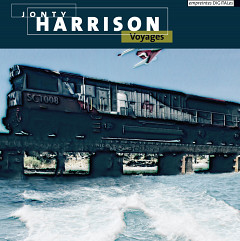
    Since the UK bought a one-way ticket on the trans-euro (political) express (but has yet to punch the ticket and actually make the journey) the country’s in a state of psycho-political chaos and music hardly seems important — and yet — where else can we gain a sense of beauty / truth / escape / relief but in that which gives us pleasure? So the train as metaphor for escape from immediate reality is obvious, excuse me…

    Pierre Schaeffer famously recorded a train for the first example of musique concrète (Cinq études de bruits) in 1948 and Jonty Harrison must surely have had that in mind when making his own extended version of that pioneering work. He does, however, travel much further along the track, sometimes to the point of simply allowing train horns to ‘speak’ for themselves, which on paper sounds dull but proves strangely captivating. A master of sound manipulation, he treats concrète recordings so as to blur the lines between what we think of as ‘real’ and ‘created’.

    These are not just train recordings, but sounds captured from all over the place, one example that leaps from the speakers being part 11 of Going / Places, made from ‘Floating quays strain at their moorings near Sydney Opera House (Australia)’. Bagpipes, frogs, a street demonstration and other recorded events are woven into this magical journey. Espaces cachés is a separate 14-minute piece which fully explores the wonders of acousmatic sound composition. Escapism may not be freedom but in these times Jonty Harrison’s captivating sound world does, at least, offer blessed relief.

    A master of sound manipulation…

    Voyages dans Vital

    «Review», Frans De Waard, Vital, no 1037, 20 juin 2016
    lundi 20 juin 2016 Presse

    As far as I recall the only other time the name Jonty Harrison came up in Vital Weekly was when I reviewed a release by a student of his, Peter Batchelor (Vital Weekly #929). Much of the work composed by Harrison is simply not designed to be played on a stereo system, but to be experienced in places; places where they have a whole bunch of speakers, anything from a couple more than two up to an immense lot. Harrison is aware himself of the problem that presents this when reducing it to stereo for a CD release. Joseph Anderson suggested to use Ambisonics, which “is a full-sphere surround sound technique: in addition to the horizontal plane, it covers sound sources above and below the listener” (and you can read lots more on wiki, I’d say). Much of Harrison’s work deals with field recordings and ever since the 90s he’s been carrying around devices to do these recordings, usually when traveling. On this release we have two pieces. The fourteen-minute Espaces cachés and the one-hour long Going / Places. The first piece seems to be overlapping field recordings together, so that multiple sounds come together and create a new place; one recognize some of the sounds, and sometimes we don’t. There are cicadas, city sounds, farmyard and nature recordings — and no doubt lots more. It seems to be having mild processing, but surely it hasn’t.

    The other piece, Going / Places contains [twenty-three] separate pieces of music, which create the sense of journey. There is lots of railway stations, tourists, harbours, boats in here, along with a geothermal pool in both Iceland and New Zealand, crickets, people playing music, a call for prayer and many more. Here too some of it is cut together, but then sounds that are from a similar group, like the aforementioned pools, or bells from various countries at the same time. It makes indeed a wonderfully [sound journey], across continents, from cities to nature and back. Sometimes it seems there is some kind of processing going on but I’m sure there is none. This release works best when one uses a pair of headphones in order to hear this ambisonics work best; in a more normal situation with speakers it worked a bit less in that respect.

    It makes indeed a wonderfully [sound journey], across continents, from cities to nature and back.

    Morphogenèse dans Musique Machine

    «Review», Martin P, Musique Machine, 16 juin 2016
    jeudi 16 juin 2016 Presse

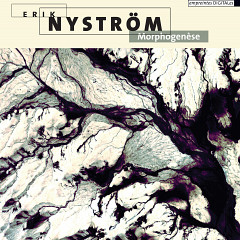
    Here’s an unusually packaged CD, wrapped in layers of entangled card inlays. Pulled apart, they reveal an outer card slipcase, an inner card inlay — both covered in texts and largely abstract imagery — and an odd little piece of card that holds the CD itself. The texts reveal recording details, as well as annotating the pieces themselves, of which there are five. The tracks, all recorded between 2008 and 2012, vary in length from around twelve minutes to over twenty. All five are rigorous, ‘hard-boiled’ electroacoustic works.

    I’m not going to pretend to remotely encapsulate what goes in Morphogenèse; given the lengths of the individual pieces, and the sheer amount packed into them, I will instead offer up some highlights and more general thoughts. As I said above, the album compiles five serious electroacoustic works, constantly shifting and developing. The first track, Catabolisms, doesn’t start off too staggeringly; however, before long, it establishes a very nice drone. This disappears into a section that sounds simultaneously like a sci-fi spaceship, and something more organic — rocks and water. The sci-fi atmosphere is also found in the ominous drones that underpin some of the tracks, as well as the ‘digital’ feel that pervades most of the album. Later, near the close of the track, the sounds quickly combust/rot to a deathly hush — it’s a really nice transition between sections. Latitudes, the second piece, is perhaps best represented by the snaking, strained, whistling drone that dominates the early sections. The next track, Lucent Voids, begins with a soundscape that seems to summon water movements and bird-song, before adding bell-like sounds and hard, spacey tones. After the 16-minute mark, there’s a sudden, outbreak of near-melodicism, with a section that lurches like court music from some alien civilisation. In the context of the album as a whole, this is quite a startling moment for the ear, and all the better for it. The fourth piece, Cataract, is perhaps more low-key, less showy in tone than it’s previous counterparts, often burbling along quite quietly. Though there are still points of darkness and near-whiteout. Far-from-equilibrium, the final piece (and oldest), might be my favourite track on Morphogenèse. It seems to carry a more visceral, even aggressive, selection of sounds than the other pieces. It also has sounds that are much less processed, even near-raw, and these add great colour in terms of texture and movement. There are some fantastic moments where Nyström pulls sounds inside out, tearing and straining them — it’s compelling and beautiful.

    Like I said above, Morphogenèse is not a release suited to a short review — it’s arguably not really an album that I’m overly ‘qualified’ to give much insight to, given it’s clear academic designs. However, there is a wealth of material here to digest and peruse, all of which demands close listening. I’ll admit that the prevailing ‘digital’ feel to the sounds is not to my particular tastes, but Far-from-equilibrium, where this effect is less pronounced, more than makes up for this. This was very enjoyable, and the kind of album that will always reward another listen.

    This was very enjoyable, and the kind of album that will always reward another listen.
  • 98
  • 99
  • 100
  • 101
  • 102
  • 103
  • 104
  • 105
  • 106