Sauter au contenu principal
electrocd

Blogue

4252 résultats
  • 601
  • 602
  • 603
  • 604
  • 605
  • 606
  • 607
  • 608
  • 609
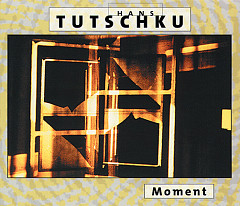
  • Moment dans Intro

    «Tonalités: Entendu», Sascha Karminski, Intro, no 77, 1 septembre 2000
    vendredi 1 septembre 2000 Presse

    Les compositions électroacoustiques de Tutschku prouvent à quel point les délimitations des frontières entre la nouvelle musique académique et les paysages sonores post-industriels sont arbitraires — du moins à partir du résultat sonore.

    Ainsi s’imposent des associations de Nurse With Wound jusqu’au grandiose Lux Æterna de Ligeti ou aussi le Gesang der Jünglinge de Stockhausen.

    Des voix manipulées avec l’arrière-plan quasi-religieux, des dynamiques extrêmes et des coupures brusques forment le centre des univers sonores de Tutschku, qui changent chaque fois qu’ils apparaîssent un peu familier et intime en justement quelque chose de totalement étrange et nouveau et indique de nouvelles facettes encore plus foncées.

    empreintes DIGITALes dans Splendid E-Zine

    «Electroacoustic Music: What is it?, How to Listen to it? and Where to Start?», François Couture, Splendid E-Zine, 1 septembre 2000
    vendredi 1 septembre 2000 Presse

    Of all demanding music (you remember, that’s the topic of this monthly column?), electroacoustic music is often considered to be the most difficult type, and also the most misunderstood. I will try to clear things up a little in this “Electroacoustic 101” lesson.

    It’s all semantics, right?

    The first problem one encounters is in the terminology. Electroacoustic music was first developed and theorized in France. Words and expressions like “musique concrète,” “électroacoustique” and “art acousmatique” are often mistaken for one another while their English counterparts don’t always bear the same meaning. To decipher it all, let’s ask one of the prominent people in the field, Jean-François Denis, owner of the leading electroacoustic label empreintes DIGITALes: “In 1950, Pierre Schaeffer ‘discovered’ a new way of thinking music. Because the compositional work was done directly with the result (raw sound is treated in studio, on tape, instead of on staff paper), therefore the process was concrete (while instrumental music asks for abstraction from the composer in order to imagine what the piece will sound like) and Schaeffer named it ‘musique concrète’ (concrete music).”

    The term “acousmatics” was reactivated by François Bayle in 1970 and describes music heard without being able to see where it originates. The distinctions between “acousmatics” and “musique concrète” are more historical than stylistic. In French, “electroacoustics” supercedes them both as the generic name of a musical genre where a composer works with sound treated in the studio and fixed on tape. The English conception of this word leads more toward a recording technique which includes both acoustic and electronic parts, but I will use the term in its “genre” acceptation.

    ”Seeing” electroacoustic music

    Electroacoustic music is not music in the traditional sense and it never was intended to be. It’s not something you listen to while washing dishes, working on a term paper or building a soap box car in the garage (although the latter might give interesting results). The composer doesn’t aim at a melody-and-accompaniement form. The electroacoustician shapes sound in the same way a sculptor shapes wood, stone or metal. He takes raw sound sources (their choice often relates to his conception of what the piece will stand for/mean) and manipulates them via studio techniques in order make them say something they were not meant to — ultimately disguising them, making them impossible for the listener to recognize. Listening to an electroacoustic piece is like studying a sculpture from every angle…or like “watching” a sound movie, hence the expression “cinema for the ear”.

    Depending on the piece, the best way to listen to electroacoustic music is with headphones (some are better with loudspeakers), lights down and even eyes closed, with minimum disturbance and interruption. The goal is to let yourself be surrounded by the sound. Of course, these are not the kind of tunes you will listen to repeatedly. But the experience is really worth a try and when you stumble upon a piece that talks to you, you will find yourself going back to it regularly.

    Essentials

    Keeping the list short, here are a few essential listenings for beginners — yes, that means easy start-ups. Of course I could (and should) list a few titles by Pierre Schaeffer and Pierre Henry, the pioneers of the genre, but their availability on the market is unstable. Let’s just say that Henry’s Variations pour une porte et un soupir (Variations for a door and a sigh, 1963) is a classic, although it didn’t age very well. Personaly, I also really like his La noire à soixante + granulométrie (1968).

    But I want to draw your attention to more recent and easier-to-locate titles. Some composers have a way of staging “cinema for the ear” that will take you like a good drama. Francis Dhomont is the best. His art is subtle, works on many levels and retains a human touch often lacking in more sterile composers, but most of all is very poetic. It all makes it a great place to start. Forêt profonde (Deep Forest, 1996, empreintes DIGITALes, [IMED 9634] ) is a stunning 60-minute piece built on fairy tales and their psychanalytical meanings. Snatches of conversations, and people reading stories in many languages, are embodied in the work and give it an eerie feeling, especially when listened to on headphones (there are people talking all around you). If you must hear only one piece of electroacoustic music, it has to be this one. Another fantastic Dhomont title is Sous le regard d’un soleil noir (Under the eye of a black sun, 1982, re-issued 1996 on empreintes DIGITALes [IMED 9633]). Stretching the metaphor of the “cinema for the ear”, this one is an Exorcist-type horror movie based around schizophrenia.

    More and more, composers are trying to free electroacoustic music from the frame of academic work and link it to more vital live settings. The French duo Kristoff K.Roll (Jean-Christophe Camps and Carole Rieussec) has achieved interesting results with “live” electroacoustics interacting with an instrumentist (clarinetist Xavier Charles). This can be heard on La Pièce (released 1999 on the French label Potlatch). Kristoff K.Roll also have a beautiful “traditional” CD on empreintes DIGITALes, Corazón Road; it’s a “journey for the ear” through Central America. I must also point out West Coast clarinetist François Houle’s Au cœur du litige (2000, Spool Records), a breathtaking 2CD set based on the 1998 Ice Storm, in which he succesfully blends prepared electroacoustics, live electroacoustics and a free improv rock quartet.

    In any case, try it. But don’t approach this music as ordinary verse-chorus-outro music. It’s not music — it’s sound sculpture.

    It’s not [ordinary] music — it’s sound sculpture.

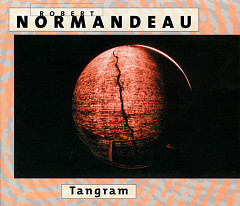
    Tangram, Robert Normandeau dans Amazon

    «Stunning sounds; captivating compositions», Steve Benner, Amazon, 17 août 2000
    jeudi 17 août 2000 Presse

    The original 1994 release of Robert Normandeau’s Tangram from DIFFUSION i MéDIA (on the empreintes DIGITALes label) was a double CD edition. It contained TWO copies of the same music: one disc having straight transcripts of the DAT masters, for diffusion use; the other being a recording of the same music diffused into a studio space from an 8-speaker array, better suited for playback over domestic hi-fi. This re-release (in DiM’s new environmentally friendly cardboard OPAK packaging) contains just the latter CD but as the two versions were all but indistinguishable from each other (at least on a domestic hi-fi system), there is little lost for the home purchaser.

    The five works presented here showcase the works of Québécois acousmatic composer Robert Normandeau produced between 1990 and 1993, and includes two prize-winning entries in the Noroit-Léonce Petitot International Competition. Éclats de voix (“Bursts of Voices”, 1991) was winner of 1st Prize for Jury as well as Public’s Prize at Noroit 91. The work is constructed entirely from computer-processed samples of the voice of an 11-year old — although this source is, in fact, hardly ever obvious. The exquisite sonorities (representing five childhood ‘states’) that Normandeau wrests from his source are entirely captivating (like most of his work) and the piece is an absolute delight from start to finish. The disc’s opening work, Bédé (1990) is an electroacoustic miniature, of just 3 minutes duration, derived from the same source material but making an interesting contrast with Éclats de voix. The source sounds in Bédé are more discernible for what they are; the piece is also rather darker and gives a somewhat more disturbing view of childhood than that presented in the later work.

    The third work on the disc, Spleen (1993) continues the same theme. Awarded the Public’s Prize at Noroit 93, this piece is constructed entirely from processed vocal samples of the voices of four 16-year old adolescents. Its restless pulsing rhythms and sudden mood-swings portray only too well most people’s experience of that time of life and in a way that is impossible to draw away from! Fabulous stuff!

    Tropes (1991) presents a different face to Normandeau’s work. The starting point for this piece is the chamber music of Mozart. More specifically, recordings of Mozart’s music, here computer-manipulated out of all recognition-not just as originating from Mozart, but even, in fact, as being instrumental music at all-except for a very few short passages. The result is an entirely individual — almost deconstructivist — view of the relevance of Mozart to the modern musician as well as the contribution that he made to the development of western art music. In this work, Normandeau demonstrates his complete mastery of his own chosen art, demonstrating a genius not far short of that of the great master, himself! The final work on this compilation, Tangram (1992) is a purely acousmatic composition. Part of Normandeau’s “Cinema for the Ears” oeuvre, this 27-minute epic takes the listener on an electroacoustic journey through the seasons, “highlighting the elements and materials associated with each.” The work is inspired by the Chinese puzzle from which it derives its name and shows a sonic equivalence to it, utilising simple sound elements to form complex structures, which become recognisable through their very figurative or associative natures. Here we have another entirely captivating auditory experience. Throughout, abstract or barely recognisable sound materials are blended perfectly with more recognisable, richly associative material: the calling of loons, crackling of flames, pulled zippers or the unmistakable sound of freight-train air-horns echoing through the Rocky Mountains above Banff-to name just a few of the more obvious environmental sounds from which this work is built. This is definitely a work to play and to savour over and over.

    Like most of Normandeau’s music, this disc deserves to be in the collection of every lover of serious, contemporary music. If you already have it and are looking for more, the release Lieux inouïs from the same company contains almost all of this composer’s works which pre-date the music here. His latest works are featured in DiM’s CD release Figures. Both are every bit as good as this.

    This is definitely a work to play and to savour over and over.

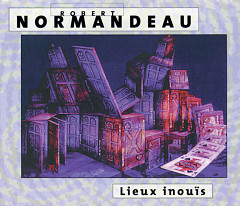
    Lieux inouïs, Robert Normandeau dans Amazon

    «Exquisite acousmatica», Steve Benner, Amazon, 15 août 2000
    mardi 15 août 2000 Presse

    This 1990 release from DIFFUSION i MéDIA (on the empreintes DIGITALes label) represents the first disc entirely devoted to the works of Canadian acousmatic composer Robert Normandeau. The five works presented here span Normandeau’s output from 1985 thru 1989 and represent, in the composer’s own words “[virtually] the only [works] I have chosen to present publicly after more than ten years of full-time work.” That statement attests more to Normandeau’s humility and modesty, than to any shortcomings he may have as a composer.

    Indeed, there is not a single uninteresting moment on this disc, which is absolutely captivating from start to end.

    Its title, Lieux inouïs, (“Unheard-of Places”) is a reference to the unique aural landscape that Normandeau’s pieces inhabit and the surreal imagery they evoke. He calls his particular approach to acousmatic ‘Cinema for the Ears’ and so it is no surprise that the works on this disc — derived entirely from computer-processed real-world sounds — are constantly conjuring up dramatic moments in the mind’s eye of the listener. And the composer handles it all with such consummate mastery. Who else but Normandeau could so seamlessly join massed choirs singing Pérotin’s Viderunt Omnes with the sounds of pneumatic drills; or mix the chatter of children playing with the clatter of railroad trucks?

    For ears unaccustomed to this genre, probably the most easily approached work is the 12-minute acousmatic masterpiece Rumeurs (Place de Ransbeck) (1987). This work constantly oscillates “between pure sound and meaning, without ever resolving to one or the other,” thus providing endless suggestions and hints but no solid facts (rumours, in fact!) of life around the Place de Ransbeck (home of Annette Vande Gorne’s studio Métamorphoses d’Orphée, where the piece was produced).

    The slightly longer Matrechka (1986) is a more abstracted work, with its complex sound-world (of largely undiscernible origin) unfolding by degrees, each of its sections revealing another within it, like the nest of Russian dolls of its title. The 15-minute Mémoires vives (“Vivid memories,” 1989) provides another mostly abstracted vision, this time of the composer’s musical heritage, evoked by the reworking of (recordings of) fragments from other composers’ music for the Requiem Mass. The sparkling 24-minute work Jeu (“Play,” or “Game,” 1989) that opens the disc is ample testimony to Normandeau’s ability to exploit the inherent punning (i.e. ‘play on words’) connotations that his source material offers. Finally, Le cap de la tourmente (1985), which closes the disc, is a dark and brooding 7-minute ‘movement’ from the much longer Musique holographique, which accompanied an exhibit of sculptures with holograms (holosculptures) by Georges Dyens.

    … there is not a single uninteresting moment on this disc, which is absolutely captivating from start to end.

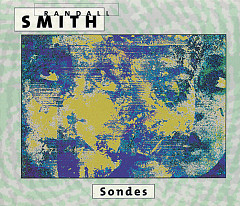
    Sondes dans Incursion Music Review

    «Review», Richard di Santo, Incursion Music Review, no 009, 13 août 2000
    dimanche 13 août 2000 Presse

    Canadian electroacoustics composer Randall Smith presents six pieces composed from 1995 through 1999. Each of these pieces is teeming with sounds and intensity; thousands of minute sounds flutter through these compositions in complex movements, revealing an intricate soundworld unlike anything I have hard before.

    InsideOut is for me the most intriguing of these works. Using only sounds derived from four instruments of an orchestra (alto flute, violin, E-flat clarinet and double bass), the piece carries a certain urgency and unease about it, and a crisp resonance that is remarkable. In the liner notes, the piece is effectively described as being “a digression through small worlds, islands of experience, each demarking a facet of the whole.”

    Other pieces incorporate the sound sources of live instrumentation: Liquid Fragments 1 uses double bass and alto flute; Continental Rift is a composition for cello and tape; and Convergence is for accordion and tape. There’s also a geological theme that runs through some of these recordings. Elastic Rebound attempts to explore — in electroacoustic terms — the geographical activity of the earth. The title is a reference to a phenomena relating to the tectonic behaviour of an earthquake. Continental Rift, says Smith, is a “metaphorical composition” describing the evolution of continental structures. This is perhaps the piece with the least sense of urgency, considering its theme is evolutionary as opposed to revolutionary; the cello intones in a way that suggests loss or a looking back to things that were. My least favourite of the compositions is Convergence: a chaotic piece for accordion and tapes, characterised by quickly shifting movements where the accordion rides erratically in a strange “carnivalesque” manner. The CD comes packaged with lengthy elucidations by the composer on each of the pieces, describing their compositional histories. Also for each piece, the contexts, themes and impressions are discussed with great interest by Mike Hoolboom.

    Randall Smith is certainly an inventive and innovative artist, experimenting with new electroacoustic techniques and creating surprising results. Each of the compositions on Sondes carries a very unique sound full of complexity and urgency, a hectic soundworld full of transitions and sharp movements.

    … a very unique sound full of complexity and urgency…

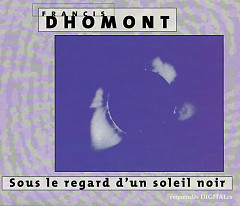
    Sous le regard d’un soleil noir dans Array Online

    «Review», Jon Christopher Nelson, Array Online, 6 août 2000
    dimanche 6 août 2000 Presse

    Acousmatic and soundscape composition are arguably the most important compositional tendencies in Canadian electroacoustic music today. Rooted in musique concrète, acousmatic music treats the sound source as an abstract element which can be modified to suit a formal plan laid out by the composer. Recorded sounds are taken out of their context and their temporal and spectral characteristics are transformed, sometimes beyond recognition. Contrastingly, soundscape composition keeps the sound material close to the original recordings, and places the musical process within a specific socio-cultural context.

    Francis Dhomont is among the foremost composers in the acousmatic tradition.

    Since 1963, he has produced several dozens of works for tape. Sous le regard d’un soleil noir (Under the glare of a black sun) was done between 1979 and 1981. Its CD release dates from 1996. This is the first work of a trilogy inspired by psychoanalytic thought.

    According to Dhomont, this work proposes a meeting of the imagination (‘psychology of depths’) with the mental images produced by the acousmatic treatment of sounds. Dhomont uses texts by psychiatrist — psychoanalyst Ronald D Laing (among other authors) to describe the journey of a schizophrenic mind from the ‘incarcerated self’ to the catatonic state.

    The piece is structured in eight sections lasting four to eight minutes each. Dhomont uses three strategies to achieve formal unity: (1) The text is delivered almost without inflections and it is clearly articulated to keep it comprehensible. Little processing is applied. (2) Material from previous sections is recycled achieving an impressive economy of means. (3) The pitch class B natural is employed as a pivot and as a recurring motive throughout the piece.

    Dhomont shows his compositional craftsmanship by keeping the pace of the sections masterly balanced. Sound objects are carefully designed to keep sources’ identities hidden. When these can be identified, they are meant to fulfill a specific formal function. For example, after the listener has been exposed to several minutes of abstract sound, the sudden appearance of a talking crowd (Inner Citadel, at 1:10) provides a striking contrast. The voice of the narrator is usually kept as a layer separate from the musical material.

    After twenty years of its conception, Sous le regard d’un soleil noir starts to feel the weight of time. Some of the sound processing techniques employed may sound a bit artificial today, e.g., the low pass and high pass filtering of the voice. The use of amplitude envelopes on natural time varying sounds eliminates important temporal cues. Thus, the spectral characteristics of these sounds do not fit their temporal structure creating a perceptual paradox. Check, for example, the articulation on the B natural in the section titled Implosion.

    Keeping in mind the year of its realization and the concepts underlying its formal plan, Sous le regard d’un soleil noir stands as a landmark of acousmatic composition.

  • 601
  • 602
  • 603
  • 604
  • 605
  • 606
  • 607
  • 608
  • 609