electrocd

Blog

267 results
  • 33
  • 34
  • 35
  • 36
  • 37
  • 38
  • 39
  • 40
  • 41
  • Impulsion in AllMusic

    “Review”, François Couture, AllMusic, March 1, 2002
    Friday, March 1, 2002 Press

    Released in November 2001, Impulsion regroups all of Micheline Coulombe Saint-Marcoux’s known, available tape works (two could not be found in the composer’s archives). Many appear on record here for the first time, 16 years after her death. Of the five works, four were composed between 1970 and 1972. Constellation I dates from 1981. The pieces are presented in chronological order. The music of Coulombe Saint-Marcoux stands the test of time. One could expect a feminine or even feminist touch, but on the contrary her works sound very close to those of her male colleagues, especially Pierre Schaeffer (in her early works) and Iannis Xenakis (his tape music, of course). Arksalalartôq (1970-1971) is an interesting study on language on poems by Noël Audet and Gilles Marsolais put through a series of permutations and transformations, but her cut-and-paste technique is somewhat clumsy or maybe just naive (not unlike Schaeffer’s, actually). The best piece is Moustières. A suite of short events, tableaux inspired by the landscape of the French Alps, it sounds fresh, each segment developing an idea with acute precision, the listener having only to piece the puzzle together. Constellation I, by far the longest work at 19 minutes, dives into more abstract music, ample gestures like splashes of colors on the canvas. It lacks a clear aim. By itself, Coulombe Saint-Marcoux’s music is not essential electroacoustics, but anyone interested in the place of women in this male-dominated field (even more so in the 1970s) will definitely want to hear Impulsion.

    The music of Coulombe Saint-Marcoux stands the test of time.

    21 situations in Espace sculpture

    “Artist’s Recordings: New Sound Spaces”, André-Louis Paré, Espace sculpture, no. 59, March 1, 2002
    Friday, March 1, 2002 Press

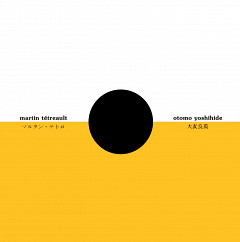
    In the tradition of soundeffect music, here are some recordings by artists who use sound as material to be sculpted. In Jean-Pierre Gauthier’s recording, Machines consentantes and Hachures (1999/2000), we hear the sound of mech” anized drums, automated flutes and decoys, vibrating garage sheet metal and quite audible radio interference. This sculptor of homemade instruments occasionally works in tandem with Mirko Sabatini. The Italian drummer plays solo on his CD titled MK. Orchestrin, the fruit of Sabatini’s lengthy research on sound and the workings of his instrument. Michel Tétreault is another sound artist often present in the visual art milieu. One of his many recordings was produced with Japanese artist Yoshihide Otomo. In 21 situations (AM 069), they manipulated turnta” bles in a different way than DJs, creating unusual sounds. Lastly, Jocelyn Robert gives us a genuine sound performance with his recording 20 moments blancs lents created for the twentieth anniversary of Chambre blanche in Quebec City. Here the artist attempts to translate the gallery’s time into sound.

    Tango in Revue & Corrigée

    “Critique”, Pierre Durr, Revue & Corrigée, no. 51, March 1, 2002
    Friday, March 1, 2002 Press

    L’auditeur éventuel ne s’attend bien sûr pas à une compilation des meilleurs tangos. Peut-être et plus sûrement pense-t-il à un détournement de cette musique? Ou alors à une vision sonore de la déconfiture argentine, un peu premonitoire, certes?

    En fait, il n’y a pas réellement de rapport avec le tango. Ou alors de manière très fortuite, si le récepteur de radio accroche dans sa recherche un émetteur branché sur ce langage musical.

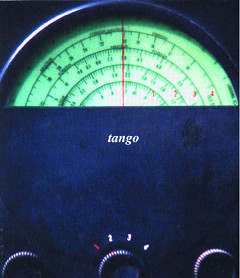
    Le Tango de Martin Meilleur est en effet un montage sonore réalisé à partir de sons bruts captés sur les fréquences en ondes courtes, au moyen de divers récepteurs. Ces captations ne sont pas retraitées — le lecteur se rappelle peut-être Devil’s music de Nicolas Collins retraitant, lui, la matière sonore captée — mais collées, juxtaposées, quelquefois amplifiées. Le résultat en est un enorme patchwork radiophonique mondial: l’auditeur passe d’une émission culinaire ou d’un bout de musique à une radiodiffusion d’un spectacle ou à une retransmission d’informations diverses, intégrant tous les sons parasites, naturels (genre perturbation météorologique) ou inherents à la qualité du récepteur. La mondialisation à domicile, en somme.

    … un enorme patchwork radiophonique mondial…

    March 3, 2002: Dufort Premieres his Harbour Symphony

    Friday, March 1, 2002 In concert

    Louis Dufort is the guest composer for this year’s “Symphonie portuaire” (Harbour Symphony), held near Pointe-à-Callière (Montréal), Sunday March 3, 2002 at 2pm. Intonarumori, for tape, boat horns, church bells and live audio processing on a specially designed software, will also be transmitted live on Radio-Canada’s Chaîne culturelle.

    Clair de terre in Revue & Corrigée

    “Critique”, Pierre Durr, Revue & Corrigée, no. 51, March 1, 2002
    Friday, March 1, 2002 Press

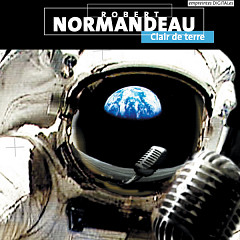
    Il y a quelque chose de paradoxal dans cet enregistrement de Robert Normandeau. Les techniques mises en œuvre dans cet enregistrement s’apparentent a des études à partir d’un son bien définit retravaillé par les techniques des studios électroacoustiques: le shakuhachi (flûte japonaise), la voix, divers instruments subissent ainsi divers traitements sonores. Dans la musique dite «contemporaine», cela aboutit trop souvent à des musiques froides et sans âme. Et pourtant il s’agit là de véritables séquences narratives, à l’image des titres — celui de l’album, par ailleurs pièce principale du recueil, précédé par Malina et Erinyes, respectivement titre d’un roman autrichien et nom des «gardiennes de la vie humaine» selon la mythologie grecque. La pièce la plus prenante des deux pour l’auditeur est certainement la seconde, avec parfois cette mise en abîme de la voix, proprement surprenante voire inquiétante et certaines sonorités ne sont pas sans rappeler les «oiseaux» de Hitchcock. La longue suite Clair de terre, apparaît plus conceptuelle dans son propos: se servant d’une des images les plus marquantes de la seconde moitié du siècle écoulé, Robert Normandeau construit une douzaine de séquences évoquant par leur intitulé des techniques cinématographiques mais destinées à relativiser ou — c’est selon — à revaloriser des sons plus ou moins communs perçus avec le même regard distancié que celui du voyageur de l’espace. Mais l’utilisation qu’il fait des sons issus de divers instruments, objets ou situations, a le mérite d’être des plus concrets, laissant là aussi libre cours à l’imaginaire de l’auditeur, qui peut tisser sa propre trame narrative, avec quelques points d’appui plus ou moins imposés par l’identification du son traité.

    Impulsion in The WholeNote

    “Review”, David Olds, The WholeNote, no. 7:6, March 1, 2002
    Friday, March 1, 2002 Press

    Perhaps more artistically creative than the scientific genius Hugh Le Caine, Quebec composer Micheline Coulombe Saint-Marcoux (1938-1985) was another Canadian pioneer in the field of electroacoustic music. In 1968, at the suggestion of Iannis Xenakis, she went off to Paris to study at the Groupe de recherches musicales and also attended classes with Pierre Schaeffer, one of the original exponents of “musique concrète.” Returning to Montréal in 1971 she worked with colleagues Otto Joachim and Gilles Tremblay to establish an electroacoustic studio at the Conservatoire de musique de Montréal where over the next fifteen years she created an impressive body of work. Coulombe Saint-Marcoux made significant contributions in a variety of areas: exploration of the voice as an instrument; the integration of electroacoustics with other artistic disciplines; reflection on the role of women composers; and experimentation with spatial trajectories to make the movement of sound more palpable to the listener.

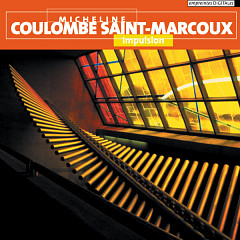
    Although many of her compositions include live performance with pre-recorded tape, the disc Impulsion focuses on the purely electroacoustic aspects of Micheline Coulombe Saint-Marcoux’s compositional activity. It is a fitting tribute that this important historic document should be released by the Canadian success story empreintes DIGITALes, a Montréal label that twelve years after its founding boasts 65 titles in its catalog, featuring 76 composers and a total of 344 electroacoustic compositions. One suspects that none of this could have been achieved without the groundwork laid by the likes of Hugh Le Caine and Micheline Coulombe Saint-Marcoux.
    Coulombe Saint-Marcoux made significant contributions in a variety of areas…
  • 33
  • 34
  • 35
  • 36
  • 37
  • 38
  • 39
  • 40
  • 41