electrocd

Blog

257 results
  • 32
  • 33
  • 34
  • 35
  • 36
  • 37
  • 38
  • 39
  • 40
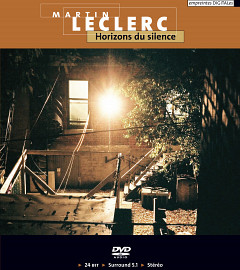
  • Horizons du silence in Music Club

    “Recensione”, Marco Castagnetto, Music Club, no. 182, March 1, 2008
    Saturday, March 1, 2008 Press

    Maneggiare le releases di casa empreintes DIGITALes significa confrontarsi con alcune tra le più interessanti proposte della musica concreta contemporanea, con tutte le difficoltà del caso, e la prova specifica del francofono Martin Leclerc rientra pienamente in quest’ottica: un piatto ricco, questo Horizons du Silence, che se certamente non rivoluziona le sorti e le mire di un settore complesso ed esplorato riesce ad interessare ed a funzionare egregiamente per la varietà di elementi che il nostro incorpora nella matrice originale. Formato lussuoso, audio in stereo o in una più seducente veste 5.1, ed una palette espressiva decisamente varia, che permette di focalizzare sia momenti più espressamente digitali (si ascoltino i frammenti minimali di “et le ca”) come vaste panoramiche in cui è la materia elettroacustica ad emergere, grazie all’utilizzo del pianoforte o della tromba, strumento protagonista del lavoro. Il merito migliore dell’album (evidenziato in particolar modo in quelle tracce dove Leclerc mantiene una composizione più descrittiva e meno astratta) è quello di riuscire attraverso un collage sonoro magistralmente progettato a suggerire contesti umani, visioni e immagini, come se ci trovassimo di fronte ad una piece teatrale cieca. Un album che gioca con una certa compiacenza con la propria difficile fruibilità, ma che sa regalare attimi intensi e molti particolari da scoprire ascolto dopo ascolto.

    Lieu-temps in De:Bug

    “Kritik”, ASB, De:Bug, no. 120, March 1, 2008
    Saturday, March 1, 2008 Press

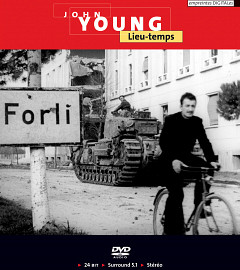
    Der Neuseeländer John Young besucht mit seinen Eltern den italienischen Ort Forli, die Heimat seiner Mutter. Für die Eltern ist es der erste Besuch seit 35 Jahren. Young verarbeitet Field Recordings von Dorfplätzen, Kirchengeläut, Bewohnern, konkrete Klänge und Radiostimmen aus der Nachkriegszeit zu einem spannenden Musique Concrete-Hörstück, in dem er als Erzähler die Kriegsgeschichte aufarbeitet.

    Mâts in Sonoloco Record Reviews

    “Review”, Ingvar Loco Nordin, Sonoloco Record Reviews, March 1, 2008
    Saturday, March 1, 2008 Press

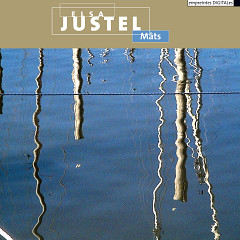
    Elsa Justel was born in Mar del Plata, Argentine in 1944, coming of maturity in a generation famous and infamous for its gallant force of creativity just in time for some exciting and useful scientific discoveries and technical inventions; a lucky generation!

    Justel is a Professor of Music Education and Choral conducting at the Conservatory of Mar del Plata. She continued studying composition, and also electroacoustic music with José Maranzano and Francisco Kröpfl.

    Elsa Justel moved the long haul to France in 1998, studying with fellow Argentinean Horacio Vaggione, receiving a Doctorate in Esthetics, Sciences and Technologies of Arts. Furthermore, Justel has spread her graces in wider artistic areas, but we’ll remain with the electroacoustic music in this review, since our reason for paying attention to her now is her new disc on empreintes DIGITALes; the world’s prime series of new electroacoustic music.

    As I float throw a pre-listening hour, just letting all the pieces on the CD play, unconsciously, without aim or 100% attention, easing around the apartment, I feel a familiar joy come face to face; that same feeling of richness and invention that I often experienced in the 1980s, when I discovered so much new electroacoustic music, especially in France. Elsa Justel’s new CD makes me feel that same way, opening an atmosphere of great possibility and long wonders to my perception!

    Track 1. Gwerz [to Horacio Vaggione] [2002] (11:40)

    The title is explained as a Breton word, meaning ballad or lament. This is funny, since it sounds so much like a Yiddish word pronounced “kvetch”, which also has to do with lamenting, meaning someone who complains a lot; a real kvetch! My Baltimorean Mother-in-law used it frequently! This in turn makes me think of a Swedish/French electroacoustic highlight from the 1980s, Tommy Zwedberg’s Bavarde (“Chatterbox”; someone who talks a whole lot!) — but now I’m veering off too far…

    Horacio Vaggione wrote the introduction to Elsa Justel’s sound art in the booklet, and here he is the dedicatee of track one; Gwerz. Of course, Vaggione is a very important name in Argentinean art music, and his importance is by no means limited by national borders. I recall my own enthusiasm at some of his works that I discovered in the 1980s, like Tar with its tapping of vaults, which really blew me away. Round about the same time, other Argentineans became well-known through art music, and especially through electroacoustic art, like Francisco Kröpfl — with Orillas on one of the Cultures électroniques CDs — and Ricardo Mandolini with Microrreflexiones on another one of those Bourges CDs, and also Eduardo Kusnir — with La Panadería. Argentine has a rich tradition of electroacoustics, and now we get the chance to measure the art of Elsa Justel.

    The piece hits home without any false modesty, with a bang and a bounce, but shortly the surroundings turn grainy, and then spooky, reverberant… and even rubbery. The ambience changes speedily. This is one of the effects that you can play with in free art music, but it’s not done too much. Justel knows how to wring the best out of the moment, out of the ambience of the moment, and like a blind man you hear the distance to the walls or the ceiling. You get locked in tight for a moment, before the cave opens into ominous distances.

    At times I can’t decide whether I hear balloons being rubbed or bacon being fried… Small sounds — now and then extremely short instances of thin rain sprinkling across tin surfaces — makes for a certain atmosphere, which is, however, lost in some more violent event; a mud flow or a wall of rocks tumbling down a geologically active slope… The question is how the music makes me feel. I get a rather anonymous feeling, but sprayed with lust and curiosity!

    Justel keeps shifting perspective from the close to the far, daring your adaptation and adjustment! She allows for brief breaks too, in which you sail across breathless gaps in time. A shower of grains rattles down on the other side, getting in your shoes…

    Track 2. Du libe tu? [1996] (2:14)

    I’m not sure what to make of Justel’s own introduction to this brief instance, but she offers an explanation into the title, anyway, which is an anagram on the title Pierre Schaeffer’s piece Bidule en ut from 1950, actually created at a concert at Amphithéâtre Richelieu at Sorbonne on 16 March 1950. It is a brief, playful whip of cream, smack dab in the middle of a joyful and skirmish kind of sound art, arrived at on a whim, perhaps, albeit bringing some of the best mood of artisanship into the fore; twanging, springing cartoon illustrations a la Disney — or Spike Jones… or, for that matter, Pierre Schaeffer!

    Track 3. Mâts [1999] (10:57)

    Elsa Justel dedicates this to her husband. I don’t mean to be nosy, but is Mâts perhaps a Swedish name? Mats — without the broken roof — is a common Swedish male name. Perhaps it means something quite different here?

    The onset is a mystical one — nature mystery; that of landrails ticking along inside late summer nights of Scandinavia… perhaps… The sounds are short, brief, chopped about, but manifold, presenting an unfinished set of circumstances in this ever-changing mind of ours. Sounds are dark, grey, perhaps military green, and small, fragile moments are scooped up and shoved aside, only to fall back in place in a vain kind of effort. Later you start to hear chordal sounds resound, and the atmosphere gets reverberant. The whole tendency inside this fastidious, moving event is prickly and fast, if you have to define it as anything. Further on the sounds could be the isolated scrapings of a wooden spoon inside an Häagen-Dazs ice-cream container purchased on Lower Manhattan or in a village in Somerset, in Yeovil… (lots of fairies and small wonders there, along the arborist dwellings!)

    You have to give Justel great credit for really exhausting the possibilities of these harsh, grey sonorities, making you stay on your toes not to miss the briefest flyby!

    Track 4. Midi de sable [2000] (9:47) [to Joan Izquierdo] (alto recorder / tenor recorder / basset recorder / contrabass recorder / tape), Joan Izquierdo [recorders]

    This is an incredibly beautiful work, shining and squeaking with candy bar lights and sweet nothings! All these recorders are utilized in their smallest constituents, as well as amassed and dense. Recorder light is finding its way in and out of the iron bars of everyday, embellishing existence for what ever it’s worth! This kind of treatment of a set of instruments does carry a tradition from Vaggione’s Tar, for example, and Justel brings this artistic streak further, placing glass bowls of recorder candy — red and green and tan — at various levels of the human room. Wonderful!

    Track 5. Alba Sud [1997 — 98] (9:48) [to Beatriz Ferreyra]

    Elsa Justel says that Alba Sud is an homage to musique concrète as well as a reverence to synthetic sources of sound, of both digital and analog origins. She says that she was too young to directly experience Schaeffer’s heydays, but he has had a great influence on her nonetheless.

    I get an ancient Australian feel in here, perhaps induced on me by the likeness of dijeridoo murmuring deep, emphatically, as black water seeps up around tree stems or crocodiles inside my imagination. Like in earlier works by Justel, you’re entrusted to details, a myriad of details, which eventually render you an atmosphere of something more over-arching. In this case of Alba Sud the general impression is muddy, moist with black iron-rich soak-water, filling your socks with shockingly cold fluids as you’re inching through one of your turned-away nocturnals.

    Justel manages to rhythmize these precarious moments in a frantically corrugated pattern, as a simple unexpected ingredient of a female “huh?” appearing without warning in a misplaced section of understanding gets me off balance!

    A piece like Alba Sud is nothing to speculate about really. It is clear that Justel has a brilliant knack of taking the simplest origins, creating mysterious sonic landfalls — and in this case I’d just recommend listening loud and brave, rock’ n’ rollish!

    Track 6. Au loin… bleu [1997] (11:26)

    Fort the first time a purely lingual progression from the start, unintelligible morphemes, male and female, tangling down like ends of old rope from the ceiling, eventually losing meaning altogether, adhering more to whistling reverberations in the shape of voices, than original voices. Guttural echoes of more real vocals spring forth like tics on the closed face of time, somebody wiping sweat from a forehead. On the backdrop of alien space sounds on distant horizons, syllables appear like Mene Mene Tekels, while sound poetic saliva spittings a la late Henri Chopin occur, visioning the Dying Dandy stretched out in a full measure of bewildering vocal sonorities, losing his composure down the ages of putrefaction…

    Yes, shreds of conversations (or monologues?) deviate and flap off like the flickering wings of jackdaws.

    Track 7. Puntos, comas y refritos [2002] (11:41)

    Justel lets on that she utilized a number of clichés in this bit, to recreate a certain nostalgia. These clichés include the sounds of water, birds, footsteps — but as I ride inside this enchantedness, I don’t feel disturbed by clichés at all. Instead I enjoy the usual delicacy of sonic composition that surely belongs to Elsa Justel. All these small sounds, offered in rich offerings, are bound to associate your mental faculties certain ways, into various rooms at then end of your own frames of reference. Ok, perhaps the breaks are a bit wild at times, from the frantic sawing of wood to a high-pitch interstellar drone into the pouring of carbonized water over cubes of ice… and the familiar brushing of teeth!

    Track 8. Bastet [2004] (10:37)

    Bastet is the Egyptian cat-god. Bastet served as the god of fire, pregnant women and the home. Here she has lipped into the piano box!

    To begin with you just notice a lofty, soaring and slightly plucking sound, and a certain motion not unlike the swirling spirals of cotton candy. You hear the flourishing overtone patterns of stroked piano strings and the Pierre Henry rumble of grand piano hulls, shifting like icebergs on northern horizons. The prickly metal crackle comes across like crystals of ice in slowly freezing winds dying down. As much as I feel the presence of a piano, I sense the chilling gusts from rocks of ice. Short units of time shamble by across cold and reflective surfaces, through a nocturnal crystal world.

    This is perhaps the most careful and delicate electroacoustic course of events on Elsa Justel’s CD, bringing her art ascending into a truly brilliant sound art of a kind that you seldom may experience. Spellbinding!

    Elsa Justel’s new CD makes me feel that same way, opening an atmosphere of great possibility and long wonders to my perception!

    Lieu-temps in Sonoloco Record Reviews

    “Review”, Ingvar Loco Nordin, Sonoloco Record Reviews, March 1, 2008
    Saturday, March 1, 2008 Press

    I reviewed another John Young phonogram some years back on empreintes DIGITALes; La limite du bruit, and my brief introduction then fits just as well here, ’scuse me: John Young (1962) is one of those prolific and talented New Zealand sound artists, whom we have come to appreciate very much. Personally I raised an eyebrow over his humorous and discerning electroacoustic text-sound piece Sju, which recently was released on a CD called “New Zealand Sonic Art 2000” from The Music Department of Waikato University in Hamilton, New Zealand. That piece deals with the different pronunciations of the Swedish word “sju”, which means “seven”. It is very hard for any English-speaking person to pronounce the word in a sensible way, but even within Sweden there are at least two major ways of pronouncing it — in fact according to social class, usually! — and a number of minor deviations from those major ways. John Young discovered the peculiarities of this word while residing in Sweden for a while some years ago, and hid deliberations turned into a little masterwork! Though born in Christchurch, Young has a mixed background, inherited from an English father and an Italian mother. His musical career took off more seriously with a doctorate on the manipulation of environmental sound sources in electroacoustic music. He then continued in the UK at the studios of the University of East Anglia, studying electroacoustic composition with another New Zealand émigré; Denis Smalley; renowned wizard of the audios, who has meant more than most for the furthering of methods and ideas in electroacoustic music. John Young has lectured at the Victoria University of Wellington and at De Montfort University in Leicester in the UK. He has also been a visiting composer at a number of institutions, such as the Simon Fraser University in Vancouver, Canada and EMS in Stockholm, Sweden. His focus has been mainly on the acousmatic aspect of electroacoustics, predominately on forms based on the distinction between recognizable natural sounds and computer-based studio transformations.

    Of late John Young is also combining electroacoustics with acoustic instruments. Last year — 2007 — Young was awarded First Prize at Bourges, indeed for the main course on this [disc]; Ricordiamo Forlì.

    Track 1 (14 subtitles): Ricordiamo Forlì (2005) [53:32]: In Piazza Aurelio Saffi / Interlude 1 / Bitter Storm / Ancient Tear / Winter / Pippo / The Garden / A Little Italian Farm / Interlude 2 — Florence / Forlì — November 1944 / Family Story / Once in Malmissole / The Bomb / Epilogue.

    Yesterday, when I listened through this [disc] for the first time, I was quite surprised and mighty pleased, for a couple of reasons. First of all, I always enjoy a kind of art that has it in it to surprise me, to give me something that I hadn’t expected, and which made me think in directions that opened new areas of life to me. This is an ideal artistic situation, but very rare. Perhaps this revolutionary feeling in perception of art — art as the distillate of life; the purest essence of life — was more common in earlier days (I’m speaking about myself), in days when I discovered great electroacoustic works by the gurus of France, like Bernard Parmegiani, Luc Ferrari, Jacques Lejeune, François Bayle, Jean Schwarz and so forth and so on. You can’t find many “epic” electronic or textsound pieces nowadays — but John Young surprised with his Ricordiamo Forlì — and he had the guts and got the label permission to venture into his own family history, which in his case was significant also for a much broader sense of history — so the second reason for my happy surprise was the daring generosity granted by empreintes DIGITALes, because extended sound art like John Young’s in excess of fifty minutes Ricordiamo Forlì falls well outside of common label ground, in this case. Perhaps a task like Young’s would be more natural as the winner of the Prix Italia Radio Art Prize, or being aired on the Kunstradio broadcasts of Radio Österreich. However, here it is on empreintes DIGITALes, and I couldn’t be happier at it than I am, as this might open the door into textsound and sound poetry too, on the famous Canadian label, which has so much credit and power, with which it can act any way it wishes, and be gravely listened to!

    I believe I got my first taste of Ricordiamo Forlì in the best way possible; in a dreamy state, because I almost fell asleep as I listened to the work, lying back on my bed, listening in full measures, and letting my fantasy roam. The catch phrases, of course, are the various church bells, which come at you through the wind of time, through layer after layer of absentminded decades.

    The background of Young’s sound work lies, as I stated, in his family history and in the history of the 20th century Western world. The booklet is in fact a short story, relating a visit in 2002 — his first one — that John Young made to the City of Forlì in Northern Italy, which is his Italian mother’s birthplace, and the city where his father — a New Zealand soldier of the 8th Army — and his mother met. Young’s mother joined his father-to-be back to New Zealand after the war, and young John later grew up there. On his first visit to Forlì, John traveled with his father, which naturally brought on very special atmospheres. This was his father’s first return since 1945, but in spite of the many decades, his father vividly recalled the city; it’s buildings and streets. John also recalled his mother’s first trip back after 35 years, when she was spontaneously greeted in the street, just naturally picking up where she once left.

    This whole story and this set of sonorities keep mixing times passed and times present in a magic way, which we sometimes can experience in art. I recall another time, in the 1980s or 1990s, when all viable 78s were re-released on CD, bringing a temporal depth to available phonograms. I recall how I fell in love with an opera singer from the 1920s — Maria Ivogün! — my feelings traveling back and forth on the lucid Stig Dagerman bridges of Birgitta Suite. This music may sometimes shift your mind through the filter of time, making past and present quite simultaneous; all places here; all times now! Some properties of John Young’s major work on this [disc] allow for this transparent simultaneity, dissolving the irons of chronology into the stuff that dreams are made of. John Young himself talks about bringing “sounds and voices from the past and the present together in imaginary soundscapes” — and it can hardly be explained in better words. This characterizes the splendid fluency and magic of Young’s work, through this many facetted, bottomless sensation of timelessness.

    A very personal trait of Ricordiamo Forlì is the story that John Young’s father — as I suppose it is — relates to the listener inside this sound work, explaining the event on a day when John Young’s mother-to-be was supposed to have joined her mother to see her aunt and her cousins, at which time she however pleaded with her mother to be able to instead go and meet the soldier from New Zealand, whom she liked. She ended up seeing this soldier, Young’s future father, and that day the house of her aunt received a hit by a German bomb, killing two out of the three relatives. In the booklet it is explained that Alex Young indeed participates from a 2005 interview, but it is also stated that the main narrator is Franco Bianchini.

    John Young deliberates quite a bit on the sonic atmosphere of the city that he finally got to see. He says: “Standing in the centre of the city’s Piazza Aurelio Saffi listening to bells from churches clearly audible over great distances gave me a strong sense of experiencing the sounds as something resonant of the place and its history… that these were voices from the past”

    When I listen to this long work of more than 53 minutes, in 14 named sections, this is what I feel, this almost ghastly experience of time and history as one long NOW — and I believe this is the best way, the most honest and respectful way to experience time, to regard our fellow sentient beings, because whenever anything happens to anyone, it happens smack dab in the midst of that person’s here and now, and nothing else really happens or exists.

    The swing of a magic wand gets the music going; a crowd is stirring — and the narrator begins his story, to begin with painting a picture of the town and its history, at first in clean talk, without too many electroacoustic embellishments, but soon enough John Young utilizes his skills, letting distant church bells talk back at you from behind quavering filters of time. The most lucid and meditative, alienated keyboard notes rise out of the cracks of bygone days. Various sounds rise from strangeness right up to the commonest everyday sonic expressions, only to veer off again into strangeness and alienation, but oftentimes in exceedingly beautiful sonorities.

    The narrator continues his account of the developments of the war, locally around this part of Italy, by Forlì, more and more surrounded and sucked-up in Young’s electroacoustic swell, which seems to work hands-on with time as such, illusionary, in a melancholy mix of old newsreels and old men’s recollections; this violently disturbing air of danger, fear and dark sentiments.

    A woman talks in Italian on the backdrop of a thin piano speaking to itself in the corner of a large, desolated hall of the civil society, while one army has left and the next one hasn’t yet arrived, and time holds its breath. Young utilizes his electronic sounds with grace and style, underwriting the sentiments of the days. This whole idea is quite devastating, quite moving: a very unusual electroacoustic epic, touched upon with sensitive fingers. I haven’t heard anything as unusual and original in contemporary sound art since I first came upon Jean Schwarz’s Quatre saisons in the late 1980s. Brittle piano tones give way to isolated chimes of giant bells deep inside hiding.

    The misfortune in the shape of a giant German bomb, destroying the family, is told by Alex Young many, many years later — and the story, inside John Young’s sonic and compositional wizardry, seems to swell like a terrible wound right out of the heart of time, again and again, that metallic bomb always hurrying down through these layers of air, these strata of chronology, time and again, and by the end of the day two sisters are always dead and an airplane pilot sits down to dinner. It is impossible to understand the events of a life, of any life — but John Young’s way of telling this story from the late days of the 2nd World War, in this incredibly delicate and touching, beautiful and horrible way, brings life and time so much closer…

    Track 2. Arrividerci (2005) [15:35]

    This second and last work on John Young’s new [disc] is an unusual one too, in this empreintes DIGITALes environment, since it’s an all-out modern chamber piece. About half way Young blends deep church bells into the music, suddenly rendering the composition quite wider and deeper implications — and he succeeds very well in this mixed-form composition. It is very hard not to have the music appear jagged or abrupt or simply unfitting, when you all of a sudden start to change the chamber ensemble atmosphere with electroacoustics or extraneous sound objects, but once again Young proves his excellent skill and sensitivity, pulling this off and achieving yet another enchanting sound world.

    Young explains: “The core sound used in the work is a recording of one of the bells of Forlì’s Duomo, the Cathedral of Santa Croce, which dates from the 15th century. Hearing their chimes amongst the bells of many other churches in and around the centre of the city evoked for me a sense of the timelessness of such sounds and their interaction in space — a physical architectural presence that extends beyond living memory”

    John Young’s new [disc] on empreintes DIGITALes has already come to mean a lot to me, and his sound art has thrown me into thoughts and meditation I wasn’t expecting. I love it when art brings me the unexpected and pulls me on up ahead into new ways of thinking.

    … with grace and style […] a very unusual electroacoustic epic, touched upon with sensitive fingers.

    Environs in Sonoloco Record Reviews

    “Review”, Ingvar Loco Nordin, Sonoloco Record Reviews, March 1, 2008
    Saturday, March 1, 2008 Press

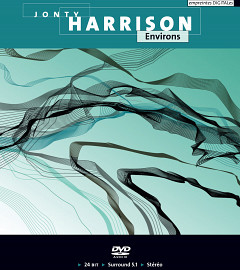
    This is Jonty Harrison’s third phonogram on empreintes DIGITALes, and his first Audio DVD. Harrison is such a well-known guru of the studios and noble jester of electroacoustics that it wouldn’t serve much purpose to dwell on personal info, except maybe just to state that he upholds a professorship of Composition and Electroacoustic Music at Birmingham University, as well as the directorate of the Electroacoustic Music Studios and Birmingham Electroacoustic Sound Theatre (BEAST). Lately he has also appeared with Birmingham Contemporary Music Group, conducting Stockhausen’s Momente, and with the University New Music Ensemble, conducting Stravinsky’s Rite of Spring — to mention a choice few of his engagements.

    To me, Jonty Harrison’s art has always been the most curious and rewarding, leading further than one could have expected; deeper into sound as such, on par with Stockhausen — though Stockhausen went about these investigations down different paths — and intuitively applying clay and paint in a fearless sounding counterpart of J. M. G. Le Clézio’s most nitpicking, frivolous literature; La Fièvre, Le Déluge, Terra Amata, La Guerre, La Quarantaine, Ballaciner etcetera… Jonty Harrison is much more than a mere electroacoustician. He’s a genuine, authentic, original, veritable 21st century Renaissance man!

    Track 1. Undertow (2007) [12:19]

    A naturalistic swell, ocean touching shore. Heavy night, massive density. Dense masses. Roars shifting weights. Weights shifting roars. The gods scoping fluids. A sudden immersion, submersion, lowering — a dive; that insulated, grayish roaring, like the space shuttle boring into the uppermost layer of the atmosphere, lighting up; that feeling of drowning. The submerged state of mind. Blood and water pressure. Atmospheres. Suffocspheres.

    Rippling closeness and distant thunder. The skin-tight rippling grows on you, louder, tighter — closer, clearer — blotting paper tight. You hide with a gang of pikes in the shadow of a hull, beneath a silent wreckage, air bubbles rising, percussively: a cool boil.

    The thunder of the undertow dies away, while the close-up ripples and their sonic shadow play form a new kind of submarine ensemble, all but imperceptibly, very gradually taking effect, slowly changing things around, taking power in the rushing of wonderfully nuanced gray, brown, black and transparent fluids, in a lustful game of ever-changing pressure and bewildering motion, turning the spirit of the times around as the ocean out in the night moves over in its sleep and mumbles…

    Jonty Harrison is a master of intricate sound worlds of ascetic beginnings; complex sonorities from monotonous events. In one compositional gaze he fathoms the wide scope of the ocean and the molecular wilderness.

    Tracks 2 — 5. ReCycle (1999-2006) [47:39]: Rock ’n’ Roll / Internal Combustion / Free Fall / Streams

    Jonty Harrison explains his grand work on this CD, made up from the four constituencies of ReCycle:

    ReCycle is a series of four works based loosely on the four Greek classical elements: earth — Rock ’n’ Roll; fire — Internal Combustion; air: Free Fall; and water — Streams. The title came primarily from the fact that many themes and sound types I have used in earlier works are revisited here, but it also reflects the possibility that listeners may detect a sub-text of environmental concern — something which I readily acknowledge and which runs through much of my work since the 1980s”

    Track 2. Rock ’n’ Roll (2004) [11.43]

    Harrison’s preoccupation with the sounds used in Rock ’n’ Roll also calls for some words directly from the composer, since they so clearly explain the way in which he goes about his art and arrives at such interesting and highly enjoyable and exciting results:

    “When we moved house, we inherited a heavy garden roller with a concrete wheel and a rusting steel tyre [tire is spelled tyre in British!]. Rolling this around the garden pathways proved sonically interesting. In the studio, my attention became more focused on the ‘rock’ sounds than on the roller sounds which had originally caught my ear. In particular, I became preoccupied with getting as close as possible to the rocks (possibly even ‘inside’ them), in contrast to the more open, spacious and ‘environmental’ use of the roller and the garden ambience. The multi-channel format allowed a further exaggeration of this contrast, using stereo speakers for the close material and a surround array for the ambience”

    These are indeed rocky, rough, crude sounds, basic and bouncing, splintering; musical properties of sorts rising out of mineral worlds: clay, sand, rock — reminding me of a few older, legendary electroacoustic musique concrète masterworks: Gabriel Poulard’s La mémoire des pierres, Michel Redolfi’s Desert Tracks and the Sub Rosa production Lilith | Stone. For sure Jonty Harrison’s brute mineral finesse places me directly back into yesteryear’s darnest, most forlorn Lapland valley of Unna Reaiddávággi, by power of suggestion! Harrison’s garden roller sonorities once again open up this rock desert with it’s steep glacier on the far side, tempting me with the treacherous pass between the Pyramid and the Knife Summit, my Petzl Charlet Irvis Flexlock crampons strapped tight on my Extra Wide Island Meindl Pro hiking boots and my 25-kilogram heavy Haglofs backpack shaped along my back, containing concentrated wildlife food, a Haglofs Annapurna 3000 sleeping bag that can withstand chilly temperatures, and the most practical little one-man Hilleberg Akto tent, good for a thousand storms! Jonty Harrison’s Rock ’n’ Roll gets me real close to those rocks, even to smell them as I crawl across wave after wave of chaotic formations, to finally get onto the snow and ice of the glacier incline, rising steeply a few hundred meters. It might seem comical to some that a garden roller of the most domestic and homey Birmingham back yard kind can invoke sensations of semi-risky glacier passages — but it has to do with the sound that Harrison gets out of it, and nothing else; the mineral purity and harshness of sound! Thus rock deserts of Northern Lapland and mountain passes across tilting glaciers couldn’t be better illustrated, having my hairs stand on end as I relive my lonely and lustful rock desert adventure of 2007… and as in the earlier work Undertow, the composer manages to wring a seriously exciting sound world out of meager beginnings, painting a masterly rock rage, the gravel growling through gruesome geological grievances!

    The only thing that perhaps will be hard to fit into my Lapland vision is the squeaking sound from the garden roller’s rusty wheel… A wild aspect of the close-up rock sounds is their spatiality, phasing madly! Another non-Lapland fitting circumstance is the presence of common garden birds! There were birds present in the previous Undertow, too, but seabirds.

    Track 3. Internal Combustion (2005-06) [11:43]

    Yet more crudity! I really begin to enjoy Harrison’s tour-de-force, hammerhead audicity: now cars! To begin with he swings the automobiles past, phasing in and out, crossroadswise, in a way you’re used to hearing them… but then… engines just start up, or begin to start up, coughing, hawking, falling apart in the process; car engines just trying to catch their mechanical breath, clear their exhaust throats, losing the body battle, gravel gliding down into gearboxes, engines imploding in rust and heatstroke… A sonic joy to listen, completely insane — reminding me in some ways of the also utterly mad Racing Car Opera by Swedish textsound guru Åke Hodell. Jonty Harrison’s art is exceedingly gifted; fun and sonically reverberant: barnstorming gale force audio: garage-gargantuan! And, aah, the phase-shifts inside this enginecide!!! Finally a jet-engine drops a dry rain of gravel on wasted automobiles huddling for destruction in a gravel pit where sand martins breed…

    Track 4. Free Fall (2006) [7:54]

    Wheezing whispers of sound, slowly growing contours and directions in an accelerating descent into a hellhole of heart-burned gravity. Everything is in a hurry; a gray, flaking, hot hurry… Lava, cockroaches and meadowlarks, and W. E. Johns’s Bigglesworth slowly rising over a Somerset airfield…

    Track 5. Streams (1999) [16:12]

    Bouncing, jittery bubbles, and the unlikely, cozy sensation of water scarves around your neck — the sound of close-miked rivulets like nightjars!Harrison grasps the horrific and silvery sonorities of a stream and commences to paint the town, embellish the whole world’s oral cavity, messing with balance organs deep inside skulls.

    Rain can sound like fire!

    Track 6. Afterthoughts (2007) [15:59]

    Harrison comments on Afterthoughts, but in my mind his thoughts fit well with much electroacoustic daydreaming:

    “The everyday sounds of a suburban garden in early summer evoke more disturbing memories and imaginings as the listener drifts into semi-slumber…”

    Distant airplanes beyond the cityscape provide a basic murmur of the common cardiography of existence, while the familiarity of magpies scratch calligraphic patterns in three-dimensional recollections through our close pasts. Nothing is happening in its usual pidginlike, muffled growl. This modern life is a curious mix of animalism and machinery.

    Harrison wouldn’t be who he is if he didn’t stretch reality in his elastic artisanship, so the commonest trait of garden and city gets pulled up in enchanted realms, extracted and contracted and layered and corrugated — and in particular dreamed upon, fantasized upon, mirror-hall speculated about, and painted across the bulging canvas of time and space, and all across the uncertain filter of time itself: wonderful!

    To sum this CD up in a very basic way, I’d like to express my loud and clear admiration for Jonty Harrison as a genius and a jester of sound and sonic composition, and as a very fun and very serious artist. He brings you deeper knowledge of sound and sound art, and leaves you in quite a better mood than when he found you. Hurray!

    Jonty Harrison [is] a genius and a jester of sound and sonic composition, and as a very fun and very serious artist.

    Geisteswissen­schaften in Sands Zine

    “Recensione”, Alfredo Rastelli, Sands Zine, March 1, 2008
    Saturday, March 1, 2008 Press

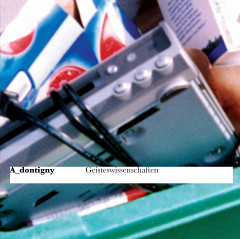
    Esce allo scoperto Aimé Dontigny, personaggio sempre troppo (volutamente) ai margini della scena canadese e internazionale, e lo fa con un disco solista (dovrebbe essere il secondo), sebbene sia coadiuvato da un manipolo di collaboratori storici come Paul Dolden, Diane Labrosse e Jon Vaughn. Diciamo la verità, nonostante i numeri li abbia tutti, il nostro non si pubblicizza nemmeno poi molto, preferendo rimanere ancorato a posizioni, forse un po’ idealistiche, di indipendenza e libertà; eppure ci sarebbero di cose da dire sul suo contro, basterebbe ricordare che intorno a lui gira Actuellecd nonché l’etichetta No Type, ed alcuni dei progetti musicali più belli in ordine a manipolazione elettronica selvaggia e libera (morceaux_de_machines, Napalm Jazz, etc.). L’esperienza decennale di A_Dontigny viene qui condensata, tramite una raccolta non differenziata di materiali vari, in un immenso lavoro di “taglia e cuci” tra gli innumerevoli samples, i bit elettronici e le parti suonate (la chitarra elettrica, il basso e il violoncello) che fanno da contrappunto alle forme iconoclaste dell’elettronica a largo uso. Le origini dei samples sono varie e difformi, la loro natura è fatta salva, ma la forma si manifesta mutevole: è la disintegrazione dello spettacolo (musicale), a sua volta strumento di unificazione, ed unica, vera e necessaria rappresentazione del mondo. Non servono altre parole. Grande.

    … una raccolta non differenziata di materiali vari, in un immenso lavoro di “taglia e cuci” tra gli innumerevoli samples, i bit elettronici e le parti suonate […] Grande.
  • 32
  • 33
  • 34
  • 35
  • 36
  • 37
  • 38
  • 39
  • 40