electrocd

Blog

113 results
  • 11
  • 12
  • 13
  • 14
  • 15
  • 16
  • 17
  • 18
  • 19
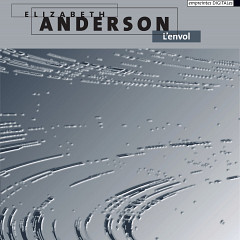
  • L’envol in SilenceAndSound

    “Critique”, Roland Torres, SilenceAndSound, March 27, 2015
    Friday, March 27, 2015 Press

    Américaine installée à Bruxelles depuis la fin des années 80, pour y poursuivre des études de composition instrumentale au Conservatoire Royal de Bruxelles et de musique électronique à Anvers, Elizabeth Anderson sort un premier album intitulé L’Envol, composé de divers travaux issus entre 1994 et 2014, en forme de parfaite introduction à son travail acousmatique et electroacoustique. Elizabeth Anderson travaille les sonorités avec un goût prononcé pour les ambiances sci-fi climatiques, construites à coups de field recordings et de machines flirtant avec les spasmes de la fausse quiétude, donnant naissance à des pièces désertifiées par l’âme humaine. Des tracks, émane une certaine désolation fantômatique, s’accaparant l’espace sous un manteau d’ambient sobre aux modulations brûlantes. Ce qui fascine, c’est la constance de son travail sur 20 ans. L’artiste continuant d’œuvrer sans relâche, sur un terrain minimal aux émotions fortes et à la retenue viscérale hypnotique. L’Envol nous transporte dans un futur aux émotions froides et distantes, monde dévasté et envahi de microstructures à l’étrangeté cybernétique. Très fortement recommandé.

    Très fortement recommandé.

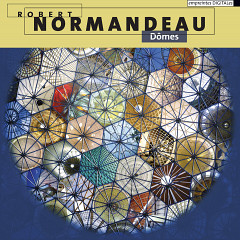
    Dômes in Carnage News

    “Recensione”, Riccardo Gorone, Carnage News, March 18, 2015
    Wednesday, March 18, 2015 Press

    Non saprei se definire questo disco, un vero e proprio album, oppure una raccolta di pezzi. Il concept che li lega, fa dell’opera Dômes un album; il fatto che poi ogni pezzo abbia vita propria, mette ai margini l’idea di inclusione all’interno di un progetto più grande. Formalmente, i brani (ai cui titoli segue la data di realizzazione) sono documentazioni, testimonianze di luoghi, situazioni che, astraendosi, si trasformano in scenari avulsi dal contesto d’origine. Robert Normandeau idea questo disco come uno sguardo che procede verso l’alto, per poi ripiombare in una realtà che, dopo l’ascensione, non sembra aver molto a che fare con quello che ci ricordavamo. Esce per l’etichetta acusmatica empreintes DIGITALes.

    Dômes: cinque pezzi (non facili) di differente produzione, in luoghi lontani e per scopi diversi.

    La part des anges (2011, 12) esplora la dispersione, la frammentazione, l’estrazione e la distillazione. Come nelle distillerie che si parla di parte degli angeli (la parte volatile durante l’invecchiamento dell’alcool che evapora fuori dalle pareti del barile, così i suoni, registrati su multitraccia da nastro, evaporano e si dissolvono lentamente, assistendo ad una continua sottrazione verso l’essenza. Kuppel (2005-6, 14), lavoro commissionato dalla ZKM, include tre registrazioni a Karlsruhe a Berlino durante un soggiorno autunnale di due mesi. Lavoro ideato per una cupola di altoparlanti all’interno della ZKM_Kubus. Pluies noires (2008, 14) è un brano ideato per lo spettacolo teatrale di Sarah Kane (Blasted) in cui sono registrati quattro tipi di pioggia (quella autunnale, invernale, primaverile ed estiva. Normandeau sembra definire “inutile” questa sua pratica, poiche “tutte queste piogge difficilmente riescono a lavare via l’oscurità dell’animo umano durante la guerra”. Probabilmente uno dei pezzi più inquietanti e abissali del disco. Hamlet-Machine without Actors (2014) è semplicemente “onnipresenza” musicale, ideato per uno spettacolo teatrale a Montreal che prevedeva un’ora e un quarto di musica dal titolo Hamlet-Machine with Actors. Ha integrato la traccia di suoni elettronici, inserendoci anche la voce degli attori sul palco e riducendola a 8′ e 54”: una rappresentazione di tabù. Baobabs (2012-13) per voci, sei percussioni e nastro, pezzo onomatopeico di cinque movimenti e con un’inedita composizione come adattamento a Il Piccolo Principe.

    Dômes richiede molto all’ascoltatore, così come ha richiesto molto al compositore. L’elemento basilare di questa miscellanea di brani è il tempo, nel suo scorrere, nel continuo modificarsi dei suoni, lento, fatto di toglimenti, intersezioni, nascondimenti, spaesamenti, rituali che ci circondano e che, senza una mirata sublimazione, rimarrebbero altrimenti ordinari. Normandeau plasma lo straordinario con un materiale ormai alieno dalla materia grezza. L’onda audio viene cesellata, ridotta disforme, cenere che poggia su quel che si crede vivo e che è ben oltre “questa” vita.

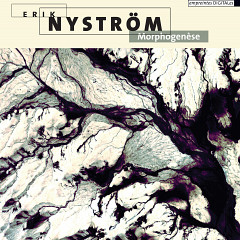
    Morphogenèse in KindaMuzik

    “Kritiek”, Sven Schlijper, KindaMuzik, March 9, 2015
    Monday, March 9, 2015 Press

    Biologische en kosmische oersoep.

    Oersoep. Erik Nyström laat je luisteren naar het moment waarop leven vorm begint te krijgen. Naast de evolutie van klank en ruimte staat de genesis en afbraak van textuur centraal op Morphogenèse. Oersoep dus waarin geluiden rondschieten of clusters vormen en dan weer wegspatten als ze bij elkaar in de buurt komen. Een levendige mêlee die zoekt naar het moment waarop ze muzikaal wordt.

    Nyströms zeer nauwgezette verkenningen vind je op het raakvlak van fieldrecordings en gecomponeerde elektronische muziek. Diepzeegeluid, zoals gekend van Jana Winderen, krijgt een compagnon in geluidkunstige exercities die raakvlakken kennen met Jacob Kirkegaard en Thomas Ankersmit. Denk: borrelen en pruttelen op biologische schaal versus Buchla-achtige sinusgolven en hypertechnologische patronen als next level minimale muziek.

    Wat chaotisch en complex zou kunnen zijn, wordt in Nyströms handen verbazingwekkend behapbaar. Onder de pulserende zeespiegeloppervlakte en zeer zeker ook tot (intergalactisch) ver daarboven openen zich klankwerelden die ook voor de componist ontontgonnen terrein lijken te zijn. Alsof hij zelf verrast wordt door een plots opstekende onderzeewind, een spuitende geiser of een enorme imploderende gasreusster.

    Alles kan nog in de primordiale toestand waarin Nyström componeert. Hij verwacht het onverwachte en schuwt gevaar niet, maar hij predikt zeker geen doem. Verandering is de enige continue constante in de vijf werken, die voortdurende beweging kennen. Netwerken ontstaan en verdwijnen, mutaties in flux zijn de modus operandi van deze levende muziek waarin harmonieuze synergie ontstaat uit anorganische elementen, als een groeiend klompje cellen dat zich in meerdere dimensies voortzet: organisch, biologisch én kosmisch.

    … in meerdere dimensies voortzet: organisch, biologisch én kosmisch.

    L’envol in A Closer Listen

    “Review”, Richard Allen, A Closer Listen, March 8, 2015
    Sunday, March 8, 2015 Press

    Tackling William Blake, Madeleine L’Engle, Mayan culture, solar winds, WWII, 9/11 and more on a single set is a daunting challenge, but somehow Elizabeth Anderson manages to pull it off. It helps that the majority of the album is instrumental, as lyrics would threaten to undo the entire endeavor. Instead, the listener may be led either by the liner notes or by impression, the latter choice a reflection of Anderson’s own mode of composition. Her swaths of color operate as tone paintings, conveying mood and eschewing the didactic.

    The earliest of these compositions was written twenty years ago, the latest only last year, but the album flows well as a whole. There’s no clear line of demarcation; even the track order follows a non-linear path. When one delves into abstraction, one manages to avoid the pitfalls of time-stamped composition. To paraphrase, three of 1994’s top songs were by Ace of Base, while the songs around them borrowed from their phrasing; yet the experimental works of that era have aged well because they weren’t like their peers. Take for example Mimoyecques, which contains footfalls, rumblings and fragments of text from Hans Christian Andersen, Alexander Pushkin and Czesław Miłosz, among others. It was never going to be a hit. Only the vocoder seems a bit dated, but perhaps its time has come along again. More importantly, the piece commemorates the workers who died when an underground fortress was destroyed in 1943. The piece works because it is both respectful and outside of time; field recordings, albeit manipulated, are seldom assigned by the mind to a single era.

    In contrast, 2001’s Ether works because it approaches from the side, unlike many other tributes to the victims of the 9/11 attacks (the brashest and most popular being Alan Jackson’s Where Were You (When the World Stopped Turning). Enormously popular at the time, that country song struck the easy, popular chord, but has not endured; when’s the last time you heard it on the radio other than 9/11? Ether instead deserves to be mentioned in the same conversations as John AdamsOn the Transmigration of Souls as a serious, mysterious work, whose folds hide entry points like the events hid emotional comprehension. The tribute is conveyed through drones, half-whispers and lapping waves, an eloquent elegy inspired by energy as well as human loss.

    But not everything here is somber. The first movement of the William Blake-inspired “Les forges de l’invisible” is particularly bright, with tones like sleet on metal alternating with electronic swooshes like diving birds, while the swirling Protopia / Tesseract, inspired by A Wrinkle in Time, alternates between ponderous and playful, reflecting the novel’s tug-of-war between protagonists and events. The collection ultimately suggests a form of transcendence – an intellectual re-framing that leads to comprehension, and if not comprehension, at least the early stages of acceptance.

    Her swaths of color operate as tone paintings…

    Dômes in KindaMuzik

    “Review”, Sven Schlijper, KindaMuzik, March 7, 2015
    Saturday, March 7, 2015 Press

    Discreetly you see him sitting in a high folding chair. He doesn’t grumble at his players, he’s already set the scene as he wants it. With encouragement and a little push to the find just the right place. Robert Normandeau directs his acousmatic music very cinematically. And yet he does not make soundtracks.

    Normandeau explores fleeting essences, fragmentation and extraction. He investigates timbre at the microscopic level, but also the sonorities of streetcars versus the reverberation of a church. Normandeau even uses rain splatter compositionally. Taking a contemporary classical approach he comes out with dark ambient soundscapes that bump up against Cinema perdu. His Hamlet-Machine without Actors, an adaptation of the soundtrack for the play by Heiner Müller, is certainly reduced to its extreme core. As a lament for the end of the (theatre) art, there remains only an afterglow, like an afterimage; a circle on the inside of your eyelids after looking too long at a light source.

    Normandeau puts in just such actors and voices in the forefront the final stretch Baobabs. His interest is particularly in onomatopoeia. This focus allows him to tie language to the concrete world explicitly, a long way from abstract representation. Rhythmic chatter and laughter, dynamic nostalgia and serene texture are choreographed theatrically into a vocal dance that frolics and sparkles.

    You shouldn’t listen to Dômes in one go. Choose your work and take the time, as if you’re watching a good movie. And immerse yourself for ten minutes inside one of Normandeau’s spaces. They are like five rooms projecting short films. Little movie theatres like a dioramas you can literally walk through, listening to see the decor and the scene constantly change color and atmosphere.

    Robert Normandeau directs his acousmatic music very cinematically.
  • 11
  • 12
  • 13
  • 14
  • 15
  • 16
  • 17
  • 18
  • 19