electrocd

Blog

85 results
  • 7
  • 8
  • 9
  • 10
  • 11
  • 12
  • 13
  • 14
  • 15
  • Morphogenèse in Chain DLK

    “Review”, Vito Camarretta, Chain DLK, March 10, 2016
    Thursday, March 10, 2016 Press

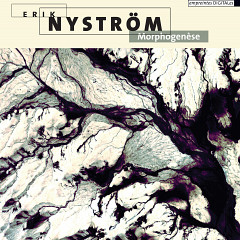
    British[-based] computer composer Erik Nyström seems to focus more on the process of making a shape than the shape itself in the explorations that got collected in Morphogenèse; the explanation of a process could be more or less an easy task, but rendering it by means of sounds is much more engaging and troublesome, but Erik managed to walk over this arduous and somehow trackless path by means of riveting sonic strategies, that he developed within pertaining conceptual field. A sort of elastic noise is the sparkle of the opening Catabolisms, whose thrilling sequence of aggregating and disgregating textures really mirrors the description of catabolic processes by German art theorist and perceptual psychologist Rudolf Arnheim in his essay Entropy and Art (“all sorts of agents and events that act in an unpredictable, disorderly fashion and have in common the fact that they all grind things into pieces.”), referred in the introduction of the track, which gradually reaches a sort of point of no return, where the breaking of all chemical bonding and the bursts of energy that followed each step of these catabolic processes pushes listener close to a sort of nowhere; similarly, a sonic sparkle — the elongation of a pure frequency of a sort of diapason — ignites the following Latitudes, a track which manages to evoke a generative process of gradual expansion that begins with a compressed sonic corpuscle. Lucent Voids, the longest composition of this collection, sounds like an unpredictable game, whose aim is the modelling and the thinning of the diaphragm between time and space, while Erik seems to add film and sheers to pure sounds on the track Cataract in order to render the analogy with the medical condition of the eye lens as well as the Greek etymology of the term “acousmatic” — its origin can be traced back to Pythagoras and should derive from the term akousmatikoi, the outer circle of the disciples of the Greek philosopher who could hear the lessons of their teacher, who spoke from behind a veil so that his presence could not distract them from the content of his lessons. These four pieces are stereo versions (for home listening) of pieces that were originally conceived for 8-channel concert projections, while “Far-from-equilibrium” — an impressive electroacoustic translation of almost randomly self-generating entropic sonic entities and textures — comes from a stereo tape. A pair of really good headphones is highly recommended.

    … an impressive electroacoustic translation of almost randomly self-generating entropic sonic entities and textures…

    Lépidoptères in Amusio

    “Kritik”, Stephan Wolf, Amusio, March 2, 2016
    Wednesday, March 2, 2016 Press

    Auf dem kanadischen (und in Sachen Elektroakustik und Akusmatik laut eigener Aussage weltweit führenden) Label empreintes DIGITALes ist soeben mit Lépidoptères eine Kollaboration des britischen Komponisten Monty Adkins (Professur für experimentelle elektronische Musik an der Universität Huddersfield) und der „kreativen Seiltänzerin“ Terri Hron aus Kanada erschienen. Sie geleitet den Hörer in die Welt von Wasserjungfern, Pfauenspinnern und Eintagsfliegen.

    Dabei dürfen Zweifel angemeldet werden, dass es Entomologen vorbehalten sei, Lépidoptères zu verstehen und wertschätzen zu können. Aber anders als ein gemeiner Naturbeobachter, der mitunter anthropomorphe Assoziationen zu allem was kreucht und fleucht entwickelt, enthalten sich Monty Adkins und Terri Hron eines emotionalisierten Transfers. Ihre Kompositionen scheinen vielmehr in den Closeup der reinen Anschauung vorzudringen.

    Interesselosigkeit kann dabei „natürlich“ nicht vorausgesetzt werden. Und doch fällt es unmöglich zu entscheiden, inwiefern die Musik letztlich nicht doch von Vorstellungen geprägt wurde, die sich anhand dezidiert biologischer Vorgänge kaum verifizieren lassen. Mit Rekordern und Elektronik nähern sie sich ihren Sujets, abstrahieren dabei jedoch wesentlich entschlossener als etwa Greame Revells The Insect Musicians (1986). Die musikalische Mimesis überhöht die konventionelle Imagination und führt so — erstaunlicherweise — zu einem Naturerleben von geradezu unmittelbarer Art. Aber eben nicht nach Art der Natur. Sondern, eben, als Kunst.

    Sondern, eben, als Kunst.

    Growl in The Sound Projector

    “Review”, Ed Pinsent, The Sound Projector, January 31, 2016
    Sunday, January 31, 2016 Press

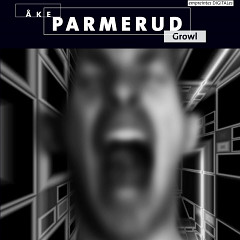
    Composer Åke Parmerud is from Göteborg, which is also the home of underground labels such as Fang Bomb, Release The Bats, and Beläten, names on which we can always rely to provide solid blasts of depressive post-industrial noise and drone music. Parmerud isn’t exactly cut from the same cloth, being as how he’s a prize-winning and classically-trained electroacoustic maestro, but there are moments of tasty darkness on his Growl (empreintes DIGITALes IMED 15132) collection which appeal to a macabre chap like myself. La vie mécanique, for instance, is a pretty effective critique of modern industrialisation, or at least an observation on it, and takes the hoary old dystopian cliché of “modern man becoming machine-like” and dusts it down for an update that involves samples of machinery blended with Techno music. In this lively composition of clattering beats and metal, it’s far from clear where the factory machines leave off and the dancefloor begins; it’s intending to convey something about the body being broken down into smaller units, much like the cogs of a machine being taken apart. Parmerud also makes a commentary on the contemporary use of machines (laptops, presumably) for making music. I wish he’d be a little less equivocal about it, both in his notes and his music, but it’s a nifty statement.

    Maybe serious composers shouldn’t dabble with Techno. However, if you think men of Parmerud’s generation should leave the kids’ music alone, you’ll be even more appalled by the idea of Growl itself, where he drily observes “metal music is big in Sweden” from his lofty position, and borrows some ideas from his youngest son who plays in a metal band. This might be Aron Parmerud who plays his “axe” for Marionette, a Death Metal band who made a couple of albums for Listenable Records. What the composer has done here is zero-in on the throat-shredding vocals that characterise a lot of the music in this genre, and through arranging samples of voices shrieking “Hell Is Us! Die We Must!”, has built a virtual “growlers choir”. With the dark techno backing, electronic effects, and gloomy ambient tones, this works surprisingly well, even if it sounds too “expensive” and well-produced for a genuine metal album and has far too many interesting dynamics. He also misses the claustrophobia and genuine sense of doom. But even so Parmerud turns in a strong piece of work, and in any case he wasn’t setting out to produce a metal album.

    What else are the “young people” interested in these days? Vinyl records, of course! So listen in to 2011’s Grooves if you want to hear what Parmerud can do when sampling the black stuff. The source material for this was the vinyl collection of his friend Kai Hanekken; in fact the composition seems to have been a by-product of a digitisation project requested by said Hanekken, who urged the composer to pick up the gauntlet and create a composition. He gave in. What gets sampled are run-out grooves and vinyl “noise”, i.e. crackles and clicks and such; Parmerud seems to have been only too aware that doing this was already something of a well-worn cliché, but again he liked the challenge and wanted to see if he could invert it and bring new life into the idea. Although best heard at high volumes and played back through a multi-channel system, Grooves still succeeds on your home CD player and delivers a suffocating density which is clearly one of this composer’s trademarks. Continuity is severely disrupted by the multiple edits, and the speed with which the layers of abstract noise pile up is incredibly alarming. You’ll feel like you’re trapped on an enormous spinning black disc of death.

    Also here: 2014’s Electric Birds derived from birdsong samples (yet another instance where Parmerud had promised himself he would never make a piece like this), and Transmissions II, the most recent composition. It derives from a multi-media work where, if seen live, a singing choir are able to manipulate sound signals in real time. Some fascinating complex electronic layers result, and it sounds a lot more contemporary than some of the formal music that often gets released on this label, and is every bit as convincing as any given Mego release from the last few years. Sometimes proper composers make a ninny of themselves when they try and get “with it”, but Åke Parmerud has nothing to be ashamed of here.

    Sometimes proper composers make a ninny of themselves when they try and get “with it”, but Åke Parmerud has nothing to be ashamed of here.
  • 7
  • 8
  • 9
  • 10
  • 11
  • 12
  • 13
  • 14
  • 15