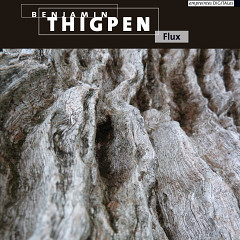
New Arrival: Flux by Benjamin Thigpen
Saturday, October 14, 2017
New releases
Find out more about Flux by Benjamin Thigpen, the most recent item added to our shop.

Find out more about Flux by Benjamin Thigpen, the most recent item added to our shop.
Guitariste, violoniste et violoncelliste,
Toujours à la recherche de ce que nos ancêtres ont composé et dont la plupart des œuvres ont complètement disparu, ne laissant pour toute trace que des systèmes de notations musicales au déchiffrage souvent approximatif,
Regroupant trois pièces créées entre 2012 et 2013,
Enjoying
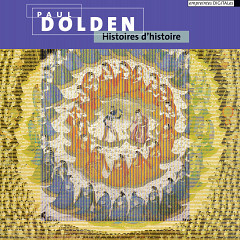
We recently had an in-depth conversation with Canadian electroacoustic composer
Chain DLK
Paul Dolden
Chain DLK
Paul Dolden
My curiosity about modern music began when I was about 14 years old. In the late 60s and into the 70s, the idea of a new music, a new art, a new society, etc. was on everyone’s mind. So there I was, a 14-year hippie child buying my
During my 20s, I transitioned from a full-time performer to a full-time composer. Now I only perform on my own recordings and with a few friends just for fun. Composition and audio technology has taken over my life
Chain DLK
Paul Dolden
Musicians would all become like
In addition, many of us had the dream that a new music would transform culture and society.
For sure, as time went on, and the 70s turned into
At the level of day-to-day tools, I can remember the excitement of getting my first 4-track tape recorder and then an 8-track tape recorder. I remember programming a mainframe computer in 1977 with Stochastic and Gaussian distributions and thinking I was hearing something new.
Back then, I could have never imagined that today, on a home computer, I would be recording, mixing and processing hundreds of tracks of sound.
Chain DLK
Paul Dolden
They are also important for discovering ways to use audio technology to manipulate sound.
Having restated the “official” history of electroacoustic music, I do hope that in the future they tell the full story of technique and tool development. For most of us, it was the development of these techniques, at the same time or earlier, by
Chain DLK
Paul Dolden
When we say contemporary music, we usually mean music that does not sound like 19th-century music. By contrast, for years, I have been following a lot of composers who continued writing in the tonal tradition with clear structural articulations or “climaxes”. About 60 of these composers, living or recently dead, are documented by
Among my reasons for listening to these composers is that I still struggle with most modern music that is constantly dissonant in our tuning system. Twelve-tone equal temperament (12ET) was designed to create tonal music that can modulate rapidly. The most accurate representation of our 12ET semi-tone in the harmonic series is the distance between the 84th and 81st harmonic. Let’s face it
As far as audiences go, there are lots of people who love my music in various ways, and when I do a concert the audience is enthusiastic about what I am presenting.
Performers today are amazing, and I have had a chance to work with some of the best over the last 35 years. We often talk about how music language has developed so rapidly over the last 100 years. I suspect an ever-greater growth has occurred in instrumental technique.
Chain DLK
Paul Dolden
I could talk on and on about compositional technique in the each work, but most of my concerns are clearly summarized in the introduction to the main score for the CD.
Instead of talking on and on about the early works, I would like to take this space to clarify an important aspect of these works that many people are left confused by.
Two times in my life, I have gone through a massive re-mastering of early works (everything before 2004). This often takes almost a year to do. I go back to the original recordings and remix and master. This habit is inspired by the ever-improving sound of modern audio technology. I also do this because it often takes me years to fully understand the music and how to maximize the mix for the work. Remember, the works involve hundreds of musical parts occurring simultaneously. This musical understanding of a work could be compared to the career of many conductors. Conductors often talk about conducting the same work for 30 years and preferring their later performances because they understand the work better. Likewise, I prefer the later masters and, yes, they are more true to my original music score for the work.
The first major re-mastering job was done in 2000-2002. These re-mastered versions were published by empreintes DIGITALes at that time on CD. After years of listening, I re-mastered the works again in 2012. Only recently have I turned these new masters over to empreintes. I hope they will have these 2012 versions on their streaming service soon.
I promise my listening public I will not re-master or “re-conduct” my works again
Chain DLK
Paul Dolden
Like my previous work, the main artistic inspiration is history or stories from the past. In this work, a different historical myth inspires each movement, hence the title.
Chain DLK
Paul Dolden
The program notes for the works usually had a historical/philosophical idea I was trying to capture in music. These ideas were based on topics as wide ranging as the biblical Walls of Jericho, the Romantic notion of music creating the social revolution, the postmodern idea that the speed and density of the information of our times are creating an intellectual and emotional stasis, etc., etc. With such big ideas, the music itself had to be larger than life
But whatever my artistic intentions were is of little importance. The listener will always decide for himself or herself the meaning of an aesthetic encounter. The real artistic or aesthetic moment happens in the relationship established between the listener and the music. For example, the Walls cycle of works has been described by some as transcendentally beautiful. By contrast, I know of two scientific experiments in which the same music was used to create an environment of pain for the test subject.
Chain DLK
Paul Dolden
Chain DLK
Paul Dolden
In this cycle of works, I am studying different musical styles and nature sounds to uncover their relationships. In short, nature’s sound patterns create most of the music and are everywhere in this cycle. For example, the same intense microtonal and polyrhythmic patterns of a swarm of insects are modeled onto brass, wind, and string parts. In this work, I found that country music sprang to life alongside the howling hounds of the open plains, and that Spain begat Flamenco alongside crickets that chirp in 6/8
Many of the titles in this cycle of works are questions, because I am creating an imaginary battle of the bands in which, for example, our soloist tries to play faster than the accompaniment, which is music based on cricket sounds, or our string orchestra tries to play a more mournful melody than the combined pitch bends of a herd of cows.
By the end of this cycle, my belief that I or other musicians were “original” music thinkers was shattered. With the musical styles I explored in the work, I found each of their fundamental music patterns pre-existing somewhere in nature. Perhaps we are only mimicking what already exists, given, for example, that it is now estimated that insects first appeared 480 million years ago.
I should add that, for the listener looking for a Soundscape work, I would not recommend this cycle of works. All my source material, the nature sounds, were transformed into music, and the unsuspecting listener hears what I hope is a series of entertaining and engaging moments and goes on a musical journey unaware that they are listening to insects or barnyard animals. The lack of clear identification on my part, between human music style and natural source, is because I believe that any artwork that is totally complicit in its own absorption, so that it no longer makes apparent sense on the surface, will exercise a remarkable fascination. In short, an artwork fascinates by its esotericism, which preserves it from external logic.
Chain DLK
Paul Dolden
I have always been fascinated with all the music of the world and have tried in my own humble way to bring it all together into one artistic vision.
I am not interested in “cross over” music, or fusion. Instead, I want to understand and use the deep grammar of different music to create a unified aesthetic picture. I hope this is not another version of cultural imperialism.
On the other hand, I do realize my ambition of combining diverse music and orchestrations is based on being a privileged Western educated male who can listen to Indian or Thai music on recordings and read books on this music. And the fact that I grew up in a surplus economy, which allowed me at age 16 to buy, at the same time, my first Les Paul and Sitar. The same surplus economy which has allowed me access to recording gear which meant I could learn how to balance all these different types of timbres and gestures through the use of equalization, compression, expansion, transient and sustain shaping tools, panning, spatial enhancement tools and extensive mixing.
The listener will have to decide whether my music represents another brick in the wall of Western decadence and decline, or if it is part of a new perception and understanding of what it means to live in the Global Village.
Chain DLK
Paul Dolden
Chain DLK
Paul Dolden
Needless to say, these two “concertos” that appear on the CD pose a challenge for most listeners, who are expecting a set proscenium arch or background around the soloist. In this case, Maurizio and Lukasz rose to the occasion of a stage that is constantly changing size, shape, colour and mood.
Chain DLK
Paul Dolden
Chain DLK
Paul Dolden
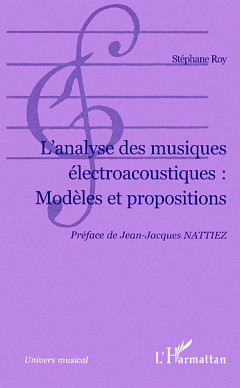
Always relevant, L’analyse des musiques électroacoustiques, the excellent book by
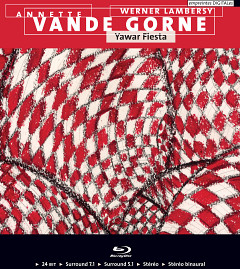
Also out on empreintes DIGITALes is
Considering the relatively small palette of sounds and sound treatments that occupy the piece, it’s remarkable that Gorne holds one’s attention so entirely for such a long period of time. Its structural unpredictability is an important factor, as is the enormous range of vocal types and arrangements, encompassing singing, chanting, speaking, shouting, crying (even keening), crooning, throat- and overtone-singing, whispering and whistling, ranging from just a single voice to many, moving like quicksilver between pitch and noise, speech and song, consonance and dissonance as well as shifting proximities and registers as though subject to the detailed rubrics of some vast, inscrutable liturgy. Another vital factor, though, is the extent of its emotional immediacy. Anything ‘operatic’ needs to keep its emotions at or very near to the surface, and while its intent and direction often feel bafflingly alien, the vitality and passion at its core is unambiguous to the point of being almost painfully overt. Unlike most large-scale works, it’s difficult if not impossible to talk about ‘highlights’ and single out particular sections or passages. The entire piece is a highlight, each and every one of its convoluted contours a spell-binding gem that becomes lost (but not forgotten) in an increasing collection of such jewel-like moments and episodes that follow each other in a way that’s almost implausibly organic. In lesser hands one would be marvelling simply at the breadth of imagination and astonishing compositional technique being demonstrated. Yet for all its unknowns and unpredictability, its wild paroxysms of austerity and elation,
![Paul Dolden [Photo: David Strong, Montréal (Québec), 2006]](https://res.electrocd.com/image.php/image/d/dolden_pa.8256.jpg?width=n2&cropratio=1:1)