electrocd

Blog

53 results
  • 1
  • 2
  • 3
  • 4
  • 5
  • 6
  • 7
  • 8
  • 9
  • Réverbères in The Sound Projector

    “Review”, Ed Pinsent, The Sound Projector, December 11, 2022
    Monday, December 12, 2022 Press

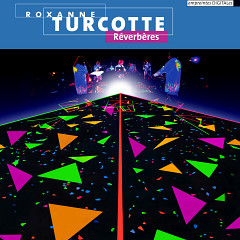
    Roxanne Turcotte may have started with traditional piano conservatoire training, but by the later 1980s she’d taken an electro-acoustic and technology direction and studied under Francis Dhomont. She too is not unwilling to be aligned with ideas of cinema and is working towards an “integrated” music that is wedded to visuals, be they film, theatrical, or installations. Besides her compositional skills, the CD Réverbères (IMED 21173) showcases her work on the synthesizer, with tapes, and with wind instruments on the long bird-call suite, Les oiseaux de Nias. The opener Masques et dichotomies is understated, but still exudes an undercurrent of darkness and mystery which I like; Turcotte is experimenting with ideas about face masks, and how they distort the human voice; subtle explorations of the possibilities afforded by these distortions follow, including unrecognisable speech, coughing and sneezing. It’s a recent (2021) piece, but thankfully makes no explicit connection to face masks in the context of COVID 19.

    Another enjoyable piece is Le bruit des soupirs, using the familiar collage form to piece together commonplace sounds recorded on the street — which might sound unexceptional, but Turcotte exhibits great imagination and skill in making her odd juxtapositions, which she calls “short news reports… parleying under a street lamp”. She alludes to travel diaries and “secret gardens”, and the piece feels like a genuine attempt to discover something that is hidden behind the “longing sighs” she hears everywhere. This particular work makes use of materials from 2014-15, first used in an installation about greeting cards. I have no idea what this was, but presumably it wasn’t an exhibit focussing on the designs, and perhaps alluding to revealing the hidden truths about humanity that can be implied within these banal and sentimental communications.

    … but Turcotte exhibits great imagination and skill in making her odd juxtapositions…

    Mélancolie in The Sound Projector

    “Review”, Ed Pinsent, The Sound Projector, December 11, 2022
    Monday, December 12, 2022 Press

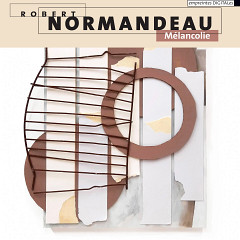
    Robert Normandeau’s Mélancolie (IMED 21174) contains five recent compositions from 2013 up to 2021, although the dates for each of them indicate that he spends many years burnishing these works before bringing them to a state of completion. This particular release showcases his “cinema of the ear” aesthetic, a principle he has long adhered to, referring to the way that meaning/content play as important a role in his work as the sounds he makes.

    As to that sound, all five pieces here were originally played back in “a dome of loudspeakers”, an image that suggest an ideal performance space that affords that truly “immersive” experience that Normandeau seeks. The music here does indeed seem to aim for that all-encompassing blanket of sound, a close-knit fabric which envelops the listener. Although he’s a maestro of digital processing, it’s true that Le ravissement here did start life as a conventional string quartet and solo singers, but after he’s finished his interventions the individual voicings of these instruments are subsumed within the larger ocean. He’s playing on the meaning of the word “rapture” to mean both a transcendent spiritual experience, and a “ravishing” with its connotations of plundering (and of rape, unfortunately); Normandeau uses these terms to express the way he is stretching “time and spectra” to the limit, through a method he likens to laminage, a specific term used in plastic manufacture.

    Even more profound are the changes wrought in Melancholia, which was completely derived from the sounds made by the bandoneon (a member of the concertina family), yet what results is a largely alien, unrecognisable grey landscape filled with the shadows of sorrow and painful longing. Savour the brief passages where the bandoneon’s chords are overdubbed and treated until they resemble a grief-stricken church organ playing a funeral hymn. Tunnel azur is the most conspicuous example of the “cinema of the ear” notion, packed with audio content including sounds derived from recordings of trains, tunnels, crowds, and workers, and suggesting a fragmented narrative structured around the opposing ideas of “day and night”; Normandeau evidently likes the idea of being in a dark tunnel when the sky outside is bright blue. Perhaps surprisingly, Tunnel azur doesn’t attempt to suggest forward movement or speed, but is much more contemplative in nature, suggesting a trip to the underworld where we can enjoy the grim vistas from the safety of a passenger seat. The density and complexity is deepened by the use of an octobass, and a Mahler quote — or rather, an allusion to Normandeau’s memory of seeing Kent Nagano conducting Mahler. Of such nuances is this composer’s work woven.

    The density and complexity is deepened by the use of an octobass, and a Mahler quote — or rather, an allusion to Normandeau’s memory of seeing Kent Nagano conducting Mahler. Of such nuances is this composer’s work woven.

    The Day Computers Became Obsolete in Neural

    “Review”, Neural, December 8, 2022
    Thursday, December 8, 2022 Press

    Once referred to as the ‘Harry Potter of the digital vanguard’, Eryk Salvaggio was an early pioneer of the net art movement. His focus now is still relentless. Salvaggio uses artificial intelligence as a tool for art, examining generative adversial networks, natural language processing and data sonification through the lens of avant-garde practices influenced by Dada, Fluxus and the Situationists. The Organizing Committee uses machine learning to create breezy cyborg pop songs that subvert dominant narratives and ideologies surrounding AI. Salvaggio has created a parallel universe where krautrock bands play on the mainframe and shrill, synthesized voices sing of the destructive, delusional habits of the human race. The eleven tracks on this album reference many alternative musical trends of recent decades including synth-pop, post-rock and new wave. Salvaggio blends everything together seamlessly in a style that is both computational and confrontational – no surprise from an artist who was once banned from eBay for trying to sell his personal contempt to the highest bidder! The Day Computers Became Obsolete features an unrivalled mix of retro-future vocals, cool guitar riffs and synthetic rhythms, all supported by keyboards and a wide range of floating, ephemeral digital effects. In Salvaggio’s latest offering criticism and irony go side by side – although the years of cyber enthusiasm may be far behind us, the idea that the future may be different has not yet been completely lost.

    … an unrivalled mix of retro-future vocals, cool guitar riffs and synthetic rhythms…

    Fulgurances in Music Map

    “Recensione”, Piergiuseppe Lippolis, Music Map, December 1, 2022
    Tuesday, December 6, 2022 Press

    Vanessa Massera è una compositrice canadese. Originaria di Montréal, l’artista considera la musica elettroacustica un mezzo per comunicare idee poetiche nell’ambito degli spazi e degli ambienti culturali che rappresentano fonte di ispirazione per la sua produzione musicale.

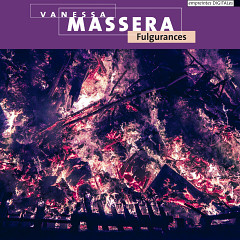
    Da poco, Vanessa Massera ha pubblicato per Empreintes DIGITALes Fulgurances, un lavoro di sei brani per un totale di oltre settanta minuti di musica costruita attraverso suoni processati e lavorati, al punto da diventare spesso irriconoscibili. L’artista ricorre ai field recordings, dai fuochi d’artificio e i falò agli oggetti industriali e alle registrazioni ambientali, ma li unisce a una strumentazione tradizionale come il sax e la fisarmonica.

    Éclats de feux inizia quasi in medias res, proiettando l’ascoltatore nell’universo creativo dell’artista, che sviluppa un sound organico, ma dalle traiettorie imprevedibili. In qualche caso, le registrazioni ambientali sembrano voler suggerire qualcosa in termini di contesto, ma qualsiasi deduzione logica è negata dalle complessità delle costruzioni: Omega 3, per esempio, comprende elementi dalla tradizione folk nordica, senza che questi appaiano chiaramente distinguibili.

    An Almost Abstract Experience dice molto di sé già dal titolo, con un ambient in crescendo e dall’umore vagamente inquieto, prima del vento industriale di Exercitium arithmeticæ occultum nescientis se numerare animi e della conclusione affidata a Border Crossing e alla tensione elettronica di Résistance.

    Vanessa Massera conferma grande sensibilità artistica con un lavoro ricco, complesso e ricercato: un prodotto di spessore per l’universo della musica elettroacustica.

    Vanessa Massera confirms great artistic sensitivity with a rich, complex and researched work: a product of depth for the universe of electroacoustic music.

    Lames de fond, Fulgurances, Bruit noir, Remembering Japan in Radiohoerer

    “Release Tipp: Hans Tutschku, Åke Parmerud, Martin Bédard & Marie-Hélène Breault und Vanessa Massera / empreintes DIGITALes”, Radiohoerer, November 15, 2022
    Tuesday, December 6, 2022 Press

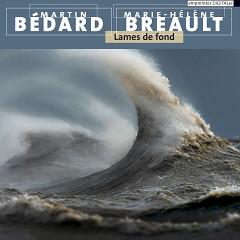
    Umgeworfen hat mich das Duo Martin Bédard & Marie-Hélène Breault deren Musik, wie eine riesige Welle über einen hereinbricht. Wie ein Actionfilm oder so ähnlich. Mitunter ist es auch brachial, aber akustisch ungemein überzeugend. Åke Parmerud’s Musik ist eher dunkel. Verfremdete Celloklänge, überhaupt arbeitet er viel mit Streicherklängen, welche dann in atemberaubende Soundcollagen münden. Natürlich wird das Erinnern von Hans Tutschku an seine Japanreise durch viele Fieldrecordings unterstützt und wie er das ganze verarbeitet und erweitert, das ist spannend. Bei der Musik von Vanessa Massera denke ich mehr als bei allen anderen an eine Filmmusik. Eine sehr beeindruckende und herausfordernde Musik.

    A very impressive and challenging music.
  • 1
  • 2
  • 3
  • 4
  • 5
  • 6
  • 7
  • 8
  • 9