electrocd
  • This website is also available in English.

Blog

4252 results
  • 175
  • 176
  • 177
  • 178
  • 179
  • 180
  • 181
  • 182
  • 183
  • Automacité in Circuit

    “Critique”, Martin Marier, Circuit, no. 22:1, May 1, 2012
    Tuesday, May 1, 2012 Press

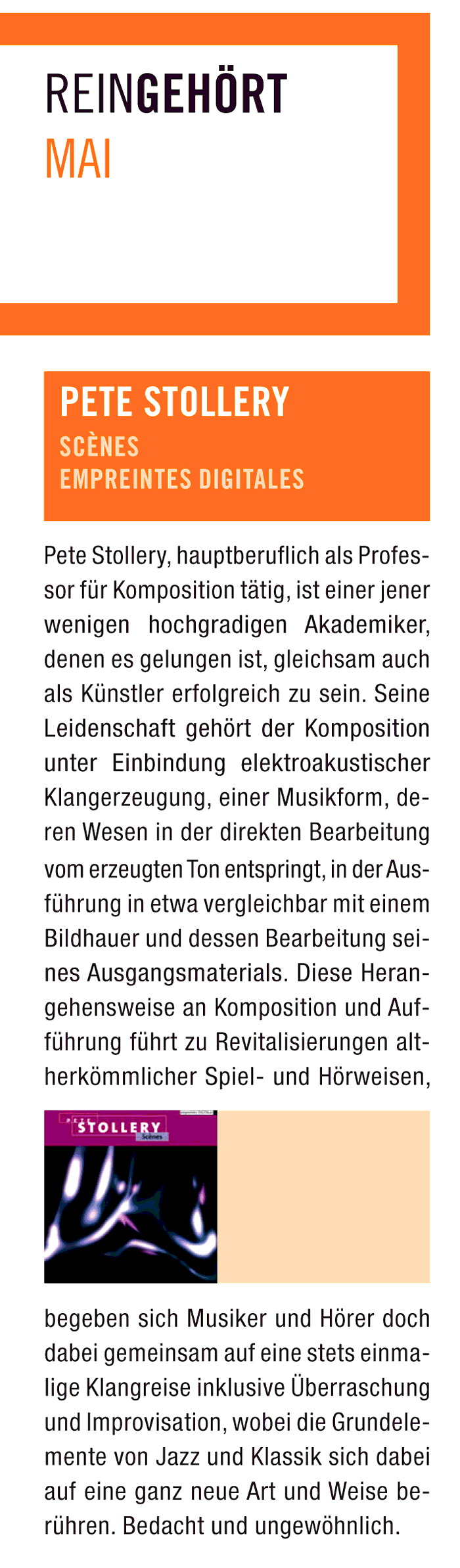
    Christian Bouchard, avec son disque Automacité, propose une musique très énergique, voire frénéti que. Le montage très serré, les sons électroniques et les artefacts de traitement plongent l’auditeur dans un univers franchement glitch.

    Impasto, un triptyque de quarante-cinq minutes, est, aux dires du compositeur, une pièce sur les peintres expressionnistes abstraits (Pollock, Riopelle et Shiraga). La forme générale est volontairement intangible et sans climax, ce qui rappellerait le style «All-over» de Pollock et des autres. Ce type de transposition de la peinture vers l’art sonore est très risqué: le «All-over» fonctionne bien pour une forme qui se déploie dans l’espace, mais le résultat est moins heureux si elle se déploie dans le temps. Malgré cela, Bouchard s’en tire plutôt bien. On aurait souhaité une structure plus claire, mais la matière sonore est si habilement articulée qu’on ne s’ennuie que rarement.

    Les deux autres pièces du disque sont plus tranquilles. On est toujours dans le glitch, mais le rythme est moins effréné et les formes sont un peu plus classiques. La dernière pièce, Objet menacé, est bien équilibrée: les moments plus fougueux sont contrebalancés par de profondes respirations et les sons électroniques sont parfois ponctués de sons concrets plus sensuels. Cette symphonie de parcomètre est, somme toute, plutôt sympathique.

    Cette symphonie de parcomètre est, somme toute, plutôt sympathique.

    Quelques reflets in Circuit

    “Critique”, Georges Forget, Circuit, no. 22:1, May 1, 2012
    Tuesday, May 1, 2012 Press

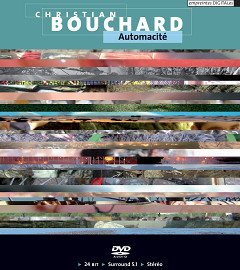
    Que s’est-il passé dans le monde de la musique électroacoustique récente pour que l’on porte à ce point aux nues et qu’on s’extasie devant ces «fameux» sons, ceux participant de ce que l’on pourrait désormais appeler le classicisme de l’inconfort? Telle pourrait être la première question de l’auditeur des premières minutes du morceau Reflets de notre société crépusculaire, tiré du nouveau disque de Pierre Alexandre Tremblay, tant ce dernier semble a priori fonder son discours sur une esthétique de la discontinuité, de la rupture et de l’attente…

    Se méfier parfois des premières impressions… Rapidement, le propos se fait plus clair, plus directif, à la fois par l’émergence d’une écriture plus soutenue ainsi que par une rupture stylistique franche, aux accents pop britanniques assumés. Car on trouve dans le disque Quelques reflets des pièces résolument accessibles, frôlant parfois l’ambient music, comme Ces enseignes lumineuses, qui apporte une véritable proposition d’alliance entre acousmatique et musiques à saveur post-rock. Ou encore, la très «baylienne» For Ever Now Soon an End, qui, dans cette volonté de réconcilier électroacoustique savante et musique plus intuitive, plus sensuelle, poursuit le disque dans ce qui s’avère être littéralement une randonnée musicale. Au rythme des pas d’un marcheur décidé, l’auditeur traverse principalement trois paysages, deux landes horizontales et étendues, avec, en leur centre, un parcours plus accidenté, mais non moins lumineux et chatoyant, et qui, même s’il laisse parfois entrevoir la facture technique en arrière, se révèle être un petit bijou d’orfèvrerie électroacoustique.

    Bel exemple de ce que peut apporter l’intégration et la fusion de styles pour ce nouvel opus de Pierre Alexandre Tremblay qui, s’il ne parvient pas toujours à convaincre par son unité, permet de découvrir de véritables trouvailles stylistiques innovantes et laisse imaginer à quoi pourrait ressembler une acousmatique «pop».

    Bel exemple de ce que peut apporter l’intégration et la fusion de styles

    Entre espaces, Scènes in Vital

    “Review”, Frans De Waard, Vital, no. 829, May 1, 2012
    Tuesday, May 1, 2012 Press

    Two releases from two composers I never heard of on the Empreintes Digitales label, home of the world of acousmatic composers.

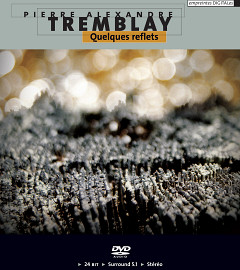
    Her [Elainie Lillios’s] biography reads like a list of official institutions and festivals, which is no doubt to impress the reader, but none of these mean much to me. The music however on this CD is quite interesting. Unlike others on this label not all here is about putting sounds through computer processing, which in this circle of composers often leads to similar results, but the power here lies in the use of field recordings (cars, voices, water) to come to the listener untreated but put together in a radiophonic manner. Sometimes the use of electronics is a bit too much of a cliche, me thinks, but the poetic Arturo and the filmic car sounds of three piece suite of Backroads are quite nice.

    From the UK is Pete Stollery, BMus(Hons), MA, PGCE and PhD, a professor of electroacoustic music and composition. His music seems to be build from field recordings which sometimes shimmer through all the electronic processing that is going on. Like with the release by Lillios, things for me are most interesting when it moves away from all the well-known practice of acousmatic sound processing and focussing on primarily field recordings, such as in Field of Silence. In Resound he uses interviews with people and here its is where the music becomes great. It has a fine radiophonic character, with mumbling voices, street sounds and what seems an absence of electronic processing. It’s only with the third piece, Still Voices, that we hear more and more of these field recordings, as the first two sink away in sound processing. A combination of electronics and pure field recordings done well is the closing piece, scènes, rendez-vous, which has a fine soundtrack like capacity.

    I wasn’t too happy a few years with the direction this label heading, but these two pick up matters where I like to see them best: a fine combination of pure sound and treatments.

    … a fine combination of pure sound and treatments.

    Entre espaces in Blinded by Sound

    “Review”, Greg Barbrick, Blinded by Sound, April 27, 2012
    Friday, April 27, 2012 Press

    Elainie Lillios is a brilliant composer whose solo electroacoustic debut Entre espaces has just been released on the Empreintes DIGITALes label. For those who may be unfamiliar with the term “electroacoustic,” it refers to a wide variety of electronic music. The genre is somewhat broad, as it covers a wide range of sound experimentation. Some of the forms include musique concrete, computer music, tape music — basically electronic music of all sorts. It is no surprise that she is recording for Empreintes DIGITALes, who are one of the most innovative labels around.

    The seven works that make up Entre espaces (“between spaces”) were realized between 1998-2007. Most musicians would probably agree that the biggest hindrances to their creativity are time and freedom. On these two fronts, Elainie has been afforded remarkable autonomy, and the results speak for themselves. With a total running time of 72:53, we certainly get our money’s worth with this disc. More importantly though is the fact that Elainie utilizes all of the tools at her command, and has created an all-encompassing sonic landscape.

    The disc opens with Dreams in the Desert (10:45), an evocative title for a piece whose overriding theme is that of water. She introduces a number of intriguing changes to propel us along, all to great effect. One of the greatest aspects of purely instrumental music like this is the opportunity it affords the listener to hear whatever they want to in the tones. Dreams in the Desert is a perfect example. I initially listened to Entre espaces without looking at the song titles or brief explanatory pieces included in the package. For me, the music conjured up images of a journey upriver, with stops at various places along the way. I think it is a great credit to Elainie Lillios’ talent that her music works so well in conveying whatever the audience wishes it to.

    The longest piece of the set is also the most dissonant. Stumbling Dance (14:45) begins with some very abstract sounds, which continue throughout. The track was composed in 1998-99, making it one of the earliest of the set. It is also one of the most demanding, and shows just how adventurous a writer Elainie has always been.

    There is something to be said for every one of the seven compositions on Entre espaces, but the one I found myself most entranced with is Arturo (13:35). The mysterious nature of the composition is what first attracted me, and as Elainie’s notes explain, this impression was well-founded. “Arturo is a tarot card reader who requests his visitors to ‘please let me answer your questions before you ask them,’ “ she writes. Her musical impression of him is fascinating on a number of levels.

    The disc closes with the appropriately titled Listening Beyond (8:20). The otherworldly nature of Elainie Lillios’ music is perfectly encapsulated here. In her own words, the composition “Explores the relationship between sound and silence and their intersection in space.” What is between the spaces? On Entre espaces Elainie Lillios attempts to show us some of the infinite possibilities, and one gets the feeling that she has barely scratched the surface.

    This is a remarkable disc.

    This is a remarkable disc

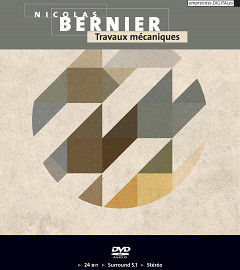
    Travaux mécaniques in Monsieur Délire

    “Listening Diary”, François Couture, Monsieur Délire, April 24, 2012
    Tuesday, April 24, 2012 Press

    Nicolas Bernier seems fascinated with machines — the old mechanical kind that needs some elbow grease to get going. Travaux mécaniques (out on DVD-A with surround and stereo mixes) culls four electroacoustic works about these machines. In Writing Machine, treated typewriter sounds accompany cut-ups of William S Burroughs’ voice. Les chambres de l’atelier and Liaisons mécaniques evoke gears, cogs, assemblages, sequences of actions entailing other actions, fantastic cause-and-effect relationships. Dans le ventre de la machine takes us into the belly of the beast, an immersive journey through a soundscape of gears, with Mario Savio’s famous Bodies upon the gears speech thrown in for good measure. Travaux mécaniques paints a highly complex soundworld where there’s a lot happening on many levels. There’s not a single second of downtime. Possibly Bernier’s most dynamic record to date. Highly recommended.

    Possibly Bernier’s most dynamic record to date.
  • 175
  • 176
  • 177
  • 178
  • 179
  • 180
  • 181
  • 182
  • 183