electrocd

Blog

4252 results
  • 444
  • 445
  • 446
  • 447
  • 448
  • 449
  • 450
  • 451
  • 452
  • February 17, 2004: Continuum to Play Arcuri

    Tuesday, February 10, 2004 In concert

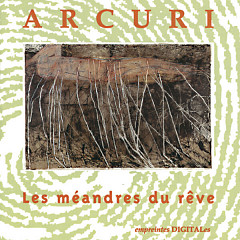
    The Continuum Contemporary Music ensemble, under the artistic direction of Jennifer Waring, presents “Brassage,” a concert held at Toronto’s Music Gallery on February 17, 2004. Amongst the works presented, Michèle Gagnon (french horn) and Ryan Scott (percussions) will play Serge Arcuri’s composition Lueurs, for instruments and tape. This work appears on his 1993 disc Les méandres du rêve.

    February 19, 2004: Friends of Musiques & Recherches

    Tuesday, February 10, 2004 In concert

    4th concert in the “Cycle acousmatique” series, “Les amis de Musiques & Recherches” (Friends of Musiques & Recherches) present works dedicated to this association of electroacoustic music, February 19, 2004 at Brussels’ Petit Théâtre Mercelis (Belgium). Featuring works by Dhomont, Chion, Ferreyra, Tutschku and Bayle. With sound spatialization by composer and director of Musiques & Recherches, Annette Vande Gorne.

    Sings the Blues in Benzine

    “Critique”, Benoît, Benzine, February 10, 2004
    Tuesday, February 10, 2004 Press

    Voici un artiste qui mériterait largement sa place sur le label de Coldcut (Ninja Tune) ou qui pourrait prétendre être le frère de son d’un Kid 606!

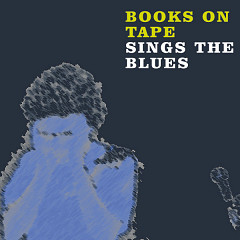
    Très proche de ces artistes magnant la paire de ciseaux et le tube de colle musical, Todd Drootin aka Books on Tape pratique l’art du recyclage et en fait presque un art de vivre (la musique) à part entière. Sur ce second album Sings the Blues (avec sa pochette très Blue note) le jeune homme convie toutes les sonorités bizarroïdes de la terre pour une orgie sonore avec pour maître de cérémonie l’homme et son sampler. Ecoutez voir…

    Récupérateur invétéré, passionné de sonorités électro incroyables, sans limites proprement dites, Books on Tape assemble des choses sans forme et leur donne une seconde vie en les associant à des breakbeats rêches et abrasifs qui font que sa musique ne ressemble à aucune autre. Usant de musiques de films de série Z, de bruits de cassette vierge, de samples de voix piquées à droite, à gauche, ou même de sons issus de tableaux de jeux vidéo, Books on Tape touche à tout sauf au blues, et encore on en est pas sûr.

    Melting-pot sonore, parfois proche de l’indigestion, cet album est à lui tout seul une véritable curiosité sonore. Et on imagine bien ce fou génial des machines s’éclater comme une bête sur scène, face à ses machines, et proposer des prestations audiovisuelles d’une certaine intensité.

    Artiste hors-norme, capable de vous surprendre à chaque seconde par des assemblages sonores invraisemblables, Books on Tape vaut vraiment le détour pour peu que vous soyez amateur de broken-beat et autres bizarreries hip-hop déjantées. Pour les autres, une fois la curiosité passée, il leur sera sans doute difficile d’aller jusqu’au bout de cet assemblage baroque, mais maîtrisé, signé par un musicien DJ affranchi. ★★ 1/2

    Books on Tape vaut vraiment le détour pour peu que vous soyez amateur de broken-beat et autres bizarreries hip-hop déjantées.
    ★★½

    Isostasie, Rhizomes, Évidence matérielle, Traces, Jeu d’ombres, Sources / scènes, Tao, La limite du bruit, Jonty Harrison, Åke Parmerud, Denis Smalley, Annette Vande Gorne, empreintes DIGITALes in electrocd.com

    “An Itinerary Through Northern Europe”, François Couture, electrocd.com, February 9, 2004
    Monday, February 9, 2004 Press

    This is a casual listening path, an invitation to travel — not a guided tour per se, more of an itinerary, akin to Romantic-era travel literature. So this will be a listening itinerary, an invitation to discover a highly subjective selection of electroacoustic composers from a specific corner of the world. Our destination: Northern Europe.

    France reigns over European electroacoustic music like a despotic queen. The persisting influence of Pierre Schaeffer’s work — even more than 50 years after the invention of what he has called “musique concrète” — and the gravitational pull of the Ina-GRM tend to hide from the rest of the world the work being accomplished elsewhere in Europe.

    So let’s start our journey in one of France’s neighbors, Belgium. The country owes much of its electroacoustic activity to Annette Vande Gorne, the indefatigable animator of the Musiques & Recherches center. Her music displays a strong sense of serenity, something rare in the field of tape music. Tao, a cycle about the five base elements (air, earth, metal, fire and water), remains a classic. In it she explores every possible transformation of the sounds associated to these elements with an uncommon level of artistry and poetry. A student of Vande Gorne, Stephan Dunkelman has picked up on her grace, a grace he transmutes into movement. Often the result of a collaboration with choreographers, his works are driven by an inner force that substitutes the sensuality of movement to Vande Gorne’s philosophical — almost mystical — depth. His pieces Rituellipses and Thru, Above and Between, released on the album Rhizomes, deserve your attention.

    A jump across the Northern Sea and we set foot on English ground. Birmingham has become an important creative node in electroacoustic music, thanks to the work of composer Jonty Harrsison and his Birmingham ElectroAcoustic Sound Theatre (better known as BEAST), a laboratory for experimentation and sound diffusion that has helped many talented composers in developing their art. Harrison’s music is an essential listen. His piece Klang (released on Évidence matérielle) ranks among the best-known electroacoustic works of the last 25 years. His precise sound constructions and his distinctive way of compressing sound matter into streams of energy put him up there with Pierre Henry, Francis Dhomont and Bernard Bernard Parmegiani. One can follow the traces of his techniques into the works of Adrian Moore, one of his students, especially in the latter’s fondness for putting simple sound sources (marker on a white board, tin foil) through complex transformations. Sieve, from the album Traces, uses a catchy playfulness to make this transformative process transparent.

    Denis Smalley was born and raised in New Zealand, but he has been living in the UK since the mid-‘70s. His contributions to the acousmatic corpus and to the development of sound diffusion make him not only the contemporary but in a sense the acolyte of Harrison. Furthermore, the two composers share a similar interest in form and in the choreographed displacement of abstract sound objects through space and time. Wind Chimes (on Impacts intérieurs) and Base Metals (on Sources/Scènes) are good illustrations of the slightly cold yet fascinating beauty of his music. John Young, one of his students — and another New-Zealander who studied and now teaches in England), follows a similar approach, although he replaces Smalley’s elemental sound sources with more emotionally charged images. The works featured on his CD La limite du bruit offer to the listener several occasions to dive into his or her own memories, the sound of a squeaky swing or a creaky door turning into avatars of Proust’s madeleine. Time, Motion and Memory is a choice cut.

    Scandinavian electroacoustic music is still too largely ignored on our side of the Atlantic, but empreintes DIGITALes’ catalog allows us to make a short stop to round up our peregrinations. Natasha Barrett has studied with Harrison and Smalley and has been involved in BEAST, but since 1998 she has elected Norway as her base camp. There, she has stepped away from the style of her teachers and has sought inspiration in the Nordic cold. Her Three Fictions, released on Isostasie, deserve many listens. And let me bring this listening path to an end with one of the key composers in electroacoustic music today, the Swedish Åke Parmerud, whose Renaissance (on Jeu d’ombres) pays tribute to the analog synthesizer without resorting to nostalgic tricks.

    Sings the Blues in Pop Matters

    “Review”, Adrien Begrand, Pop Matters, February 6, 2004
    Friday, February 6, 2004 Press

    The last album that I heard that worked the same way as Books on Tape’s new one, Sings the Blues, was King of Woolworth’s charmer, Ming Star. Not that they sound remotely like each other, mind you, but both of these electronic albums have the same appeal. Neither artist is trying to turn electronic music on its ear; instead of pushing the proverbial envelope, they’re just happy in their own little niche. Ideas may be recycled from other artists’ work, and this music isn’t anything that will make your jaw hit the floor the first time you hear it, but given time you feel yourself warming up to the music until you realize that, in its own innocuous way, the material is well-crafted, accessible, and quite enjoyable.

    Books on Tape, the moniker of Los Angeles artist Todd Drootin, keeps things amazingly simple, compared to many of his peers. Sings the Blues is yet another clever laptop collage of samples and beats, but compared to more ambitious fare like Four Tet and Manitoba, he works more like a jazz artist, establishing a very simple primary melody in a song and just letting loose for the duration of the piece, acting as a cut-and-paste soloist. It’s a 65-minute mishmash of myriad musical styles that is sometimes dark, sometimes warm, the overall tone of the record changing with almost every track, but in the end that’s half the fun.

    Credit Drootin’s girlfriend Kerri for inspiring him to create this album. Drootin plundered her personal record collection, covering a wide variety of genres, for sampling ideas, and as it turns out, the idea worked out quite well, sometimes magnificently. Sings the Blues is a bit of a tongue-in-cheek title, which Drootin alludes to in the brief intro Laptop Blues, a track that basically consists of a lazy, amateurish acoustic guitar progression that’s given a silly, slightly warped effect by Drootin. Republic Of gets down to more serious business, however, as it mines the languid, funky trip hop sounds of early Massive Attack, minimal samples of guitar, fretless bass, and strings providing a murky, noir-like tone. See You In Tokyo sounds just as sinister, but this time the song is propelled by an acoustic drum sample (note the outstanding use of the ride cymbal sample), and has more of an early ’80s electro touch. The terrific She’s Dead To Me cranks up the intensity, a frenzied blend of synth bleeps, screeches, and frenetic beats, while the more dance-oriented Pointe du pied and Girls Up Front are more playful, each possessing whimsical melodies.

    The latter half of the album returns to the darker side of Books on Tape’s sound. The careening Death In the Sex Shop sounds like a video game soundtrack, with its frantic jungle beats and siren-like synths adding to the song’s menacing, nocturnal feel. The song immediately segues into Siberian Soundsystem, one of the album’s most inspired moments, as Drootin adds swirling noise that weaves in and out of the stark breakbeats, making for a harrowing, enthralling listening experience. But the true highlight of Sings the Blues is the seven-and-a-half-minute The Crucial, an entrancing, intoxicating blend of a slow, insistent drum sample, a looped acoustic guitar riff, and a brief saxophone sample that repeats throughout the track. Over the course of the song, Drootin throws in various samples, like electric piano, flute, synth, jungle-like snare drum samples, and electric guitar, making the song an extended, free-form solo. The sax may add an instantly recognizable sound that would strike the listener as being “jazzy”, but it’s what Drootin does with the other elements of the track, his spontaneity and inventiveness, that makes this song more jazz-influenced than the usual electronic piece.
    Sings the Blues does run a little long (65 minutes), and it would have been nice to hear Drootin continue in the direction of The Crucial, but for the most part he manages to keep things fresh. The album might hit a speed bump here and there, but the ride is mostly fun, and never dull.

    … a 65-minute mishmash of myriad musical styles that is sometimes dark, sometimes warm, the overall tone of the record changing with almost every track…
  • 444
  • 445
  • 446
  • 447
  • 448
  • 449
  • 450
  • 451
  • 452