electrocd

Blog

4252 results
  • 446
  • 447
  • 448
  • 449
  • 450
  • 451
  • 452
  • 453
  • 454
  • Bleak 1999 in De:Bug

    “Kritik”, bleed, De:Bug, February 1, 2004
    Sunday, February 1, 2004 Press

    Eine ziemliche Überraschung für alle Tomas Jirku Fans dürfte diese Platte sein, denn sie ist sehr dark und voller Radiogeräusche, gruselig dunkel fast an manchen Stellen, rauschig rauschig, morbide, manchmal nah an Raster Noton und dann wieder fast industriell. Ich gebe zu, ich bin selten in der Stimmung, mitrsoetwas anzuhören, auch wenn es immer noch eine Basis von Minimalismus hat, aber ich vermute, in Zuständen, in denen man nicht einschlafen kann und am liebsten ans Sterben denkt, könnte das gehen. 3/5

    Rumors of War in Grooves

    “Review”, Greg Clow, Grooves, no. 12, February 1, 2004
    Sunday, February 1, 2004 Press

    When you release a record called Rumors of War and name all of the tracks after some of the most horrific battles, tragedies, and massacres of the last century — ranging from 28061914 Sarajevo through 11092001 New York — it’s pretty obvious that you’re not out to offer listeners something light and cheerful. That’s not to say that this second album by Italy’s Metaxu is a completely dark and depressing collection, as there are moments when the duo’s glitchy and orchestral-tinged ambience exhibits a fragile and bittersweet beauty that seems to hold a vague sense of hope, but there is definitely an inescapable air of melancholy running through most of the dozen tracks.

    Notable pieces include 25031999 Belgrade, which features a minimal piano melody and string samples layered over a backdrop of subtle pops and clicks, and 01091939 Warsaw, where Metaxu lays down a sound-bed of humming static and a quiet drone loop, weaves in some mournful violins, and closes with a segment of a ghostly sounding radio broadcast announcing Britain’s declaration of war on Germany. But the most affecting segment of all may be the ode to the World Trade Center disaster. This six-minute piece starts with a high-pitched beacon tone over a rumbling ambient backdrop that becomes louder as the track progresses. By the final 30 seconds, the sound eerily resembles that of a roaring jet engine that becomes more and more intense, leading to a sudden bang and then one final, futile tone.

    Taken in the context of the thoughts and images of September 11th that remain fresh in most people’s minds, it’s a truly chilling composition, and, like the rest of the disc, it’s a reminder that despite its synthetic and mechanical origins, great electronic music can convey messages and emotions just as well as more traditional musical forms.


    … a truly chilling composition and […] a reminder that despite its synthetic and mechanical origins, great electronic music can convey messages and emotions…

    Sings the Blues in Grooves

    “Review”, Rob Geary, Grooves, no. 12, February 1, 2004
    Sunday, February 1, 2004 Press

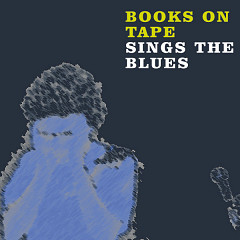
    Books on Tape covers a lot of ground, but of course what he doesn’t do is sing the blues. Todd Drootin’s live shows have been dubbed something like laptop punk for his infectious energy. On record it’s Drootin versus his record collection, dicing samples into bits you can nearly recognize but can’t quite. While Akufen takes a similar approach into herky-jerky house, Books on Tape winds up with something like sinister downtempo that retains some of the warmth and texture of its sources. Break Sings the Blues into single tracks, and they could fit on any number of compilations, where they would be standout tracks.

    Frisson works backward strings and low-resolution bass into a dub quagmire that would sound at home on ~scape; She’s Dead To Me becomes a spastic flute and drumtaps workout that sounds a bit like T Raumschmiere’s menacing funk. What keeps Sings the Blues together is Drootin’s grasp of structure and the sense of unrealized possibility left in his sounds: The Crucial sets ominous piano against a short, piercing horn phrase that could have turned sweet or sinister with the next notes — we’ll never know.

    Books on Tape winds up with something like sinister downtempo that retains some of the warmth and texture of its sources.

    Sings the Blues in De:Bug

    “Kritik”, bleed, De:Bug, February 1, 2004
    Sunday, February 1, 2004 Press

    Ach, und wenn der wirklich den Blues singt, dann in Tief-, Schief- und Schräglagen, von denen einem gar nicht bewusst war, dass sie auch den Blues haben. Todd Drootin mit einer Platte voller Oldschoolflavour in digitaler Neubearbeitung, voller tragischer Momente, die einen packen, leisen und leichten, überdimensioniert in Szene gesetzten Elementen, die mal HipHop, dann Breaks, dann irgendwie eher DIY-rockig, immer aber mit einem abwegig strangen Charme loskicken. Immer unterwegs und niemals verlegen um eine kleine Melodie zuviel, oder eine Passage, die langwierig abschweift, nur um einen dann stehen zu lassen als wäre einem gerade eine kleine Erleuchtung passiert. Laptopfolklore zwischen Freeflowpunk und Beatbox. 5/5

    5/5

    Anecdotes, Jeu d’ombres in The WholeNote

    “Review”, David Olds, The WholeNote, no. 9:5, February 1, 2004
    Sunday, February 1, 2004 Press

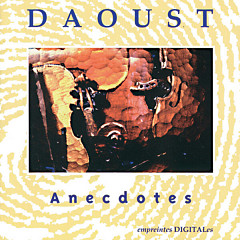
    Åke Parmerud’s Jeu d’ombres provided a strong reminder to me that this independent Montréal label is not just the most significant producer of Canadian electroacoustic recordings, but also has the most important catalogue of international electroacoustic artists. Swedish composer Åke Parmerud has been working in the field since the 1970’s and is recognized as a master of the genre. This current disc, with offerings from 1986 through 1999, provides an excellent introduction to his work. Of particular note are the mixed works: Strings & Shadows for harp and tape with Sofia Asunción Claro and Retur with the Stockholm Saxophone Quartet. I also enjoyed comparing Parmerud’s 1988 Stringquartett, a tape composition based on the manipulation of recorded string sounds, with Canadian Yves Daoust’s earlier Quatuor, which uses many of the same techniques. This latter work is, of course, also available from empreintes DIGITALes, on Daoust’s Anecdotes.

    … this independent Montréal label is […] the most important catalogue of international electroacoustic artists.
  • 446
  • 447
  • 448
  • 449
  • 450
  • 451
  • 452
  • 453
  • 454