electrocd

Blog

4252 results
  • 590
  • 591
  • 592
  • 593
  • 594
  • 595
  • 596
  • 597
  • 598
  • Figures in Sztuka Fabryka

    “Review”, Geert De Decker, Sztuka Fabryka, January 5, 2001
    Friday, January 5, 2001 Press

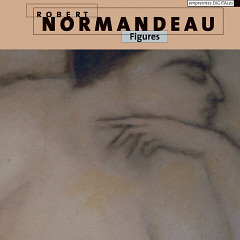
    On this CD [Figures] there are 4 compositions, each last between 11 or 19 minutes. The first track is called Le renard et la rose (1995) — “The fox and the rose” in English — is composed with sounds that comes from a track used for a radio-play of The Little Prince by Antoine de Saint-Exupéry and voices of the actors at this play. Robert Normandeau uses the sounds to create an ambient drone atmosphere where some sounds are rhythmical used by means of repetition, echo and reverberation. Sometimes the atmosphere is slow while where repetition is used the tempo goes up.

    Figures de rhétorique (1997) is the second composition and starts with a contemporary piano play (Jacques Drouin) where slowly some soft metallic ticking sounds are added, both interact slowly while to the end they really start a fast and more disturbing interaction.

    The third track Venture (1998) is again an atmospheric composition with several moods wave sounds comes slowly up and disappear faster followed with an ambient atmosphere. There are moments of tranquil atmospheres while a few seconds later there is a drone mood. With the atmosphere he creates in this composition, he wants to reach six movements: innocence, stability, tension, frenzy, violence and serenity. Something that succeeds him very well because as in the six movements there are moments of a true war between the sounds but followed with peace.

    The final composition Ellipse (1999) the sounds used in this composition are warm as it are string and wood sounds. It is a composition of contemporary classical music made with guitar. The guitar is not used to play on in an academic way but string and wood sounds are created by using in a non-conform way. These sounds are recorded and mixed in multiple so that a warm contemporary classical play is created.

    Alchimie in New Creative Music

    “Reviews”, David Cotner, New Creative Music, January 1, 2001
    Monday, January 1, 2001 Press

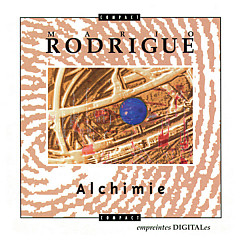
    Bells subsume into drainage systems and there is something quixotic about the cutting-up of water. And is identifying sounds winning out over listening to them? A taste of honey and a swirl of flies? Now shivering and wobbling, with an unidentified lowing beside. The cut-up review? No, as it coincides with the lowing laugh — that would be banal. Voices of children are trumped by more wobbling. Thumped? It could be read as such. Coo-koo. Applause. Is alchemy’s transmutation nothing less than an exchange of ideas? Something from nothing…

    Telephone message — communications. Tones — questions. Voices — attention. Musique concrète — it is unclear.

    Traces in Solénoïde Radio

    “Chroniques (Mission 5)”, Solénoïde Radio, January 1, 2001
    Monday, January 1, 2001 Press

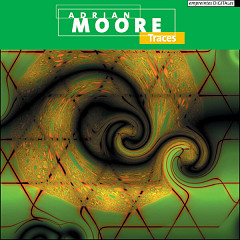
    À force de concevoir des remèdes efficaces dans le traitement de pathologies radiovisuelles aiguës, le label empreintes DIGITALes pourrait bien devenir un des fournisseurs officiels de notre acousmodrome solénoïdal. Dans la nuée de nouveautés que vient d’essaimer le label canadien, se distingue l’album de l’anglais Adrian Moore. Une œuvre concrète, versatile et complexe qui se découpe en trois parties: l’une est dédiée à l’abstraction sonore, l’autre au retraitement de sons naturels d’objets domestiques et la dernière est à connotation «radiogénique» selon les termes de l’artiste. Transformés en véritables capteurs de sons cachés ou insinués, ce sont les microphones qui sont ici à l’honneur. Naviguant entre évocations insolites ou oniriques et digressions autoparodiques, l’auditeur devient le témoin émerveillé d’une exploration chirurgicale et émotionnelle au cœur de la texture sonore…

    Une œuvre concrète, versatile et complexe…

    Moment in The Wire

    “Soundcheck Review”, Andy Hamilton, The Wire, no. 203, January 1, 2001
    Monday, January 1, 2001 Press

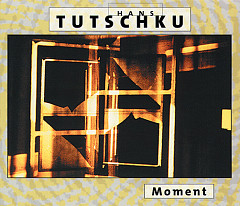
    In contrast to Mark Polscher’s disc of pure electronic music reviewed above, the German composer Hans Tutschku gravitates closer to the concrete tradition, despite his associations both with Karlheinz Stockhausen and Ircam extrémités lointaines (1996) uses recordings of city sounds from South East Asia The more concentrated, unified … erinnerung… (“Memento”, also 96) reflects a recent concern with speech as the basis for acousmatic transformations, and uses granular synthesis to break sounds into their constituent elements and reassemble or stretch them. Highly recommended.

    Highly recommended!

    Sondes in Heimdallr

    “Critique”, Stéphane Fivaz, Heimdallr, January 1, 2001
    Monday, January 1, 2001 Press

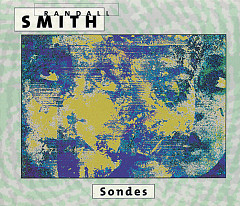
    Encore une production de l’excellent label canadien empreintes DIGITALes, cette fois-ci avec l’artiste de Toronto Randall Smith, spécialiste entre autre de musiques de film. Toujours dans une veine électroacoustique, cet album innove tant par la pallete impressionante de sons utilisés que par l’ingéniosité et l’inventivité des créations ainsi obtenues. Smith, après avoir donc travaillé pour le septième art, est devenu une référence dans le petit monde de l’électroacoustique, ayant présenté ses travaux dans le monde entier, et reçus moults récompenses méritées. En effet, cet album est surprenant autant que captivant Randall Smith détient les clés de son monde étrange, et nous les livre petit à petit, morceau après morceau, note après note, pour ouvrir les portes d’un paradis sonore impressionnant de maturité et de cohérence. En mélangeant les sources acoustiques et digitales, la pureté des sons gagne en crédibilité. On retrouve ça et là des morccaux éparses de flûte, de guitare, de cuivres, de cordes, etc… savamment assemblés en une construction sonore avant-gardiste. Pour une oreille peu habituée à ces sonorités, on pourrait penser à une orchestre symphonique en train de s’accorder, mais cette pensée est certes reductrice, tant ce travail est fourni et intense, sur la corde raide. Entre calme ambient et rêveries industrielles, sur fonds de tambourin imaginaires. Excellent!

    … cet album innove tant par la pallete impressionante de sons utilisés que par l’ingéniosité et l’inventivité des créations ainsi obtenues.

    Sondes in Equinoxe

    “Kritik”, Uwe Schneider, Equinoxe, no. 14, December 20, 2000
    Wednesday, December 20, 2000 Press

    Der kanadische Musiker Randall Smith widmete sich bisher ùberwiegend der Komposition und Aufnahme von Soundtracks, vornehmlich fiir Low-Budget-Filme einer kleinen Finna in Toronto, und wurde schon mit einigen intemationalen Preisen honoriert. Was er mit seinen mir vorliegenden rein musikalischen Arbeiten zustande bringt, solite jedem Liebhaber experimenteller Musik uneingeschrankt empfohien werden. Sondes. eine Zusammenstellung verschiedener Aufnahmen der letzten fùnf Jahre, enthalt eine Klangmelange, die mitreiDende Soundtornados ruid absolute Windstille in kiirzester Zeit aufeinanderprallen lassl, und bringt dies so gekonut zustande, dass an keiner Stelle Hektik aufzukommen scheint. Schon dus 14-minütige InsideOut enthalt alle Qualitäten des Albums: Ein kurzer drohnender Sound dringt in die Gehörgänge ein, um abrupt abzubrechen und die Musik hn klanglichen Chaos versinken zu lassen. Allerhand gesampelte Gertiusche verbinden sich mit rein elektronischen Klangen, und plôtzlich treten einige erdige Sounds auf den Plan, die mehr und mehr nach herkömmlichen Instrumenten oder Naturgerduschen klingen. Hore ich da im Hintergrund sogar das kurze Zupfen einer Akustikgitarre, oder wur es nur ein geschicktes Tauschungsmanover? Summt mir gerade eine Stechmùcke um die Ohren, oder ist es immer noch Randall Smith? Auf einmal wird es sehr still, und plötzlich ist das Drone wieder da, wie ein Strudel, der alles nach unten zieht. Nicht alle weiteren Stùcke konnen mit der beeindruckonden Atmosphare des Openers mithalten, doch wird es wahrend der mehr als 70 Minuten dauernden Spieizeit nie wirklich langweilig. Klassische Soundquellen wie Altflöte und Akkordeon sowie Kontrabass und andere Streichinstrumente werden in die Musik integriert. und alles mùndet in den finalen Trommelwirbel des letzten Stucks. Zustitzlichen Kaufanreiz bietet das liebevoll gestaltete Digipack. welches mit einem 28seitigen Booklet aufwartet.

  • 590
  • 591
  • 592
  • 593
  • 594
  • 595
  • 596
  • 597
  • 598