electrocd
  • This website is also available in English.

Blog

4252 results
  • 598
  • 599
  • 600
  • 601
  • 602
  • 603
  • 604
  • 605
  • 606
  • Transformations, Hildegard Westerkamp in Encompass

    “Review”, Joyce Hildebrand, Encompass, October 1, 2000
    Sunday, October 1, 2000 Press

    Remember that afternoon on the beach just a few months ago? The flash of sunlight on water, the feel of hot sand under your feet, the tang of lemonade on your tongue. Chances are the sounds of children laughing and icecubes tinkling will come to mind last, if at all. Why does hearing so often take a back seat to vision or taste? Have we been suppressing unwanted noise for so long that we have dulled our capacity to hear? Vancouver-based composer Hildegard Westerkamp offers our ears a wake-up call, reminding us that sounds are as much a part of place as images and smells.

    Westerkamp records whatever reaches her microphone in a particular place and then transforms and combines those sounds electronically. Her “instruments” include everything from creeks and ravens to truck brakes and train whistles. “I transform sound in order to highlight its original contours and meanings,” she says in the extensive liner notes of her CD Transformations. “This allows me as a composer to explore the sound’s musical/acoustic potential in depth.”

    If you are thinking “Solitudes” music, you’re on the wrong track. The first composition on the CD, A Walk Through The City, explores the sounds of Vancouver’s Skid Row’ carhorns, jackhammers, voices. Although perhaps the most challenging of the five works on this recording, it captures the beauty and complexity even in those sounds that we often try to filter out.

    In Kits Beach Soundwalk the “intimate sounds of nature” like clicking barnacles and sucking mussels are set against the pervasive hum of the city, blurring the line between nature and non-nature. Beneath The Forest Floor offers an opportunity to experience the deep peace that the composer felt while recording the sounds of BC’s Carmanah Valley.

    Cricket Voice emerged from a Mexican desert region called, strangely enough, the Zone of Silence. The cricket’s high-pitched trills become the desert’s heartbeat when slowed down in the studio. Cacti spikes, dried up roots, and the echoes of an old water reservoir provide the instruments for background percussion.

    Westerkamp thinks of sound as a part of ecological systems and is careful not to overmanipulate it. “I feel that sounds have their own integrity and need to be treated with a great deal of care,” she says. She also recognizes that her compositions, played far from the places in which they originated, become part of another “soundscape.” Indeed, my dog spontaneously howled through Fantasie for Horns II, adding his voice to those of foghorns, train whistles, and a French horn!

    More recently, Westerkamp has been working with photographer Florence Debeugny on At the Edge of Wilderness, a sound/slide installation about ghost towns left by industry in BC. It opens as part of a larger exhibition on September 8, 2000 in Vancouver. She also travels widely, giving workshops, lectures, and concerts, and she plans to put out a double CD in the next year with works based on her experiences of India.

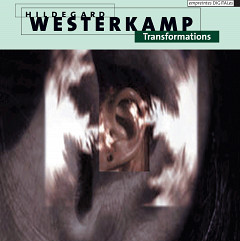
    … captures the beauty and complexity even in those sounds that we often try to filter out.

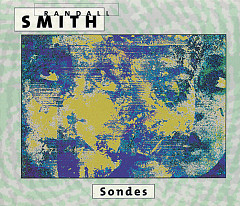
    Sondes in Intro

    “Tonträger: Hörtest”, Sascha Karminski, Intro, no. 78, October 1, 2000
    Sunday, October 1, 2000 Press

    Smith hat seinen Arbeitsschwerpunkt von Soundtracks zu “gemischten elektroakustischen Kompositionen” verlagert; will heißen: klassische Instrumente (v. a. Streicher und Bläser, aber auch Akkordeon) meet Tapemanipulationen. In weniger illustren Momenten klingt das verdächtig wie das, was György Ligeti und Co. auch ohne Elektronik erschaffen. Im Verlauf der Kompositionen immer häufiger jedoch umspielen sich Originalsounds und Effekte, bis sie kaum noch zu unterscheiden sind und völlig neue Klangwelten erschließen, die assoziativ mit biologischen (Liquid Fragments 1) und geologischen Phänomenen und Vorgängen (Elastic Rebound, Continental Rift) verbunden werden. Wozu ein Sampler, wenn auch so Soundmalereien gelingen — der Film läuft eh im Kopf ab.

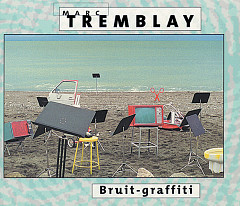
    Bruit-graffiti in Intro

    “Tonträger: Hörtest”, Sascha Karminski, Intro, no. 78, October 1, 2000
    Sunday, October 1, 2000 Press

    Daß die Welt um uns herum Klang ist, wissen nicht nur Joachim-Ernst Behrend und Talvin Singh — die unesoterische, krachige Variante vertritt u.a. Tremblay, der hier mit scholarischem Ernst Autos (Vroum), Klos (Résidus (clip dadaïste) — Vorsicht, nicht als Tafelmusik geeignet!) und alte Westernfilme (Cowboy Fiction) als unerschöpfliche Klangreservoirs entdeckt. Ganze Universen erschließen sich in der Welt der Telekommunikation bei «… Ceci est un message enregistré…» (vom schnöden Klingeln übers Knacken in der Leitung hin zum Telefonsex) und des Geldes bei L’argent… toujours l’argent! — von der Börse über Werbung hin zum TV-Quiz. Richtig aus dem Rahmen fällt lediglich das kindlich-naïve Conte sous la lune, das ohne den konzeptuellen Überbau viel direkter wirkt und uns zeitweilig die Welt mit Kinderohren hören läßt — wahrhaft psychedelisch.

    Bruit-graffiti in Blow Up

    “Altrisuoni in breve”, Etero Genio, Blow Up, no. 29, October 1, 2000
    Sunday, October 1, 2000 Press

    Animato da una dissarcratoria vena dada, minata in parte da un’impostazone accademica, il canadese francofono Tremblay prende spunto dal suono alcuni status symbol come l’automobile (Vroum), il telefono («… Ceci est un message enregistré…») e il denaro (L’argent… toujours l’argent!), per dare vita a grumi di rumore organizzato, Altra traccia di spessore è poi Cowboy Fiction dove, ispirandosi ai westem dei ‘50, viene, posta in risalto la contraddizione fra fantasie libertarie e realtà imperialiste insite all’epopea del far west: le fonti sonore utilizzate provengono dalle coIonne sonore di El Dorado e Searchers, da una versione del classico Rambling Man di Hank Williams e dal linguaggio di locomotive e fucili (ad ogni epoca i propri status symbol). La copertina in perfetto stile warholiano, con il nostro intento a dirigere una pletora di carabatole, prometteva comunque maggiori sfaceli. (6/7)

    6

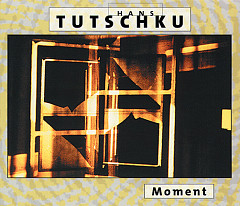
    Moment in Blow Up

    “Altrisuoni in breve”, Etero Genio, Blow Up, no. 29, October 1, 2000
    Sunday, October 1, 2000 Press

    Affascinante lavoro da parte di questo trentequattrenne tedesco di Weimar: rielaborazioni via computer di suoni concreti, strumenti vari e voci, Il disegno di Tutschku è comunque anomalo in quanto inizia sovente dal magma manipolato per mettere a fuoco le fonti originarie solo in ultima battuta. Un’opera di scomposizione, rimontaggio e dilatazione del suono calata nelle tenebre — Sieben Stufen utilizza un testo di Georg Trakl, lo stesso poeta maledetto che gli Étant donnés e Michael Gira rivisitarono in Offenbanung Und Unterqang — anche quando, in Extrémités lointaines vengono usate registrazioni prese in città, chiese e templi del Sud Est Asiatico, Oppure quando il poeta spagnolo Antonio Bueno Tubia recita di persona, in … erinnerung…, il proprio testo Yo os io aseguro…’. Nel passato di Tutschku, motivo di garanzia, anche un tirocio per studiare la diffusione del suono effettuato presso Stockhausen. (6/7)

    6

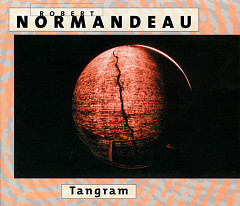
    Tangram, Robert Normandeau in SAN Diffusion

    “Review”, Gred Horton, SAN Diffusion, October 1, 2000
    Sunday, October 1, 2000 Press

    Normandeau freely admits to having been influenced by various other music forms including rock; these influences are obviously audible in most of his works. For example his piece Venture, which was created in 1996, uses as its sole source material the music of Jimi Hendrix, Led Zeppelin, Pink Floyd and other rock artists. Certain pieces on Tangram share some of the common elements which can be derived from rock music, i.e. long determined passages and repetitive rhythms.

    Tangram’s first track Bédé (1990) uses onomatopoeia through the voice of eleven–year–old Marie–Helene Blain. The effect is of children giggling, whispering and conspiring together in an ethereal world, tentatively touching the real world like Alice Through the Looking–Glass. Was Charles Lutwidge Dodgson listening to this when he wrote about Alice? Éclats de voix (1991), also uses onomatopoeia through its spoken passage: various sections lead us through processed effects; ghostly mutterings and industrial sound textures which lend a sadness and emptiness to a spectral score, introducing the listener to an elaborate sound world. Spleen (1993), for which the composer was awarded the Main Prize at the Musica Nova 95 International Competition held in Prague, is full of tension built up through a percussive heartbeat, but there is an underlying irritability in the piece like the weariness a traveller may feel at journeys end. An undoubtedly complex work. Track 4 Tropes (1991) contains excerpts from Mozart’s chamber works. Beyond the treated piano and orchestral soundscapes lies a delicate inner core. Normandeau appears to dissect and then reassemble Mozarts music whilst still maintaining the original composers subtle creation of character. The title track Tangram (1992) is at 27:05 minutes — the longest piece on the disc. This powerful piece strains to give birth to the perfect Chinese Tangram, a seven piece geometrical form, finally emerging into fluidity and composure.

    Robert Normandeau’s Cinema for the Ear aesthetic lends to his work a depth where meaning, sound and music become one. Either composition on this disc could be placed into a film script, these are soundtracks for the mind, very filmic in structure, and will therefore affect each listener differently creating a personal imaginary element.

    I first bought the CD and listened to these compositional works in 1994, found it excellent then and I still find it drives my imagination in the year 2000.

    … soundtracks for the mind…
  • 598
  • 599
  • 600
  • 601
  • 602
  • 603
  • 604
  • 605
  • 606