Moment in Intro
So drängen sich hier beim Hören Assoziationen von Nurse With Wound bis hin zu

So drängen sich hier beim Hören Assoziationen von Nurse With Wound bis hin zu
Of all demanding music (you remember, that’s the topic of this monthly column
It’s all semantics, right
The first problem one encounters is in the terminology. Electroacoustic music was first developed and theorized in France. Words and expressions like “musique concrète,” “électroacoustique” and “art acousmatique” are often mistaken for one another while their English counterparts don’t always bear the same meaning. To decipher it all, let’s ask one of the prominent people in the field,
The term “acousmatics” was reactivated by
”Seeing” electroacoustic music
Electroacoustic music is not music in the traditional sense and it never was intended to be. It’s not something you listen to while washing dishes, working on a term paper or building a soap box car in the garage (although the latter might give interesting results). The composer doesn’t aim at a melody-and-accompaniement form. The electroacoustician shapes sound in the same way a sculptor shapes wood, stone or metal. He takes raw sound sources (their choice often relates to his conception of what the piece will stand for/mean) and manipulates them via studio techniques in order make them say something they were not meant to — ultimately disguising them, making them impossible for the listener to recognize. Listening to an electroacoustic piece is like studying a sculpture from every angle…or like “watching” a sound movie, hence the expression “cinema for the ear”.
Depending on the piece, the best way to listen to electroacoustic music is with headphones (some are better with loudspeakers), lights down and even eyes closed, with minimum disturbance and interruption. The goal is to let yourself be surrounded by the sound. Of course, these are not the kind of tunes you will listen to repeatedly. But the experience is really worth a try and when you stumble upon a piece that talks to you, you will find yourself going back to it regularly.
Essentials
Keeping the list short, here are a few essential listenings for beginners — yes, that means easy start-ups. Of course I could (and should) list a few titles by
But I want to draw your attention to more recent and easier-to-locate titles. Some composers have a way of staging “cinema for the ear” that will take you like a good drama.
More and more, composers are trying to free electroacoustic music from the frame of academic work and link it to more vital live settings. The French duo
In any case, try it. But don’t approach this music as ordinary verse-chorus-outro music. It’s not music — it’s sound sculpture.
The original 1994 release of Robert Normandeau’s
The five works presented here showcase the works of Québécois acousmatic composer
The third work on the disc,
Like most of
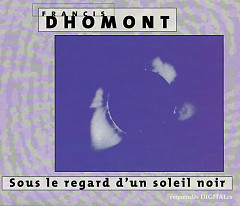
This 1990 release from DIFFUSION i MéDIA (on the empreintes DIGITALes label) represents the first disc entirely devoted to the works of Canadian acousmatic composer
Indeed, there is not a single uninteresting moment on this disc, which is absolutely captivating from start to end.
Its title,
For ears unaccustomed to this genre, probably the most easily approached work is the 12-minute acousmatic masterpiece
The slightly longer
Canadian electroacoustics composer
Other pieces incorporate the sound sources of live instrumentation
Acousmatic and soundscape composition are arguably the most important compositional tendencies in Canadian electroacoustic music today. Rooted in musique concrète, acousmatic music treats the sound source as an abstract element which can be modified to suit a formal plan laid out by the composer. Recorded sounds are taken out of their context and their temporal and spectral characteristics are transformed, sometimes beyond recognition. Contrastingly, soundscape composition keeps the sound material close to the original recordings, and places the musical process within a specific socio-cultural context.
Since 1963, he has produced several dozens of works for tape.
According to Dhomont, this work proposes a meeting of the imagination (‘psychology of depths’) with the mental images produced by the acousmatic treatment of sounds. Dhomont uses texts by psychiatrist — psychoanalyst
The piece is structured in eight sections lasting four to eight minutes each. Dhomont uses three strategies to achieve formal unity
Dhomont shows his compositional craftsmanship by keeping the pace of the sections masterly balanced. Sound objects are carefully designed to keep sources’ identities hidden. When these can be identified, they are meant to fulfill a specific formal function. For example, after the listener has been exposed to several minutes of abstract sound, the sudden appearance of a talking crowd (Inner Citadel, at 1:10) provides a striking contrast. The voice of the narrator is usually kept as a layer separate from the musical material.
After twenty years of its conception,
Keeping in mind the year of its realization and the concepts underlying its formal plan,