electrocd

Blog

4252 results
  • 698
  • 699
  • 700
  • 701
  • 702
  • 703
  • 704
  • 705
  • 706
  • Volt in Audion

    “Review”, Alan Freeman, Audion, no. 16, October 1, 1990
    Monday, October 1, 1990 Press

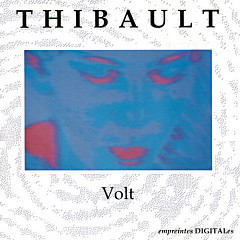
    Radically different, and totally out-on-a-limb, this is a very surprising release indeed. A very complex melodic music, both stochastic and rhythmic, often jumping from one to the other. This is computer music of a very innovative kind, it could both be described as a stop on from Peter Frohmader’s Homunculus as well as Morton Subotnick’s Return; elements of both are present, yet this is far more intensive and demanding. The experience is one of frantic rhythms juxtaposed with angular melodies, a music that flies off at tangents in all expected and unexpected directions. Not easy to get into, but ultimately rewarding.

    Radically different, and totally out-on-a-limb…

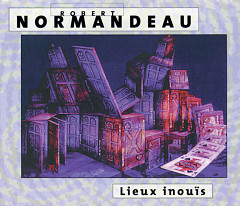
    Lieux inouïs in Audion

    “Review”, Alan Freeman, Audion, no. 16, October 1, 1990
    Monday, October 1, 1990 Press

    Also greatly influenced by European electronic and musique-concret techniques, Canadian Normandeau has developed many of the compositional techniques developed by the likes of Pierre Henry and Stockhausen further, to create a music that contains many familiar elements yet is new and different.

    Featuring five very different styled pieces Lieux inouïs is a challenging and exciting experience. Most obviously a dedication to Stockhausen (in fact some text from his Hymnen is borrowed here!), Jeu is a dynamic collage, featuring slabs of sound, good use of space, and sonic sliding effects. In fact the compositional technique is almost stolen from Stockhausen! Mémoires vives is a carefully constructed collage of borrowed orchestral and instrumental sounds, a great ever-developing sound-pool. Rumeurs (Place de Ransbeck) is very much in the fashion of François Bayle, featuring opening and closing doors, voices and effects. Incidentally it is nothing like Pierre Henry’s similar instrumental Music for a door and a sigh! Contrasting again, Matrechka is a kind of organised chaos, a melange of electronic sounds moving through numerous phases, spatial and dynamic. And to end on a softer note Le cap de la tourmente is a spooky atmospheric piece with rich harmonics, composed by very novel means.

    … a great ever-developing sound-pool.

    Volt in Musicworks

    “Extra-musical CDs”, Kathy Kennedy, Musicworks, no. 48, September 1, 1990
    Saturday, September 1, 1990 Press

    A new compact-disc label called empreintes DIGITALes has come to the forefront of the “musique actuelle” scene in Quebec. The three most recently launched CDs: Volt by Alain Thibault, Lieux inouïs by Robert Normandeau, and Ligne de vie: récits électriques by Christian Calon are now being distributed throughout Canada.

    The three CDs share a rich breadth of digitaliy sampled sonic language, virtuosic technical production, and a preponderance for extra-musical references (visual, spatial, or litterary elements). This is perhaps indicative of the thriving dance/theatre scene in Quebec that is so eager to integrate new and original music.

    The most accessible (and already heard) of these three is Volt, which includes a work called Le soleil et l’acier (Sun and steel) featuring classical singer Pauline Vaillancourt. It was used in a theatre piece last February by the internationally acclaimed Carbone 14 company. Surprisingly traditional, the piece uses expressionistic tonalities, a meandering operatic voice through chamber textures (sampled in actuality), and the words of the German poet Heinrich Müller. It is unavoidably reminiscent of Schönberg’s Verklärte Nachte, Mahler’s 2nd and 4th symphonies, and others who have drawn upon poetry and literature for their inspiration. In fact, this piece was presented at the Montréal Musée d’art contemporain and the Goethe Institute’s Blickpunte (German cultural) event.

    OUT is part of a video opera of the same name, and ELVIS (Électro-lux, vertige illimité synthétique) is a multimedia work with computer controlled visual support including a saxophone arrangement by Walter Boudreau. Concerto pour piano MIDI, however, is purely a musical piece that has very little to separate it from its traditional lineage apart from the use of electronics.

    The Thibault CD often feels like a digital reproduction of more traditional sounds, sometimes relying on such steadfast elements as regular rhythm and diatonic harmony. However, there is a wholesome pleasure taken in the mastery of these sounds into an entertaining and stimulating aural event.

    Robert Normandeau views the electroacoustic genre as an opportunity to express certain manifestations of the soul that would otherwise have been muted. He achieves this by exploring innovative sound colour and texture in what he calls “sonic landscapes” The sounds are truly appropriate to the CD’s title: Lieux inouïs (Unheard-of places). This kind of sound painting makes use of the listener’s set of acquired perceptual references, creating, along with the sound, a kind of spatial, texturai imagery whkh is, again, extra-musical.

    Normandeau acknowledges this in his descriptbn of the piece Jeu as a kind of “cinema for the ear.” Matrechka is divided into sections thatd are entitled by colour: steel grey, cobalt blue… His link with visual imagery is longstanding: in 1985 he composed accompanying sound for an exhibition of holosculptures (sculptures with holograms) by George Dyens. Each piece contained a different soundtrack in continuous playback.

    The Christian Calon CD also relies on visual metaphor but the execution is more cryptic and less facile. The 40’ piece Minuit employs a text throughout, which varies in its voice, functioning as narrator, actor, etc. The writings by the composer are inspired by, among others, Beaudelaire, Joyce and Artaud. Great care is taken on the CD jacket to explain the diverse functions of the voice and the textual and sonic writing.

    It is to the credit of the empreintes DIGITALes label that the entire text has been skillfully translated. In fact, each piece on all three CDs comes with an ample description as well as a note on the composer, all fully translated. Unlike some other, more established labels, this new company represents the artist with as much detail and precision as possible.

    … an entertaining and stimulating aural event.

    Lieux inouïs in Option

    “Review”, Julia Loktev, Option, no. 34, September 1, 1990
    Saturday, September 1, 1990 Press

    The title, meaning “Unheard-of Places,” could be misleading. Normandeau, a professor of acoustics and electroacoustics at the Université de Montréal, may not be splicing his way through terra incognita, but he is mapping out some pretty interesting soundscapes and “acousmatic” compositions, as he deems them. These five pieces include both abstract sonic arrangements and more concrete, almost cinematic or radiomatic, compositions. The abstract works, as well as another piece based on computer-processed extracts from requiems, lean towards the monotonous at times. But the two concrete compositions easily make up for the tinge of tedium. Both Jeu and Rumeurs (Place de Ransbeck) project a compelling “cinema for the ear” never too cluttered, never too sparse. Rumeurs (Place de Ransbeck) wanders through haunted halls and doorways in a drama of spaces and objects. Jeu an exploration of the different uses of the French word for game or play, skips from a quiet torest to an amusement park, with sojourns near a bulldozer and a medieval choir along the way. It is uncanny how smoothly they come together in a finely manipulated soundscape. Both compositions are exquisitely spatially mixed and ideal for headphone listening.

    … exquisitely spatially mixed and ideal for headphone listening.

    Volt in Keyboard

    “Review”, Mark Vail, Keyboard, no. 16:9, September 1, 1990
    Saturday, September 1, 1990 Press

    Alain Thibault: If the name doesn’t ring a bell, it should. Co-winner of Keyboards first Reader Tape Contest (Feb ’86), Thibault focuses on a more rhythmic ancl accessible, less haughty musical feeling. His tones resemble similiar instruments (he uses drum-like timbres much of the time), but they’re played in a mechanically inhuman, fast, precise way. Le soleil et l’acier features a lovely soprano voice singing “aah,” enveloped by a sometimes subdued, sometimes frenzied and sinister sequence. Included on the CD is Thibault’s award-winning God’s Greatest Gift — complete with the sliced and diced Ronald Reagan quote, “God’s greatest gift is human life” — alone worth the price of admission.

  • 698
  • 699
  • 700
  • 701
  • 702
  • 703
  • 704
  • 705
  • 706