Sauter au contenu principal
electrocd

Blogue

201 résultats
  • 26
  • 27
  • 28
  • 29
  • 30
  • 31
  • 32
  • 33
  • 34
  • Alibi dans Computer Music Journal

    «Review», Anna Rubin, Computer Music Journal, no 25:1, 1 mars 2001
    jeudi 1 mars 2001 Presse

    [This text was also printed in SAN Diffusion (RU), 1 novembre 2000]

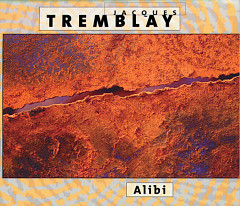
    The recent Jacques Tremblay compact disc, Alibi, includes six pieces dating from 1990-1995. Mr. Tremblay is a young composer who explains in the program notes that he began as a guitarist and encountered electroacoustic music as a “revelation.” Further, he grounds his work in the use of concrete sound, both vocal and ambient, and favors a rich, dark sound palette. The “typical” sonic makeup of the first three pieces, in particular, are so varied and rich, yet oddly similar to each other, that listeners may prefer to listen to the CD in the following order: tracks 1, 4, 2, 6, 3, 5.

    The first work, Hérésie ou les bas-reliefs du dogme (1990), is a relatively long 21-min piece, which includes extended recordings of an American fundamentalist Christian preacher along with snippets of Frank Sinatra and Muslim and Gregorian chant. The extended “rant” of the preacher is countered with French dialogue which I could not follow, but which another reviewer characterized as “papal posturing.” Most of the quoted speech is enmeshed in a rich stew of repetitive, mechanical sounds, and long stretches of bell-like overtones emphasizing upper partials over repetitions of tonic and dominant. Occasional stretches of Tibetan horns and Gregorian chant (sung by a woman, yet another heresy!) gradually distort and slither away. The religious spirit is perhaps viewed here through the lens of those dark, Spanish baroque paintings, all blood, fire, and damnation, although religion itself is viewed as the evil. The piece inscribes a long 18min arc, pauses, and then has a 3-min coda of similar material. I am not altogether convinced by this large-scale form, but certainly Mr. Tremblay has a feel for climactic intensity and gnarly sounds which get under your skin.

    Oaristys (1991) is described as following “the stages of a hypothetical night of love,” and is divided into six movements: Call of Desire, Approach, Embraces and Sensuous Delight, Animal Urges, Scattering, and Inflection. This work is highly sensual, but ominous as well. But then, great passion is often companion to a sense of danger, of vulnerability before the beloved other, even as union occurs. Mr. Tremblay draws from both these sides of the erotic experience. Waves, bird-like calls, cello quotes from a Bach Sarabande, and the stylized vocalizations of a Japanese Noh actor all enmesh the listener in a sinuously rich texture. The second section loops and cycles erotic feminine laughter with percussive patterns reminiscent of bird calls. The composer characterizes this section as a remake of the Erotica movement of Symphonic pour un homme seul by Pierre Schaeffer and Pierre Henry. Sounds progressively expand, speed up, reappear, distort, and disappear in a mercurial trajectory, and the succeeding four movements follow each other until ending with a slow, brooding finale.

    The third work, L’intrus au chapeau de spleen (The Intruder with a Spleen Hat), is a mysterious sonic stew which incorporates favorite Tremblay strategies — multi-layered repetitive mechanical sounds, sinuously morphing gestures — but allowing a bit more silence to frame individual gestures. A mysterious, watery, and nocturnal world is evoked, conveying the sense of what boils and roils beneath otherwise ordinary surfaces.

    Rictus nocturne (1992), again in six movements, evokes the jam session of jazz. I quote the composer: “Each movement follows its own story and develops a compositional problem: montage; play-sequence, of density; of silence; and of sketched, improvised and edited sequences from object instruments.” The jazz idiom, though, is absent in the composer’s own music, though it is intermittently quoted. Interestingly, this piece includes the most introspective and quiet music heard on the disc to this point. What Mr. Tremblay seems to love most of jazz is its quiet balladic side as well as the needle noise of old records which he riffs upon.

    Jeu d’ondes quotes Maurice Ravel’s Jeu d’eau, and also includes quotes from historic recordings of reflections on the problems of creating an FM network for radio broadcast. Delightful confections of boat noises, much of it frothy and effervescent, make this a tasty morsel.

    La robe nue (The Naked Dress) uses string sounds for a good deal of its material, as well as bells, train, and a horse. The composer evokes Marcel Proust’s Cambray, the first book of Remembrance of Things Past. Mr. Tremblay returns to a reflective mood, giving individual sounds room to gently resonate. This piece is extremely effective in maintaining a languorous, yet musically compelling, texture throughout.

    … extremely effective in maintaining a languorous, yet musically compelling, texture throughout.

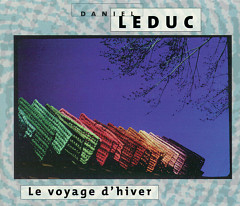
    Le voyage d’hiver dans Computer Music Journal

    «Review», Laurie Radford, Computer Music Journal, no 25:1, 1 mars 2001
    jeudi 1 mars 2001 Presse

    The 45th release from Montréal’s bastion electroacoustic label, empreintes DIGITALes, is a collection of works produced between 1994 and 1997 by the Montréal composer and radio producer, Daniel Leduc. Mr. Leduc has worked extensively in the medium of radio, a fact that helps explain his penchant for the voice as the primary sound source in most of the works included in this compilation. The first, the intriguingly titled Réponse impressioniste donnée par Josef K. lors d’une fin de soirée hivernale à une touriste française qui passait en face de la gare (Impressionistic answer given by Josef K. to a French tourist walking by the railway station at the end of a winter’s evening), may have the longest title but is the shortest piece. Réponse impressioniste is an “electroclip,” which introduces the listener to the fundamental sonic and gestural world that Mr. Leduc has gleaned from the François Bayle/Michel Chion legacy of acousmatic composition: the predominance of the voice as both semantic and sonic subject and object, either unadulterated or highly modified and processed; ringing quasi-inharmonic drones which encompass the sound stage and serve a structurally unifying function; a variety of sound materials drawn from natural sonic environments including, in this instance, wind and passing trains; and the sometimes bombastic entrances of punctuating, climax-building synthetic materials, raw, rough, and vibrant in contrast to neighboring sounds.

    Réponse impressioniste, in addition to providing an initial summary of Mr. Leduc’s sonic world, proves an appropriate thematic opening for the disc which includes the 42-minute opus, Die Winterreise (Winter Journey), from 1997. In this extended composition, the composer sets the original German poems by Wilhelm Müller (1794-1827) as a suite of 24 electroacoustic miniatures plus a coda, each ranging from 30 sec to 3 min in length. (Yes, these are the same poems Franz Schubert set in his song cycle of the same name in 1827!) The text is wonderfully recited by the actor Erwin Potitt and is provided in its entirety in German, French, and English in the CD booklet for reference.

    One has several compositional choices available when approaching a work employing text and voice, especially when the words elicit such potent visual images and are of such sonic richness on their own: establish and maintain a distinct sound and space for the voice and for the accompanying materials such that they are parallel but nonintegrated; integrate the voice materials into the timbral and metaphorical workings of the composition such that sound and sense achieve equal status; or — a hybrid of these two approaches — provide an accompanying “soundtrack” to extend and illustrate the words and semantic content of the text while keeping it the focus of attention in the forefront of the sonic image. Mr. Leduc chooses, for the most part, the latter option. He investigates several approaches to the vocal setting of the Müller text, including clear, unencumbered recitation, degrees of parallel signal processing of the voice that oscillate between accompanying and replacing the original vocal recording, and a more exaggerated and fragmented presentation. Despite these variations of approach, the vocal element is always maintained as the motivating agent in the piece, thus remaining faithful to the time-honored tradition of the lied as championed by Schubert.

    A ringing, bell-like vocal sound (a recognizable offspring of the GRM’s Syter system) serves throughout the work as a unifying element, a refrain which haunts the speaker of the poems and accompanies the diverse collection of natural sound materials which populate and attempt to give dimension to Müller’s poignant and often desolate images. The short pieces that make up this substantial work run seamlessly from one to the next in a successful pacing of vocal declamation, interjected non-vocal materials, and more extended electroacoustic interludes.

    The piece utilizes an ample assortment of recognizable wintry sounds such as the wailing winds, snow-crunching footsteps, and jingling bells that make up the first poem, Gute Nacht (Good Night). The sound world becomes immediately more diverse and evocative in the succeeding poems, Die Wetterfahne (The Weathervane), Defrorne Tränen (Frozen Tears) and Erstarrung (Numbness). While an incessant string timbre and a vivid, chattering, high-frequency texture propel Der Lindenbaum (The Linden Tree) and Wasserflut (Flood) respectively forward, Auf dem flusse (On the River) is illustrated simply with running water and the return of the ringing, bell-like refrain. Speed-varied voices and traffic sounds harry the voice in Rückblick (Looking Back), while a raging fire and rapidly moving filtered white noise provide a backdrop for Irrlicht (Will-o’-the-wisp).

    A curious, noisy, orchestra-like interlude introduces Rast (Rest) and brings to the fore the most predominant electroacoustic timbre in the piece, a high frequency noise that seems an appropriately illustrative element for a winter topic. It is, though, overused in this long work. Frühlingstraum (Dreams of Spring) stands out as one of the work’s most successful segments in terms of both illustrative measures and vocal integration. The voice is tracked with a parallel stream of chattering vocal fragments while the sound stage is filled with a joyous din of cymbals and whirling synthesizer drones. Waves of filtered noise return as a staple of the sound world in Eisamkeit (Solitude) and Die Post (The Post), as does the parallel voice-tracking in Der Greise Kopf (The Grey Head) and Die Krähe (The Crow), where it is complemented by the more-than-obvious use of cawing and chirping birds.

    The final segments of the cycle begin to grasp at ways of supporting the voice: the descending tom-tom solo at the end of Letzte Hoffnung (Last Hope) as an illustration of falling; the honking and baying cacophony in Im Dorfe (In the Village); the crackling storm of Der Stürmische Morgen (The Stormy Morning); the punctuation of a passing airplane in Täuschung (Illusion); the still unaltered bell-like refrain in Der Wegweiser (The Sign Post); more snow-crunching feet and tolling of bells in Das Wirthaus (The Inn); reversed, distorted, and tolling bells, as well as a distant church organ hymn in Mut! (Courage!); telephone push buttons, busy signals, and answering machine bleeps in Die Nebensonnen (The Phantom Suns); and finally, an out-of-tune plucked instrument and reversed versions of the same in Der Leiermann (The Hurdy-Gurdy Man). The minute-long coda is a bewildering final touch to this lengthy opus with its initial outburst of breaking glass followed by footsteps (now on a wooden surface) moving off into the distance and the roar of a motorcycle, the latter two sounds accompanied by the twittering of a music box melody.

    Mr. Leduc shoulders a huge challenge in setting this quantity of text and image in the context of an electroacoustic work. His decision to concentrate on the vocal recitation and to provide simple electroacoustic illustrations in support of the text succeeds in many instances but not in sustaining the grand span and depth of the original poems. The piece is ultimately radiophonic in nature and origin and would unlikely be as suitable for an acousmatic concert experience as for a hörspiel-type broadcast.

    A second short electroclip, Traverser les grandes eaux (To cross the great waters), follows Die Winterreise and serves as both an interlude and a transition to the final extended work on the disc. Its droning string textures, rapidly panning metal rattles, wisps of wind, and aperiodic pulses of tonality provide a point of repose from the flanking works. A central swell of string pads, as well as the well-orchestrated entries of muffled voice and high string drone, contributes to this brief sonic essay’s convincing shape.

    The concluding work on the disc is the most recent of Mr. Leduc’s creations to be presented. Troposphère, from 1997, is a suite of four pieces in “minimalist style,” lasting over 15 min. The objective is alluded to by the titles of the four pieces: Stratus, Cumulonimbus, Altocumulus and Cirrus. The music is “realized through a heuristic composition process by stratifying layers of sound.” Combining similar or dissimilar layers of sound is a standard process in many if not most types of electroacoustic music (from hard-core acousmatic works to electropop). The success of such an approach lies in both the possible implications of the materials used and the interplay that results between the coexisting sound streams, a result of either conscious design or haphazard chance. At times, the composer’s choice of materials fuses admirably into an engaging polyphony where time and timbre cavort and produce a meaningful texture, gesture, transformation, or punctuating event. But too often the layers of sound remain isolated from each other in terms of both gestural and timbral attributes and implications, leaving one with the sense of listening to improvising musicians who are oblivious to each other. There is an obvious attempt to produce programmatic textures and a sense of gravitational suspension in keeping with the tropospheric subject of the work. Unfortunately, these attempts are overly static and underdeveloped, lacking a sense of dialogue between or fusion of the contributing sound materials. The over-use of materials such as storm, rain, and high frequency noise, in combination with the chattering of hammers and the cliché of passing cars on wet pavement, simply does not create a sonic statement worthy of the title Cumulonimbus. The continued predominance of a thick band of noise and gurgling lo-fi sounds in Altocumulus, although briefly punctuated by a singular, large bell sound that gradually distorts in an interesting manner, does nothing to stem the impression of a gratuitous combination of materials. The fleeting entry of a soprano voice, intoning a melodic fragment amid a jumble of garrulous sounds reminiscent of analog sequencers circa 1975, seems an all-too-obvious and forced attempt to elevate the work into the ether in the penultimate moments of Cirrus.

    There are no stunning, ear-melting timbres or moments of gestural ecstasy in Mr. Leduc’s work. He endeavors to create a type of hybrid sonic poetry where voice, natural sound, and processed or synthetic sound combine to buoy textual content or carry abstract compositional goals to fruition. The harvest is at times rich and promising, at other times wanting in depth and content.

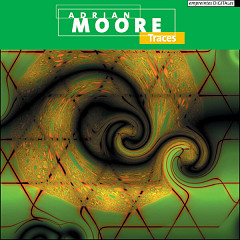
    Traces dans L’entrepôt

    «Kritiek», Tom Wilms, L’entrepôt, 1 mars 2001
    jeudi 1 mars 2001 Presse

    Adrian Moore kwam in contact met electroacoustiek in zijn geboortedorp Nothingham door een concert van Denis Smalley. De performences met tape en verschillende luidsprekers interesseerde hem en zijn verdere studies onder Jonty Harrison op de university of Birmingham gaf hem de gelegenheid te werken met BEAST (Birmingham ElectroAcoustic Sound Theatre). Hij studeerde af in 1998. Intussentijd heeft zijn werk al verschillende prijzen bij elkaar gesprokkeld. Nu geeft hij les op The Scheffield University . Hij is ook voorzitter van de Sonic Arts Network, De Britse nationale organisatie voor de promotie van het creatieve gebruik van technologie in de composities en voorstelling van muziek.

    Het werk op deze CD valt uiteen in drie delen, deze dat het abstracte onderzoekt (Junky, Dreamarena), deze dat zich focust op het herinterpreteren van natuurlijke geluidsobjecten (Study in Ink, Foil-Counterfoil), en dan heb je nog het ‘radiogenic’ (Sieve)

    Junky en Dreamarena, dat gedeelte dat zich bezig houdt met het abstracte, zou je kunnen omschrijven als ‘electroacoustische ambient’; Junky heeft simpele melodische en harmonische structuren, Dreamarena is abstracter.

    Adrian Moore: “The works on Traces offer a search for the hidden, both within the piece and within the sound. It is this hidden property in certain sounds that still excites the ear. The microphone offers us the chance to examine these hidden qualities, such as the sound of a marker pen on a whiteboard, the sole sound-source used for study in Ink. An everyday sound that could perhaps be described onomatopoeically by the word “squeak” offers surprising versatility when examined through the microphone, extending even to ‘human’ characteristics of strength, weakness, enquiry, frivolity, humor and self-parody.”

    Foil-Counterfoil werkt met verschillende geluidsbronnen. Hier is ook gezocht naar ‘hidden sounds’ door de microfoon extreem dicht bij de objecten te plaatsen.

    Sieve, het ‘radiogenic’ werk, is opgebouwd uit natuurlijke geluiden en hun elektronische manipulaties. “In Sieve, a huge amount of sonic data is thrown at the listener, who naturally is asked to make sense of it.”

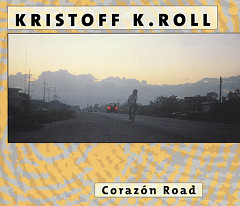
    Corazón Road dans SAN Diffusion

    «Review», Mathew Adkins, SAN Diffusion, 1 mars 2001
    jeudi 1 mars 2001 Presse

    Unlike all of the other disks from empreintes DIGITALes that concentrate on the work of a single composer, Kristoff K.Roll is the performing/composing duo of Carole Rieussec and Jean–Christophe Camps, who compose and improvise, attempting to capture the poetry of everyday life from amongst the musical worlds and their codes.

    Described as a musical travel diary, Corazón Road takes you on a sonic trip around Central America. Like any diary, small excerpts and fragments reveal only a little of the whole. So it is with Corazón Road. You have to listen to the disk right through to get the impression of what Camps and Rieussec are trying to create. In its treatment of the collected sonic environments this is not merely an ethnomusicological set of location recordings, neither is it a musical work in the mould of Telemusik, rather it is more like a hörspiel — a play in four acts with a prologue and two interludes in which sonic set pieces, vignettes, raw recordings and composed material rub shoulders to create a hybrid that is more like the scrapbook we all used to keep combining photos, tickets, postcards and our own written memories.

    This disk is intoxicating from beginning to end. As a listener you become so absorbed in the sound world that the numerous sections of the work become irrelevant after a while — they become mere parts of a bigger journey. One of the reasons that this sound world is so engrossing is because of the sense of timing and pacing of material. Camps and Rieussec have an extremely keen ear that carefully balances the composed and the anecdotal, activity and repose. One of the best example of this occurs in the central part Belize City where the quiet and evocative Derrière la fenêtre (Behind the Window) and Un bateau arrive (A Boat is Arriving) are juxtaposed with the raw, raucous sound of the Belizean Rappers rounded off by the advice all travellers should heed once in a while, It will be better for you to take a bus

    Diary extracts, photos and maps in the liner booklet complete the travelogue. Though these are interesting, you could do no better that to listen and let you imagination do the rest.

    … listen and let you imagination do the rest.

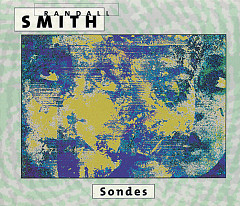
    Sondes dans Fake

    «Kritiek», Sybilla, Fake, no 8, 1 mars 2001
    jeudi 1 mars 2001 Presse

    De Canadese componist Randall Smith maakt een soort moderne kamermuziek. Hij componeert eerst werk voor diverse bekende solisten (vaak in opdracht). neemt de uitvoering op en bewerkt dan delen van deze opnames op elektronische wijze. Het uiteindelijke resultaat komt voort uit een mix van deze bewerkte fragmenten en andere opnames van -meest traditioneleinstrumenten. Toch is wat je hoort niet vervreemdend modern; meestal hoor je pure akoestische instrumenten zoals cello, bas, tluit en accordeon in een warme compositie. Dit moet de ultieme vrijheid voor een componist zijn. Bovendien is in het fraai vormgegeven boekje te lezen dat aan elke compositie een dieper concept ten grondslag ligt op het vlak van natuurgeweld- en schoonheid, ontstaansgeschiedenis van de wereld en primaire lichaamsprocessen zoals bloedsomioop en hartklop. Het lezen van deze boodschappen’ is niet echt nodig om van de muzick te kunnen genieten maar het voegt wel een extra dimensie toe en maakt je alert op dingen die je anders niet zou horen. Veel van Smith’s werk hoett terecht prijzen gewonnen op prestigieuze concoursen voor modern-klassieke muzick. Aanrader!

    21 situations dans AllMusic

    «Review», François Couture, AllMusic, 1 mars 2001
    jeudi 1 mars 2001 Presse

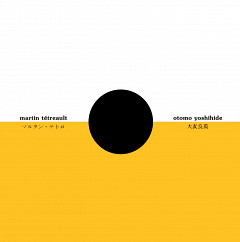
    This encounter between two of the leading turntablists of the avant-garde was meant to be. It happened in Montréal Martin Tétreault’s territory), December 1997. Japanese pioneer Otomo Yoshihide ex Ground Zero performs on turntables, sampler and CDs. Tétreault uses his arsenal of pick-ups, prepared records and prepared needles. They recorded 21 short improvisations (maximum duration: three and a half minutes) on specific themes, ranging from traditional music to cartoon, from science-fiction to education. This working method allowed them to concentrate their efforts on a few selected sound sources for a short period of time. It resulted in sharply focused pieces summarizing the techniques and art of both musicians. Humor is always a key aspect of Tétreault’s work and it is well represented here, especially in Science-fiction where the “spacy” analog synthesizer sounds he dug out are assembled into a melody very close to “Somewhere over the Rainbow”. The listener’s attention has no time to wander off. Recommended.
    Recommended.
  • 26
  • 27
  • 28
  • 29
  • 30
  • 31
  • 32
  • 33
  • 34