Sauter au contenu principal
electrocd

Blogue

4252 résultats
  • 142
  • 143
  • 144
  • 145
  • 146
  • 147
  • 148
  • 149
  • 150
  • 3 – 5 janvier 2014: 3 jours d’acousmatique au San Francisco Tape Music Festival

    jeudi 2 janvier 2014 En concert

    Le prochain San Francisco Tape Music Festival se tiendra du 3 au 5 janvier 2014 au Z Below à San Francisco (ÉU). Trois jours de classiques, d’œuvres des premiers pionniers et de créations. Parmi les 26 œuvres présentées, on retrouve celles de Hans Tutschku, Maggi Payne, Denis Smalley, Peter Batchelor, Thom Blum, Matt Ingalls, François Bayle, Jonty Harrison, Hildegard Westerkamp, Elainie Lillios, Stijn Govaere et Elsa Justel.

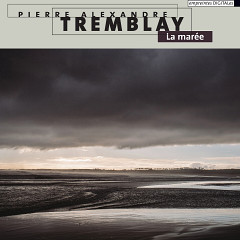
    La marée dans psychemusic.org

    «Review», Gerald Van Waes, psychemusic.org, 1 janvier 2014
    mercredi 1 janvier 2014 Presse

    Sometimes it takes a while to grasp a composer’s own specific angle how he/she perceives the sonic reality and composes with it. Usually and compared to the older generations, a modern composer became much more like sound painter. For this, they also use a couple of tools of preferences of their own. Pierre Alexandre Tremblay is both active into contemporary jazz as well as into electroacoustic music. Having played bass guitar for most of his live, he also uses a laptop to enhance the sonic world. Improvisation remains important for the development of his pallet. He also is a member of two ensembles which further enhance improvisation, which is Ars Circa Musicæ (with a range from noise to free jazz, punk rock and contemporary music), and De type inconnu (a two-guitar and two-laptop duet based in Montreal), besides being part of Splice (LOOP Collective, London), and the L.F.O. Orchestra. He currently teaches composition and improvisation at the University of Huddersfield in England.

    The improvisational pallet used in the first composition, La rupture inéluctable, is a combination of some slower notes of the basic instrument, the bass clarinet, played by Heather Roche, with a more emphasised louder and calmer playing. The bass clarinet is an instrument, which can also show such strongly emphasized bursts of air, which here and there are clear and power up the resonances. Especially the long notes become part of an extra resonance in the background, which is distorted with electric noise and electric vibration, a few times it is simply peeping or calming down in parts with a more natural or quiet echo.

    The second piece, Le tombeau des fondeurs, is a favourite track of mine, because it combines certain enhanced sound pallets that work very well together. Used here are deep droning electric amplifications of drones mixed with percussive rods that sound a bit like a carillon with more emphasis on the side effects of the instrument. This enhanced instrument is the Bashot-Malbos piano, played by Sarah Nicolls. It is interrupted in sound, gets different, additional resonances. Further on it is mixed with church bells-alike sounds and with real piano. Here is audible an interesting interaction between sound enhancement and direct improvisation. Some ideas still come over with a certain random amount of effects at first listen, but makes sense.

    The third piece, Mono No Aware, is played on the Babel table, which is another interesting experimental music instrument. It has horn-like electric-acoustic vibrational qualities. Clicking background effects are part of its sounds as well. These combinations of tones are growing slowly together. Also, more breathy and more fast-percussive vibrations are used in the evolution of its sonic and droning activity.

    The fourth recording (on CD2), Still, again, is a combination of voice activity (breathing and operatic singing), directly recorded and re-processed with some interactive percussive echoes and marble-like rhythms and bass-like enhancements for the voice performance with a surrounding field of improvisations and a bass rhythm. It is like being surrounded by a basic living area of an echoing resonance field. Small piano drones and electronic tones, oscillating bass drones, like rhythms are giving the background a living entity that all feel like a comfortable enriched area for the solo voice.

    The last piece, Un clou, son marteau, et le béton is basically piano with an additional world of electroacoustic enhancements. There’s the wilder and calmer contemporary piano playing and the droning electric vibrations of interference. I am still not sure what is directly coming from the piano resonance, as a sound reaction from it or not.

    The liner notes mention that a part of the enhanced extras to the acoustic instruments come forth from the exploration of the relationship between the loudspeaker and the instrument. Let’s say that besides actual playing and resonance this could also includes the effects used in the recording, during the amplification, in the feedback, but even via the interruption and change of certain qualities.

    Sometimes it takes a while to grasp a composer’s own specific angle how he/she perceives the sonic reality and composes with it. Usually and compared to the older generations, a modern composer became much more like sound painter.

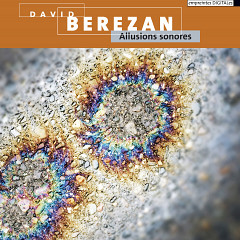
    Allusions sonores dans psychemusic.org

    «Review», Gerald Van Waes, psychemusic.org, 1 janvier 2014
    mercredi 1 janvier 2014 Presse

    The electroacoustic music of David Berezan sounds very physical; at the same time it loses itself a bit into the vagueness of the spatial being of the environmental sounds themselves. It collects, reshapes and organises the recorded sounds in a richer form of variety, then after a while, also such a collection, this starts to become a common familiarity and a plain formal entity of ideas.

    My favourite track is Buoy (2011) which is based upon the exploration of the sound environment from sea buoys, which are used to aid sea navigation and for the scientific research of maritime weather, ecology and oceanography, where a whole area of data is collected. Although the amount of sonic material seems to be rather limited in sources, I still get the impression that this foundation shows a much wider range of material shifts as being indicated. It goes smoothly from one world to the next with a few extra associations in its sonic extension. First of all I hear what is the impression of something like splashing of stones in water. Further on are the sounds of stone rubble itself. I hear certain waves of more electronic sounding reactions, and then also, the rambling of harp like aluminium rods or more metallic vibrations, being carried upon the rhythms of waves which shows this whole range of sound worlds, a change from one sort of resonance or area towards the next, changing the sound material in pitch and effect, flowing and transforming itself from one area to the next, onto the sea wave rhythm. But even here, after a while, the attention to it and all these available changes do not find much more else outside these nice contrasts so that after a while the left over attention tends to dissolve and blur each recollection of it, and each trans-position so much into one another, that what at one point this seemed like systematic order and change, thoroughly seems to be determined to become nothing but a chaotic collection of natural varieties.

    Thumbs (2011) is based upon the plucked sound recording of a Balinese thumb piano, forming clusters, dripping sounds, and collections of tones, collected just like grains of tones, or like blurry collections of tones and also, a whole sound world of ambient resonances. Faster varieties with an inner rhythm and certain slower inner rhythms are combined, echoing and droning again tend to go drowning in all its varieties.

    Badlands (2008) collected sound materials from the prairie landscape of southern Alberta, Canada, like birds, insects, flies, sand, natural contrasts and echoes, breathing rhythms, the idea of “there once lived dinosaurs”, rhythms that are found, and voices.

    Galungan (2010) used the recordings collected in and around Ubud in Bali, like the sound of a gamelan bowl. The tones are reconnected in a random fast and slow rhythm, creating its own dust of sounds.

    Nijō (2009) is based upon the Nightingale Floors wooden floors in temples in Japan with its chirping and squeaking sound when walked upon, combined with the voices of the surrounding environment too, again finding its random rhythms, and its blurry existence. Birds, human voices and a train whistle can be heard in it too.

    I miss a bit the vision of a composer doing something more than collecting random sounds and making a sound pallet from it. Here these sound ballets in the end become something like dusty sound sand, with a vague inner rhythm and the idea of keeping the separate sounds distinctive. This exploited loose connections does not really add something extra to these environments and in fact hardly bring the hidden qualities more to the fore. It more confirms a random vision in the hearing process, as if all is dust and comes to dust. I hope that electroacoustic music gets a few more definitions and visions than that in future, dimensions that are not so easily blown away to dust.

    The electroacoustic music of David Berezan sounds very physical.

    Louis Dufort dans SOCAN — Paroles & Musique

    «Louis Dufort: À l’intérieur du son», Guy Marceau, SOCAN — Paroles & Musique, 21 décembre 2013
    samedi 21 décembre 2013 Presse

    De l’infiniment petit à l’infiniment… sonore, la formule sied bien au compositeur Louis Dufort. Car à tenter de savoir ce qui inspire le créateur en électroacoustique, sans être réducteur, équivaut presque à percer le secret du Boson de Higgs! Qu’importe, puisque dans son cas, la démarche est souvent plus importante que le résultat.

    Ce n’est pas un hasard s’il n’a jamais manqué de travail depuis sa sortie de l’Université de Montréal en J997, année où la Fondation SOCAN le récompensait pour sa pièce Concept 2018957. Quelque 60 créations originales plus tard pour les principaux ensembles de musique contemporaine, ici et en Europe, un poste d’enseignant au Conservatoire de musique de Montréal et une collaboration de presque 20 ans avec la danseuse et chorégraphe Marie Chouinard, voilà un acteur bien en vue de la scène artistique contemporaine.

    Sa nouvelle création, une cinquième commande en carrière de l’Ensemble contemporain de Montréal (ECM+), donne le prétexte parfait pour tenter de comprendre le maelstrom dans lequel plonge son esprit au moment de créer. Le 24 janvier prochain, il présentera Les corpuscules agglutinés pour 10 instruments acoustiques. Préambule et explications du principal intéressé: «Aujourd’hui, je parle beaucoup plus en termes d’énergie et de matière plutôt que simplement de structure de notes, lance Louis Dufort, qui travaille dans une certaine abstraction. Il y a un temps où je faisais de la musique à programme, comme sur mon premier album Connexion (empreintes DIGITALes), des pièces très dramatiques et narratives (Zénith, 1999, œuvre acousmatique) où l’on pouvait percevoir une histoire défilante. Je donnais à l’auditeur des vecteurs perceptifs très forts et faciles à saisir, comme du cinéma pour oreilles. J’étais dans ce paradigme, mais ça a vraiment changé.» On peut placer cette césure dans la période 2.0 du compositeur, et la situer au début des années 2000. «Ce qui a vraiment changé, c’est son désire de trouver de la beauté dans la structure plutôt que dans un aspect extramusical.

    Musique organique et organicité

    Il poursuit: «J’accède à l’intérieur du son pour entrer dans la matière et en faire d’autres sons. L’ordinateur nous permet maintenant de pénétrer la note. Par exemple, si on fait l’analyse d’une note de trompette, on se rend compte que les premières millisecondes sont du bruit, mais qui font partie du son.» Son terreau d’inspiration passe donc maintenant par l’infiniment petit, alors qu’il découvre une nouvelle sensibilité. La biologie, la configuration des éléments de la nature ramenés dans ses plus infimes détails (vus sous la loupe du microscope, notamment), les vues macroscopiques des micro-organismes et l’organisation chaotique naturelle des éléments sont devenus des modèles structurels pour les assises de sa musique.

    «À force de jouer en temps réel avec l’ordinateur, on est littéralement en symbiose avec la matière; il y a une co-émergence entre le compositeur, son écoute, sa perception, et son contrôle paramétrique sur le son. Ma main contrôle les paramètres du son, qui me renvoient une image perceptive, et cette image va contrôler les changements paramétriques que je vais faire.» Louis Dufort précise qu’il applique aussi ce processus à ses œuvres mixtes, à la vidéo dans une approche syncrétique, non littérale, avec la musique. «Le mouvement de la vidéo est entrepris par le mouvement des ondes produit par le son. À mettre deux médiums dans une même relation dynamique permet cette connexion directe et physique entre le son et l’image, alors que le visuel suit la courbe dynamique du son pour obtenir une synchronicité.»

    Dans le spectre sonore

    Voilà pour l’explication. Mais pour Les corpuscules agglutinés, Louis Dufort appliquera son processus d’écriture à des matériaux acoustiques. «Je remarque que mon écriture pour les instruments acoustiques devient de plus en plus épurée, dans la recherche de l’harmonique, d’une musique plus spectrale, modale, au sens des modes anciens. Et on le remarque aussi chez la communauté des jeunes compositeurs qui ne recherchent plus tant les dissonances qu’on retrouvait dans l’écriture musicale des années 60 ou 70. Ces dissonances se sont adoucies. J’ai envie (et je nesais pas si je vais y arriver!) de créer une œuvre sur une notee, poursuit-il en riant, et de travailler seulement sur le timbre, la couleur.»

    Bien que l’œuvre soir encore en chantier, la spatialisation est déterminée: les musiciens ne seront pas sur scène, mais positionnées tout autour du public. «Dans Les corpuscules agglutinés, je veux rester dans le microscopique, et faire entendre des particules sonores; la spatialisation rend possible cette musique immersive: particules sonores, corpuscules, agglutination, masse. C’est le concept global de la pièce.»

    D’ici la fin de l’année scolaire, Louis Dufort travaille sur certains projets personnels en vidéo / audio qu’il aimerait bien faire circuler dans les festivals internationaux européens. Siégeant au conseil du festival Elektra, voilà une courroie de transmission idéale pour les musiques et productions visuelles technologiques qu’il explore de plus en plus. «En mai, je tire la “plug” pour me lancer, et aussi travailler sur des nouvelles œuvres pour un prochain album chez empreintes DIGITALes. Et puis j’ai envie de voyager, mon fils a maintenant 18 ans!» Par ailleurs, la musique composée pour le spectacle de Marie Chouinard (Gymnopédies et Henri Michaux: Mouvements) continuait-elle aussi à voyager outre-mer en novembre et décembre ainsi que janvier prochain en France, Belgique, Pays-Bas, et Hongrie. Du reste, Louis Dufort écrit beaucoup, question de documenter ses processus de travail, et de laisser une trace en publiant le fruit de ses recherches dans des revues spécialisées. La connaissance de la création pure en musique contemporaine ne s’en portera que mieux!

    J’accède à l’intérieur du son pour entrer dans la matière et en faire d’autres sons.
  • 142
  • 143
  • 144
  • 145
  • 146
  • 147
  • 148
  • 149
  • 150