Sauter au contenu principal
electrocd
  • This website is also available in English.

Blogue

4252 résultats
  • 445
  • 446
  • 447
  • 448
  • 449
  • 450
  • 451
  • 452
  • 453
  • Jean-François Denis, empreintes DIGITALes dans Voir

    «Phénomène électro», Réjean Beaucage, Voir, no 876, 5 février 2004
    jeudi 5 février 2004 Presse

    Jean-François Denis est un pilier important de la communauté électroacoustique montréalaise. On discute avec lui des séries de concerts MusMix (2) et Rien à voir (15), présentées ce mois-ci par l’organisme Réseaux.

    Il ne se passe pas grand-chose du côté de la scène électroacoustique montréalaise sans que Jean-François Denis y soit pour quelque chose. Directeur de la maison de disques empreintes DIGITALes, seule étiquette québécoise qui ne fasse paraître que des disques de musique électroacoustique, il dirige aussi DIFFUSION i MéDIA, la porte d’entrée chez nous d’un bon nombre d’étiquettes étrangères du même genre. Le disque Jalons, de Francis Dhomont, qui remportait le 25 janvier dernier le prix Opus du «Disque de l’année — Musiques actuelle, électroacoustique», c’est empreintes DIGITALes qui l’a publié; une étiquette qui célébrait ses 14 ans le 31 janvier dernier. Jean-François Denis est aussi membre, avec les compositeurs Gilles Gobeil et Robert Normandeau, de la société de concerts Réseaux, qui présente ce mois-ci deux importantes séries: MusMix, une collaboration avec le Nouvel Ensemble Moderne (NEM) et le Centre de création musicale Iannis Xenakis (CCMIX), et Rien à voir, dont la 15e édition sera aussi la dernière.

    MusMix: Si vous lisez ces lignes le jour de leur publication, il ne reste qu’un concert à la série MusMix. Jean-François Denis explique: «Le projet est assez précis. Il s’agit d’un événement biennal qui présente des musiques mixtes de compositeurs canadiens. On sait que le Québec est internationalement reconnu en ce qui concerne la musique électroacoustique, mais la musique mixte reste quelque chose de moins courant. Par ailleurs, ce sont surtout les compositeurs de musique instrumentale qui font de la musique mixte; alors, même si ces concerts peuvent attirer un public amateur de musique électroacoustique, il s’agit souvent de compositeurs qui lui sont moins connus. Mélanger l’instrumental et l’électronique, ça donne peut-être le genre de musique le plus délicat à mener à bien». Mais comme le programme est le fruit d’un appel d’offres largement diffusé et pour lequel les organisateurs reçoivent de nombreuses propositions, la sélection proposée offrira le meilleur des deux mondes. Avec l’expertise de Réseaux en matière de diffusion de musique électroacoustique et avec celle du NEM dans l’interprétation des musiques contemporaines, les conditions optimales sont réunies pour une soirée réussie. On y présentera deux créations, de Martin Bédard et Alcides Lanza, qui participaient déjà à la première édition il y a deux ans et dont les œuvres avaient été remarquées par un représentant du CCMIX qui a invité les compositeurs à venir travailler sur une nouvelle œuvre à Paris. Aussi au programme: Andrew Staniland, Kotoka Suzuki, John Oliver, Farangis Nurulla-Khoja et Monique Jean. (Le 6 février, 20 h, Salle Beverly Webster-Rolph du Musée d’art contemporain.)

    Rien à voir: Ce mois de février 2004 nous amène du même souffle la 15e et dernière édition de la série de concerts Rien à voir, qui célèbre depuis 1997 la musique acousmatique (diffusée, dans la pénombre, par un orchestre de 24 haut-parleurs encerclant le public). «Réseaux est en repositionnement au sujet de la façon de présenter ses concerts, explique Jean-François Denis. Bien sûr, présenter huit concerts en cinq jours, c’est économique et efficace, mais c’est dur pour le public qui voudrait tout suivre, alors on cherchera une meilleure façon de faire. Idéalement, ce serait plutôt quelque chose comme un concert par mois, mais c’est une tout autre histoire, notamment au niveau budgétaire…» Ce genre de projet serait possible dans un lieu dédié à ce type de diffusion, c’est pourquoi Réseaux est partenaire avec le NEM et les Productions SuperMusique dans un projet visant à mettre sur pied une «maison» regroupant les activités des trois organismes. Un lieu où seraient réunies musiques actuelle, contemporaine et électroacoustique. On croit rêver. «On y travaille, acquiesce Jean-François Denis, mais c’est un gros projet qui se développe lentement.» D’ici là, c’est à l’Espace Go que l’on ira entendre Randall Smith, Hildegard Westerkamp, Andrew Lewis et Yves Daoust, du 11 au 15 février.

    … un pilier important de la communauté électroacoustique montréalaise.

    Front dans Splendid E-Zine

    «Review», Walt Miller, Splendid E-Zine, 2 février 2004
    lundi 2 février 2004 Presse

    Back in the day, I saw a group called Disc play live. Their members — including a young unknown going by the handle Kid606 — took a pocket knife to their CD pile and incorporated their scratched-up play into a mix of power electronics. Using methods that are almost passé by today’s standards, Disc floored me with blasts of The Spice Girls skipping at random over low frequency white noise and digital fuckery. It was dumb, goofy fun, surrounded by loose, highbrow concepts and gifted with enchanting results — pop culture, damaged and regurgitated into something new, exciting and, dare I say it, entertaining.

    Max Haiven and Jon Vaughn, two student activist/artists, attempt to do something in the same ballpark — as humorless as it is — with Front, their first documented full-fledged release. Within the album’s 73 minutes and 33 nameless tracks, the duo explores the points at which attitudes intersect with aesthetic choices. Their distrust of the latter begs the question, “What is art? What is pop music?; they seem to believe that there’s not as much separation as you might think. To demonstrate, Haiven and Vaughn throw all sorts of folky instrumentation and skipping/looping pop recordings into a stark experimental stew of Difficult listening. And that’s Difficult with a capital “D”. Granulated drones and austere digital atmospherics provide a foundation for the occasional wisps of familiarity — an acoustic guitar, a snippet extracted untidily from the radio, a stray vocal — that snap us back into the real world. It’s a hard road for an ear to travel, and it shows that, however profound Haiven and Vaughn’s mission, it’s much easier to get a handle on their concept than on the music itself.

    The duo’s actual approach is unknown, but a record like Front, without any discernible structure, would almost have to have some extemporaneous elements dropped in on the fly. In fact, the two are seasoned in the art of electroacoustic improv, having performed live together and with others at various musical events in Canada. Their sounds unfold organically, sometimes beautifully; the interruptions and incoherence of this long piece are its structure. There is a chunk in the middle of the album that is nothing more than an oscillating organ note, held down over the course of four tracks. Why these tracks were broken into lengths of 1’14”, 2’11”, 0’17” and 4’02” is unimportant. The arbitrary methods adopted by Haiven and Vaughn are about rejecting convention, and, while that’s hardly a costly stance in the context of experimental music, Front gets its point across in joyless fashion. Thing is, it’s an impossible thing to pull off, entirely — their glitchy loopage is not exactly a novelty — but the boys know this. Their talents as sound sculptors speak for themselves (check out track 24, an impressive percussive montage) and, in the end, the pair make an interesting racket that succeeds on its own merits, concepts aside. That said, gimme The Spice Girls enhanced by a pocket knife any day.

    Their talents as sound sculptors speak for themselves…

    Brilliant Days dans The Wire

    «Soundcheck Review», Julian Cowley, The Wire, no 240, 1 février 2004
    dimanche 1 février 2004 Presse

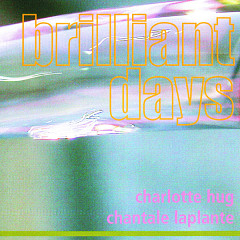
    Three tracks recorded in Glasgow, two in Bamberg, Germany by Swiss viola player Charlotte Hug and Canadian laptop musician Chantale Laplante. Sounds from the laptop are diffused in ways that effectively reconfigure both the performance and the space of listening. Hug’s additional use of electronics heightens the sense of a reverberant multidirectional music. She uses radically unorthodox bowing techniques on her viola, yet in this decentred live electroacoustic context each frictional rasp and shrill glide of the bow are assertions of the viola’s identity in defiance of the featureless swell and boom projected from the computer and the nameless sounds Laplante inserts around the sonic field.

    It’s tempting to conceptualise the viola as an originary place, a sound source with a history and a well-defined culture and to cast the laptop as a space of reception and transmission, sounds passing through but never belonging or conferring an identity. That distinction is undoubtedly problematic. Certainly the impact of the laptop in improvised music is considerable, its implication far-reaching, posing all sorts of new challenges for acoustic instrumentalists. Brilliant Days registers that impact, raises those implications, confronts those challenges, as Hug’s viola asserts itself or moves electronically out of its body.

    … the impact of the laptop in improvised music is considerable, its implication far-reaching, posing all sorts of new challenges for acoustic instrumentalists

    Sings the Blues dans Stylus Magazine

    «Review», Neslon L, Stylus Magazine, 1 février 2004
    dimanche 1 février 2004 Presse

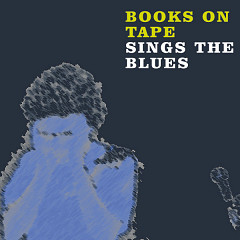
    Todd Drootin a.k.a. Books on Tape has offered up some of his best work yet on Sings the Blues. Todd’s production on this album is the type of beautiful sorrow that keeps you listening, although not all of the songs are emotional; Books on Tape is a great mixture of hype tracks and heartfelt beats. The second song, Republic Of, is a perfect example of the blues element of the album. Books on Tape is a producer, and although there is no singing on the album, it is still tremendously entertaining; Books on Tape can tell a story in a song without even using words. With his past catalogue of work, it seems Books on Tape will leave his mark as one of the great producers. Track four is a lot more hyped up, but the title She’s Dead To Me suggests the emotions he is trying to communicate. The ninth track Circus Animal Battle Rap (instrumental), also an instrumental, offers comic relief in the form of a circus seal sample amidst a hot beat. This is a great album from start to finish.

    This is a great album from start to finish.

    Sings the Blues, Books on Tape dans Magnet

    «Review», Rich Juzwiak, Magnet, 1 février 2004
    dimanche 1 février 2004 Presse

    Todd Drootin (a.k.a. Books on Tape) also wants to rock. The difference is, he knows how. Nothing sums him up better than the Pixies sticker on the side of his mixer. His rollicking approach to IDM deconstructs live guitar and bass loops via injections of white noise and hyper- distorted beats. Simultaneously gorgeous, fun and ear-splitting. Sings the Blues feels as important as drill’n’bass masterworks by Aphex Twin, Squarepusher and µ-ziq, only it trades animosity for swagger. The album’s title is a big lie: infrequent vocals are hacked to bits and fuzzed out like the rest of it.

    Sings the Blues feels as important as drill’n’bass masterworks by Aphex Twin, Squarepusher and µ-ziq…

    Bleak 1999 dans Cracked

    «Review», Cracked, 1 février 2004
    dimanche 1 février 2004 Presse

    A beautiful piece of refined electronica, subtlety and minimalism sprinkled with almost human warmth. Delightful and tasty, and apt for all times and moments because of its delirious lightness. The Canadian Tomas Jirku has added another fine gem to his (eclectic) ever-growing discography. No Type, an obviously underrated label, has added another fine release to its just as eclectic catalogue. (Entries on this website have included Claudia Bonarelli and Books on Tape.) And I am feeling all warm and mellow from the inside, glowing with contentedness all over. I think I finally found out, what makes a recording of electronic music in the most primary sense appealing to me: warmth. A special, soft and comforting warmth that encompasses the mind and the heart with full and rich sounds, and I don’t even care from which side of the sonic spectre they come from or what their special wave form is. If an artist manages to create an atmosphere of organic or even human appeal, that is what I am looking for. And then it is quite obvious for me to say that this special record is “my favourite electronica record” right now. Very much like Vitamins For You at the end of last year, that is going to be a record that will stay close to my stereo for quite some time and even finally make it into a kind of top list or best-of collection at the end of the year (even though I always have mixed feelings and opinions towards top lists and such, but in the end, it is something I like to read myself, so I guess I’ll provide one as well). Switch back to the music.

    It all oscillates around a steady, almost monotonous bass-drum-beat that is quite muffled, like listening to your loved one’s heartbeat by putting your ear on his or her chest. Instead of being disturbed or puzzled by irritant gurgling and burping noises from within the intestines (a thing as natural as it comes), Tomas Jirku adds various layers of synthetic sounds and warm keyboards on top of that beat, which is sometimes broken into a echoing purring sound or a beautiful reverbing bass-wave, at other times starts the funky groove typically of minimal electro (e.g. on the track Glyburide). The number of layers and the variations and dynamics of the tracks differ from very minimal and sparse arrangements, which are rather at the beginning of Bleak 1999 to expanded and constructed tracks such as Input fluid in the middle of the record. Melodic lines span slowly but steadily over longish tracks, like watching clouds move or shadows crawl across a wall. At times he reduces the sonic scape provided to a clinical environment, with some white noise or radio static in the back and a peeping of a life-support-machine in the foreground, added with some human samples (check the grand Li) or backwards-looping human voices to more radio-static and erratic keyboards (check the disturbing beginning of 04.1.93). To me, those “intermissions” are quite as important as the “proper tracks”, because they put the “life” into the whole CD. They add the spice and distraction to make an album of what otherwise might be just a collection of tracks. Is that another metaphor for dailylife?

    The most impeccable and intriguing feature of Bleak 1999 is the overall atmosphere of melancholia and nostalgia, like computers dreaming of a better world (less text-processing and email, more calculations on medical research and poetry). The title of the record will lead you astray in more than one way. At least I can find no bleakness on these tracks. There is a tendency towards monotony, but that has become a positive feature in the last years in electronic music and in my life in the last three months. The vibrating fundament of a life according to habits and customs is sparked by monotony, though it is more trendy to call it minimal. The tempo of the beats stays well within the realm of a calm human heartbeat or the tracks of a slow moving underground, both with synthie-drones plucked into your ears. The dynamic tension of beats drawing against and with glimmering synthie-sounds and manufactured (or would it be more appropriate to call them processed) spheres of sound, without overtly being destroyed – Bleak 1999 moves in circles of passion that is subdued by the cost of love, life and labour. Definitely a stayer with meaningful layers still to be discovered. The only remaining mysteries are those of the year in the title of the record and the titles of the tracks themselves – ranging from a simple T or R via chemical elements Ca or formulas LiCO3 to names of chemicals or enzymes Clindamycin to drugs or medicine Haloperidol to one track called Psychosis. Maybe Tomas Jirku is just a student of biochemistry or medicine in his spare time the same way other people are architects or communication-designers and spend their free time producing electronic music. That is just as well. At times, I am sure, that electronic music can use all the input and influences from the real world it can get.

    Delightful and tasty, and apt for all times and moments…
  • 445
  • 446
  • 447
  • 448
  • 449
  • 450
  • 451
  • 452
  • 453