Sauter au contenu principal
electrocd

Blogue

4252 résultats
  • 571
  • 572
  • 573
  • 574
  • 575
  • 576
  • 577
  • 578
  • 579
  • Musiques naïves dans AllMusic

    «Review», François Couture, AllMusic, 1 août 2001
    mercredi 1 août 2001 Presse

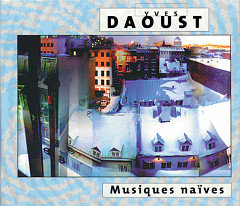
    Musiques naïves, “Naive Music”: a beautiful title for this collection of works by Yves Daoust. It aptly describes the stolen melodies from Chopin and Schubert, the memories, the children voices, the rediscovered natural phenomenons. Water Music originates from the composer’s fascination with the sound of melting icicles. A fantasy around water and the end of winter pleasures unfolds almost magically, taking the listener on a beautiful journey, not exempt of ironic passages (a flushed toilet evacuates winter altogether!) It is the best work on this CD, although Il était une fois… (conte sans paroles) “Once Upon a Time… (Tale Without Words)” also features all of Daoust’s best compositional tricks. Résonances, a study on the bells of the Notre-Dame church in Montréal, remains much colder and uninvolved. The same comments apply to Impromptu, ten minutes of unconvincing computer treatments of Chopin’s Fantaisie-Impromptu in C# Minor, Op. 66. Fantaisie also has a classical motif at its heart, Schubert’s Fantaisie in F Minor, Op. 103. Phrases of it serve as the articulation for this work using excerpts taken from the archives of the national French-Canadian radio. A commission from Radio -Canada to celebrate its 50th anniversary, it is inhabited by a nice nostalgia, but non-Quebecers will hardly be able to relate to it. Less essential than Daoust’s first CD Anecdotes, Musiques naïves documents the work of an established composer.

    … documents the work of an established composer.

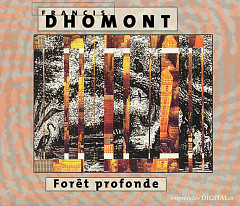
    Forêt profonde dans AllMusic

    «Review», François Couture, AllMusic, 1 août 2001
    mercredi 1 août 2001 Presse

    At age 70, electroacoustic composer Francis Dhomont released his magnum opus, the 58 minute piece Forêt profonde (“Deep Forest”). The second installment of a cycle on psychoanalysis started in 1981 with Sous le regard d’un soleil noir, this album/piece was inspired by Bruno Bettelheim’s book on the meaning of fairy tales The Uses of Enchantment. The piece unfolds over 13 parts. Seven are thematic and include an important use of speech to tie up the narrative, while the six other parts (the titles playing on the word “chambre”) work as instrumental bridges. Dhomont accumulates excerpts from classic fairy tales (from Charles Perrault and the Grimm brothers), bits of Shakespeare and other storytellers for adults, plus segments of Bettelheim’s analysis, along with various testimonies. Some voices belong to actors, others are anonymous (including many children); some speak in French, English, Spanish, Italian, and German — the whole “libretto” is translated in English. From the opening chorus of “Once upon a time… ” the listener is sucked into a mesmerizing sound world that shifts from the tender to the shizophrenic, from the childlike to the claustrophobic with dizzying speed. Words and acousmatic sound events are closely intertwined, stemming a number of levels of interpretation that insures hundreds of fascinating listening experiences. Such richness and poetry had never been achieved before in a genre too often categorized as academic. There is nothing dry or affected here. Forêt profonde is essential listening for anyone interested in tape music and one of the easiest points of entry for the newcomer or the curious by-passer.

    Such richness and poetry had never been achieved before…

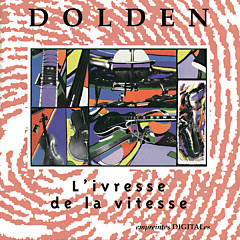
    L’ivresse de la vitesse, L’ivresse de la vitesse 1, L’ivresse de la vitesse 2 dans AllMusic

    «Review», François Couture, AllMusic, 1 août 2001
    mercredi 1 août 2001 Presse

    Culling material that covers a decade of work, L’ivresse de la vitesse (“Intoxicated by Speed”) had the effect of a bomb in musique concrète circles. Paul Dolden’s previous album The Threshold of Deafening Silence (1990) already indicated that the composer eschewed traditional tape music esthetics, but this ambitious 2-CD set consecrated him as a new voice. Dolden works with instruments. His compositions are amalgams of partitions, hundreds of them, recorded individually on a wide array of instruments. They are later assembled through pitch, polyrhythmic and textural relations to create high-density pieces that seem to be performed by massive lunatic orchestras. At the heart of the album are three such pieces: Dancing on the Walls of Jericho, Beyond the Walls of Jericho (these two completing a tryptich started on the previous CD with Below the Walls of Jericho) and the title piece. The three works in the Invocation series feature tape parts from the Jericho cycle over which a solo part has been added. Performers include Dolden himself on guitar, Vivienne Spiteri on harpsichord, and cellist Peggy Lee, simply beautiful in Physics of Seduction. Invocation #2. The same method is applied to the title track, transformed into the two parts of the Resonance series, both performed by François Houle (on soprano saxophone and clarinet). An older piece, Veils, concludes the set with a look at the emergence of Dolden’s technique as it is made of acoustic parts and more conventional musique concrète treatments. The energy, richness, and density of the music bring to mind the Vancouver new music big bands NOW Orchestra and Hard Rubber Orchestra — that is to say that it conveys a much more organic experience than more standard tape music. Decadent and subversive, L’ivresse de la vitesse is a classic, a unique form of fin de siècle tape music.

    Decadent and subversive, L’ivresse de la vitesse is a classic, a unique form of fin de siècle tape music.

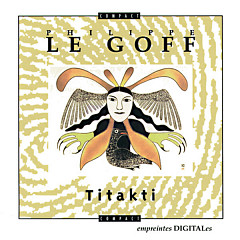
    Titakti dans AllMusic

    «Review», François Couture, AllMusic, 1 août 2001
    mercredi 1 août 2001 Presse

    Titakti is one of the unsung classics in the catalog of electroacoustic label empreintes DIGITALes. A cycle of four works ranging from six to 21 minutes, it was created after Philippe Le Goff spent five years in the Arctic, more precisely in Nunavik (Québec), in a handful of villages lost in the Northwestern Territories (Canada), and on Coat Island and Baffin Island. The composer immersed himself in the culture, language and daily lives of Inuits. The resulting pieces are passionate tributes to a culture still very much anchored in tradition. Speech, singing and field recordings are paired with acousmatic sounds and occasional musical instruments to create truly cinematic works, like the actual sound track to a hidden movie. The stand-out title is La Guerre (“War”), a beautiful solar piece driven by Inuit chants and enhanced by a delicate music score made of minimal contributions by a wide array of instruments, from tabla to electric guitar, Hammond organ, shinaï, and a trio of French horns evoking the sound of exploration boats. The other track featuring “music” is Nipingit—la parole, in which violin and viola dialogue with Inuit women. Meta incognita and Plan séquence (“Action Shot”) respectively open and close the CD on wide panoramic views. Laughter and joy of life inhabit all four works, making them feel like as many movements of a larger piece. Straying lightly from the more academic musique concrète to enter the realm of film-sound documentary, Titakti sits the listener in the middle of an Inuit village. Very strongly recommended, especially to persons who are looking for an easy introduction to tape music. The album was released in empreintes DIGITALes’ “Compact Compact” series.

    Titakti is one of the unsung classics…

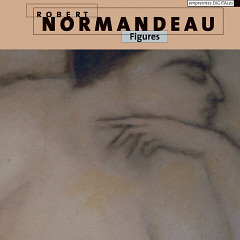
    Figures dans AllMusic

    «Review», François Couture, AllMusic, 1 août 2001
    mercredi 1 août 2001 Presse

    Released in 1999, Figures is Robert Normandeau’s third CD. It contains four works, all around the 15 minute mark, all created since the release of Tangram (1994), the composer’s previous album. The first piece is his most acclaimed Le renard et la rose winner of the Golden Nica at the 1996 Ars Electronica competition (the piece had already been included on three different compilation albums). Revolving around Saint-Exupéry’s Le Petit Prince, it uses as sound samples the music Normandeau wrote for a radio adaptation of the book, plus the voice of the actors. There is very little left of the original text, as the composer furthers his explorations in sound-speech relations. Yet the narrative translates into a gripping cinema for the ear. The other highlight on this CD is Venture, an unusual exercise for Normandeau. Here he pays tribute to his progressive rock background, using as source material quotes from various 1960s and 1970s LPs. Bits of Mussorgsky’s Pictures at an Exhibition, the piece that introduced many prog fans to classical music thanks to Emerson, Lake & Palmer’s album, surface here and there. The piece is not a Christian Marclay-like collage: much of the material is manipulated to the point that it is hardly recognizable, but the standard prog rock gestures are cleverly underlined without reducing the genre to a handful of clichés. Play “spot the tune” to find quotes from The Beatles’s A Day in the Life, King Crimson’s Formentary Lady, Yes’ Close to the Edge, and many more. Compared to these two impressive works, Figures de rhétorique, for piano (played by Jacques Drouin) and tape, and Ellipse composed with samples of guitarist Arturo Parra, lack panache.

    … the narrative translates into a gripping cinema for the ear.

    Bruit-graffiti dans AllMusic

    «Review», François Couture, AllMusic, 1 août 2001
    mercredi 1 août 2001 Presse

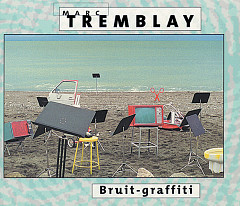
    Bruit-graffiti is composer Marc Tremblay’s first album. He approaches electroacoustics from a “popular” or “vernacular” angle. The CD offers six works based on everyday sounds and noises. This is not musique concrète, as the listener easily recognizes the sound sources. In fact, the identification process is part of the listening pleasure in this case, since Tremblay is an obsessive quoter. The first track, Vroum, opens with a “Beep Beep” sampled from The BeatlesDrive My Car — the tone is set. This piece explores the sonic possibilities of the automobile — a nice concert of horns with numerous samples from other famous and less famous car songs. Cowboy Fiction provides the finest moment. It is constructed from two western movies (El Dorado and The Searcher) and various related sound sources like samples of Hank Williams. The atmosphere is brilliantly restored, the whole thing reads like an old western plot — any fan of the genre will appreciate. Most of the pieces run for 10 to 15 minutes. Résidus (clip dadaïste) (“Waste”), on the other hand, is a 5 minute dadaist clip and the most disgusting piece of electroacoustics you will probably ever hear. A tribute to Marcel Duchamp’s work Fontaine, this piece uses noises heard in a public restroom. Very graphical, it leaves no room to the imagination. The first two minutes are funny on a very atavistic level; after it just gets sickening — but still interesting in a very weird kind of way. Tremblay’s maverick tape music, through its attraction to popular references and sound collage, is a lot less difficult than usual musique concrète, but purists will grind their teeth.

    … interesting in a very weird kind of way.
  • 571
  • 572
  • 573
  • 574
  • 575
  • 576
  • 577
  • 578
  • 579