Sauter au contenu principal
electrocd

Blogue

4252 résultats
  • 567
  • 568
  • 569
  • 570
  • 571
  • 572
  • 573
  • 574
  • 575
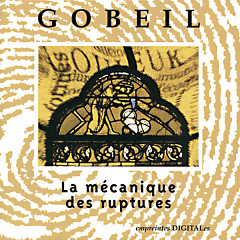
  • La mécanique des ruptures, Gilles Gobeil dans SEAMUS Journal

    «Spectro-morphological Structuring Process in Gilles Gobeil’s “Le Vertige Inconnu”», Joseph Harchanko, SEAMUS Journal, no 16:2, 1 septembre 2001
    samedi 1 septembre 2001 Presse

    Introduction

    Gilles Gobeil’s 1992 composition Le vertige inconnu has quickly gained a reputation as a masterpiece of electroacoustic music due to its explosively dynamic and expressive structural direction.

    The purpose of this analysis is to explain the perceived integrity of a work that continues to achieve a positive consensus among composers, students, and audiences, or what Smalley refers to as a “consensus about the efficacy or failure of particular musical works, thus indicating an instinctive evaluation of the newer spectro-morphological values.” [Denis Smalley, Spectro-morphology and Structuring Process from The Language of Electroacoustic Music, ed. Simon Emmerson; Hardwood Academic Publishers: New York, 1986: 63.] Its expressive shape denotes an underlying structural cohesiveness transcending the mimetic qualities of its source material. The consensus on this piece points largely to structuring principles wholly independent of the concrete meaning of the subways, crickets, and other noises within this work. Instead, abstracted shapes work to create a sense of direction wholly independent of any associative meaning created by the sounding objects themselves. Spectro-morphology is by no means the only method of analysis for electroacoustic works; however, it is a means of describing the processes of the sounds themselves. In other words, spectro-morphology is the language of non-mimetic material, or at least the non-mimetic aspect of sonic material. Therefore, spectro-morphology requires disassociative listening — divorcing oneself from any external context, social or linguistic, presented by the sounding objects themselves.

    This analysis makes use of spectrographs to document the sounding energy of Le vertige inconnu. In these spectrographs, the Y-axis represents frequency bands, the X-axis represents time, and the color intensity represents relative energy within the frequency band. Our perception of sound is inescapably linked to our familiarity with physical gesture. The listener associates high-energy sound with high kinetic energy causation. The morphology of a sound is concerned with the onset of sound, either by physical or electronic means, and its motion towards the termination of the sound. The attack-decay archetype is a common physical model as it suggests a strong kinetic causation and the gradual diminishment of energy towards termination.

    Below is a spectrograph of a basic attack-decay gesture:

    Attack-decay Archetype

    This image from 58 second into Le vertige inconnu represents the primary structural motive of the work. As the gesture moves towards termination, the high frequencies diminish in energy more quickly, moving the attention towards the sound’s low frequencies, thus creating a descending attack-decay gesture. By contrast, the next image is of a reversed attack-decay gesture. Its onset is less causative in the morphology of the sound and its motion towards termination is through an increase in spectral energy:

    Attack-decay Archetype

    The morphologies that exist within a sound are reflected on various structural levels of the composition. The generative role of the onset, the motion towards termination or a new onset, and the presence of sustain portions of the sound, or continuants, occur at the lowest structural level. Likewise, larger structures will move away from the generative onset gestures towards terminating gestures. As textural-carried material is concerned with internal motion and not with external goals, it presents the higher-level corollary of the continuant. At the highest structural level, texture and gesture work as a dynamic dichotomy, reflecting similar motion patterns found at lower structural levels.

    Spectral Overview

    The perception of sectional structuring is very common even among first time listeners in beginning electronic music classes. The work has been divided into five sections for this analysis. The dividing marks have been placed at the following times: Section A (0:00 – 1:46), Section B (1:47 – 3:10), Section C (3:13 — 4:27), Section D (4:37 – 6:37), and Section E (6:57 – 8:20).

    Section A

    A reverse attack-decay gesture opens the work, functioning as an anacrusis to the first descending attack-decay gesture. The opening gesture is extended from 2 to 5 seconds by several descending gestures (visible in the spectrograph below) before a second decisive descending attack-decay gesture signals the termination of the first gestural area. While the tessitura of the terminating gesture remains constant, the faster decay of the high frequencies creates a prolongation of the descending gesture, preparing the listener for the first texture-carried subsection.

    Gesture-carried Subsection — 0:00 to 0:15

    The first texture-carried area is delineated by the primary descending attack-decay motive, acting as an onset to the subsection. The main textural area consists primarily of mechanical iterations. A great deal of motion is visible in the spectrograph, but it is motion without direction. The attack-decay gesture terminating the texture-carried area is weaker than those heard previously. Thus the texture continues beyond the gesture until a second descending attack-decay gesture brings the subsection to a more decisive close. The terminating gesture itself exhibits the same construction as the higher structural levels, as illustrated below:

    First Texture-carried Area — 0:16 to 0:34

    One of the curiosities of this composition is the collection of disparate sounding sources, particularly the presence of both naturally and mechanically produced sounds. In examining the second textural subsection, however, one discovers the morphological connection between the sounding sources. Textural areas throughout the work are dominated by repeated iterations – short periodic sounds without gestural direction. The second textural subsection consists primarily of insect noises sounding over a rooted pitch-space. However, a need for termination develops as the rooted pitch-space begins to climb in tessitura. It cannot continue indefinitely and therefore tension is created, transforming the texture-carried material into gesture-carried material. The gestural nature is reinforced both by tessitura and with an increase in aggregate spectral energy as the sounding objects increase in amplitude. A third sounding object is introduced between the frequencies previously occupied, complimenting the frequency spectrum to produce maximum effect. At 55 seconds the continuant stops with an interrupting gesture, clearly different than the preceding sounds due to its complimentary pitch-space. However, the terminating function is inconclusive since the gesture lacks the descending morphology of the primary onset/termination motive.

    End of Second Texture-carried Area — 0:41 — 0:57

    The tension created by the ambiguity of this gesture is increased by the silence that follows. At 58 seconds the interrupting gesture is repeated, followed by a strong descending attack-decay gesture, bringing the subsection to a decided close. Within the first minute of Le vertige inconnu, Gobeil has established a functional spectro-morphological vocabulary so effectively that it can play upon expectations to create deceptive terminating gestures used to prolong the structural areas.

    0:51 — 1:03

    The third texture-carried area contains a similar structural process to the first texture-carried subsection. An increase in spectral density creates motion away from the texture-carried continuant towards termination. A descending attack-decay gesture at 1:32 anticipates the final build towards termination. However, the gesture at 1:37 lacks the terminating spectral energy to bring the section to a close. It is followed by a return of the mechanical iterations, which function as a textural prolongation. The final terminating gesture is a strong descending attack-decay gesture, prepared sufficiently though the prolongation of the terminating gestures to act as a final decisive termination to Section A.

    End of Section A — 1:31 — 1:46

    Section A contains four subsections. The opening gesture-carried subsection serves to introduce the primary descending attack-decay motive. The following texture-carried subsection presents three important concepts: periodic iterations as texture-carried material, sectional prolongation by an interrupting motive, and the transformation from texture-carried material to gesture-carried material through the use of increasing spectral energy. The third subsection presents the ambiguity of the relationship between the sounding sources, which is to be addressed later in the composition. The fourth subsection serves to bring the section to a close by repeating the ideas of increasing spectral density and textural prolongation. Section A is summarized below:

    Section A — 0:00 to 1:46

    Section B

    Section B provides a contrast to the more gesture dominated section A. The gestures within section B fail to give a sense of direction and therefore function as what Smalley terms “texture-framing.” [Ibid: 84]. An increase of spectral energy from 2:35 to 2:50 provides the first sense of gestural motion in Section B. However, the morphology of the terminating gesture is an upward motion in spectral energy and lacks the decisiveness of the primary motive.

    The following subsection appears as a different sounding environment through the use of reverb and resonance. Also significant to this subsection is the strong presence of harmonic frequency spectra, contrasting with the inharmonic spectra that dominate most of the work. This transition to the second subsection of B is shown below. The resolution and color are varied to better highlight the harmonic spectra.

    Iterations from another source, perhaps a flute or an air brake, are mixed with the more harmonic iterations. Like previous textural areas, the continuant moves towards termination through increasing spectral density. Underscoring the importance of the principle motive, one can now intuitively hear how the final descending attack-decay gesture fulfils the terminative function that the upward gesture, bisecting this section, could not.

    Section B — 1:47 to 3:10

    Section C

    Whereas section B is marked by a lack of gestural direction, section C brings back the mechanical iterations with an increase in gestural direction. This forceful motion is interrupted by the descending attack-decay gesture and is followed by a return of the high-frequency iterations from section B. Another descending attack-decay gesture acts as the onset to a slow textural build, as previously heard in section A. As in previous instances, the strong gestural activity of this section cannot be easily concluded with a single gesture. For this reason, the textural section at 4:14 is heard as an extension of section C. This section is decisively concluded at 4:24 with the descending attack-decay gesture, indicating the onset of Section D.

    Section C — 3:13 to 4:27

    Section D

    Like section C, section D serves to further develop both previously heard sounds and structuring principles. The textural iteration motif from section A returns in section D. The spectro-morphological connection between the mechanical sounds and insect sounds was presented in section A when they were introduced in consecutive textural subsections. Now Gobeil’s brings the spectro-morphological connection of these disparate sound sources into high relief. As seen below, the insect iterations and mechanical iteration are neatly aligned, demonstrating to the listener their morphological similarity.

    The role of the iterations is no longer textural. As they increase in amplitude they lead towards termination or a new onset. Their alignment serves not only to demonstrate their structural similarity, but also to increase the gestural direction. Their ultimate termination in the descending attack-decay archetype is strengthened by the careful alignment of this motive to the tempo of the iterations.

    A second subsection of D is reminiscent of the slow textural build heard in section A. However, this motive is now combined with the sort of interrupting gesture heard in section A (0:55). Instead of being immediately followed by the concluding gesture, the gradual build starts again after the interruption, increasing the tension as the sectional termination is further postponed. Strong gestural activity terminates this build and acts as an onset to the return of the iterations, now in their new gestural role. The iterations move the listener to the climax of the work at 6:45, the strongest descending attack-decay gesture yet heard.

    Section D, although containing previously heard material, is unprecedented in gestural activity. The direction towards termination never wavers as interruptions only serve to heighten the tension. Just as the interruption of the middle subsection at 5:30 serves to prolong the tension, the middle subsection itself acts as an interruption of the gestural iteration motive which dominates this section. The material presented in the opening of this work has been transformed into the primary engine of structural motion towards the work’s ultimate goal.

    Section D — 4:37 to 6:57

    Section E

    The need for preparation and balance before termination demonstrated in the individual sections and subsections of the work can also be found at the highest structural level of the work as a whole. The sudden conclusion of this piece at 6:45 would be anticlimactic. Therefore, the final section presents a simple structural idea that is consistent throughout the work: decisive termination through prolongation. Section E contains three subsections, each growing towards termination with a slow spectral build. The second subsection termination is less decisive than the first, leaving room for the ultimately decisive termination at the end of the work.

    Section E — 6:57 to 8:20

    Summary

    The continuity of this work is based on repeated and varied use of similar material: long increases in spectral energy, repeated iterations of both insect and mechanical origin which are used both texturally and gesturally, sectional interruptions and prolongations, and strong descending attack-decay gestures used to delineate structural sections. Morphological ideas are clearly working at all structural levels: the shape of the sounds, how those sounds are combined to create larger gestures and sections, and the overall structure of the sections through the entire work. The first section acts as a large structural onset, the second as the start of the continuant phase, with sections C and D leading upwards in energy to the climax at the end of section D. Section E works as a prolongation of the terminating gesture used to round off the work. The structural principles of textural continuant transforming into gesture through spectral building with interruptions to heighten the sense of direction, and the use of prolongations to round them out occur simultaneously throughout the structural levels. On the highest level, the relationship between onset, interruption (I), termination (T) and prolongation are summarized below.

    Spectral Overview

    As stated previously, spectro-morphology describes but one aspect of a composition. Elements such as space and the meaning and contextualization of sounding sources may provide still deeper and richer insights into this work. However, spectro-morphology is the language of sonic experience. Masterworks of western music have traditionally been considered those works demonstrating skillful mastery of their fundamental materials, be they pitch/rhythm motifs or spectro-morphological motifs. Further, the development of these constructive materials into large-scale formal structures reflected on various structural levels is also a hallmark of craftsmanship. Finally, as Smalley emphasizes, the efficacy of a work is dependant on the listener’s experience. Gobeil’s careful attention to detail provides a dramatically linear work whose meaning deepens on subsequent hearings, a crucial trait for success in the fixed world of tape music. Careful study of the structuring principles of such a work provides a useful compositional model, connecting accousmatic music, “the rightful heir to western music” [Ibid: 61], to its roots.
    … a masterpiece of electroacoustic music due to its explosively dynamic and expressive structural direction.

    Délirantes dans AllMusic

    «Review», François Couture, AllMusic, 1 septembre 2001
    samedi 1 septembre 2001 Presse

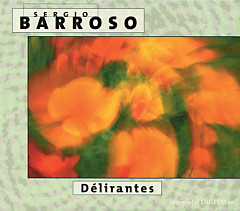
    A 2-CD set, Délirantes culled for the first time Sergio Barroso’s best electroacoustic works into a comprehensive and easily available package. The nine works included were created between 1982 and 1995 and all newly recorded for this album. The spotlight remains mostly on the Cuban-born (now living in Canada) composer’s mixed electroacoustic works (for instrument and tape), especially the ones he wrote to be performed with a keyboard controller. These are often the most captivating pieces, as the listener can have a hard time trying to guess what had been fixed on tape and what was performed “live.” La Fiesta, which opens disc 1, and Charangas Delirantes, closing it, makes very good examples of this technique, They are both very festive and highly intricate. Crónicas de Ultrasueño is the only piece involving two instrumentalists (Barroso on keyboard controller and León Biriotti on oboe). It flows nicely but is no match for Viejas Voces featuring Laura Wilcox on viola or En Febrero Mueren las Flores with Adele Armin on Raad violin, an electroacoustic string instrument. The latter piece is alone worth the album: dense, rich, evocative, and tinged by a subtle Latin-American color that gives Barroso’s music its charm and originality. In regards to the composer’s origins, the tape piece Tablao, with its Flamenco-style hand-clapping, remains his strongest statement. Recommended.

    … dense, rich, evocative, and tinged by a subtle Latin-American color that gives Barroso’s music its charm and originality.

    Les corps éblouis dans AllMusic

    «Review», François Couture, AllMusic, 1 septembre 2001
    samedi 1 septembre 2001 Presse

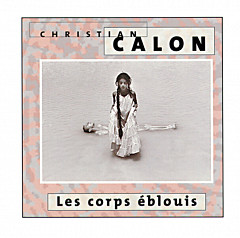
    Les corps éblouis (“Bedazzled Bodies”) is an EP released in 1998 by empreintes DIGITALes in its “Compact Compact” series. It contains only one work, the title track, first created in 1993 and revised the next year. The best example of Christian Calon’s work during his “second period” (while in Marseille, 1991-1995), it is meant as a complement to the full-length CD Ligne de vie: récits électriques which culled the best from his “first period” (in Montréal). This piece attempts to blend the metaphorical and the metaphysical in the transubstantiation of its sound source, an electric guitar. Moving away from the acousmatic esthetics of his 1980s works, the composer processes sound (instead of synthesizing it), but whatever the theories and techniques used, the result remains pure Calon. Washes of sounds revolve around the listener’s head in concentric circles until they reach a breaking point when they scatter away. This sequence occurs a few times, always with variations that alter the unity of the movement. The plasticity of Francis Dhomont’s works (especially Espace / Escape) can be felt throughout — it is no surprise that the mentor spacialized the piece when it was premiered.

    … the result remains pure Calon.

    Bruits dans AllMusic

    «Review», François Couture, AllMusic, 1 septembre 2001
    samedi 1 septembre 2001 Presse

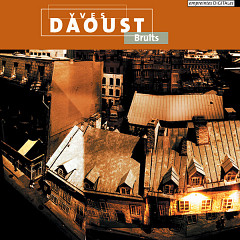
    The center of attention on Bruits, electroacoustic composer Yves Daoust’s third CD, is undeniably the 30 minute title suite. In three movements, he manages to remain true to his anecdotal writing style while completely renewing his palette. Unsuspecting listeners could mistake the first moments of Children’s Corner for a piece of experimental noise. The charge is surprisingly ferocious but quickly defused by the use of children laughs, shouts, and games. Still the piece follows a noise esthetic the likes of which had never appeared in Daoust’s work before. The round of surprises continues in Nuit where material from the first movement is recycled into a more abstract form. Here the music follows a tangent that brings it close to experimental electronica artists working outside the academic electroacoustic sphere, such as Fennesz and Carsten Nicolai. The third movement, Fête, uses field recordings of the various summer festivals in Montréal, bringing back a human factor and Daoust’s love for the anecdote. The three other pieces comprising this set are not necessarily more typical, but they clearly pale in comparison. An earlier version of Impromptu is available on Musiques naïves. This time, the tape part computer-derived from a Chopin piece is augmented by a piano part, a keyboard part, and more children sounds. La Gamme is a rare attempt at sound synthesis. Written for the bicentennial of the French Revolution, Ouverture is an electroacoustic hörspiel putting in correlation various moments in the history of Québec. Both poetic and political in nature, it will be lost on non-French speaking listeners.

    … dans le silence de la nuit… dans AllMusic

    «Review», François Couture, AllMusic, 1 septembre 2001
    samedi 1 septembre 2001 Presse

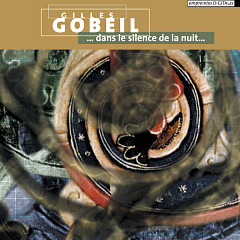
    This second CD by Gilles Gobeil develops a more literary theme, with three of the four pieces taking their inspiration in Marcel Proust, HG Wells, and Jules Verne. Yet, the composer’s style changed very little since the late-’80s/early-’90s pieces found on La mécanique des ruptures. If anything, his technique of violent contrasting has been pushed to farther extremes. Therefore … dans le silence de la nuit… (…In the Silence of Night…) sounds like more of the same. But again, the technique has been refined and where there used to be a flooring of textures now the listener often finds complete silence. The closing piece, Nuit cendre, gets very disturbing in this vein. Projet Proust is an electroacoustic interpretation of the first pages from the author’s mammoth cycle, accompanied by a pure (as in “not altered”) narration. Point de passage, an interpretation of Wells’ novel The Time Machine features more abrupt shifts and unexpected bangs. That is the crux of Gobeil’s art — truly a case of love-it-or-hate-it.

    … his technique of violent contrasting has been pushed to farther extremes.

    La mécanique des ruptures dans AllMusic

    «Review», François Couture, AllMusic, 1 septembre 2001
    samedi 1 septembre 2001 Presse

    La mécanique des ruptures (The Mechanics of Cleavage) is Gilles Gobeil’s first CD. The eight electroacoustic works culled here were created between 1985 and 1993 and vary from short clips Nous sommes heureux de…, one minute) to ambitious tape dramas (La ville machine, 15 minutes). In general, the longest pieces include an instrument or narration part. Suzanne Binet-Audet is featured on two such pieces playing ondes Martenot, one of the earliest synthesizers. Montréal electric guitarist René Lussier provided examples of his playing for Associations libres (Free Associations). But whatever the length or medium, Gobeil’s style remains pretty much the same throughout and could be (over)simplified to one single gesture: a door slamming shut. He throws buckets of sounds at the listener’s ears, multiplying contrasts between peaceful ambiances and sudden “bangs!,” often articulated by a short crescendo. This in-your-face approach to electroacoustics will please listeners who want “action” (i.e. loud ample movements of sound). Nonetheless, Le vertige inconnu remains Gobeil’s strongest piece, very powerful in its violent plasticity. La ville machine, almost taking the form of a hörspiel, is another highlight. Its story follows three confusing but interesting parallel narratives (in French in the piece, but provided in an English translation in the booklet). Recommended.

    … very powerful in its violent plasticity.
  • 567
  • 568
  • 569
  • 570
  • 571
  • 572
  • 573
  • 574
  • 575