Sauter au contenu principal
electrocd

Blogue

4252 résultats
  • 581
  • 582
  • 583
  • 584
  • 585
  • 586
  • 587
  • 588
  • 589
  • Robert Normandeau dans Le Devoir

    «Cinéma sonore», Bernard Lamarche, Le Devoir, 7 avril 2001
    samedi 7 avril 2001 Presse

    Quatre jours d’électroacoustique, neuf concerts (deux par soir pendant quatre soirs, en plus d’un programme de jeunes compositeurs montréalais), 35 haut-parleurs, quatre compositeurs invités: c’est ce que propose la nouvelle édition de la série Rien à voir, la neuvième, toujours organisée par l’organisme Réseaux, diffuseur et promoteur montréalais de la musique électroacoustique.

    Du «cinéma pour l’oreille»: l’événement conserve sa formule et présente une armada de haut-parleurs en guise d’orchestre, dans un environnement plongé dans le noir et où les signes visuels sont réduits à leur plus simple expression. Mais encore plus, la série n’a jamais mieux porté son nom que depuis qu’elle est accueillie dans les entrailles du Complexe Ex-Centris, boulevard Saint-Laurent. «Ça permet de lever le malentendu de la scène. Là, on est dans une salle de cinéma, il n’y a pas de scène. On est encore plus proches de notre propos, la diffusion sonore. C’est la musique qui importe», explique Robert Normandeau, compositeur et cofondateur de l’organisme Réseaux et de la série Rien à voir.

    Lundi, le Britannique Adrian Moore interprétera plusieurs de ses œuvres, dont certaines viennent d’être publiées sous l’étiquette montréalaise empreintes DIGITALes. Un compositeur dans la jeune quarantaine, de la deuxième génération en Angleterre, Moore «est de la génération des compositeurs qui sont tombés dedans quand ils étaient petits, explique Robert Normandeau. Ils ne sont pas passés de la musique instrumentale à la musique électroacoustique». Moore est reconnu pour sa palette sonore extrêmement étendue. «Il travaille sur la matière, avec des timbres riches.» Avec Jonty Harrison, auprès de qui il a fait ses études à Birmingham, «ils ont carrément un orchestre de haut-parleurs, avec lequel ils font des tournées. Ils sont passés maîtres dans le domaine de la spatialisation sonore».

    Le lendemain, le Français Régis Renouard Larivière dévoilera ses musiques, dont la plupart n’ont jamais été diffusées ici. À l’instar des compositeurs d’une jeune génération qui, «délibérément, se sort du postmodernisme», Régis Renouard Larivière «revient à une musique minimale, plus pure, plus dépouillée, dans laquelle le silence a autant d’importance que le son. Il fait des musiques comme à peu près personne n’en fait». L’an dernier, Normandeau avait présenté une des pièces de Renouard Larivière lors d’un de ses concerts. La réaction du public et la critique dithyrambique ont précédé son invitation.

    Mercredi, le Montréalais Gilles Gobeil, un des cofondateurs, en 1991, de Réseaux, y ira de sa prestation sur console de son, dont le style est reconnaissable entre tous. «C’est assez exceptionnel, assure Robert Normandeau. Depuis 12 ans, il enfonce le même clou, revient aux mêmes thèmes. Les mêmes éléments sonores, caractérisés par des écarts absolument incroyables entre les sons les plus forts et les sons les plus faibles.»

    Seule femme de cette édition — elles sont plus rares dans le domaine —, Beatriz Ferreyra, originaire d’Argentine mais résidant en France, clôturera la série, jeudi. À la suite du Traité des objets musicaux, de Pierre Schaeffer, une référence dans le domaine, publiée en 1966, Ferreyra a collaboré de façon importante à trois disques publiés deux ans plus tard, Solfège de l’objet sonore. «Elle était à la source même des recherches de Schaeffer», explique Normandeau. Dans sa musique plus référentielle, moins abstraite, Ferreyra a recours à des sons dits anecdotiques, «repérables», et propose un travail «très fin» qui «raconte des histoires». La compositrice donnera également une conférence le mardi 10 avril à la faculté de musique de l’Université de Montréal, à 13h (salle B-399).

    Les musiques de Rien à voir (9) seront diffusées ultérieurement sur les ondes de la Chaîne culturelle de Radio-Canada, dans le cadre de l’émission L’Espace du son, réalisée par Mario Gauthier. Ceci dit, rien ne vaut l’expérience d’avoir des points de diffusion démultipliés, d’entendre plusieurs sources sonores, d’entendre et de goûter l’art de l’interprétation: «La part d’interprétation est énorme.»

    Normandeau arrive de Bruxelles où il a participé, à titre de membre de jury, à un premier concours de spatialisation. «J’étais assez convaincu de la chose, et le concours a confirmé ce que je pensais. L’interprète prend l’espace intérieur de la bande et, à titre de diffuseur, le magnifie. Si des sons s’éloignent dans la pièce, il va accentuer ce phénomène. Essentiellement, c’est un travail d’amplification des gestes qui sont faits sur la bande. C’est un travail extrêmement difficile à faire. Il y a très peu de bons diffuseurs. Ils doivent rendre justice à ce qu’il y a dans l’écriture.» Heureusement, les gens invités par Rien à voir sont reconnus comme de bons diffuseurs, qui peuvent assumer cet aspect.

    L’interprète prend l’espace intérieur de la bande et, à titre de diffuseur, le magnifie.

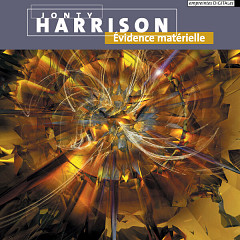
    Évidence matérielle dans Darker than the Bat

    «CD Review», Peter Jan Van Damme, Darker than the Bat, 4 avril 2001
    mercredi 4 avril 2001 Presse

    If you like danceable beats or if you love screaming guitars, don’t even listen to this CD. Don’t look for melodies but experimental long tracks (Splintering is almost twenty minutes long). Évidence matérielle is for people with an interest in abstract, avantgarde music and electroacoustics. Sounds of casserole dishes are used but also street noises, rain, fire and other sounds. Is it music, sound art or something else, Jonty Harrison samples all sounds and combines them to tracks. He’s experimenting with sounds and sometimes you can hear voices. Try to discover where he gets the sounds. In Splintering many forms of wood are used to create another weird piece. The songs weren’t composed in a year’s time as most artist do, but actually bring a collection of his works. Streams, was composed in 1999 and the opening track, Klang, was composed in 1982. This album is dedicated to his late father Doug.

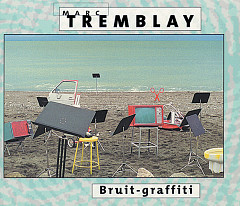
    Bruit-graffiti dans Les Inrockuptibles

    «Musiques», Philippe Robert, Les Inrockuptibles, 3 avril 2001
    mardi 3 avril 2001 Presse

    Le bruit, voilà le thème de ce disque de l’électroacousticien canadien Marc Tremblay, ancien élève d’Yves Daoust dont le chemin musical a croisé celui de quelques improvisateurs dont le platiniste Martin Tétreault. Quelle que soit sa nature, une sonnerie de téléphone, des voitures qui passent au loin ou un avion dont les réacteurs déchirent le ciel, le bruit, qui est une des composantes essentielles de notre univers quotidien, nous ramène inéluctablement à l’instant qui passe, à un chaos sur lequel nous n’avons aucune prise. Selon Tremblay, le bruit serait un élément perturbateur dans la quête de l’harmonie. Pas certain: souvent, on ne perçoit plus ce qui est familier. Aussi, pour redécouvrir le bruit, et qui sait, l’apprivoiser, Tremblay s’est attelé des années durant à en explorer le potentiel expressif, dénichant de la poésie là où beaucoup n’entendent plus qu’agression. Bruit-graffiti part donc du postulat que les objets parlent, et propose une espèce de symphonie réaliste à partir d’objets bruyants articulée en six parties qui renvoie l’auditeur à son quotidien. Ainsi sont évoqués la voiture (dont le son du moteur est quasiment devenu le fond sonore de la vie urbaine), le téléphone (sa vie, ses voix), la maison (la chasse d’eau!), la bourse (ses échanges économiques) et les réminiscences de l’enfance. On devinera à l’énoncé de ces thèmes que la démarche du compositeur, basée sur le cut-up qu’explore également, mais à partir de musique existante uniquement, John Oswald, s’inscrit dans une filiation qui va de “Revolution #9” des Beatles à AutoJazz de Barney Wilen en passant par Toilet piece de Yoko Ono. La pièce la plus étonnante est un hommage au western qui ravira les cinéphiles: on y entend, mixées, des sources altérées provenant de La Prisonnière du desert de John Ford et El Dorado d’Howard Hawks. Coups de fusils, trains à vapeur et bribes de Rambling Man d’Hank Williams recomposent un film imaginaire. Pour le seul plaisir des oreilles celui-là.

    Évidence matérielle, Jonty Harrison dans The Georgia Straight

    «Evidence Often Extraordinary», Alexander Varty, The Georgia Straight, 1 avril 2001
    dimanche 1 avril 2001 Presse

    It’s not unusual to hear people talk about recordings that take you on a journey, usually in the context of sounds that are tropical, uplifting, or expansively — and expensively—produced. Jonty Harrison’s Sorties, however, doesn’t so much lead you through a sonic landscape as buridle you, blindfolded and confused, into the back of a car, destination unknown.

    A series of linked soundscape vignettes, this 15-minute piece begins placidly enough, perhaps any ordinary urban street. Heels click against the pavement; cars — thrum by on what sounds like wet asphalt; children’s voices clatter from the reflective shop windows nearby; an indistinct bass line wafts from a second-floor studio. But then the mood changes: the squealing of subway brakes leads to a minor scuffle, after witch a door slams shut and the ambient noises fade to black. But the work is far from being over. Keys rattle against locks, tumblers turn, an oddly musical creak — electronically processed saxophone? — signifies the opening of another door.

    In this new world, it’s raining; thunder booms, and then the downpour stops as the listener kicks along a shingle beach, waves plashing nearby, before being pulled through yet another door into a leafy garden of birdsong; in the distance, a puzzled child cries “Mommy! There’s a shoe!

    What domestic or criminal drama is being played out here remains unexplained, as the listener is quickly taken away from this pastoral scene. A buzzing fly morphs into droning industrial noise and then into a silvery synthesized chord, which in turn becomes the noise of a passing bus as the initial street reappears, this tune overlaid with a mesh of clicking and whirring. The piece continues for another minute or so until, finally, ominous low pulses signal its uneasy end.

    Sorties a title intended to be read for both its English and French meanings — is taken from Évidence matérielle, Harrison’s new CD on the Montréal-based empreintes DIGITALes label, and in the liner notes the composer explains that “the dominant sound image of the work is that of leaving (exiting, escaping, fleeing) an interior space for an exterior one, only to find that one is mysteriously and inevitably trapped once again in another ‘interior’.”

    Be that as it may, when one listens to this work on headphones, in a darkened room, it’s hard to detect that the listener has any hope of escape. Harrison’s sonic images have such presence that one really does seem kidnapped, swept away in the composer’s design, and although the feeling is not always-comfortable it’s as gripping as a pair of handcuffs.

    Sorties is an extraordinay piece, as are most of the other works collected on Évidence matérielle. The glorious, metallic physicality of Klang; the fractured yet evocative images of Splintering the appropriately transparent liquidity of Streams: all use a supposedly cool medium — electronic music — to paint warm portraits of human experience. Only Surface Tension fails to cohere: it’s an attempt to make music by sampling and manipulating the sounds of discarded packing materials and other rubbish, but those noises are too amorphous and its structure too indistinct to be fully involving.

    Harrison’s compositions are typical of those featured on empreintes DIGITALes, which with 58 titles in its catalogue is perhaps the world’s leading record label dedicated to electroacoustic music. Its productions run the gamut from “environmental” sounds made up of electronically manipulated field recordings to the purely digital concoctions of the recording studio, and its roster includes such Vancouver composers as Sergio Barroso, Paul Dolden, and Hildegard Westerkamp. Vancouver and Montréal are both hotbeds of this kind of work, but an indication of empreintes DIGITALes’ status in the world at large is that only one Canadian composer is represented in its four new releases. Accompanying Harrison’s CD are albums by his student and fellow Englishman Adrian Moore and New Zealand’s Denis Smalley, in addition to one from Montréal’s Louis Dufort.

    Space precludes full reviews of these, but it’s probably fair that all four composers share a common aesthetics — although whether that is the result of a shared philosophical outlook or something forced on them by the technology they’re working with is hard to say. Whatever the case, if you’re looking for drama Dufort is your man; his dynamic range is greater and his sounds harsher than those used by his English and Kiwi counterparts. But, like them, he’s interested in building long, flowing compositions from small sound sources. By compressing, stretching, and twisting familiar noises, and by the steady aecumulation of sonic detail, all four make music that is transporting — even if, as in Harrison’s Sorties, the journey isn’t always fun.

    … one really does seem kidnapped, swept away in the composer’s design…

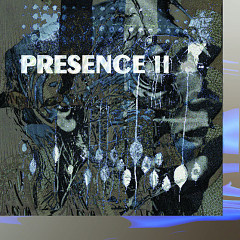
    Présence II dans La Folia

    «Review», Grant Chu Covell, La Folia, 1 avril 2001
    dimanche 1 avril 2001 Presse

    Presence II is a 2-CD anthology of 34 works from 32 composers from 11 countries. The diversity is overwhelming and it’s hard to single out individual works. They’re all arranged alphabetically.

    Where to start? Bradley’s “volalle melodie vi to trot” / “fowl melody to trot” is very, very disturbing: under or over a text that seems to be foreign language instruction we hear parents of young children at their wits end. Fitzell’s Zipper Music II (an earlier version is on DISContact! II below) is a nifty exploration of the sounds a zipper can make. McIntosh’s Climb to Camp One is built from the sounds of climbing equipment being used inside an amplified piano but it doesn’t recall ostensibly similar works by Cowell or Cage. I’m partial to the 3 short works by Joachim (the oldest works in the set) which explore the filtering of computer generated sounds. Solursh’s We extracts some neat noises out of water, while Teller’s H a e i o u y æ ø å pt. 2 (ex.) gets mileage from laughter. Of course I like the seemingly random collage effects of Trudel’s Ce n’est pas ici and am wonderfully at a loss to explain what the crowd noise, fire, marching band and nature noises are all about. There are many works here, and this is an easy anthology to pop in the CD player and savour.

    Stepping back to 1997, Presence is a 2CD anthology of 23 composers. Some of the many good pieces that jump out are Tape Measure in which Steve Bradley has played a Verdi LP with a sewing machine needle attached to a tape measure. No, you can’t hear the Verdi, but it’s with childlike fascination that you will hear some micro-level gurgling and rumbling. James Harley contributes a long work, Voyage, a grand arc of sound, intricate and spacious. Monique Jean’s If finds an essay in a simple spoken phrase, and in Squeaky Chair Christopher K Koenigsberg finds a symphony in, yes, a squeaky chair. Jean Routhier’s Face à claques is a deviant piece of assemblage, something to do with things overheard we shouldn’t be privy to.

    Also still available is DISContact! II from 1995 that offers 51 short works on 2 CDs. The CEC makes somewhat limited quantities of their productions and this one was reissued in 1997. This is an enriching anthology filled with works created by members of the CEC. The brief works pack in variety and contrast, as well as varieties of technique and sound worlds. Spoken political pieces, song settings, inscrutable noise works, musique concrète and collage are well represented and thriving in the hands of these composers.

    Looking forward, the CEC has put out the call for inclusion in Presence III, so watch this space!

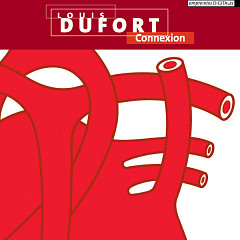
    Connexion dans Ampersand Etcetera

    «Review», Jeremy Keens, Ampersand Etcetera, no 2001_6, 1 avril 2001
    dimanche 1 avril 2001 Presse

    Louis Dufort, born in 1970, is a year younger than Moore (god, that makes me feel old), and from Montréal rather than the UK. He also has a different general approach — his pieces have more variation in volume and density and he has a strong interest in using the voice — usually sampled and stretched, but recognisable. The variation within the pieces again emphasises the difficulty in description per se. Transit is a piece “that makes use of continuous discontinuity,” and it does shifting between high ringing tones with cluttering and rushes behind; into a descending tinkling and ringing with voices; machinelike rhythms, unstable, clickings, tones and a buzz; banging and the voices of a lost chorus; clatter quiet; slow wind, rebuilding, more voices to a squeaky climax and then quiet fade. Unstable and decentred. The mode of Pointe-aux-Trembles is more obvious in this “impression of the refineries of East-end Montréal” with its regular ebbing and flow — we are getting periods of factory-like loud rhythm with noisy loops of machines, sirens and trains (is that a voice in there?) interspersed with quieter sections, perhaps between the refineries with soft high tones. There are programmatic titles which approximate to the changes I noted — and a nice long fade. With Zénith the voice becomes more prominent — high singing tones open it, and the main body of the piece uses voiced notes throughout. It builds slowly from the almost solo start adding soft tinklings to a first climax of voice and ‘orchestra,’ cymbals crash, horns swirl. Some mouth-sounds shift into a loud, aggressive phase which includes some growling voice which is a cross between death-metal and Mike Oldfield’s Neanderthal man on Tubular Bells. And it seems way out of place here (it reappears on Décap). The ending is surer, with an angelic choir of voices. Finally Décap at 24 minutes, described as “a study for wrist and ankles,” is partly excerpted from a dance piece, and is more rhythmic in both its overall structure (like Pointe-aux-Trembles it shifts between active, loud phases and quieter contemplative ones) and in the local approach. The opening could be from a glitch collection as strong attack whooshes with long fades, pulsey percussion and whispering drive us into the piece. From here we alternate between percussive active parts and more moody, tonal components. In addition to the gruff voice, there are also voice loops where syllables are repeated into nonsense and layered interplaying choirs. The whole builds through some minor climaxes to a big percussive shimmering looped conclusion.

    So two complex albums, sonically fascinating. The similarity in their descriptions ‘continuous discontinuity’ and ‘shaping form continuously’ should prepare you for the active and involved listening expected of you. Not for easy-listening background pleasure, but for focussed attention.

    … sheer exhuberance.
  • 581
  • 582
  • 583
  • 584
  • 585
  • 586
  • 587
  • 588
  • 589