Sauter au contenu principal
electrocd

Blogue

4252 résultats
  • 589
  • 590
  • 591
  • 592
  • 593
  • 594
  • 595
  • 596
  • 597
  • Sondes dans Octopus

    «Critique», SH, Octopus, no 13, 18 janvier 2001
    jeudi 18 janvier 2001 Presse

    Tout est vibration, ondulation, scintillement, télescopage, balancement dans les pièces pour bandes de Randall Smith, né à [Windsor, Ontario] en 1960. C’est aussi minéral, liquide, incandescent. Essentiellement de la musique électroacoustique. Il utilise avec une belle intelligence les possibilités du violon et du violoncelle S’il était une métaphore de cette musique apparemment abstraite, c’est au mouvement d’une corde que l’on pourrait songer immédiatement: une corde frottée, pincée, tirée, fouettée. Sondes regroupe les compositions des quatre dernières années. L’ensemble forme un collage chatoyant, délicat et finement édifié. L’effet est entrainant, dansant parfois, gracieux certainement. Ce n’est pas pour autant joyeux. La fête se mêle à la douleur; le rire à la tristesse. La musique y est également organique, sanguine. Randall Smith semble désigner de son doigt un point du ciel ou de la terre, un endroit qu’on ne peut distinguer parce que l’on n’utilise pas tout de suite la bonne focale. La précision se fait petit à petit, le ciel se dégage lentement, le brouillard se lève sans précipitation. Le compositeur ne recule pas devant la manipulation technologique tout en laissant une large part à la naturalité du son émis. Contrepoint, rythme et harmonie demeurent les règles de base de la composition musicale selon Smith. Le matériau y est texturé, le son percutant et contrapuntique. Les images sont celle de films populaires ou expérimentaux, de Jaws à Freaks, d’Apocalypse Now à Fourmiz… Ces pièces fonctionnent comme des lieux géographiques d’un monde imaginaire, comme les lettres de l’Alphabet dans les aventures de Philémon, dessinées par Fred. Quelque chose ne tourne décidément pas rond dans la tête de Randall Smith, cela doit étre sa musique.

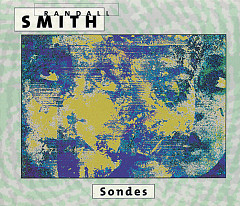
    … un collage chatoyant, délicat et finement édifié.

    Figures dans Henry Schneider

    «Review», Henry Schneider, Henry Schneider, 15 janvier 2001
    lundi 15 janvier 2001 Presse

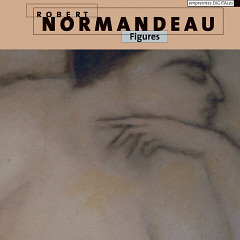
    Clocking in at exactly 60 minutes Figures is Robert Normandeau’s latest release of acousmatic music. The opening piece is Le renard et la rose (The Fox and the Rose). This is a concert suite composed from two sound sources: music commissioned for The Little Prince and the voices of the actors involved in the recording of the story. It is light and bubbly with laughter layered and processed through a chain of effects. The second piece is Figures de rhétorique which combines tape and piano. It has a cosmic feel at times similar to early Pink Floyd and Stockhausen. The third composition is Venture, named after the 60s group The Ventures. But it is more than that. Venture refers to all the progressive rock music of 60s and 70s. Normandeau states that Venture is composed exclusively of fragments of that music. Unmistakably, there are bits and pieces of The BeatlesRevolution 9 and Pink Floyd’s Grand Visier’s Party. I am uncertain of the other sources, but the resulting Venture is worth the price of this CD alone. Figures closes with Ellipse, a tape piece commissioned by Arturo Parra for him to accompany Normandeau on guitar. It sounds like heavily processed acoustic guitar scrapings, tappings, and noodlings. Or is it a swarm of angry alien bees? Figures is the high point for me of the recent empreintes DIGITALes releases.

    Venture is worth the price of this CD alone… the high point of the recent empreintes DIGITALes releases.

    Corazón Road dans Henry Schneider

    «Review», Henry Schneider, Henry Schneider, 15 janvier 2001
    lundi 15 janvier 2001 Presse

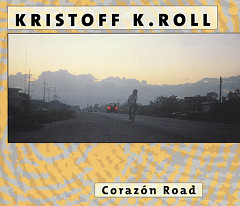
    Corazón Road is the musical diary of a trip the Yucatán peninsula and Central America. Using tapes he made during this trip, Kristoff K.Roll process them and combines the results with electronics. Amidst the flora and fauna of Central America, you also hear a Coke salesman, someone selling chiclets, a balloon vendor, etc. The result is an interesting travelogue of electroacoustic music at times restful and others energetic.

    … an interesting travelogue of electroacoustic music at times restful and others energetic.

    Sondes dans Vital

    «Review», Henry Schneider, Vital, no 258, 15 janvier 2001
    lundi 15 janvier 2001 Presse

    Randall Smith is an electroacoustic composer working in Toronto, Ontario. Sondes’ six tracks spanning four years of composing are condensed into an earjarring seventy-five minutes. Sondes is truly difficult music. Some compositions are for cello and tape while others are composed solely of sampled flute, violin, clarinet, and bass. At times harsh, but never melodic, this music requires a dedicated listener. If you are trying to concentrate on something else while Sondes is playing, forget it! If you like raucous, harsh, avant-garde music, Sondes is for you.

    If you like raucous, harsh, avant-garde music, Sondes is for you.

    Bruit-graffiti dans Vital

    «Review», Henry Schneider, Vital, no 258, 15 janvier 2001
    lundi 15 janvier 2001 Presse

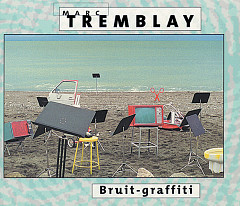
    “Bruit” is French for noise, noise that is innocuous, bothersome, undesirable, and pointless. Marc Tremblay is a French Canadian electroacoustic composer who explores six interpretations of these aspects of noise on this album. The opening composition Vroum is an aural exploration of the automobile using samples of The Beatles (Beep beep mmm beep beep, yeah), car horns, car doors, starting engines, driving cars, etc. These are those mundane sounds we hear everyday brought into a new focus. The second composition Conte sous la lune is intended as an homage to childhood. It is a quiet piece with tinkling chimes, fluttering electronics, and infants laughing and bathing all sampled and processed. The third piece Résidus (clip dadaïste) can be quite revolting to some listeners. Tremblay plays with the sounds we hear in a bathroom: flushing, belching, farting, vomiting, washing, etc. and a bit more out there than Roger Waters’ Body Music. Résidus (clip dadaïste) builds to a toilet flush of major proportions, probably not something you want to have playing as dinner music. The fourth composition is Cowboy Fiction where Tremblay samples the soundtracks from the French version of Howard Hawks’ El Dorado, John Ford’s The Searchers, a cover of Hank Williams’ Rambling Man, locomotives, and guns. This is an ingenious blend of these sources that results in a dream-like vision of Hollywood Westerns with the White Man (John Wayne) taking the land by force from the Indian. The fifth composition is «… Ceci est un message enregistré…», a sexy little number exploring the sonic realm of the telephone: ringing, hidden defects, dead-air moments, anonymous voices, and its decadent use for phone sex. The disc closes with L’argent, toujours l’argent…. This piece is a study of money as sound material and is more ambient/cosmic in nature than the other pieces. Bruit-graffiti is the perfect addition to your sound collage library.

    … an ingenious blend… the perfect addition to your sound collage library.

    Connexion dans Vital

    «Review», Henry Schneider, Vital, no 258, 15 janvier 2001
    lundi 15 janvier 2001 Presse

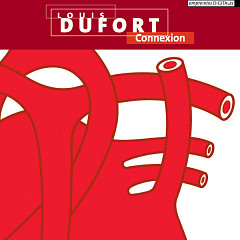
    Louis Dufort composes for the Marie Chouinard contemporary dance company, works with the artistic committee of ACREQ, and explores hybrid and unbridled musical experimentation. Connexion is his first release of electroacoustic music and contains four compositions: Transit (1998), Pointe-aux-Trembles (1996), Zénith (1999), and Décap (2000).

    Spanning 4 years of musical explorations, each piece is unique. Transit is an abstract composition that jumps around from metallic alarm clock-like bells, descending whines, processed noise, and wordless vocals. At times it sounds like it could be destroying your speakers. The liner notes state that Transit is “a work that makes use of continuous discontinuity.” Pointe-aux-Trembles is a quiet piece comprised of high frequency sounds and is an impression of the refineries at Eastern Montréal’s. Zénith, as the name implies, is a Ligeti styled composition that slowly builds to a loud climax culminating with demonic mutterings. The final composition, Décap, is Dufort’s study of wrists and ankles and is for the Marie Chouinard dance troupe. It is quite impressive and I could swear that I heard samples from The BeatlesRevolution 9 and Pink Floyd’s Ummagumma (the studio album). If not sampled [Dufort says it is not], then Dufort duplicated some of the studio tricks used 30 years ago on these albums.

    … quite impressive…
  • 589
  • 590
  • 591
  • 592
  • 593
  • 594
  • 595
  • 596
  • 597