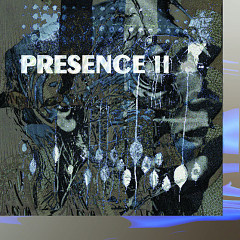
With 34 works from 32 composers, this double-CD compilation [Présence II] situates the listener in what could be compared to strolling through a colourful town market, with its confluence of colours, tastes and smells. The pieces on offer address a variety of musical concerns, and present a number of different approaches to the latter. They come in different ‘shapes and sizes,’ from a 37” miniature to a three-movement work lasting over 12 minutes. Of these some are complete works and some are excerpts.
Although strict classification into genres and styles is impossible and undesirable, it may make some sense to group the pieces in this collection according to common concerns and general approaches within which their materials are developed and structured. Of course, overlapping will be inevitable and works may belong to more than one group. Nevertheless, grouping is still a worthwhile pursuit since it will hopefully give the reader a reasonable idea of what to expect and provide first time listeners with signposts to the various ‘goods on offer in this town market’. With this in mind, lets begin our ‘stroll’…
Our first stop will take us to works constructed by virtue of the timbral qualities of their materials — even when they use sounds of recognisable sources. Velocity, by Peter Batchelor, begins in the lower ends of the spectrum, with a single massive ‘wave’, which is then expanded into a complex textural set-up. The spectrum is slowly expanded to include wider bandwidths, alternating between the stasis of textural material and the activity of strong gestures reminiscent of the original opening. As Batchelor himself proposes in the programme notes, this work explores just such type of contrast: the sonification of movement and stagnation. Towards the last quarter of the work, the interaction between the two types of material seems to become more intricate: instead of simply giving way to their counterpart, static and dynamic sections seem to engender each other, to be the cause of their antithetical manifestation.
A similar concern, albeit with a different approach, is found in pacific, by Kevin MacLeod. The general tendency of this work is one of transition from activity to stasis, beginning with a hectic counterpoint of sounds, followed by a serene section, articulated by means of noise based gestures against a high pitched background. A low frequency drone brings this work to its conclusion. On the other hand, the main force articulating Points of No Return, by Chin-Chin Chen, is the superimposition of two types of material according to their timbral content. Initially, a pitched sound (roughly E), is set ‘in the spotlight’. Then, the sound evolves into a variety of textural and gestural complexes. The interesting feature of this section is that it is all related to a basic pitch, roughly between A# and B: even when unpitched material is used (belonging to a different sonic category, as explained in the programme notes) there seems to be an underlying basic drone unifying the passage. In fact, pitch becomes a structural device, delimiting sections and giving a sense of progression when, after the abrupt end of the first section at ca. 2’, a drone takes over and different harmonic fields are created by superimposing short allusions to other pitches.
In step, under (excerpt), by Benjamin Thigpen, a group of low frequency sounds evolve into a set of appealing grainy textures and high frequency pitched strata which dissolves slowly into silence. It is worth paying attention to the intricate resonant decay characteristic of most sonic material in this work. Zipper Music II, by Gordon Fitzell, achieves an admirable timbral variety out of sounds produced by a mere zipper, articulated successfully into a coherent musical flow. Even background noises are used effectively. ARGOS, by Martín Alejandro Fumarola, effectively employs a limited number of materials to produce a convincing shape; contrasting long evolving textures with sharper gestures. At the same time, the ear is drawn to the inner details of the gradual evolution of the long textures. Au-delà du miroir, by Daniel Zimbaldo, consists of a single sound mass which emerges very slowly out of ‘nothingness’, swells into a climax — displaying evolving internal details of its timbral architecture — and then fades out also very slowly into ‘nothingness’.
In spite of its use of recordings of water and the allusion of its title to the role of this element in our constitution, David Solursh’s We is articulated by virtue of the timbral qualities of its materials, including untouched as well as processed samples, thus achieving a wide and attractive sonic palette. This material is well organised into a clear structure which could be described as consisting of a number of ‘waves’, each with its own spectral characteristics and temporal articulation. As an illustration of the latter, there are different types of onset, from waves which start abruptly to others which emerge slowly out of silence. Éphémère, by Yves Gigon refers to the mayfly. However, the articulation of its sonic world falls within the abstract category, rather like programmatic music using orchestral instruments. In any case, it is an interesting and unconventional presentation of the ‘ephemera’. In the first place, it defies the immediate image one may have of the mayfly as a lightweight living organism inhabiting high frequency spheres: the piece presents slowly evolving aural images at the low end of the spectrum. Could it be that the whole work is actually presented from the perspective of the mayfly, for whom routine human objects may appear heavy and large? — it is also interesting to read in the programme note that the gestation of this ‘fleeting moment’ was the result of a long process towards maturity. To many moments passed is a touching work by Ian Chuprun: described by the composer as a ‘celebration and lament’, the delicate manipulation of sonic material is indeed moving and, mysteriously, in spite of its abstract material, it does leave a sensation of longing. Its ‘controlled eruptions’ give a definite shape to the composition, subtly containing the energy that attempts to burst from within and maintaining an elegant sense of flow of the discourse. Perhaps its ‘human’ attributes are aided by fleeting moments containing material which may be considered to resemble — or perhaps even originate from — vocal utterances.
Moving on in our ‘stroll’ we come across a group of works with more overt use of vocal utterances in order to articulate their discourse. Nevertheless the latter is still abstract, since the voice is treated for its intrinsic sonic value rather than for the semantic meaning of its utterances. Todor Todoroff’s Voices Part I, combines the voice with sounds of a percussive nature, treating it with various types of resonation and feedback loops. This results in a serene and contemplative environment in which sounds develop and evolve giving the impression of timelessness, as pointed out by the composer in the programme notes. Alastair Bannerman’s In th’air or th’earth hovers between the recognisable and the abstract, the real and the surreal environment of unintelligible but definitely human utterance. The voice evaporates and re-materialises, this device being used in the structuring of the work. It begins with delicate high frequency streams which slowly give way to the voice material, a preamble of the dream-like atmosphere of this work, which may be compared to a slow-evolving storm, surrounding and involving the listener with the beauty of sounds and textures achieved by means of processing of the voice, changing its texture and timbral content, and giving the impression that the it is constantly changing its shape. This work ends with a passage resembling the beginning; this time, instead of materialising into vocal utterance, it only reaches intermediate stages of transformation, reminiscences of the latter. Annette Vande Gorne’s Amoroso, the second movement of a longer work entitled Vox Alia provides a different treatment of the voice, creating long streams of pulsating ‘pitch beads’ which, nevertheless, leave traces of the original vocal sung material: sometimes these traces consist of a voice, while in other occasions, a flock of voices float in the sonic air, dissolving into the more ethereal abstract entities, allowing a short glimpse of a ghost of an Ave Maria before transforming again into abstract eddies of sound., H a e i o u y æ ø å pt. 2 by Jørgen Teller, is an excerpt from a set of three longer versions — including a 30 minute piece, an installation and a work for radio — which concentrates on laughter. Samples are processed mainly by looping and granulation, producing various superimposed textures.
Turning our heads in a different direction, we find Dugal McKinnon’s Horizont im Ohr (excerpt), a work which contains exclusively ‘abstract’ materials. Paradoxically, it appeals to the senses with great intensity. Perhaps the best description of this excerpt may be found in McKinnon’s own evocation of ‘the sensual physicality of the acousmatic’. Indeed, the sounds in this work are of extreme beauty and sensuality and their organisation results in discourse of a natural physicality which may be compared to dance movement. This brings us to Soundbodies: Bodypart, by Adrian Moore, an excerpt which was actually composed with dancers in mind, amalgamating impeccably and with great effect a number of disparate sources, such as vocal utterances including breath and sighs, instrumental sounds and abstract electroacoustic material. Moore’s energetic statement seems to create what may perhaps be defined as a ‘frantic dance of live’, and, to a certain extend, may be understood as a statement which, far from being abstract, actually re-presents physical reality, whether it alludes to real objects or social conventions.
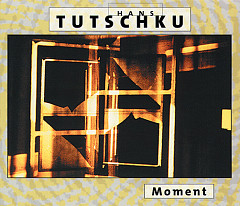
Threading away from the purely abstract we encounter Hans Tutschku’s extrémités lointaines, which seems to play with the expectations generated by the alternation between the abstract and the mimetic or anecdotal (in the sense of re-presenting physical reality). In fact, it seems to be articulated within a continuum which spans from absolute recognition to absolute abstraction. Its delicate treatment of environmental sounds from south-east Asia threads an imaginary space between recognisable and purely sonic landscapes, achieving a successful balance between these and so maintaining the tension and interest of the work. Towards the end, this tension is resolved sweepingly into a complex of pulsating pitches: a chord. However, when one feels that the final destination has been reached and the concluding sonic landscape is set, a further twist in the pitched complex subtly reveals a closing far East scene.
Following our footsteps we now approach the overtly anecdotal, offering music in which source and landscape recognition are an essential part of the structure and discourse. Antti Sakari Saario’s B-Side sweeps the listener into a variety of environments, from pop drumming to factory ambiences and imaginary scenes created using feedback noises and normally discarded sounds (such as noise, clicks and pops) with great effect as an integral part of the discourse. This vertiginous journey is ended with a rapid transition into silence, resembling a radio receiver which is suddenly shut off. Stereotyped Latter-Day Opinion, by Jean Routhier, the second shortest work in this compilation, provides a witty collage of disparate sounds which blend into a rhythmic pattern. Ce n’est pas ici, by Pascale Trudel consists of a succession of broken scenes in the manner of flashbacks or akin to changing channels on a television set. In a sense, the best description of this work is summarised in the succinct programme note: ‘I / remember / pieces of time / that / compose / life’. Finally, taking the anecdotal to its ultimate manifestation, we find ourselves aurally ‘gazing’ at the documentary world pioneered by Luc Ferrari: 6 Aphorisms, by Thomas Gerwin consists of short ‘sound environments’ from field recordings on location, taken from an interactive installation produced by the composer.
A different type of anecdotal approach uses spoken and sung texts for their semantic and social meaning. The use of the word in Steve Bradley’s “volalle melodie vi to trot” / “fowl melody to trot” is explicit and its meaning is crucial in order to apprehend this satirical commentary on society, which superimposes the neutral presentation of rules for proper French pronunciation on the gradual loss of temper (and sanity) of ‘normal’ parents dealing with their child’s behaviour. After a rather abrupt beginning it becomes clear that the crackles and pops of the French tutorial are intentional. Is this, perhaps, another allusion to the parents’ state of mind or even to the sanity of modern life? On the other hand, Whipping the Boys, by Barbara Golden seems to adopt a documentary approach, making subdued comments about some corporal punishment inflicted on male individuals and, at the same time, presenting reality within the sonic world of the analogue synthesiser. sylvi macCormac’s Spirit Wheels: Journey (part 1 of a puppet opera), begins and ends with the sound of a solo aerophone. The beginning is followed by percussion instruments and voices relying spiritual messages from various doctrines. chris wind’s to be led, the shortest work in this compilation, consists of the reading of text underpinned by a reversed sample of a Straussian waltz. The text, read by a female voice is ‘self explanatory’.
Reading Allowed (PA 11), by Ian Chuprun uses text and may be considered to be anecdotal. However, the possible distraction from musical content is balanced and ultimately driven by abstract processed material, so that the reading of text appears rather as an iconic allusion to the source material and to the intention of the piece. The use of clichés such as speed/pitch change and vocoding seem to acquire intentional significance when related to the allusion ‘to the parallel between web art and early computer music developments’ mentioned in the programme notes.
Our imaginary stroll takes us now to a group of works which owe their structure and discourse to the articulation of pitch. In fact, although Jorge Antunes’ La beauté indiscrète d’une note violette uses a sung phoneme, it actually applies the composer’s theoretical developments on the relationships between sound and colour and derives its unity from being built on diverse articulations of the pitch class E. Martin Gotfrit’s A Palaver with Procrustes (excerpt) is also concerned with pitch, but this time as the result of a tuned filtering process based on the Fibonacci series, beginning at the lower end of the spectrum, reaching higher frequencies and descending back slowly. In contrast with the previous two works, A Palaver with Procrustes, by Martín Alejandro Fumarola presents complexes of different pitches creating contour instead of focusing on the internal characteristics of a single tone or elaborating on a single pitch class. Timbral identity is mainly defined by the characteristics of the synthesiser used. The result is an almost contemplative discourse which purposefully avoids strong gestures.
Work within the domain of pitch using synthesised material brings us close to the character of the next group of pieces, which may be seen to have a direct ascendance to the origins of elektronische musik. The first of Three Electronic Sketches, by Otto Joachim uses transpositions of a single iterative sound typology in order to create its discourse. The transposition affects the timbral content as well as the relative height of the sound. The second sketch uses pitched material akin to that produced using random processes. The final sketch combines pitched material with iterative sounds reminiscent of the first sketch, acting as a synthesis of the previous two movements. Suk Jun Kim’s last two movements of sudden cry begin with a low frequency drone from which transpositions of an iterative texture emerge. After reaching a climax in which the bandwidth is extended to reach higher parts of the spectrum, the work descends back to the low frequency echelons.
As we approach the end of our ‘stroll’ we encounter a group of works which involve performances using instruments. Somewhere Submarine (5th Movement) , by David Prior is the last of a suite of five pieces for piano and tape. It contrasts rhythmic gestures of piano sounds against slow moving chords. The latter also act as a muffled reverberant background to the former akin to a scene in the depth. Climb to Camp One, by Diana McIntosh offers a recording of a performance of this work, which represents a mountain climb through difficult conditions. The performance requires application of various climbing tools to the interior of a piano and includes the use of the voice of the performer, resulting in a variety of textural and gestural sonorities enhanced by the natural resonance of the instrument. This piece combines various of the characteristics of encountered above, such as its relation to other media (music theatre), the use of timbral complexes and the introduction of anecdotal material — for instance, in the representation of shortness of breath resulting from the effort of ascending a mountain by actual breathing of the performer mimicked in the rhythm with which the piano is articulated.
DUO, by jef chippewa achieves a remarkable integration of the production of sound in a saxophone with the output of an analog synthesiser. Except for one instance, saxophone gestures initiate long ‘phrases’ within which the two poles interact to create a synergetic world in which both are able to coexist and interact. This work concerns itself with timbral affinity and, as such, brings us back full circle to where we started our short tour through Presence II.
It is inevitable that, given the variety on offer, each listener will have her/his own preferences. Certain works may appeal to some and not to others. While it is difficult to imagine that one can find everything to one’s taste, Presence II may have the virtue of being like our town market analogy: almost everyone may find something appealing in it.