Sauter au contenu principal
electrocd
  • This website is also available in English.

Blogue

4252 résultats
  • 618
  • 619
  • 620
  • 621
  • 622
  • 623
  • 624
  • 625
  • 626
  • Rendu visible dans Stridernews

    «Review», Garth Cheddar, Stridernews, no 8, 1 avril 1999
    jeudi 1 avril 1999 Presse

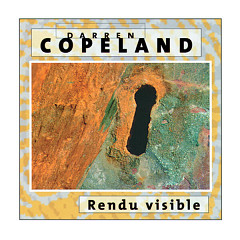
    Toronto-based electroacoustic artist Darren Copeland is fond of visual analogies in his work, and uses environmental sounds exclusively — a combination that could easily come off as unappealing to these ears. Mention that you just purchased a recording of ‘environmental sounds’ to most people and they instantly conjure up a serene image of baleen whales swimming in the emerald bay of some picture-postcard faraway place, to an accompaniment of ‘Yanny’-form piano tinklings or (at best) a pleasantly bland Robert Rich-Vidna Obmana electronic wash. Granted empreintes DIGITALes will probably never put out a recording affixed with a dread sticker reading ‘file under New Age,’ it is still quite easy to convince oneself the whole environmental-sound shtick is pretty well played out. Then again, its probably just my problem. The Wire may fawn over the latest Chris Watson field-recording CD as some sorta reaffirmation of the true wonder and danger of the natural world, but as for me, I think I’d rather just listen to my refrigerator. Darren Copeland avoids the trap of ‘sound representing environment’ by manipulating sounds to create completely new and unique environments that envelop rather than sedate the listener. Rendu visible is far more reminiscent of a sonic tidal wave of Aube-an proportion than the digitized wallpaper released daily on Celestial Dilettante and other like-minded labels.

    The opening Rendered Visible is the obvious recommended radio cut and also the most overtly ‘nature sound’-ing piece on this collection. It begins by utilizing fairly familiar, recognizable sounds of rain, wind, and jungle animals, layered over other less-recognizable sounds, creating a large crescendo that really blows through the listener like a late afternoon hailstorm on a July day on the high plains, particularly when played at high volume. It soon subsides just as quickly, leaving a few little shore birds to pick at debris, punctuated by subtle low tones played on an African flute by a Ghanaian musician not owned by Mickey Hart. Very nice.

    The remaining tracks follow a similar pattern of building up tension through adding layers, but rely more on ‘abiotic sounds’ along the lines of wind and rain and other less ‘natural’, unrecognizable drones and hums, creating a similar but less ‘busy’ effect than the first track. Reaching for Tomorrow sounds less obviously environmental sound-related than the other pieces presented here. This ever-changing ten-minute piece of background tones punctuated by nondescript incidental noises builds more gradually than Rendered Visible but is just as intense, albeit in more a darkly subtle way. Sample any few seconds of this piece and it sounds more like an excerpt from a ‘Cold Meat Industry’ promotional compilation rather than an entry in an international acousmatic composers competition, but the overall impression is much closer to the tape music of, say Vladimir Ussachevsky than to the output of some dreary Swedish goth band.

    The concluding 24-minute opus Night Camera is the sparest piece, utilizing sounds from rather familiar and ‘ordinary’ sources (wind, rain, cars passing, people talking in the distance) along with others less recognizable. It too builds through increasing sound layers to a very satisfying level of intensity at several points through the three movements. The conclusion of the piece is almost terrifying, with a distressed, ghostly human voice barely comprehensible through what sounds like a hurricane. Apart from being a great listen in its own right, Night Camera conveys the sense of wonder in experiencing the ‘music’ inherent in the ordinary world around us. While the aforementioned Mr. Watson accumulates frequent flyer miles recording birds in Costa Rica or carnivores on the Serengeti, Copeland manages to create something ten times more captivating from recordings that could very well have been made from a microphone hung outside a conservatory window. I’ll admit that field recordings in and by themselves are often quite marvelous (the most incredible single thing I heard all last year was a coal train coming to a long, gradual stop in the Nebraska badlands), but its the human touch of a composer with a sympathetic ear that can really transform the sounds of the everyday world into something truly otherworldly. Rather than providing an aural document of a specific place and time, Copeland allows the listener to render his/her own unique impression of the sounds contained herein, shaped by their individual connection to the sound world around them, a liberty that is much appreciated around these parts. Rendu visible is a subtle yet intense, familiar, yet alien aural expedition that borders on the overwhelming, and is my absolute pick-of-the litter of the empreintes DIGITALes ‘cheapie’ series thus far.

    … reminiscent of a sonic tidal wave…

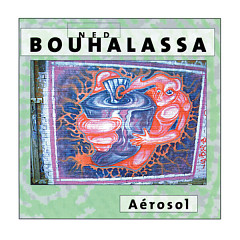
    Aérosol dans Stridernews

    «Review», Garth Cheddar, Stridernews, no 8, 1 avril 1999
    jeudi 1 avril 1999 Presse

    ‘Electroacoustic music’ is a term encompassing an array of music that utilizes recorded sound (traditionally magnetic tape) as an instrument. It can be divided into two broad categories: music which utilizes tape and performers, such as compositions for orchestra and tape, or live interactive music for performer and tape [mixed music], and the more traditional ‘tape music’ based entirely on recorded sound. Tape music did not appear until after World War II (though it had antecedents in Dada and Futurism) when tape recorders became widely available, and were ‘invented’ in France by Pierre Schaeffer (though a few isolated composers ‘discovered’ the process on their own soon after). Schaeffer’s collages of found sound and manipulated tones represented a radical break from contemporary ideas of ‘music’ (in fact he coined a term “musique concrète” to describe his work). They were meant to be heard as abstract sound art, without predetermined notions that sounds necessarily have to be ‘connected’ to the objects that produced them-any ‘meaning’ being assigned by the listener. Musique concrète provided the foundation later for the tape music of serialist composers such as Karlheinz Stockhausen, and eventually stimulated the evolution of electronic music itself.

    Tape music has often gotten an undeserved bad rap in this country. Self-consciously hip, mainstream music journalists write it off as an ‘academic’ exercise for university eggheads (even though Schaeffer himself was never trained as a composer or musician), and conservative NPR programmers either ignore it altogether or regard it (along with most ‘weird’ 20th century music) as beyond the pale. Hence most folks have had very little exposure to electroacoustic music, and recordings have been virtually impossible to obtain in this country until recently.

    Montréal-based label empreintes DIGITALes is among the first North American labels to actively distribute and promote electroacoustic music exclusively, and their recent Miniatures concrètes CD (reviewed below) is a good sampler of modern musique concrète. Other more widely available (barely) electroacoustic music releases of late include Karlheinz Stockhausen’s Kontakte (ecstatic peace!), The Storm of Drones 3-CD compilation on Sombient/Asphodel (which includes one disc of empreintes DIGITALes artists), and the Testament compilation CD on RRR.

    Writing reviews of ‘underground’ music is sometimes a tricky thing. One has to keep in mind that even though someone is a household name in my household, it doesn’t mean that their name is likely to be dropped real often down at the local ‘Pump and Pantry’. I recall Bouhalassa’s name from an appearance on that rather okay Swarm of Drones compilation (Asphodel) from a couple of years back and at the time just figured he was probably Naut Humon’s cousin or a one-time roadie for Rhythm and Noise (or both). When this appeared in the mailbox recently, I was a bit surprised to find out he was an award-winning, up-and-coming sound artists who studied under musique concrète big-leaguer Francis Dhomont, and has been an active promoter of electroacoustic music since 1987. Go figure. Aérosol is an introduction to Bouhalassa’s works from 1990-1998, and reveals him as a very accomplished soundcrafter doing a pretty fine job of making what the French call ‘contemporary music’ sound a bit more contemporary.

    When played as a backdrop, most of the music on Aérosol sounds structurally similar to your typical Pierre Schaeffer / Pierre Henry ‘good time oldie’ cut-and-paste tape music regularly pumped into restaurants and bank lobbies throughout the Midwest. But Bouhalassa’s music stands apart from his forbears due to his remarkably diverse and interesting sound palette, which draws heavily on non-traditional and even (gasp!) non-French sources for inspiration. The unintentionally funny liner notes paint him as an overly hip, quasi-nihilist rebel who ‘wigs out’ to Nirvana and Sonic Youth. He also states his love for techno, which he listens to daily, and often dances to until the early hours of the morning (fuckin’ raver), and is photographed hilariously (to me, anyway) in front of some seeming computer-generated montage, shaven headed, peering pensively to the side, looking like any of the myriad of anonymous techno-crats who litter the pages of The Wire these days. Despite the mild ‘hype’, Bouhalassa manages to pull off a pretty amazing feat that some of his new hip acousmatic youth counterparts (e.g. Alain Thibault) do not: to create music with the upbeat energy and vitality of techno and other ‘underground’ musics in a way that involves, rather than pummels, the listener while maintaining a grasp of the traditional style (and spirit) of musique concrète.

    The standout ten-minute opening track pretty much sums up Bouhalassa’s style. Jets is an ever-changing, active yet never overly ‘busy’ sound landscape filled with seemingly familiar sounds assembled into a seamless, flowing whole, while maintaining the integrity of its individual elements (yeah, kinda like musique concrète, dude!). A large share of the sound sources for Jets are ‘musical’ and manage to faintly recall every kind of electronic music ever invented, from kosmische tone-float to post-industrial speaker damage. Everytime I hear this, I spot 10 or 20 little sound bits that I think I’ve heard before, on an old Pink Floyd album, early Tangerine Dream, the first This Heat, or anything in the Soleilmoon mailorder catalog, yet when I try to pin those bits down on the next listen, they always seem to elude me. A good share of the sound material Bouhalassa uses is electronic in an up-front, digital and very ‘there’ way (like much techno), but these bits are often embedded in a subtle, yet equally interesting background of lower-end sounds. This disc sounds great (and completely different) on crappy computer speakers as well as expensive headphones, and like most great sound art, sounds slightly different on each listen (it is especially rewarding when played loudly). Bouhalassa always keeps his pieces moving, never allowing them to stagnate or slip into predictability, but all the while he is very patient, allowing his ideas to unfold gradually while maintaining a sense of spontaneity. Its hard for me to describe the overall effect of Jets other than to tag it as a sonic roller-coaster ride, an overworn term that pretty well sums up the effect of most of my favorite tape music.

    The next three pieces are similar to Jets, with a few differences in sound material and style. Constamment (autoportrait) is the longest piece and also Bouhalassa’s most overtly ‘techno’ work. It begins in a somewhat restrained, yet colorful way, and then infuses a very unobtrusive illbient backbeat element as a backdrop, which appears and disappears as needed. Attractions follows, which utilizes processed acoustic sound sources, making it the most recognizably musique concrète piece on the album. It opens with the sound of breaking glass, a good old tape music cliché that indicates something of a subtle sense of humor (always welcome in this genre) before moving on to more unfamiliar ground. Where as Attractions uses more traditional methodology to collage sounds, the following piece Move 1 uses MIDI technology to achieve the same ends, but is good nonetheless. Bouhalassa’s use of computer greatly expands the array of sound material available from very limited sources, and I can but hope this work will stand as an example to the legions of MIDI-heads who crank out cratefuls of dull ‘fiddle-dee-dee’ music and fail to take advantage of (or even interest in) the full range of sonics available. Move 1 also contains my favorite sound ‘bit’, a densely layered insect swarm that recalls David Dunn’s excellent ‘Chaos and the Emergent Mind of the Pond’ on the Angels and Insects CD, on Nonsequitur.

    The final piece Bouffée délirante is an early piece from 1990 that sounds quite a bit different; an overt attempt at ‘cinema for the ear’ which is not quite as sonically rich as the other pieces, but still a good and very interesting example of an artist ‘groping for a sound’ as Mr. Moon would put it. It relies heavily on the ‘jump cut’, an abrupt edit used to good effect on most of the pieces on this disc, which here tends to come off a bit jarring. Still I’m willing to cut him some slack and recommend Aérosol as a fine point of entry for those acolytes of electronic music who have some interest in exploring electroacoustic territory. Yet another in the uniformly excellent ‘budget series’ from this fine label.

    … reveals him as a very accomplished soundcrafter…

    Rendu visible dans The Wire

    «Soundcheck Review», The Wire, no 182, 1 avril 1999
    jeudi 1 avril 1999 Presse

    Canadian acousmatic composer Darren Copeland builds evocative soundscapes from environmental recordings. His manipulation of birdsong, sea sounds, and other sources appears minimal, but the three pieces here have a distinctly composed feel, nonetheless. At times the layering grows dense, but it is orchestrated to avoid clutter and conveys the same impression of spaciousness that emerges from more sparsely populated passages. Enhanced documentary for the ear.

    Enhanced documentary for the ear.

    Alibi dans Etch

    «Review», Davis Ford, Etch, no 5:2, 1 avril 1999
    jeudi 1 avril 1999 Presse

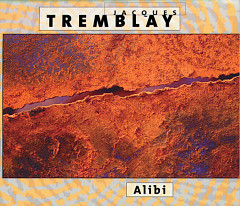
    This is an extremely complicated, and disjointed volume of concrete sound manipulation. As a general listen, it can come across quite harsh, with it’s wide spectrum of noises, some of of them literally attacking you. Listening to Karlheinz Stockhausen often produces a similar tone, and Tremblay admits a Stockhausen influence. In a described context, this melting pot of sounds starts to make sense. Listening to the first track, Hérésie ou les bas-reliefs du dogme, you are assaulted with various religious audio snippets varying from southern American televangelist preachers, and other quotes issued in French. One gets the sense, whenever samples of preachers are used, that the artist isn’t necessarily promoting religion, but chastising it. This indeed turns out to be the case, as culled from the liner notes: “I found it unbelievable to see all the cruelties that man has committed in the name of God. I had found my subject.”

    With Tremblay, it appears that subject is preeminent to the music. With each piece he has a strong message or concept in which to convey via recognized sounds. Sounds do transform, and shapeshift, but when they do, it appears that there is a purpose to that as well. Tremblay points out that when the Gregorian Chant dissolves into distortion, it symbolizes a transition from pure to impure. Alibi is like a difficult read, which must be pieced together and analyzed. This can be a fascinating adventure, or a tiresome chore, depending on who listens to it. Taken at face value, the pieces herein can be quite intrusive as a background, attesting to their demand for deeper exploration. This property alone seems to indicate that this collection should garner timeless recognition. Other themes Tremblay explores involve: eroticism, the unconscious, a tribute to jazz spontaneity, and Marcel Proust. Jeu d’ondes is a piece constructed entirely from sounds taken off a sailboat. In this “imaginary marina,” ships have come together to celebrate a new vessel: “the unsinkable FM network” which Tremblay expresses via various radio broadcasts throughout while the ships blow their horns. There are some fascinating and original ideas and concepts realized on this disc, although it requires a bit of explanation to guide you through Tremblay’s world.

    … this collection should garner timeless recognition.

    Rendu visible dans Etch

    «Review», Davis Ford, Etch, no 5:2, 1 avril 1999
    jeudi 1 avril 1999 Presse

    Copeland creates all of his music solely from tape consisting of environmental sounds. Rendu visible (rendered visible) centers around the mysterious fusion of sound and vision, and how different people may interpret sound, which then triggers visual elements (He begs an interesting question: “What if a listener is congenitally blind?”) This music is very visual, indeed. On the piece, Rendered Visible, Copeland creates landscapes of drones, and surrealistic ambient highways that sound like the roads may stretch for continents. One car may pass as expected, while another car may approach, but its timing is extended so that you may never appear to realize its passing, and it soaks back into the earth. Copeland morphs the sound of cars flitting by into the sound of waves crashing into the shore. Droning human cries of despair add to an already eerie landscape. At times, this album seems almost like a human version of some of Thomas Koner’s ambient wastelands. Those deep, dark, ice-cold drones are there, but you get human contact with elements like doors closing, people speaking in the background, and animal sounds, etc. Night Camera is a suite of three separate pieces, each in a different audio environment. Each piece acts as a sort of mechanical gadget that allows you to see in the dark (infrared?) what you otherwise would not be able to see. This is a wicked concept that works almost too well. The environments Copeland creates are downright creepy, and almost certain to contain predators, which can be heard scraping and scratching at the landscape (at least in ‘my version’ there are predators). As the wind whips through the trees with rain, I could almost feel my eyes tear up. Thunder is processed into what sounds like the metallic roar of a great metal deity. The environment is harsh enough to make you shut your eyes, but that only clears the visual slate for yet another fantastic voyage.

    Aérosol dans Etch

    «Review», Davis Ford, Etch, no 5:2, 1 avril 1999
    jeudi 1 avril 1999 Presse

    Ned Bouhalassa has constructed a truly breathtaking journey through the world of natural sound manipulation. Consider the piece Move 1, which begins with the maddening buzz of insects. I made the mistake of stepping on a hornet’s nest once while treading through some wetlands. I thought planes were approaching. I was wrong. This is what I heard. I got stung plenty. The hornets quickly disperse, and the sound shifts into chickens clucking sporadically. This is interrupted by the sound of something dropping into the water, almost as if a frog is scurrying for cover, which has the gratifying effect of destroying the environment the music was sculpting for you. Chickens and water are not common entities… yet they seem to coexist here. Further along, wetland insect buzzing slides in and out, interrupted almost violently by flapping wings. Then, a door slams.

    Again, Bouhalassa seems to create a semi–coherent environment, only to slap you in the face with something completely foreign. The piece parades on, and the sounds become less familiar and more manipulated. Many of the sounds Bouhalassa incorporates are immediately familiar, yet he shifts them into environments and textures they probably would never see. This is the real treat involved in listening to this release. He also attempts to integrate the world of musique concrète with some well–intentioned but hardly inspiring techno. This is really the only area worth bypassing on this wild sound journey. Highly recommended.

    … a truly breathtaking journey through the world of natural sound manipulation…
  • 618
  • 619
  • 620
  • 621
  • 622
  • 623
  • 624
  • 625
  • 626