electrocd

Blog

4252 results
  • 124
  • 125
  • 126
  • 127
  • 128
  • 129
  • 130
  • 131
  • 132
  • Who Has the Biggest Sound? in Gramophone

    “Gramophone talks to… Canadian composer Paul Dolden…”, Gramophone, January 1, 2015
    Thursday, January 1, 2015 Press

    … about The Un-Tempered Orchestra and Who Has the Biggest Sound?

    Who Has the Biggest Sound? is the most substantial of the two pieces on the CD…

    In this work, I go on a journey around the world, looking for sounds produced by insects and animals. Who has the most beautiful melody? Who can play the fastest? I found a direct relationship between animals of a specific geographical region and the unique music style from that area — for example, when it’s slowed down, the rhythm of crickets matches flamenco and other Latin rhythms; the rhythm and pitch-bend of barnyard animals matches country and western music. This project suggests that humans hold their musical creative abilities in too high an esteem.

    One wouldn’t necessarily think you were always using sounds from nature…

    I didn’t want a nature-sounding work — you should only hear pure music. But what you are in fact hearing is the sound of insects and animals translated on to musical instruments, and into a musical structure we can understand.

    Are the sounds electronically generated?

    All my music is based on the live performance of instruments. Musicians are hired and recorded one at a time — although I play all my own string parts, from violin to double bass, from banjo to electric guitar. I then do whatever editing is needed before mixing all the tracks together. On average, my ‘virtual orchestra’ comprises 400 members, and the size of different sections changes within a piece or even within an individual movement.

    What’s The Un-Tempered Orchestra about?

    Part of my ongoing quest since the 1980s has been to make us feel vibrations or music in a different way. I find our tuning system quite ugly and its vibrational combinations a cliché. I use the recording studio to create vibration or frequency patterns that you cannot achieve with conservatory-trained musicians in the concert hall. In this particular piece, I’m fascinated with non-octave tuning systems and the emotions and colours they create. When there are no octaves, it forces the ear to feel new sensations.

    What are your musical influences?

    I listen to all types of music from across the world and these genres are put through a huge ‘Dolden filter’ when I sit down to write. Who Has the Biggest Sound? is a piece in which I most directly mimic the colours and gestures of other genres — country, rock, Latin, Baroque — although this has a lot do with the musical material that the insects gave me! But the work isn’t simply a pastiche of styles, as each section is united by the use of the same melodic and harmonic material.

    What can your music offer traditionalists?

    Classical listeners may be turned off by the distorted guitars and pounding drums but an ‘ideal listener’ will be open-minded enough to join me on a journey into microtonal heavy-metal hell and through to sustained, blissful, consonant choirs accompanied by soft instrumental sounds. I believe this ‘ideal listener’ exists in the mind of every artist.

    On average, my ‘virtual orchestra’ comprises 400 members…

    Who Has the Biggest Sound? in Gramophone

    “Review”, Laurence Vittes, Gramophone, January 1, 2015
    Thursday, January 1, 2015 Press

    For his first new recording in nine years, and 20 years after his breakthrough two-CD set, L’ivresse de la vitesse, which The Wire listed as ‘one of the top 100 recordings of the 20th century’, Montréal-based Paul Dolden reportedly spent 8000 hours in the studio preparing his electroacoustic works Who Has the Biggest Sound? (2005-08) and The Un-Tempered Orchestra (2010) by layering together hundreds of studio hours of live, acoustic recordings, complete with the composer’s own narration at some points. It’s easy enough to throw the resulting 71 minutes into your daily mix at what seems like a reasonable volume level and let it buzz randomly and pleasantly through your daily soundscape. It’s only when you crank up the volume, however, that the impact of Dolden’s conceptual juxtapositioning, combined with the stunning spatial precision of the recording, begins to cook. At times the ideas are so refreshing that they tumble over themselves in almost gleeful haste. And the strong theatrical flow of the 15 tracks of Who Has the Biggest Sound? seem to group themselves into a series of larger episodes — most notably the rambunctious energy of The Saddle Song and My Hound is Out of Harmony, and an absorbing trio of Village Orchestra dance experiments — before concluding inevitably with a track of More Unanswered Questions. For the six tracks of The Un-Tempered Orchestra, despite the occasionally awesome dimensions of its super calliope-sized sound, the nature of Dolden’s philosophical conceit would seem to require close, intimate attention to nuances at those tightly squeezed intersections where space and intonation collide.

    … the ideas are so refreshing that they tumble over themselves in almost gleeful haste.

    Dômes in La Presse

    “Le temps des listes: Top électro 2014”, Alain Brunet, La Presse, December 26, 2014
    Friday, December 26, 2014 Press

    […] Au cours des dernières années, l’électro s’est taillé une place importante sur ce blogue, et pour cause: voilà un pôle important de créativité et d’innovation à l’ère numérique. Voici donc le résultat de nos écoutes cette année.

    […]

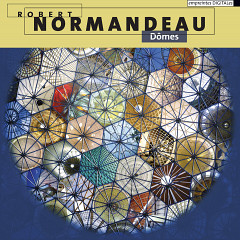
    Robert Normandeau, Dômes

    […]

    … un pôle important de créativité et d’innovation à l’ère numérique.

    Au-delà in The Sound Projector

    “Review: The Devil’s Lexicon”, Stuart Marshall, The Sound Projector, December 18, 2014
    Thursday, December 18, 2014 Press

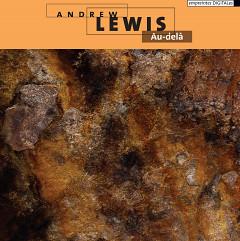
    Another explorer of the voice’s possibilities, Andrew Lewis has the narrators of his opening piece Lexicon remind us repeatedly of what ‘words are like […]’, among these, ‘leaves’, ‘lives’ and ‘lights’, meanwhile likening the page to a ‘map’. Drawn from a the poem of a 12-year old, Lexicon’s words are dissected, scattered between a fragmentation of speakers, distorted and seasoned with electronic effects; the resulting, disjointed linguistics becoming a meditation on dyslexia, whose cohesion lies just beyond ordinary reach, subordinated to a grander sense of order. It’s an agreeably disorienting portal into a collection of pieces that put an unsettling slant on familiar terrain.

    This collection – like much of the empreintes DIGITALes label’s output – comprises a composer’s showcase, the pieces originating from 1990 to 2012, and serving as a scrapbook of Lewis’ extracurricular interests, from linguistics to landscapes, of which he very capably demonstrates the musical qualities. That said, while thematically varied, the collection is defined by a more evident ‘signature’ than other releases: a predilection for sounds processed within the range of recognition, and a measured dynamic range. However, if the cost is our potential for surprise, our capacity for wonder remains intact: Lewis imbues these pieces with great depth, detail and a sustained accumulation of power over their extended running times.

    Dark Glass transposes the ‘unsuspected harmonies of broken glass’ into a sound sculpture of a far-reaching radiance: not an unusual device in this particular genre admittedly, and one that acts as a cohesive device for the full course of the album. Interspersed within its expansive harmonics and pitch-shifted tinkling are plunging moments of pure drama. Similar effects arise from Ascent as it factors in the tumbling rocks of mountainous Bangor – the region in which Lewis lives and works – transposed at times into pinball effects, punctuated by the climber’s odd pause for breath. The glassy radiance continues to serve as a cohesive device, bonding the natural elements of Time and Fire, the sea of time-drowned voices in Cân and the creepy panoply of distorted children’s voices in the closer Scherzo.

    Each of these pieces possesses the ability to transport the listener to somewhere beyond the concrete and the everyday while apparently originating from within it.

    Each of these pieces possesses the ability to transport the listener to somewhere beyond the concrete…

    A Gift of Etc

    Wednesday, December 17, 2014 General

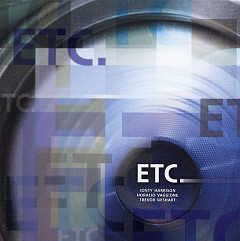
    empreintes DIGITALes will be turning 25 this January and we are starting the celebrations now! With orders of any 3 empreintes DIGITALes discs — already 130-title strong — electrocd.com will include (for a very limited time) a complimentary copy of the Etc CD with works by Harrison, Vaggione, and Wishart. The item is automatically added to your shopping cart. [Offer closed on January 14, 2015.]

    Etc

    La marée in The Sound Projector

    “Review: Negotiation and Irresolution”, Stuart Marshall, The Sound Projector, December 13, 2014
    Saturday, December 13, 2014 Press

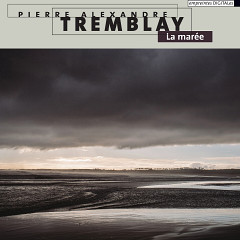
    For his fourth release on the ever-exemplary empreintes DIGITALes label, Pierre Alexandre Tremblay offers worthy company to label-mates and audio-vivisectionists such as Monique Jean and Manuella Blackburn, even if he is generally less incendiary across these five spacious pieces; forsaking cut ’n’ paste conscientiousousness for the full preservation and processing of performances in real time, draping over these aching canyons only the most necessary effects, to ensure the listener very gradual and genuine gratification. The momentous opener La rupture inéluctable consists of a resonant bass clarinet solo from Heather Roche, whose aerodynamic curves and low-end descents — initially foregrounded by golden slivers adrift in a vacuum — gradually succumb to a spell of more pugilistic tendencies: fits of pummelling framed by showers of feedback and distortion: mood-swings between grace and gratuitous, which, while making a fine first impression, establish a precedent of radical dynamic exchange between performer and loudspeaker that verges on war-craft.

    I’d not heard of the Baschet-Malbos Piano prior to hearing Le tombeau de fondeurs (‘The Tomb of the Casters’), and it sounds nothing like what I’ve expected: a flower-headed, metal bouquet stemming from its seemingly unrelated namesake, producing sharp, undulating lines that devolve over time into pounding, dissonant clusters, which are buried alive by tolling bells and hammered metal, finally petering out in a slow, defeated descent. Mono no aware conveys greater restraint, visiting the ears in insect waves from the Babel Table (another new name to me) with the menace of approaching warplanes. Still, Again is a war of wills between fricative near-vituperation for Peyee Chen’s soprano vocals and the lurk of distortive electronics. However, the most cacophonous moments are reserved for the bipolar eruptions of piano in closer, Un clou, son marteau, et le béton (‘A Nail, Its Hammer and Concrete’), which draws more tightly the wire between the extremes of implied threat and weary indifference, heightening tension for the duration with brooding three-key ruminations alternating with petulant outbursts, a dichotomy ever averse to resolution.

    Compiled very patiently across two discs, these five pieces demonstrate a different level of psychological control to the exhibitions of electroacoustic control that empreintes DIGITALes has presented thus far: the magic residing more in the frictional spontaneity of a theatre of operations than in the scientific perfection of detail, while providing some fascinating terrain for our continued exploration.

    … the magic residing more in the frictional spontaneity of a theatre of operations […] providing some fascinating terrain for our continued exploration.
  • 124
  • 125
  • 126
  • 127
  • 128
  • 129
  • 130
  • 131
  • 132