electrocd

Blog

4252 results
  • 132
  • 133
  • 134
  • 135
  • 136
  • 137
  • 138
  • 139
  • 140
  • En chute libre, En orbite in Le son du grisli

    “Critique”, Guillaume Belhomme, Le son du grisli, June 13, 2014
    Friday, June 13, 2014 Press

    Comme Martin Tétreault enregistra Le dernier disque de jazz du XXe siècle avec Pierre Tanguay et Xavier Charles, on ne sera pas étonné d’apprendre que le Canadien aux platines s’adonne sur ce CD au rock! A la colle avec le batteur Michel Langevin (du groupe de metal Voivod dont je l’avoue j’ignore tout), leur duo s’appelle Et\Ou. Première question, qui du duo fait le Ou du Et et le Et du Ou? Tétrault, Langevin? Bien, qu’importe, l’un ou/et l’autre.

    Deuxième question: tient-on là le dernier disque de rock du XXIe siècle? Pourquoi pas. Mais d’un rock vaudou qui fait tressauter et danser le tourne-disque, d’un rock sans complexe qui ose parfois le balourd (comme sur le Duo 8), d’un rock noise et saccadé, brut et abrupt… De quoi oublier toute dénomination, et ne plus bouder notre plaisir à l’écoute de ce rock qui n’en est tout simplement pas un.

    … rock vaudou qui fait tressauter et danser le tourne-disque

    À la plage in Monsieur Délire

    “Listening Diary”, François Couture, Monsieur Délire, June 2, 2014
    Monday, June 2, 2014 Press

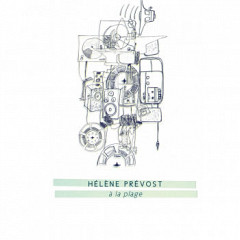
    The great communicator Hélène Prévost, who was for a long time the lead new music presenter at Canada’s francophone state radio, just released her debut solo album. There is nothing summer-like about À la plage — “At the beach”, but it is actually a play on the French word “plage”, which also means “track” — it is the result of serious research on sounds and their mechanical and poetical interrelations. Ten tracks ranging from two to ten minutes, and each track has its own soundworld, though these soundworlds are all related. Disembodied sounds — rumbles, tweets, taps — sampled instruments (especially a guitar), fragments of conversations. This is abstract hörspiel, sound art that presents, that says, and then listeners draw their own narration or evocation from it. It’s a demanding listen, no doubt, but a rewarding one.

    It’s a demanding listen, no doubt, but a rewarding one.

    Allusions sonores in Le son du grisli

    “Critique”, Pierre Cécile, Le son du grisli, June 2, 2014
    Monday, June 2, 2014 Press

    David Berezan est un compositeur de musique acousmatique, souvent récompensé. Allusions Sonores est le premier disque que j’entends de lui. Attention, rien à voir avec le Berezan de mon immeuble, qu’on ne me soupçonne pas de conflit d’intérêt!

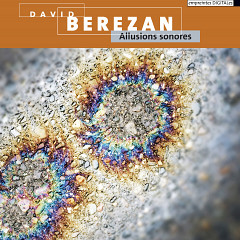
    Sur Empreintes DIGITALes, ce Berezan là remplit tout l’espace du CD d’«allusions sonores» qui font référence à des bruits divers et variés (bouées de navigation maritime, lamellophone balinais, field recordings de plusieurs continents…). Bien, très bien même… Et là-dessus, il jette des reverses, des tintements et des sons acoustico-moléculaires qui épateraient plus d’un marin revenu sourd de Badlands… Bref, de quoi réjouir le terrien adepte de musique de grand large que je suis!

    Bref, de quoi réjouir le terrien adepte de musique de grand large que je suis!

    Allusions sonores in The Sound Projector

    “Review”, Stuart Marshall, The Sound Projector, June 2, 2014
    Monday, June 2, 2014 Press

    Always grateful to take receipt of new releases from a favourite electroacoustic label: empreintes DIGITALes, whose releases of benchmark collections by Monique Jean and Manuella Blackburn have previously wowed me to annoying verbosity. David Berezan’s a new name to me, but he upholds the label’s reputation for quality product; this set of allusive sounds reflecting everything I enjoy about electroacoustic music. While they are said to inhabit different bodies, Berezan and Blackburn display a strong thematic and audible kinship in their respective works. Both have produced pieces in and about Japan for one thing, and both have an appetite for exotic instruments. Accordingly, Berezan constructs the lush but byzantine second piece, Thumbs (2011), from a single plucked note on a Balinese thumb piano; a note he gets right inside: stretching it every which way in and around our ears and bodies.

    It is a compositional discipline that informs every piece, each with its distinct identity, which digital processing never detracts from. Take Nijō (2009), with its origins in customised Japanese ‘nightingale’ flooring. Otherwise stable and silent, certain castle floorboards were raised ever so slightly as to ‘sing’ if and when an intruder stood upon them, alerting security to their presence. Perhaps for the possibility of emergency, the piece forsakes the stealthy motion one might expect for the torrent of bouldering acoustics we actually hear. Other tracks are more subdued, but no less fascinating: Buoy (2011) is almost ambient in its representation of swelling seawater, its patina of digital glitter endowing the soothing sounds with an almost rotoscoped, fictional veneer.

    In total, these five pieces offer us a glimpse of the potential breadth of the composer’s work, and I suppose newcomers (in particular) a view of some of the more palatable possibilities afforded by electroacoustic music. Even those of us as jaded about ‘experimental’ music as much as sausage factory pop or electronic should surely find solace in such careful craft.

    Even those of us as jaded about ‘experimental’ music as much as sausage factory pop or electronic should surely find solace in such careful craft.
  • 132
  • 133
  • 134
  • 135
  • 136
  • 137
  • 138
  • 139
  • 140