electrocd
  • This website is also available in English.

Blog

4252 results
  • 560
  • 561
  • 562
  • 563
  • 564
  • 565
  • 566
  • 567
  • 568
  • … dans le silence de la nuit… in Jade

    “Chronique”, Julien Jaffré, Jade, December 1, 2001
    Saturday, December 1, 2001 Press

    Gilles Gobeil, né il y a 47 ans à Sorel, est de cette génération qui a suivi les premiers tâtonnements de la musique concrète en France, avec Ferrari, Schaeffer ou Henry, les premières expériences à grande échelle de sleeping et de musique répétitive (Riley, La Monte Young, Conrad) et d’acousmatie (Bayle). Ses expériences ont accompagné sa scolarité et ses études universitaires (tout autant que les Beach Boys, d’ailleurs…). Sa réussite auprès de ses pairs (prix Ars Electronica, diverses récompenses), ses participations à de nombreux collectifs (GRM, groupe de musique électroacoustique de Bourges) ont construit la personnalité de sa musique et son style. Un voyage onirique en quatre étapes qui puise ici son inspiration largement dans la littérature contemporaine (de Proust à Jules Verne, de Thomas Moore à HG Wells). Des visions dépressives ou nostalgiques, oniriques ou anticipatives de voyages, qu’ils soient intérieurs ou géographiques. L’atmosphère générale de l’album ne prête pas à rire, climat de tension permanente où l’on pense par moment à l’album de Faust et sa B.O. du Nosferatu de Murnau où aux ambiances de Morcook ou Lovecraft… l’utilisation d’ondes Martenot et de rupture violente comme sur un de ces précédents albums La mécanique des ruptures n’y étant pas étrangère. Une belle invitation au pays des rêves sombres.

    Une belle invitation au pays des rêves sombres.

    Clair de terre in Ampersand Etcetera

    “Review”, Jeremy Keens, Ampersand Etcetera, no. 2001_20, December 1, 2001
    Saturday, December 1, 2001 Press

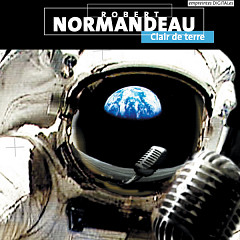
    Normandeau’s album is less punctuated, somewhat academic in origin, and yet more lyrical: the first two tracks use mono-sources (voice, flute) while the third is an “exercise”. The opening Malina is based solely on shakuhachi as played by Claire Marchand, and presents the sound largely uncompromised — some stretched to drones, some editing — but presented in is captivating simplicity.

    With Erinyes Normandeau uses the voice as his instrument: taking recitation from a production of Sophocles’ Electra for which he composed the music, he uses a treatment known as “freezing” to extract voice sounds. He has then orchestrated and structured them into a dramatic piece. Shifting between tonal stretched voices and short looped fragments, chants and ululations, rapid, slow and fragmentary passages, he has created a percussive musical piece that draws you in and holds you — changing pace and tone subtly, without unnecessary underlining, ending with an extended strangled cry. It reminded me somewhat of parts of Roger Doyle’s Babel.

    Clair de terre combines electroacoustic and cinema — each of its 12 parts represents a cinematographic technique (“Narrow frame” “Rhythmic editing”) and relates it to a musical technique. After a spacey Overture (Ouverture) — the piece was stimulated by the famous photo of the earth from space — with a launch, swirling tones and beats, computer squiggles and blips; each part is structured as a “soundspace, an object’s sound, the sound of a musical instrument, and vocal onomatopoeias“ (Erinyes is part of the onomatopoeia series). The parts are not presented sequentially, however, but combined in short and subtle pieces, for example, the shakuhachi plays its tones over chattering base in Primary and secondary colours (Couleurs primaires et secondaires), a train runs through Camera mobility (Mobilité des plans), a squeaking door, electric guitar chords and so on, concluding with Wide frame (open space) (Cadre large (espace ouvert)) where pipes lead a melody before some percussive punctuating finales. Each of these movements is a marvellous miniature of about 3 minutes duration, based on excellent choice of sound sources, that combine to create a dense and complex work. At times the links are obvious (the cutting in Rhythmic editing (Montage rythmique), the sound palette in Primary colours (Couleurs ternaires), Dazzling’s (Clarté (éblouissement)) fireworks) others take more consideration — but it develops into something well beyond an academic exercise. A fascinating conclusion to a very approachable album.

    Each of these movements is a marvellous miniature […] that combine to create a dense and complex work.

    … dans le silence de la nuit… in Ampersand Etcetera

    “Review”, Jeremy Keens, Ampersand Etcetera, no. 2001_20, December 1, 2001
    Saturday, December 1, 2001 Press

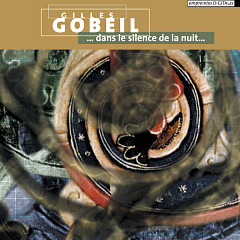
    The four tracks on Gobeil’s disk have been well received in competitions around the globe, and are each based around narrative — personal or literary. One of the difficulties of this form of music, other than the complexity in trying to describe it, is the piercing punctuation — a tendency to signal the start or end of passages by loud, aggressive noises (a subcategory of the overall interest in wild volume changes). Gobeil uses this dramatic underlining extensively — which can get annoying, but does give the disk a unity, as some of the sounds (door slamming, bangs) are used across the tracks.

    Derrière la porte la plus éloignée… combines and manipulates sounds from a trip to Italy into an abstraction: a throb, breathing, violin and whirlys /bang/ a susurrus, train, tones, violin, dripping water increasing, throbbing /bang/ walking, drips and horn getting loud /loud passage/ trains (probably) seguing into tones / rhythmic elements, walking, talking, tones, increasing breathing, ringing noises build into a big visceral accretion of sound, then a little ringing and fade. A dense dreamlike Italy. The punctuation is even stronger in Projet Proust where sentences from the opening of the novel are read, accompanied by light electroacoustics, then followed by concretions which are probably related to the text, the punctuation playing the role of a full-stop at the end of an auditory sentence. Some sounds are domestic — a kitchen, with water running, a choir in a church, insects or a train — while others are tones, whistles, crackles and bangs. The piece flows smoothly, and complements my own memories of those early sections — balancing the comfortable domestic with Marcel’s night fears.

    Following the literary theme, Point de passage is a version of WellsTime Machine and again matches my memory. Throughout there is a rhythm and tone from machinery, mainly steam, reflecting the steam age that produced the novel. The piece swings between an active mechanical period with knocking and sirens into a more lyrical central section, chatterings and vents, soft tones, rainfall and flutes, and finally another noisey building of buzzing machines and jackhammers, rising and falling to a slammed conclusion. Nuit cendre adapts Verne’s Journey To The Centre Of The Earth and isn’t at all like Rick Wakeman! It swoops between quiet subterranean rumbles or slow drones and tones into bangings and dense bellringing or distressed voices, sounds rising and falling like stalagmites and stalactites, excitement and awe at the underground landscape. Complex and difficult works, these 4 pieces create a strong sense of place and narrative, and deserved the awards they won.

    … these 4 pieces create a strong sense of place and narrative…

    Clair de terre in Virgin Megaweb Megactu

    “Nouveautés”, Virgin Megaweb Megactu, December 1, 2001
    Saturday, December 1, 2001 Press

    Musicien québécois travaillant depuis des années autour de l’art contemporain (danse et installations), Robert Normandeau offre, avec ce volume récapitulatif, un panoramique de ses expériences électroacoustiques et électroniques en un superbe travail de mise en espace du son et de ses variations. Aujourd’hui, séduit par les sirènes techno, on le retrouve aussi sur label Rephlex d’Aphex Twin pour des compositions plus punchy. À suivre…

    … un superbe travail de mise en espace du son…

    Bruits in Metamorphic Journeyman

    “Review”, Metamorphic Journeyman, November 21, 2001
    Wednesday, November 21, 2001 Press

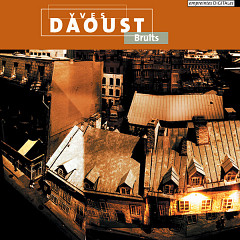
    Since Daoust’s official entry into the professional world of music in 1978, he has composed an average of one work per year, in various genres, for diverse occasions, and ensembles including film and stage soundtracks, multi-disciplinary performances and concert works. He was awarded the Euphonie d’Or prize (Bourges 1993) for his work Quatuor (Anecdotes IMED 9106) consecrated as a “classic” in electroacoustic music. Bruits is a third recording by Yves Daoust on empreintes DIGITALes (Anecdotes 1991; Musiques naïves 1998). 4 works, 4 commissions; from Québec organizations as well as French and British organizations. The title work is a postcard, a sonic portrait of a landscape dear to Daoust: Montréal. You will be introduced to the children of the city, its nights and festivities. Daoust chose to be a witness of an environment in La gamme as well. Bruits is a most interesting release, an opportunity to dig deeper into the creative realms of one of Québec’s most important electroacoustic composer.

    … a most interesting release…

    … dans le silence de la nuit… in Metamorphic Journeyman

    “Review”, Metamorphic Journeyman, November 21, 2001
    Wednesday, November 21, 2001 Press

    Gilles Gobeil invites us to his haunting imaginary world. 4 works takes us on an unbelievable dream (or is it a nightmare?). True to his style, Gobeil’s music is rich with evocative moods. It’s a continuous sonic thriller. Beware, we certainly don’t know where this music will take us. Projet Proust, Point de Passage, and Nuit cendre were all inspired by Gobeil’s readings (Proust, HG Wells, and Jules Verne). Derrière la porte la plus éloignée… will show you Venice like you’ve never seen it before. All aboard with Gilles Gobeil on a trip you won’t forget!

    … a trip you won’t forget!
  • 560
  • 561
  • 562
  • 563
  • 564
  • 565
  • 566
  • 567
  • 568