electrocd

Blog

4252 results
  • 562
  • 563
  • 564
  • 565
  • 566
  • 567
  • 568
  • 569
  • 570
  • Yves Daoust, Louis Dufort in La Presse

    “Après Mutek, le Média Lounge et le Montréal électronique groove [MEG], revoici Elektra… 2001”, Alain Brunet, La Presse, November 8, 2001
    Thursday, November 8, 2001 Press

    À compter d’aujourd’hui et ce jusqu’au 17 novembre 2001, deux week-ends consécutifs de musiques électroniques, présentations multimédia et performances robotiques sont prévus à l’Usine C. Les œuvres de Markus Popp (Oval), Monty Cantsin, Yves Daoust, Jean Piché, Louis-Philippe Demers, Louis Dufort et Nerve Theory y sont attendues.

    «Nous avons loué la Cadillac des systèmes multimédia», annonce fièrement Alain Thibault, compositeur réputé et directeur artistique de l’Association pour la création et la recherche électroacoustiques du Québec (ACREQ).

    Pour la troisième année consécutive, donc, Elektra se propose «d’établir le lien entre les différentes cultures contemporaines issues de l’utilisation créatrice des nouvelles technologies.» Rappelons que, dans le cadre d’Elektra, l’ACREQ a déjà produit des œuvres importantes du répertoire international multimédia et électroacoustique; y ont été présentés des créateurs tels que Granular Synthesis, Ryoji Ikeda, Pierre Henry et Karlheinz Stockhausen.

    Alain Thibault n’a, d’ailleurs, aucun mal à situer Elektra 2001 parmi les autres manifestations électroniques du genre qui se tiennent à Montréal.

    «Ce que nous présentons dans bien des cas, soulève-t-il, ce sont des œuvres à grand déploiement comme les performances robotiques. Parce que nous disposons d’un lieu pour le faire, parce que nous savons quoi louer, parce que nous avons plus de connaissances au plan de l’équipement multimédia. Le système européen que nous comptons utiliser pour Elektra 2001 n’a rien à voir avec ce qu’on peut entendre dans d’autres festivals de même nature. Au dernier Media Lounge, par exemple, on n’a pu compter sur des installations aussi sophistiquées. Au niveau technique, personne ne nous bat, j’en suis certain.»

    La première série de concerts, donc, s’ouvre ce soir avec: SPIN de Jean Piché et FausTechnology de Purform. Ces pièces multimédias (musique électronique, animations et traitements d’images numériques) ont été conçues spécifiquement pour une projection sur trois écrans. On assistera, soutient-on du côté de l’ACREQ, à un tour de force technique qui consiste à créer une seule image panoramique avec les trois surfaces de projection (10,5’ x 42’).

    Demain, c’est le retour d’un animal de la performance, connu au cours des années 80 sous la bannière néoïste, animal réputé pour ses prises de sang en direct… On rappellera que Istvan Kantor, alias Monty Cantsin, avait repris contact avec le public montréalais en 1999 avec la performance Executive Machinery. Toujours obsédé par les objets de la bureautique, il revient cette année avec une nouvelle installation robotique, un groupe de performers torontois et son plus récent corpus vidéographique. Repossessing the Body-Machine, la nouvelle performance de l’artiste multidisciplinaire Istvan Kantor, sera ainsi présentée en première montréalaise.

    Samedi, le musicien allemand Markus Popp alias Oval présentera une performance «Powerbook live». Au sujet de Markus Popp, les producteurs d’Elektra affirment qu’il est probablement l’artiste européen le plus en vue de la scène electronica. La veille (demain, 18 h), Popp expliquera sa démarche artistique et son projet OvalProcess lors d’une présentation multimédia au Café de l’Usine C.

    Également au programme de samedi, Nerve Theory nous proposera une performance vidéo/sonore intégrant les images et la voix du new-yorkais Tom Sherman ainsi que la musique du viennois Bernhard Loibner. Toujours au même menu, les trois tableaux de Bruits du compositeur électroacoustique montréalais Yves Daoust. Cette musique, conçue spécifiquement pour huit canaux, sera diffusée pour la première fois avec un support vidéographique réalisé par Jean-Sébastien Durocher. Enfin, on aura droit à la première diffusion en salle de Décap de Louis Dufort, une pièce pour bande de 25 minutes qui a valu à son auteur l’obtention d’une mention, catégorie «Digital Musics», lors du dernier Prix Ars Electronica qui se tient à chaque année en Autriche.

    Présentée trois soirs consécutifs les 15, 16 et 17 novembre, la pièce de résistance de Elektra 2001 est la performance robotique de Louis-Philippe Demers. Grand déploiement, vous dites? Pas moins de 48 membres robotiques identiques seront accrochés à une impressionnante charpente métallique évoquant la forme d’une arène. Robots, musique électronique et projections vidéo, expérience visuelle et auditive en perspective.

    On notera en outre que la politique de prix peu élevés d’Elektra 2001 (15$ pour tous, 10$ pour les étudiants) favorise l’accessibilité du public aux arts électroniques. Notez que l’entrée est libre (gratis!) pour la soirée d’ouverture (aujourd’hui) et pour la conférence de Markus Popp-OVAL (demain).

    Clair de terre in Sonoloco Record Reviews

    “Review”, Ingvar Loco Nordin, Sonoloco Record Reviews, November 1, 2001
    Thursday, November 1, 2001 Press

    It’s with a certain nervous apprehension and an expectant joy that I listen to very new music, and any piece of art stamped 2001 has got to be considered within that framework. It’s NOW! music; telling tales about the present and the recent. Even if the subject matter should happen to be antique stuff, the way it is expressed is now, simply by its placement on that timeline. I’m very curious about things like these; new expressions of art; art providing one of the finest and most refined essences of human life, reflections on human life.

    Robert Normandeau’s name is mentioned with respect by connoisseurs of electroacoustic music. He is a founding member of the CEC (Canadian Electroacoustic Community), and he has a number of very good CDs to his credit, for which he has been amply praised and awarded.

    Malina (2000) (for Brigitte Haentjens) is the first track on this factory-fresh CD from empreintes DIGITALes. The piece is developed on the contents of a play, which in turn is based on the 1971 novel Malina by Ingeborg Bachmann (1926–1973) – an example of how the arts may spill over into each other’s domains in a fruitful way. The stage adaptation of the text is a poetic reading of it, which, says Normandeau, “makes use of the unsaid, silence, and atmosphere in a way that allows the music a place that it seldom enjoys in theatre.” Indeed the soaring beginning is a lone but husky shakuhachi, which immediately moves into a layer behind a sonic film of moist weather and soft caresses of oriental erotism, wherein blowing mouth-sounds whisk the rushing air around the corners of wet words, unspoken and silent, just hinted at by the bulging oral cavities which form soundless atmospheres of unheard echoes and immobile gestures towards the heart and the stars. The sometime choo-choo train sounds call up visions of Vietnamese rice fields, through which an elevated embankment with a rail runs, while on high the falcons circle, certain to spot their pray, remaining in these Normandeauisms in patient spirals of restful movements, eyes gleaming with the intense gaze of birds of prey. The squeaks of un-oiled carriages, dragged along mud roads by small people in large hats, rise out of Malina, and even if these associations were in no way intended by the composer, he has no power over them when the music has left his workshop. The associations stirred by his electroacoustics inside somebody else’s brain, way across the Atlantic Ocean, in a Scandinavian rural outpost, whirl as they will, and all I can do is jot down these notes of the fleeting images passing on the inside of my eyelids…

    Erinyes (2001) (for Anne-Marie Cadieux) is centered around the voice, springing out of the voice, a voice carrying no morphemes of meaning, solely offering onomatopoetic mimicries, shadowy movements of subconscious intentions, disappearing in the mist of amnesia and the defensive act of mental repression. The vocal sounds used herein were taken from a production of Sophocles’ Electra set up by Brigitte Haentjens in Montréal in April of 2000, for which Robert Normandeau provided the music. The Erinyes were “the keepers of the shadows” in Greek mythology, and their chief purpose was to punish evildoers, but they put a scare on anyone… Normandeau puts the voices through a number of treatments, but he likes to focus our attention on the method of “freezing”, i.e. stopping the sound and investigating it inside out. I don’t suppose there is much need of scientific explanations into this. The main thing is the result, the experience — the creative flow – and it’s at play here! As a demonstration of the fast flight of the frightening creatures of the ancient Greeks, this way of casting the shadows of sounds down a vocal fast-track is ideal, filling your listening night with eerie notions and creepy feelings of guilt and remorse; too late, too late… Violet clouds are gathering, and darkness falls from on high… “Mama, put my guns in the ground; I can’t shoot them anymore…” – and could I clear my conscience of guilt I’d be a saint or a god, but being but a human under these cold stars, they could be coming for me; the Erinyes…

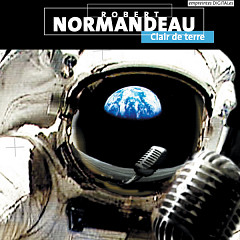
    In Clair de terre (1999) Robert Normandeau makes use of his collection of sounds, gathered during the passage of ten Earth years. In his introduction Normandeau lingers on the peculiarity of humans to historically always place themselves or the world in which they live at ground zero, at the center of the universe. This has been the case, as when the humans believed that Earth was the center, around which the rest of Creation was revolving. Later they thought that their local star was the center. One peculiarity which remains till this day (which Normandeau doesn’t mention) is that the humans of today – especially Western Man – honestly believe that this life is the one and only life, but of course it will in time be obvious even to westerners that we’re passing through a chain of lives, which no one really can estimate the length of – and life in itself does not end; it’s our perception of Time; of beginning, of end, which is wrongly perceived. Normandeau points our attention towards the more practical and widespread cosmic awareness – on the materialistic level –, which began with the first photographs of Earth taken from space, clearly – in a very brute way – placing our home among the stars. Subsequently the camera and its artistic or scientific terms determine this piece. Clair de terre – after an overture – is divided into twelve section, which all “systematically explore the grammar of cinematography”, transposed into the language of electroacoustics. The titles are Cadre étroit (espaces clos) (“Narrow Frame [Close Space]”) – Couleurs primaires et secondaires (“Primary and Secondary Colors”) – Mobilité des plans (“Camera Mobility”) – Montage rythmique (“Rhythmic Editing”) – Montage métaphorique (“Metaphoric Editing”) – Durée des plans (“Duration of Shots”) – Clarté (éblouissement) (“Brightness [Dazzling]”) – Taille des plans (“Proportion of Shots”) – Couleurs ternaires (“Ternary Colors”) – Micro montage: Obscurité” (“Micro Editing: Darkness”) – Cadre large (espace ouvert) (“Wide Frame [Open Space]”). Each of the twelve moments of Clair de terre is “composed of a soundscape, an object’s sound, the sound of a musical instrument and vocal onomatopoeias.” The “Overture” introduces a blipping sound, as from a scientific instrument or probably some monitoring instrument at Kennedy Space Center, because you hear the nervous conversation of people intensely involved in something in the background. The basic rhythm of the blips keep on resounding, but in the bass, in deep, rhythmic waves pounding the shore of the mind, the beaches of human understanding – as sweeping, soaring trebles bore away into deep space, extending our conception of the Universe and ourselves… Other sections of the work are quite different, though, with crunchy micro sounds nibbling at our sleeves, falling like bread crumbs around our kitchen tables, blowing up like sharp dust in our faces, half blinding us as we head for fresh water… In yet other sections deep drones rumble through our conceptions of Time and Space, in a post-romantic delusion of Wagnerian tragedies and large-scale intrigues, involving all the Nordic deities of old. One soundscape has the Doppler effect of a passing train move by in – perhaps – a Pierre Schaeffer homage. There really is no end to the ingenuity of Normandeau at setting these collected sounds of his at work in elaborated, colorful images of imagination. His sonic palette has many colors, many timbres, many surprising – and beautiful – evolutions.

    … deep, rhythmic waves pounding the shore of the mind, the beaches of human understanding — as sweeping, soaring trebles bore away into deep space, extending our conception of the Universe and ourselves…

    Bruits in The WholeNote

    “Review”, Paul Steenhuisen, The WholeNote, no. 7:3, November 1, 2001
    Thursday, November 1, 2001 Press

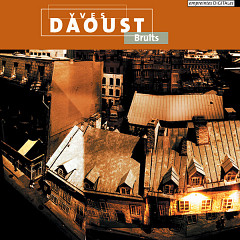
    Over the past 11 years, Montréal’s empreintes DIGITALes label has established itself as an important source for electroacoustic music from around the world. The recent release of Yves Daoust’s Bruits adds to their excellent catalogue, contributing a disc of infrequently ramshackle and noisily intimate source materials sculpted with finesse.

    Daoust sets the tone with Children’s Corner, using the sonic landscapes of street festivals, markets, outdoor sports, and backup beeps from delivery trucks as his starting point. Amidst varied metamorphoses, the sound materials remain vestigially recognizable, yet sufficiently developed so as not to lapse into a documentarian aesthetic. While Nuits lacks the personality of its predecessor, Fête stage-dives straight back into its crowds and celebratory nature, re-establishing the light-hearted quality that defines and separates Daoust’s work. Fête reminds of the Parisian summer solstice celebration “fête de la musique,” where musicians from any background play on the street, with all of the recorded fiddles, accordions and djembe heard in a two-block venture through Place de la Republique, yet none of the pickpockets or thieves.

    With the help of mutated material from Chopin’s Fantasie-Impromptu in C# minor, Daoust’s Impromptu engages and expounds upon its inspiration without clutching the Chopin too tightly. The final piece, Ouverture, develops the swaying crowds of previous works for more directly political purposes, exploring the subject of Québécois history. Overall, despite being somewhat uneven, Daoust’s Bruits succeeds with a boisterous playfulness and the warm impressions of community heard in the playgrounds and watering holes of old Montréal.

    … contributing a disc of infrequently ramshackle and noisily intimate source materials sculpted with finesse.

    Clair de terre in The WholeNote

    “Review”, Paul Steenhuisen, The WholeNote, no. 7:3, November 1, 2001
    Thursday, November 1, 2001 Press

    In the late eighties and early nineties acousmatic art in Montréal captured international attention. Among the forerunners was a young Robert Normandeau whose music possessed a soulful enterprising intensity.

    As a short-lived golden age began to fade after 1992 and the practice fell into some question, I was starting to feel very uneasy about the music outputted by Normandeau. Technical strides and artistic exploration were being made, the music was even developing a pop sensibility (which I admired), but somehow the youthful grit was beginning to fade. However, with his new CD release Clair de terre my fears for the worst have been quelled. He has recaptured that earlier intensity and most of all without turning back on the discoveries of the intervening years.

    The pop sensibility is certainly still there. In fact, it smacks you in the face when you hear the opening blasts of a shakuhachi in Malina. In the minutes that follow Normandeau shows his range as a composer by weaving through an oceanic tapestry of moods and sentiments that journey far beyond contemporary or traditional conceptions of shakuhachi music with a subtlety and depth that confirms his maturity and artistry. The other works continue on a similar theme of playful interplay between recognition and departure. The powers of acousmatic art to push beyond common associations could never be more evident as they are with the music of Normandeau at his finest.

    Normandeau shows his range as a composer by weaving through an oceanic tapestry of moods and sentiments…

    … dans le silence de la nuit…, Gilles Gobeil in Sonoloco Record Reviews

    “Review”, Ingvar Loco Nordin, Sonoloco Record Reviews, October 29, 2001
    Monday, October 29, 2001 Press

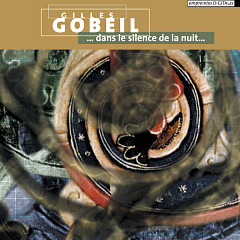
    When you peer into the electroacoustic antecedents of Gilles Gobeil you encounter the names of well-known as well as more obscure organizations throughout the genre which have all rendered him awards; Biennal Acousmatic Composition Competition (Belgium), International Electroacoustic Music Contest (Brazil), Ciber@rt (Spain), Bourges International Electroacoustic Music Competition (France), Stockholm Electronic Arts Award (Sweden), Ars Electronica (Austria), Luigi Russolo International Competition (Italy), Newcomp Computer Music Competition (USA), Brock University Tape Music Competition (Canada) and so on and so forth. Impressing! Undoubtedly, this wizard of the electronics, spinning all around his hat, is amply worthy of all this havoc, because he is one of the most talented and sensitive jugglers of sounds we’ve heard.

    His new CD is one of a batch of new issues from the prolific empreintes DIGITALes of Canada, wherein we can monitor the present vibrancy out of his creative act. The works presented were conceived between 1995 and 2001, so we are provided with new music, which is always very interesting, since all acts of creativity, throughout the arts, are mirrors of our present day life and the position and state of humanity and affairs of the moment! The similarity between visiting a modern arts gallery down the street and listening to a new CD with electroacoustics is striking. It is often about shapes, shadings, light, movements, contours – and… associations. The richer one’s own scope of references and the wider our frames of reference, the richer and more rewarding our experiences of art. That experience, in its more evolved stages, doesn’t come for free. It takes initial time and effort, but as Pete Seeger once sang in a song called Maple Syrup Time: “Everything worthwhile takes a little time”. The electroacoustic village is pretty sparsely populated, even though worldwide – interconnecting through the Internet – we’re a growing bunch. For the newcomer it’s all about finding a way into the soundscape, and it might be all too easy for someone completely unaware of the electroacoustic goings-on to just bump off the surface, on hearing these weird sounds… However, in later years there seems to have been an up-surge of the idiom, hopefully indicating a wider public interest too, and an uncanny assortment of very good electroacoustic releases have helped pave the way. empreintes DIGITALes constitutes one of the main outlets of high quality sound art, and this CD by Gilles Gobeil is no exception.

    Derrière la porte la plus éloignée… (“Behind the Remotest Door…”) (1998) presents a few images from a journey through Italy. A deep murmur opens the piece, harboring sounds as of a deep, slow breath. Jingle jangle wrenchings are inhaled, exhaled, as if you were deep inside the belly of the monster, or maybe hid away on an old wooden bench in a dark corner of a cathedral or age-old church… The liberating sound of running, trickling water refreshes for a while… but suddenly the echo of the sounds indicates a much smaller space, and you hurry in flight down stinking sewers. A sound as of an elevator maybe means that you’re reaching safety, but an enormous, dense factory wall of noise holds you back… A richness of timbre and of millions of grains of sound suddenly halts, as a distant propeller airplane sound is detected from a distance, in the sudden silence. Once again the sounds hit head on, like someone just pushed a button or pulled a lever, but then again this music could be an illustration to the travels after death, through the bewildering landscapes of Karma that are described in the Tibetan Book of the Dead… so just aim for the Light, and fear not these grim faces staring at you from the walls, these murky hands reaching out at you from the slimy corners, because they’re just remnants of bad deeds, manifestations of ill thoughts… so hold on to the best within yourself and aim fearlessly ahead…

    Projet Proust (1995, 2001) is “a personal reading” of the first pages of Du côté de chez Swann (“Swann’s Way”) (1913) by Marcel Proust. The narrator is Marc Béland. In a classical electroacoustic manner, the voice of the narrator is heard as from inside soothing spheres of bliss, whereas the sound web in which those spheres of French morphemes are expressed is ominous, spatial, dark, threatening, as from a furnace of destruction or the core of energy on the verge of exploding into a supernova of the intellect, spreading your desperate identity in a dissipation of fragmented thoughts and remnants of words throughout the abyss within… Like in the first piece on the CD the sounds at times start behaving in an inhaling/exhaling manner, indicating Time through Breath, Life through moving Oxygen and Carbon Dioxide. Chanting of angelic choruses are hallucinated through the whining of bee swarm timbres and the occasional occurrences of grinding machines in a large, smoky hall of a steelworks on the Baltic coast, into which diagonal rays of sunlight through semi-transparent windows on high cut through the rising smoke and hovering dust of iron particles, producing rhombs and squares of light on the dirty brick walls and the littered floor, and on the hell-like machinery of industrialization… Minuscule binary progressions of grains of sand wisp back and forth in the panning of the artisan’s tools, as cut up blisters of cries and hollers are ground down to oblivion, until one short second of a real-life scream plummets into water and relative silence… and the softness of speech continues… Nocturnal atmospheres are introduced, from silent Mediterranean nights of dark heat, wherein insects talk to themselves… but is this also a regression of evolution, back to dinosaur pastures of plenty, where the grass is green and where the giants of the earth rule…? … because I hear growlings of primeval forests and plains… or is it just the Unconscious in fast reverse, down the branchery of evolution inside the halls of mirrors of my mind…?

    Point de passage (“Crossing Point”) (1997) is, says Gobeil, “a free adaptation of ‘The Time Machine’ (1895) by HG Wells (1866–1946)”. It begins in a furious speed, accelerating in volume, but dissipates into – once again – a “breathing” state of relative silence… Anyone who has read the book by Wells knows and remembers the story, so this is supposed, then, to be programmatic music, re-enacting the story of the British scientist who invented a time machine and went to a distant future — 800 000 years ahead! — where humanity was divided into a naïve and innocent breed (the Eloi) living on the surface of the planet like we do, and a dark, evil and intelligent breed (the Morlochs) residing beneath the ground, in tunnels and halls deep inside the earth, appearing on the surface only to abduct the fair and gentle ones, tearing them apart for the sake of their flesh. Of course, the plot is inspired by the findings of Sigmund Freud and his concept of the Subconscious and the Unconscious, and particularly the sexual and creative implications for the individual, who has to balance the surge and might of millions of years of evolution – tucked away in his unconscious – on a razor’s edge of civil varnish.

    There is a lot of movement in this piece; rushing sounds as from haywire subway trains, and I can feel the cold steel of the evil subterraneans’ machinery, and the smell of oil and fuel… A cold rain is falling over the steel dome into which the scientist has pulled his time machine… These sounds from Gobeil’s fantasy are immensely lonely, as from a god who has given up his supremacy… A slow breath, on the verge of snoring, pictures this god asleep in his loneliness.

    Nuit cendre (1995) is the last piece. Again Gilles Gobeil has turned to a classical science fiction novel; Voyage a centre de la terre (“A Journey to the Center of the Earth”) (1864) by Jules Verne (1828–1905), the originator of modern science fiction. Initial sounds are abrupt indeed, but soon you are taken into watery, descending swoops of motion, apparently inside some hollow place or craft, and the grinding force of a landslide or dark matter being shoved aside grows into a relentless noise of lithophonic qualities. Lighter metallic rings of timbres sooth for a while… Unusually withheld nuances of sound lurk in the crevasses of the passage… There is an ominous apprehension inside this music… and the tubular rhythms of machinery once again grows in intensity, albeit in softer, brownish timbres of clay and wet slices of soil, seeping down the outside of your listening sphere like venomous honey… It is undoubtedly a crude environment, dark with clay, granite and bedrock strata. The music moves in this environment with diamond edge and boring vibrations… but the sounds of air through vents or steam through pipes transform the event into a softer impression, and suddenly it feels as though the space opens up, perhaps into a giant subterranean hall, so large and extended that you cannot see the roof up there in the dark, even though you point your torchlight upwards… and then you see it; a low-intensity, bluish light that sort of hovers inside the giant subterranean cathedral… Later on sounds of what appears to be thousands of winged creatures flapping about – maybe giant bats – sends fear down your spine, or are these sounds the stumbling feet of shadowy beings skipping towards you in your vulnerability, towards the core of the planet…?

    … one of the most talented and sensitive jugglers of sounds we’ve heard.

    Bruits, Yves Daoust in Sonoloco Record Reviews

    “Review”, Ingvar Loco Nordin, Sonoloco Record Reviews, October 29, 2001
    Monday, October 29, 2001 Press

    Yves Daoust has been dealing in sounds since very young years. He began taking piano lessons at the age of seven, and prepared the family piano at age sixteen, in 1962. He composed his first electronic work at 19, in 1965, for a gestural theatre work of an hour’s duration. He indicates that he found his electroacoustic style at IMEB, Bourges during an apprenticeship.

    He officially entered the life of a composer in 1978, and has since produced about one work a year, in different disciplines. He names his major influences as Cage, Xenakis, Stockhausen, Kagel, Ferrari and Savouret, as well as some of the classical composers.

    The first part of the triptych Bruits; Children’s Corner (1997) is a series of pictures centered, as Daoust says “around a relatively homogenous, diurnal sonic world”, like for instance street festivals, markets, machines and so on. He points out that the fragmentation procedure he utilizes creates a kind of “sonic smog”, which sometimes clears to reveal the clarity of certain sounds. After initial nursery rhymes of school children a total carnage of sounds, rolling at you in dense clusters, a prolonged high pitch ripple takes you into events suddenly lighting up like matches in the dark, showing, for a second, the faces of the people around you and the white walls of the houses, until the surroundings instantly fall back in silence/darkness again, just leaving memory marks in your brain tissue. It is impossible to make any sense at all of this, except that the whole piece could constitute a crude sample of Earth life picked up by some unknown recipient in a distant galaxy, pointing his devices of perception in our direction, receiving the influx from Earth civilization in chopped up and stellarly disturbed portions. At some very beautiful passages a distant jumble of bells constitute the backdrop for short, sharp, flaky short wave disturbances, mixing the tonal with the truly bruit. A continuous murmur bubbling below carries all kinds of minuscule sounds on its rough terrain. On high an airliner struggles across the canopy of the day, and here below chirping birds and playing children color time in happy garlands until it all is reduced to its constituents again, in a mincer of the light of day.

    Nuit (1998) is the second part of Bruits. Daoust has a very clear view of what he is doing and achieving with his sounds. He says: “It is as though all the noises accumulated during the day continued, flattened, in the mind of the sleeper, reduced to a tinnitus that becomes confused with the sonic activity of nocturnal insects and with the very real, though distant, hum of the sleeping city.” Those phrases convince me that Yves Daoust thinks about electroacoustics in much the same way I experience this music; i.e. in a very poetical kind of way – and I suppose almost every composer of electroacoustics has to be a poet too, the way he bends shapes and sounds and auditory morphemes in and out of wack! Indeed the nocturnal layer constitutes a dreamy, very poetical sensation. The chirping of locusts and the squeaking high-pitch timbres of electronic devices join forces to produce this nocturnal machine-nature hybrid, taking you into secret, enchanted dominions of hearing, stemming from encounters with gleaming eyes and rustling unknowns in dark areas of the forest of night. The sounds roll and curl, spiral and ooze, meander and rush, in a spellbinding display of artistic bliss. Nothing is still; everything is on the move in this crazy world of dreams, where passing features remind you of people you’ve known or places you’ve been, and not least feeling you’ve felt – while other parts are nothing but alien and disturbing to your sense of security.

    The final section of Bruits is Fête (“Party”) (2001). Daoust’s introductions are on the money as usual: Fête is a sort of allegro barbaro, a frenetic dance where music of the streets, clamoring voices, cries and whistles combine”. Yes, by now it would be obvious that Daoust likes to indulge in shattering, overpowering carnages of sound, which you just have to listen to again and again to be able to catch all the glimpse there are to catch of the sonic and associative developments. Jubilant crowds are taken on a tour-de-force into a layer just behind or below or maybe above the real world of events, like seeing the world through crystal and having your head stuck down into a bucket of water while being injected with some hallucinatory drug. Soon you’re astray, though “glimpses” really are what you catch of the real world, in such a chopped up and deviated way that you almost puke – so this is really good! You name it; we like it! Tickling grains of bell-like audio fall like dense precipitation all around, as heavily altered accordion tunes spin a thread of insanity around your last resources of clear thought… No way out of this – except maybe a brutal awakening from a runaway dream… (“Woke up, fell out of bed, dragged a comb across my head…”) Rhythmic cardiovascular beats bump and vibrate, and it all vanishes out on a thin, dissipating line of high pitch treble.

    Impromptu (1995) is the only piece with an explicit instrumental idea, engaging Jacques Drouin [piano] and Lorraine Vaillancourt [keyboard]. The whole title is “Impromptu for piano, synthesizer, sampler and tape”. It cannot be helped; I have to quote this immensely eloquent Mr. Daoust on this piece too: “I completed this piece thanks to the help of Chopin, who for the occasion loaned me his Fantaisie-Impromptu in C-sharp minor for piano (op. 66). I have taken all material for this work from it, but also the agitation of the writing, the overly abundant energy, the tension.” It is a very seasick piano that opens the work. With gusting winds all around it, as the tones sort of reach us through watery waves of salty expanses. Unaltered speed freak pianism mingles with bent-out-of-shape tones, and a drone is heard – but sometimes not directly – as dump trucks of the soul are gearing up and gearing down somewhere in the vicinity. The blending of clean, clear and sparklingly present piano tones and all kinds of disturbed and wrenched, wretched sounds out of the poor instrument is splendidly arrived at, and here I can feel the influence of the Maestro, Mr. Stockhausen, in actual sound as well as in spirit and idea. Being a suspicious critic of the mixed-form bag, I nonetheless approve very much of Daoust’s adventure here, since, it seems, he uses the actual, acoustic instruments like would he any source of sound, thereby simply having them take on the apparition of “concrete sounds”; not primarily instrumental sounds. There is less of the frantic amassment of dense sounds here, and more of the poetic touch, careful in the detail, deeply in love with the over-arching gesture – and the musicality of this electroacoustic piece lands me in pure auditory pleasure! Prime time contemporary music! Hats off to Yves Daoust!

    La Gamme (“The Scale”) (1981, revised 2000) is a kind of exercise on the part of Daoust, as he, as a dilettante to the electronic sound media stumbled through the venues of electronic possibility in 1981. Daoust calls this “techno music before its time”. The beginning is glassy, like long walls of shelves filled with bottles and wine glasses, screeching to each other about the blessings of fluid. A rubbery wind-down of events follows, like ropes of events closely knit together in a spiral grip of time… reminiscent of some Jean Schwarz adventures from the same time – but a lot of music sounded like this back then… and it still sounds fresh, electronically fresh. There’s nothing concrete about this beginning; it’s pure electronic music, electronically generated – but further into the work children’s voices in a school yard or a playground provide enough concretisms to secure even this piece in the secure grip of a musique concrète definition – and somebody practicing scales on the piano, overheard through a window facing the school yard, renders the piece a calm Paris suburb afternoon feeling, with no ill intents anywhere. Highly rhythmical progressions out of the 1981 electronic machinery talk directly to my memories of For Jon III by Lars-Gunnar Bodin of Norrtuna, Gnesta, Sweden; a veteran och veterans of electronic music. Sparkling clusters of edgy sounds spin down your auditory meatus like tumble weeds of Texas and Oklahoma down a gravel farm road during the Dust Bowl climate disaster…

    The last entry is Ouverture (1989), which turns out to be a recount of the history of Canada in the making; a story that keeps its topicality through the struggle for independence in Quebec. The intrigue passes from 1760 and the end of New France, which falls into the hands of the British. It continues past 1793 with the decapitation of Louis XVI in France, and so it continues, in a narrated and sound-theatrical tour up the annals of history, though heavily blended with the sounds of modern Canada and an array of electroacoustic sound-bendings and sonic processes in the digital domain. Most of all this goes on in French, though English language is introduced inside the piece. This is just as much a radio play as a piece of electroacoustics. It’s very interesting and ear-catching, and like everything on this CD very well done, by an Yves Daoust who is a poet as well as a musician, and who manages to fascinate even an old hard case like myself…

    … the poetic touch, careful in the detail, deeply in love with the over-arching gesture — and the musicality of this electroacoustic piece lands me in pure auditory pleasure!
  • 562
  • 563
  • 564
  • 565
  • 566
  • 567
  • 568
  • 569
  • 570