electrocd

Blog

4252 results
  • 566
  • 567
  • 568
  • 569
  • 570
  • 571
  • 572
  • 573
  • 574
  • L’oreille voit in AllMusic

    “Review”, François Couture, AllMusic, September 13, 2001
    Thursday, September 13, 2001 Press

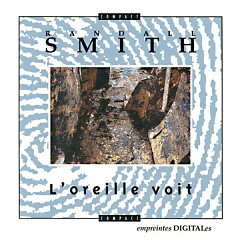
    L’oreille voit (“The Ear Sees”) was Randall Smith’s first CD. Released in 1994, it gathers works created between 1988 and 1994. His constructions include a lot of movement, something that translates into the titles of works like La volière (“The Aviary”), Ruptures (“Breaks”), and Counterblast. This sense of movement gives life to the compositions in a way similar to what can be found in Francis Dhomont’s works: ample, calculated gestures of swirls and crescendos that lead somewhere (as opposed to Gilles Gobeil’s escalators that stop in their tracks). L’oreille voit begins with the composer’s recently finished La volière, where the human voice is used to simulate bird sounds. The wide dynamics and intriguing sources make for a fascinating listening experience. Then we gradually move back in time down to the 1988 The Face of the Waters, which paradoxically contains anything but water sounds. Very playful, it imitates water or conveys the idea of it by using a sonic vocabulary reminiscent of the candor that marked the early days of musique concrète (Pierre Henry’s early pieces, particularly): bedsprings, glasses, light bulbs, squeaky doors, etc. Smith’s subsequent works, especially the ones for tape and instrument, will tend to be denser and more satisfying, but this first crop reveals a composer who, although remaining firmly anchored in academic electroacoustics, eschews its too frequent pretentiousness and approches the art form with innocence and the intention to have fun.

    … approches the art form with innocence and the intention to have fun.

    Sondes in AllMusic

    “Review”, François Couture, AllMusic, September 13, 2001
    Thursday, September 13, 2001 Press

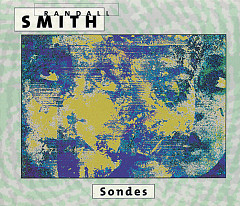
    This second solo CD by Randall Smith shows him taking a leap from acousmatic tape music to mixed electroacoustics. The innocence and refreshing candor found in L’oreille voit have slightly receded to make room for denser works. That is not to say he lost his power of evocation. On the contrary, the pieces on Sondes tend to be closer to his ideal of “cinema for the ear” while offering more refined compositions. InsideOut still contains a lot of playfulness. Its basic materials are limited to five samples, five notes produced by four different instruments: flute (C4), violin (G#4), clarinet (D#4), and double bass (Bb2, A2). Extensively transformed, these fragments were reassembled following classical techniques. The result is fascinating and has nothing to do with your usual Baroque etude. Movement is still at the center of Smith’s vision, with or without a real instrument to support the tape. Elastic Rebound and Continental Rift (the latter for tape and cello) were inspired by geological concepts. But the real highlights are Liquid Fragments 1, where the double bass and the alto flute play with (distorted) mirror images of themselves, and Convergence, a piece commissioned and performed by virtuoso and champion of new accordion music Joseph Petric. The latter deconstructs traditional forms of accordion music like polka and tango and fits them into a very entertaining carnivalesque setting. Smith’s music is not particularly original, but its joie de vivre and sense of purpose are highly contagious. Recommended.

    … its joie de vivre and sense of purpose are highly contagious. Recommended.

    empreintes DIGITALes in AllMusic

    “Label Profile”, François Couture, AllMusic, September 13, 2001
    Thursday, September 13, 2001 Press

    Of all avant-garde music artists, electroacoustic composers may be the ones having the most difficulty to reach an audience. Labels dedicated to this style are few and often tied to academic institutions that limit their accessibility. That’s why empreintes DIGITALes can be considered as a success. Since its inception in 1989, this independent label has become an international reference in electroacoustics, building an impressive catalog that encompasses the best living composers from Canada, the USA, France, England, and abroad.

    In 1989, Jean-François Denis and Claude Schryer founded DIFFUSION i MéDIA, a production company based in Montréal and dedicated to tape music. An imprint was created: empreintes DIGITALes (a second one, SONARt, dedicated to sound art projects, also saw the light of day but only a few titles were issued in the early 1990s). The first albums to be released were Christian Calon’s Ligne de vie: récits électriques and Robert Normandeau’s Lieux inouïs, in January 1990. Both quickly became respected composers, the latter one of the label’s most prolific and best-selling artists.

    The first releases focused on Quebec artists, but in 1991 the label issued the 2-CD set Mouvances~Métaphores (reissued in 1996 as two separated CDs: Cycle de l’errance and Les dérives du signe), a mammoth retrospective of French legend Francis Dhomont, another best-selling artist. From this point on, the label rallied composers revolving around the Groupe de recherches musicales in Paris, the BEAST in the UK (a research group led by Jonty Harrison), and the Canadian Electroacoustic Community. Other important contributors would include Michel Chion, Yves Daoust, Paul Dolden, Gilles Gobeil, Denis Smalley, and Annette Vande Gorne.

    Schryer soon left the company to concentrate on his career as a composer. Denis continued to direct the label and also founded Réseaux, an association devoted to presenting tape music concerts, while establishing a strong relationship with kindred label Ambiances Magnétiques (in the early 2000s, both shared the same premices and web design).

    In the mid-’90s, empreintes DIGITALes launched “Compact-Compact,” a series of half-priced CDs containing under one hour of music. It targeted newcomers to the genre. Throughout the years the label pioneered original CD box designs. The OPAK box, which allowed room for a thick booklet with extensive liner notes, was introduced in 1996, but was dropped in 2000 in favor of a slimmer cardboard design. These unique graphic signatures were instrumental to the label’s recognition.

    … this independent label has become an international reference in electroacoustics, building an impressive catalog that encompasses the best living composers…

    Impulsion in Voir

    “Ça bouge au Conservatoire”, Réjean Beaucage, Voir, September 6, 2001
    Thursday, September 6, 2001 Press

    Si vous êtes de ceux et celles qui avaient l’habitude de se rendre rue Notre-Dame pour assister à l’un ou l’autre des nombreux concerts présentés par le Conservatoire de musique du Québec à Montréal, modifiez vos signets comme on dit, parce que le Conservatoire a déménagé! Maintenant logé dans plus petit, sur le Plateau, l’éminente institution en profitera pour faire le tour de diverses salles montréalaises, une majorité des concerts étant donnés dans la salle des Jeunesses Musicales du Canada, maintenant sa voisine.

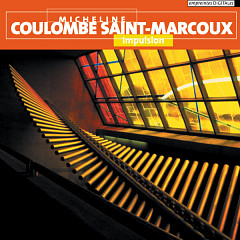
    Ce qui retient notre attention ce mois-ci, ce sont six concerts de musique électroacoustique qui seront offerts les 26, 27 et 28 septembre à la Chapelle historique du Bon-Pasteur. D’autant plus qu’en prélude à ces concerts, le 26 à 19 h, on lancera sur étiquette empreintes DIGITALes un disque consacré aux œuvres de Micheline Coulombe Saint-Marcoux. Il me semble bien que c’est la première monographie consacrée à cette grande compositrice d’ici, qui nous a quittés bien trop tôt, il y a déjà plus de 15 ans. La première soirée lui sera dédiée, ainsi qu’à Otto Joachim et Gilles Tremblay; puis les 27 et 28, cinq concerts (tous gratuits!) nous permettront d’apprécier l’enseignement que donne le Conservatoire en écoutant les travaux réalisés par des étudiants et des professeurs qui y sont passés ces 30 dernières années. Instructif!

    … la première monographie consacrée à cette grande compositrice d’ici…

    Traces in Audion

    “Review”, Audion, no. 45, September 1, 2001
    Saturday, September 1, 2001 Press

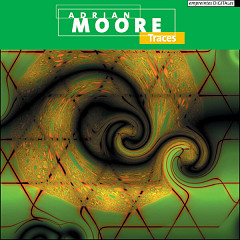
    This guy’s got a great sense of humour! All the squeaks and wails in the opening Junky remind me of that Monty Python sketch with the ‘mouse organ,’ and then we have all sorts of tumbling tubes and jangling plucks, as the whole sound canvas trips over itself. It keeps up like this, in various guises, and is constantly surprising. Adrian’s art is refined and so creative that it defies simple definition, as he twists sound and froths it up. He has this knack of luring the listener in, only to surprise and startle with unexpected trips and twirls, along with bizarre ring-modulations and tonality twists that defy simple description. Fascinating.

    … defy simple description. Fascinating.

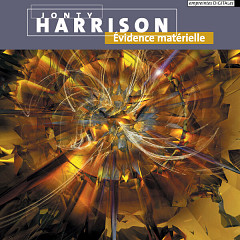
    Évidence matérielle in Audion

    “Review”, Audion, no. 45, September 1, 2001
    Saturday, September 1, 2001 Press

    There’s a very blurred area at the edge of musique-concrete, where the ‘music’ element is almost lost in what is really pure sonic art. Metamkine call this sort of thing ‘Cinema For The Ears’ as it is really more like being inside some sound environment (or at least as an onlooker) witnessing all this sonic commotion, clanking metal, snapping wood, and the likes. Really, for much of the time this could be a collage constructed from the sounds in a mill or foundry. Actually, sometimes we seem to be trapped in a wooden box, which is being carted around really clumsily, then we end up inside a water tank! I guess you get the idea! It’s all put together rather well, and there’s good use of effects and processing, all amounting to pure art.

    … really pure sonic art…
  • 566
  • 567
  • 568
  • 569
  • 570
  • 571
  • 572
  • 573
  • 574