electrocd

Blog

4252 results
  • 636
  • 637
  • 638
  • 639
  • 640
  • 641
  • 642
  • 643
  • 644
  • Jean-François Denis, empreintes DIGITALes in Montreal Mirror

    “Discreet Music”, Chris Yurkiw, Montreal Mirror, February 12, 1998
    Thursday, February 12, 1998 Press

    On the 50th anniversary of “musique concrète,” Montréal’s electroacoustic composers are still watching the cement dry.

    “At first the art of music sought and achieved purity, limpidity and sweetness of sound. Then different sounds were amalgamated, care being taken, however, to caress the ear with gentle harmonies. Today music, as it becomes continually more complicated, strives to amalgamate the most dissonant, strange and harsh sounds. In this way we come ever closer to ‘noise-sound.’”

    Whenever this quote from Luigi Russolo is bounced around, the kicker is that the futurist artist wrote it in his manifesto The Art of Noises back in 1913. Russolo was ushering in the modern era and he gets cited because he turned out to be a damn good futurist. By the ’20s, French composers like Érik Satie and George Antheil were writing ballets for sirens, crying babies and typewriters; a generation later, American John Cage was reinforcing the idea that all sounds — including silence — were musical; into the rock era it was no great leap to the feedback of Hendrix, the kling klang of Kraftwerk and the scratching of Grandmaster Flash.

    But long before the avant-garde became popular, a pair of Pierres named Schaeffer and Henry made a crucial discovery while playing around with the new technology of magnetic recording tape in 1948. In the studios of Radiodiffusion-télévision française [(RTF)] they manipulated recorded sounds — both ‘musical’ and non — by splicing the tape, rearranging it, varying the speed, looping it and overdubbing it. Schaeffer called it “musique concrète,” and with that he allowed for the possibility of a truly ‘artificial’ music. Not many considered it to be music then, and even 30 years later people were still railing against studio creations with the battle cry, “Disco sucks!

    Fifty years after the birth of musique concrète (and a few changes in name, like electroacoustic or acousmatic music), Pierre Schaeffer’s break is certainly not lost on Jean-François Denis. Denis is one of the pillars of Montréal’s vibrant electroacoustic scene — the French connection not insignificant — a composer first but nowadays more of an instigator who spends most of his time promoting the music by releasing it on the crucial empreintes DIGITALes label. It’s a tiresome job pushing an ambient, jarring and intellectualized music, but Denis places more faith in its acceptance by the proverbial ‘people’ than any industry, media or festival.

    “I think electroacoustic music is becoming less bizarre for the public,” says Denis, “and more present in their lives. The scores for lots of films, for example, are often verging on electroacoustic music, but it’s never pointed out to the audience.”

    So Denis and composers Robert Normandeau and Gilles Gobeil, a trio who make up the electroacoustic promotional body Réseaux, are using the 50th anniversary of musique concrète to try to make their point once again. Not that they need an excuse: the upcoming concerts Rien à voir are the third in a series presented by Réseaux in the past year. But the link with the past is going to be made clear with the works and presence of two European figures; Frenchman Bernard Parmegiani, one of the godfathers of electroacoustic music whose work dates just post-Schaeffer, and Belgian Annette Vande Gorne, whose breaking of the gender barrier in yet another boys club has inspired Canadian “électroacousticiennes” such as Wende Bartley and Roxanne Turcotte.

    Works by Denis, Normandeau and Gobeil will also be accompanied by those of Montréaler Christian Calon and Mark Wingate, one of the few American practitioners of a form rooted much more firmly in Europe and its stronger outposts. And while the presence of the composers is a nice touch, it’s certainly not needed in electroacoustics, where the recorded works are played for the audience via a surround-sound style set up of 20 loudspeakers.

    “When the lights go down at an electroacoustic concert,” says Denis, “I always think, ‘I have no idea what this might sound like.’”

    Pierre Schaeffer’s break is certainly not lost on Jean-François Denis

    Bernard Parmegiani in Ici Montréal

    “Papa! C’est de la poésie”, Michael D Hogan, Ici Montréal, February 12, 1998
    Thursday, February 12, 1998 Press

    En 1948, Pierre Schaeffer, alors responsable du studio d’essai de la Radio française, découvrait les possibilités du disque souple pour enregistrer, transfommer et organiser des sons existants dans l’environnement. On assistait ainsi à la naissance de la musique concrète. Cinquante ans plus tard, ce type de musique n’a cessé d’évoluer et est plus présent que jamais dans notre univers sonore (indicatifs radio et télé, pubs, créations radio, etc.). Réseaux, une société de diffusion des arts médiatiques, a donc décidé de célébrer l’anniversaire de ce vaste champ d’expérimentation de la musique moderne en présentant Rien à voir (3) une série de neuf concerts acousmatiques et de rencontres avec des compositeurs invités: Mark Wingate, Christian Calon, Annette Vande Gorne et, surtout, Bernard Parmegiani, à qui l’on rendra hommage pour la circonstance.

    Bernard Pammegiani compte parmi les plus grands compositeurs de musique concrète. Plus tôt cette semaine, il nous a parlé depuis son studio de Paris. Bien que très loquace, l’homme se révèle assez peu en entrevue. Issu d’une famille de musiciens et très tôt fasciné par le découpage et le collage d’images, Parmegiani est d’abord venu à la création sonore comme technicien, puis comme ingénieur de son à la radio et à la télévision. Il fut ensuite invité à faire un stage au Groupe de recherche musical piloté par Pierre Schaeffer et Pierre Henry. C’est à cette époque qu’il eut l’occasion de réaliser des films, tant du point de vue de l’image «de synthèse» que du son. Puis vint la composition de Violostries, qui le rendit célèbre.

    Ce qui frappe au premier abord dans ce cheminement, c’est la multiplicité des champs d’investigation (il a aussi pratiqué la pantomime pendant quatre ans), autant que l’incessante rencontre entre les préoccupations pour l’image et pour le son. Il est également intéressant de constater la fréquence avec laquelle reviennent dans son discours des mots se rapportant à une certaine indétemmination: intuition, pressentiment, inconscient, diffusion, hasard.

    La musique concrète est un genre très jeune. Aussi, n’a-t-elle pas encore développé de grammaire commune, à l’instar de la musique orchestrale. Les compositeurs peuvent donc se permettre d’explorer une multitude de possibilités dans l’arrangement de leurs différents matériaux sonores. Parmegiani explique: «C’est en traduisant de manière plus ou moins consciente les images de ma vie onirique dans l’œuvre que j’organise ces agencements.» Et toute autre expérience quotidienne peut aussi y être intégrée (une lecture, une rencontre, le souvenir d’une expérience passée). «C’est dans la rencontre réussie de tous ces éléments que se produit un moment de trouble indéfinissable. Soudainement, cette musique génératrice d’images mentales ouvre à l’auditeur les portes menant à son propre cinéma intérieur.»

    La musique électroacoustique est souvent considérée comme austère et difficile d’accès. Pourtant, elle n’est que l’expression (plus ou moins bien rendue parfois, il est vrai) d’un paysage intérieur. Beethoven, à qui on faisait les mêmes reproches en son temps, est aujourd’hui siffloté dans toutes les chaumières. Parmegiani dirait qu’il faut se mettre des «oreilles fraîches» et les garder ouvertes. Edgar Varèse, qui a aussi touché à la musique concrète aimait raconter cette anecdote: se promenant sur un site où l’on diffusait une de ses pièces, il croisa un homme avec ses enfants. L’homme pestait contre ce magma informe, mais sa fille lui répondit: «Chut papa! C’est de la poésie».

    Transformations, Hildegard Westerkamp in eContact!

    “In Review”, Andra McCartney, eContact!, no. 1:1, February 1, 1998
    Sunday, February 1, 1998 Press

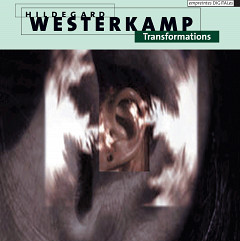
    Hildegard Westerkamp says: “I hear the soundscape as a language with which places and societies express themselves.” Her Transformations CD presents five of her soundscape compositions, reflecting work composed from 1979 to 1992, each sounding the depths of a different place, creating a different inner landscape each time I hear them. She works with the sonic and sociopolitical potentials of each place, recording, mixing, and subtly transforming sounds to heighten listeners’ awareness and appreciation of these sites. She is a skilled and careful interpreter of their languages.

    You make it with the skin of the desert night

    Cricket Voice is a musical exploration of a solo cricket song, recorded by Westerkamp at night in a Mexican desert region called the Zone of Silence. The acoustic clarity of this place frames the cricket song, accompanied by soundmaking with the spikes of cacti and other plants, and electroacoustic transformations of these sounds. This composition is as expansive as the desert, intimate as the voice of a single cricket.

    Listen to our cities

    Two of the works, A Walk Through The City, and Kits Beach Soundwalk, are both based on urban soundscapes. In the downtown core, I can become numb to the constant sounds. These works challenge me to listen, to transform, to make quiet places in the city. A A Walk Through The City takes us through Vancouver’s Skid Row area, guided by Norbert Ruebsaat’s poem of the same name. Kits Beach Soundwalk begins at Kitsilano Beach, in the heart of Vancouver, yet at the same time a border. I hear the throb of the city balanced with the tiny sounds of barnacles feeding in the lapping tide. This piece explores many borders—between dream and waking, city and country, water and land, documentary and composition. When it enters the dreamworld of high frequencies, I remember where quiet places in the city can take me.

    Soundmarks and Sitka

    Fantasie for Horns II is the earliest piece in the collection, composed from the sounds of Canadian trainhorns, foghorns, factory and boathorns, and a live part for French horn. Horns are especially evocative soundmarks that give us a sense of place. Each time I hear this piece, I remember growing up by the sea and listening to the moan of the coastal foghorns, reminding me of the awe-inspiring power and energy of the sea. The latest piece on the CD is Beneath The Forest Floor. Most of the sounds for this piece were recorded by Westerkamp in the Carmanah Valley on Vancouver Island, and the piece evokes the stillness and peace of this old-growth rainforest, home to Sitka spruce and cedar trees over a thousand years old.

    I have always found Hildegard Westerkamp’s work to be a particular source of insight and inspiration. It takes me to familiar and new places, encourages me to listen to the sounds around me, and to “transform through listening,” as Pauline Oliveros also notes about Westerkamp’s work. Her music urges me to listen to the language of the soundscape and to express my own relationship to it by working with soundscapes myself. I hope it does for you, too.

    … a particular source of insight and inspiration.

    Claire-voie in eContact!

    “In Review”, Andra McCartney, eContact!, no. 1:1, February 1, 1998
    Sunday, February 1, 1998 Press

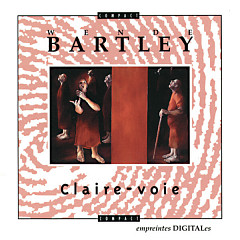
    Claire-voie brings together four electroacoustic pieces by Wende Bartley, composed between 1985-1993. The work is characterized by Bartley’s dense texturing of instrumental, vocal, and recorded environmental sounds, as well as her exploration of the performing potential of the female voice. It is powerful and evocative work.

    Ellipsis (1989-93, 14:31) is a work for female singer and tape. Sung by mezzo-soprano Fides Krucker, this piece explores extended vocal techniques such as multiphonics, glottal stops and vocal fry, in a tripartite structure associated with the lunar phases and chronicling a three-fold story of women’s collective unconscious, which Bartley terms “The Age of Darkness,” “Creating a New Space,” and “The Age of Resonance.” (see also Hannah Bosma’s description of the piece in 1995 International Computer Music Conference Proceedings, pp. 141-142).

    The second piece, Rising Tides of Generations Lost (1985-93, 15:01), is my current favourite on the CD. It starts with whispered vowels, consonants, and syllables, moving through to spoken words and finally longer phrases that are almost buried, yet rise again through the fires that tortured and silenced women. In her description of the piece, Bartley quotes American novelist Kate Chopin: “this ‘beginning of things’ is ‘vague, tangled, chaotic, and exceedingly disturbing. How few of us ever emerge from such beginning. How many souls perish in its tumult.” Disturbing as it is, I always feel hopeful and energized as strong voices emerge clearly at the end.

    Ocean of Ages Revealed (1991, 13:21) explores the gestures of Balkan vocal music, as well as other sources, through the PODX granular synthesis system developed by Barry Truax at Simon Fraser University. This process allows composers to expand and stretch the sounds to reveal microscopic shifts and changes in a slow-moving tapestry. The piece is based on a visual image by Susan Griffin, in which we travel into the darkness of a cave, seeing images of another time etched into the walls.

    The last piece, IceBreak (1992, 14:22) evokes the world of ice melting, dissolving and transforming into water, moving through “states of rupture, isolation, introspection, passion, and infusion.” It is made of textures created from short improvisations on instruments from the Kyai Madu Sari, the Javanese court-style gamelan. The textures form rhythmic and melodic streams that echo through sound-space.

    I find in Bartley’s music a source of spiritual energy and feminist consciousness that is matched by musical and technical diversity and depth. I listen to this CD often.

    It is powerful and evocative work.

    Autour in Splendid E-Zine

    “Review”, Elliott S, Splendid E-Zine, January 26, 1998
    Monday, January 26, 1998 Press

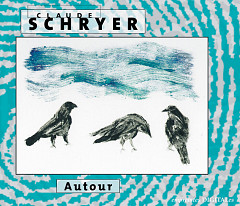
    Acoustic ecology is Claude Schryer’s art. He subscribes to idea that “artists can help design a more imaginative and balanced landscape.” With that in mind, his soundscapes echo the environment as natural sounds and urban noises are used to create some sort of aural picture. The resulting juxtapositions border between believably-untouched recordings and the surreal combination of elements carefully placed out of context and proportion.

    The tracks are generally one to two minutes in length, and each contributes to a global scheme while being a satisfying experience in itself. In fact, I often found it enjoyable to listen to a brief track and pause before moving on to the next segment. The third section of El medio ambiente acústico de México is a perfect example of Schryer’s approach. A man selling gum in the subway eventually moves into the background while the ambience then fades into a train sound. A squeaky truck, a steady beeping horn and traffic noise slowly take over. This all leads up to a firecracker pop that leaves only the sounds of breathing as a coda to the section.

    From a distance Autour may sound like a random sequence of sounds, not much different from the sonic environment that surrounds us daily. However, when one listens closely the transitions are subtle and the combination of materials is well measured. Recommened for careful headphone listening.

    Recommened for careful headphone listening.
  • 636
  • 637
  • 638
  • 639
  • 640
  • 641
  • 642
  • 643
  • 644