electrocd

Blog

4252 results
  • 91
  • 92
  • 93
  • 94
  • 95
  • 96
  • 97
  • 98
  • 99
  • Elizabeth Anderson, Michel Pascal in Publico

    “Em Seia, sob o calor da electroacústica”, Diana Ferreira, Publico, January 1, 2017
    Sunday, January 1, 2017 Press

    A reter destes Dias de Música Electroacústica em Seia fica a experiência única de partilhar, em diálogo aberto, com os compositores que a compõem e difundem, o momento em que a música acontece.

    Sempre que Jaime Reis instala o equipamento de som, acontecem Dias de Música Electroacústica (DME). Não é que os restantes dias não sejam também de electroacústica, já que o próprio admite que quase não faz mais do que pensar em concertos; mas estes são aqueles em que à volta do director artístico do DME se reunem compositores e intérpretes, estudantes de música e público regular, com o objectivo de fazer a música acontecer. Assim se explica que o festival DME conte já 51 edições, desde a primeira das 32 realizadas em Seia, em Junho de 2006.

    A mais recente acabou de acontecer, entre 27 e 30 de Dezembro, compreendendo palestras, workshops, instalações e concertos diversificados – desde electroacústica pura à música mista do duo Noviga Projekto, que encerrou o festival (Clara Saleiro e Manuel Alcaraz, respectivamente flauta e percussão), incluindo uma sessão de videomusic e a participação de jovens estudantes enquanto intérpretes.

    Foram precisamente cinco alunos de percussão, entre os 12 e os 17 anos, que abriram o concerto monográfico dedicado ao francês Michel Pascal (n. 1958), perante uma sala cheia e com várias pessoas de pé, entre dois grandes pósteres de duas figuras históricas: Francis Dhomont (n. 1926), cuja Vol d’arondes se ouviria ainda nessa noite, e Jean-Claude Risset (1938-2016), cuja emblemática The other isherwood havia sido escutada no concerto inaugural.

    A partitura desses Cinq études de caisse-claire, para caixa e electrónica sobre suporte, explora diferentes técnicas de execução e potencialidades do instrumento. O material sonoro da electrónica provém integralmente do registo de sons de caixa, reconhecíveis em maior ou menor grau, ora complementando, ora contrastando com a parte instrumental em execução, a qual varia entre a utilização de baquetas (no aro, na pele, com ou sem correntes), dedos e vassoura.

    Saliente-se a importância do trabalho realizado, neste âmbito, com os estudantes de música (do Conservatório de Música de Seia, Escola Profissional da Serra da Estrela e Escola Profissional de Artes da Beira Interior), orientado por Aldovino Munguambe e pelo próprio compositor (que difundiu também a electrónica), conferindo-lhes a oportunidade de experimentar desde cedo os meios do seu próprio tempo.

    Seguiu-se a peça acusmática Never die (2015), que recorre a sons de água, combinando-os, entre vários outros, com o registo de sons de piano. Após a difusão da peça de Dhomont, numa celebração da amizade deste com Michel Pascal, foram interpretadas duas peças para duo de violoncelos, ambas de 2016: a antestreia de Sinueuses e a estreia absoluta de Circacello (esta com electrónica).

    Já na noite seguinte, o contexto era puramente acusmático: uma panorâmica do trabalho da norte-americana Elizabeth Anderson, com uma obra para dois canais espacializada ao vivo e as três restantes originalmente compostas para oito canais, todas elas à volta dos 15 minutos de duração.

    O conjunto de obras apresentadas revelou um trabalho minucioso, que prende pela delicadeza da transformação dos objectos sonoros como das trajectórias subtilmente empreendidas. A preocupação da compositora com a percepção do espaço estabelece uma relação directa com o seu trabalho sobre o tempo: micro vs. macro.

    Mimoyecques (1994) inspira-se na fortaleza local e combina o recurso a gravações de campo com o registo de 18 vozes masculinas, nas diferentes línguas dos prisioneiros da Segunda Guerra Mundial, na leitura de textos da época. Protopia / Tesseract (2005-07) inspira-se numa viagem intergaláctica, tema que parece interessar a compositora que, em Solar Winds… and Beyond (2012-14), explora também o cosmos. O concerto terminou com L’heure bleue: renaître du silence (2016), iniciando no limiar do silêncio, com subtis transformações ocorridas no interior de longas massas sonoras em progressivo crescendo, culminando numa sequência de acordes perfeitamente tonais com que a compositora pretende retratar a ascensão ao espiritual.

    A reter destes dias em Seia fica a experiência única de partilhar, em diálogo aberto, com os compositores que a compõem e difundem, o momento em que a música acontece. E ela acontece onde tem que acontecer, mesmo numa cidade serrana internacionalmente tão conhecida… graças ao DME.

    O conjunto de obras apresentadas revelou um trabalho minucioso, que prende pela delicadeza da transformação dos objectos sonoros como das trajectórias subtilmente empreendidas.

    Le cri du Choucas in 5:4

    “Best Albums of 2016 (Part 2)”, Simon Cummings, 5:4, December 31, 2016
    Saturday, December 31, 2016 Press

    8. Francis DhomontLe cri du Choucas

    “When it comes to acousmatic music as its finest, though, Francis Dhomont remains one of the best of the best. […] Dhomont regularly fashions material that’s beautiful but barbed, sometimes arranged in multiple layers of dense activity, sometimes shot through with thin splinters of razor-sharp pitch over roiling depths. […] Coherent and organic throughout, the drama […] is just as much to do with the way musical materials are judged and handled than with the work’s more immediately tangible text component. […] Le cri du Choucas contains music more dark and uncomfortable than one expects from Dhomont, even in the work’s closing moments; far from offering a reassuring conclusion, it passes instead through angular, awkward, even ugly passages, surrounded on all sides by ominous glowering layers of sound seemingly coloured different shades of black. At its end, Le cri du Choucas sounds stunned, which is precisely how i felt too. It’s another spectacular creation from an undisputed master of the art.” (Reviewed in May 2016.)

    Voyages in 5:4

    “Best Albums of 2016 (Part 2)”, Simon Cummings, 5:4, December 31, 2016
    Saturday, December 31, 2016 Press

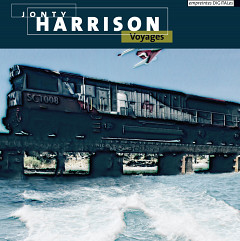
    10. Jonty HarrisonVoyages

    “[…] large-scale tapestries that exist at the delicate liminal point between authenticity (raw and untouched) and artifice (clearly juxta-/superimposed). The latter is emphasised throughout the fourteen minutes of Espaces cachés, something of an essay in qualitative shifts and jump cuts between assembled groups of sound sources. […] As its modest but ambitious title suggests, Going / Places doesn’t simply expand this idea, it explodes it […] Harrison’s moulding of the recordings into complex fabrics turns Going / Places into a stunningly vivid piece of uncanny metarealism that encapsulates both the physicality and the psychology of the present experience together with aspects of memory and anticipation.” (Reviewed in December 2016.)

    Espaces tautologiques in 5:4

    “Best Albums of 2016 (Part 1)”, Simon Cummings, 5:4, December 30, 2016
    Friday, December 30, 2016 Press

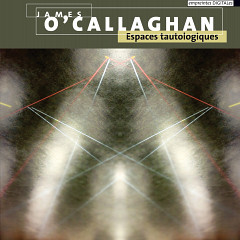
    30. James O’CallaghanEspaces tautologiques

    The four works on this fascinating collection from Empreintes DIGITALes vividly demonstrate O’Callaghan’s very physical relationship with found sounds. Isomorphic is a piece concerned with granular materials, whereas in the trilogy comprising Objects-Interiors, Bodies-Soundings and Empties-Impetus, instruments are not simply explored but thoroughly scrutinised, their sonic potential writ large in huge textures seemingly filled with a myriad whirring, clanking and gurgling machines and gizmos. This creates the startling impression that the instruments are organic life forms and we are hearing their internal organs and mechanisms, particularly in Empties-Impetus, where a potent drama emanates from continual alternations between mild and torrential episodes — the former of which become like pausing for breath between punches to the chest.

    … a potent drama emanates from continual alternations between mild and torrential episodes…

    Le cri du Choucas in The Sound Projector

    “Counting Crows”, Ed Pinsent, The Sound Projector, December 18, 2016
    Sunday, December 18, 2016 Press

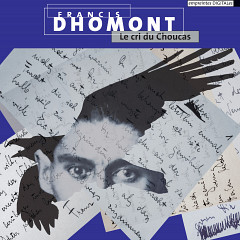
    Veteran composer Francis Dhomont is one of the big noises in Canadian electroacoustic and musique concrète composition, so it’s no surprise to see him represented on the showcase label empreintes DIGITALes with his recent composition, Le cri du Choucas. Astute readers (and viewers) will instantly recognise the piercing eyes of Franz Kafka collaged on the cover art there. Le cri du Choucas takes the ideas of Kafka as its theme, a pursuit which Dhomont has been following since 1997. There’s a previous chapter, Études pour Kafka, released by this same label in 2009; I don’t recall hearing that one, but the body of it has been reworked here. The composer also positions this release as the third and final part of a grand triologie, begun in 1981 as Sous le regard d’un soleil noir (released by Ina-GRM in France) and continued in the mid-1990s as Forêt profonde. He aims at extremes of drama, enriched with ideas about psychology; he wishes to plumb the depths of a man’s mind, through sound.

    You could pick no better creator who personifies “unknowable depth” than your man Kafka; I’ve been reading his short stories since about 1979, and one day I hope to understand them. I can’t claim to have studied a great deal of critical analysis of Kafka, and I’m not sure that I care to; there’s a pleasure to be had for the reader in the constant mystification he sets up with his warped visions of European vistas, his mental labyrinths and strange symbols. I’ve no doubt there are numerous interpretations and explanations of The Trial and The Penal Colony, both works which feature in this music, but Francis Dhomont emphasises one particular aspect: the Law. Dhomont takes “the law” in Kafka to be “a metaphoric representation of the impenetrable realms the human mind hits”, and explores this theme with some determination. He probably reads Kafka’s work as describing a maze which always leads back to the same inescapable place, and ascribes the tone of despair and futility to the gloomy inevitability of mankind’s fate.

    Dhomont also gives us his sonic take on other significant Kafka themes, including guilt, solitude, dreams, death, the family, and “impossible messages” — the last one being an apt description of Kafka’s own short stories, for this reader. On Le cri du Choucas — a title which incidentally translates as “The jackdaw’s call” and makes a punning reference to the Czech word Kavka — he does it through rich and maximal fugues of abstract sound. Everything has been heavily treated and processed through a vast amount of expensive-sounding digital crunch and filter effects, yet you feel you could somehow reverse-engineer these noises into their sources if you only listened for long enough. Alien though they be, some sounds closely resemble swarms of chattering voices in a huge mass, which is how I remember parts of Frankenstein Symphony by this composer (from 1997). Often these sounds coalesce and rush forward in a massed advance which seems unstoppable; it creates a suitably nightmarish and unreal mood for the listener.

    The work is further illustrated and signposted by a good deal of spoken-word narration (in French), fragments of texts and documentary recordings which I assume highlight significant milestones in the design. But these interpolations also interrupt the flow of the music, and keep reminding us of the grand abstractions that Dhomont wishes to convey, barely allowing us any space to conceive our own thoughts. This is one of the stumbling blocks for me on this otherwise exciting release, as it lends an air of didacticism to the work; it’s like being lectured by stern academics in a stuffy University where the Kafka syllabus hasn’t been updated in over 35 years. One senses that the masters at this academy would have no truck with Orson Welles’ free-spirited cinematic interpretation of The Trial. It’s also something of an old-school musique concrète technique, one which has tended to mar my enjoyment of Pierre Henry’s Apocalypse de Jean, that famed Oratorio électronique from 1969. This aside, you can comfortably play this meticulous work at peak volumes for immersive and transporting effects, to induce profound states of mind… from 25 May 2016.

    … you can comfortably play this meticulous work at peak volumes for immersive and transporting effects, to induce profound states of mind…
  • 91
  • 92
  • 93
  • 94
  • 95
  • 96
  • 97
  • 98
  • 99