electrocd

Blog

257 results
  • 4
  • 5
  • 6
  • 7
  • 8
  • 9
  • 10
  • 11
  • 12
  • October 20 – 31, 2008: Robert Normandeau Is Visiting Bangor

    Wednesday, October 15, 2008 In concert

    Robert Normandeau will be composer in residence at Bangor University (Whales, UK) from October 20 to 31, 2008 as the 2008-09 Parry Williams Visiting Composer Fellow. He will start the composition of a new piece to be premiered in 2009. During his residency, he will give a conference, a master class, and on October 30 a concert solo of recent works: Murmures, Palimpseste, Kuppel, Chorus, and StrinGDberg. The same evening Jonty Harrison will premiere his piece Phantom Power.

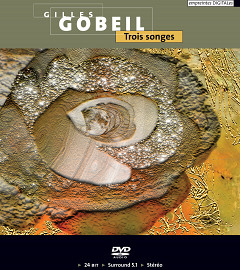
    Trois songes in Touching Extremes

    “Review”, Massimo Ricci, Touching Extremes, October 9, 2008
    Thursday, October 9, 2008 Press

    “Cinema for the ear” is a much exploited expression in the acousmatic field — including the description of Gilles Gobeil’s work on the liner notes of this DVD — yet there is no doubt that few artists are able to challenge the Quebecoise’s visionary aptitude when it comes to assembling materials that fuse concrete matters and ethereal essences in such a masterful fashion. Trois songes was entirely realized in Karlsruhe, Germany over the course of four residencies between 2005 and 2007, the designer of these complex, often breathtaking architectures inspired both by literature (Jacques Lacarrière, Dante Alighieri) and an unemployed scenario by mythical movie director Andrey Tarkovsky. The most graceful piece on offer is Entre les deux rives du printemps, an impressive consecutiveness of events characterized by large quantities of nocturnal ambiences, crickets underlining unfathomable secluded reverberations, and a magnificent recurrence of echoing ghosts of early polyphonic music. The latter element is indeed a foundation for various circumstances in the record, whose aura is repeatedly wounded by distressed utterances (usually equalized until they become unrecognizable), natural elements — an example being the storm at the beginning of the splendidly exciting Le miroir triste, complete with different species of birds, bells and additional voices — and, last but not least, the surprising presence of René Lussier’s daxophone, a disembodied timbre sounding at times like a voice from the netherworld (the composer describes the instrument as “stunning and rather frightening”). The initial Ombres, espaces, silences… is more or less self-explanatory while trying to sonically describe the life of the “Desert Fathers” at the beginning of the Christian age, strikingly dramatic for the large part with a disquieting closing chorale that might give you the urge to cry. Needless to say, sacred music is again an essential tool in Gobeil’s compositional method for this chapter, but it’s the whole album that deserves to be eulogized for poignant substance and sheer brilliance of the overall result. The best of 2008 for the Canadian label, together with John Young’s Lieu-temps.

    The best of 2008 for the Canadian label, together with John Young’s Lieu-temps.

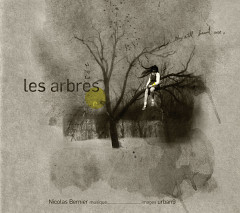
    Les arbres in PlayGround

    “Discos”, Luis M Rodríguez, PlayGround, October 6, 2008
    Monday, October 6, 2008 Press

    Nos gustan los discos que empiezan a llamar nuestra atención desde la misma portada, cuando atacan no sólo a uno sino a dos o más sentidos. Y hay algo en la fachada exterior — sombría, entre grisácea y verdosa, no especialmente vistosa pero sí extrañamente sugestiva — de este álbum que intriga, que invita a imaginar.

    Esa sensación no hace sino multiplicarse cuando entra en juego el sonido. Sin titubeos, a pesar del perfil marcadamente abstracto de la propuesta, el disco reclama tu atención desde el primer momento, desde que un estruendoso rechinar mecánico introduce en cuestión de segundos la atmósfera silbante, microscópica y abisal de // Post, el primero de los seis cortes de generoso minutaje — sólo dos bajan de los siete minutos — y estructura mutante que conforman un álbum que surge como resultado de un proceso de colaboración bidireccional mantenido en el tiempo entre el compositor Nicolas Bernier y al artista urban9. El último se ocupó de desarrollar conceptos visuales — seis de ellos, uno por cada canción, acompañan al disco en forma de tarjetas postales — inspirados en los primeros esbozos musicales de Bernier, imágenes en constante re-construcción que a su vez iban interfiriendo en la composición, el desarrollo y los tratamientos de unos paisajes sonoros de arquitectura electroacústica dibujados a base de texturas crepitantes — densas, por momentos aislacionistas o casi industriales, en transformación constante —, grabaciones de campo de corte naturalista — puedes reconocer el cricrí de los grillos, las voces anónimas de unos niños, respiraciones, etc. —, precisas articulaciones de microcirugía digital e instrumentaciones mínimas — de filiación compartida entre el post-rock más sedado y contemplativo, la composición clásico-contemporánea, las orquestaciones propias de la escena electrónica neoclásica, el folk de cámara o el jazz blanco, sosegado y prístino de la escuela ECM — urdidas a base de guitarras, metales, vibráfonos, pianos preparados, flautas, acordeones y cuerdas.

    El canadiense Bernier evita con soltura el peligro de la frialdad digital gracias al constante recurso a los más amables timbres acústicos, pero no parece haber jerarquías entre sonidos. Aunque la escuela clásica de Bernier — esa noción académica de la acusmática — se deja notar en algunos tratamientos sonoros — términos como audio photography, audio transfiguration, audio reformation, audio alteration o audio bricolage sucediéndose en los créditos de todos y cada uno de los cortes del disco — un tanto exagerados, aquí priman la textura, el clima y la atmósfera como señas de identidad de una música que a pesar de ser extremadamente meticulosa y técnica consigue sonar humana, orgánica, subyugante y conmovedora, cerebral a la vez que sensual.

    Si necesitas nombres para ubicarte, piensa en algo próximo a lo que saldría de viajar hacia el norte agitando en una misma maleta los discos de Eluvium, el primer Encre, Radian, Fennesz, Elegi, Bill Frissell, Svarte Greinerng, Mark Templeton o Ljudbilden & Piloten. Agradabilísima sorpresa.

    El canadiense Bernier evita con soltura el peligro de la frialdad digital gracias al constante recurso a los más amables timbres acústicos, pero no parece haber jerarquías entre sonidos.

    October 12 – 18, 2008: Francis Dhomont in Argentina, Chile

    Saturday, October 4, 2008 In concert

    In Buenos Aires (Argentina), Francis Dhomont will present a conference and a concert at Universidad Nacional de Lanús on October 9, 2008 and a different conference and concert at Escuelas Ort on October 10. In Chile, for the 8th festival Ai-maako 2008, he will be part of an outdoors group concert in Valparaiso (October 12) and, in Santiago, he will give a solo concert (October 14), a master class (October 17) and a sound spatialization workshop (October 18).

    October 5, 2008: Réseaux Celebrates 60 Years fo Electro

    Friday, October 3, 2008 In concert

    On October 5, 1948 at 9PM on the French radio was broadcasted the very first musique concrète concert. Exactly 60 years later on 2 Montréal radio stations and one Québec City station, Réseaux des arts médiatiques presents a multi-radio event with Érick d’Orion, Mario Gauthier, and Hélène Prévost. These composers will play their own work live and Pierre Schaeffer’s first pieces. Turn on your radio receivers, log on the Internet radios to listen to 1, 2 or all 3 at the same time and celebrate with us all 60 years of electroacoustics.

  • 4
  • 5
  • 6
  • 7
  • 8
  • 9
  • 10
  • 11
  • 12