electrocd
  • This website is also available in English.

Blog

4252 results
  • 529
  • 530
  • 531
  • 532
  • 533
  • 534
  • 535
  • 536
  • 537
  • Podweek in Voir

    “Critique”, Voir, June 27, 2002
    Thursday, June 27, 2002 Press

    Très active depuis 1998, l’étiquette montréalaise No Type se spécialise dans l’expérimentation électronique. Oeuf Korreckt en représente assez bien la démarche avec son petit cabaret chimique qui, dès les premiers sons, possède la propriété de faire fuir votre chat sous un divan, avant que des rythmes plus dansants ne viennent modérer le paysage sonore. Podweek, qui couvre le travail depuis 1995 avec des techniques faussement démodées, rappelle tantôt Autechre, tantôt Chris Clarke, et si la chose manque parfois de personnalité, on peut encore beaucoup attendre de cet œuf déjà fort correct. ★★★

    ★★★

    August 18, 2002: Jean-François Denis Rebroadcasted

    Tuesday, June 25, 2002 In concert

    Jean-François Denis was guest at Radio-Canada’s Chaîne culturelle radio programme “Nicholson” on December 9, 2001 to talk about the evolution of empreintes DIGITALes since its first release in 1990 and electroacoustic creation in general. This radio programme has been selected for rebroadcast on August 18, 2002 at 8 pm (EDT; UTC -4). The works on the programme are: Forêt profonde (3 excerpts) by Francis Dhomont, Derrière la porte la plus éloignée… by Gilles Gobeil, Éclipse by Ned Bouhalassa, Cut 1, 2, 3 Progress by Åke Parmerud, Mass by Richard Karpen, Oaristys by Jacques Tremblay, Inside Out by Randall Smith, the mixed version of Impromptu by Yves Daoust (with Jacques Drouin and Lorraine Vaillancourt), and Péroraison by Yves Beaupré.

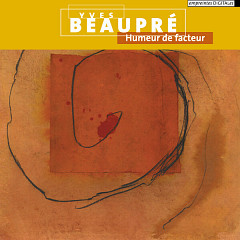
    Humeur de facteur in Ampersand Etcetera

    “Review”, Jeremy Keens, Ampersand Etcetera, no. 2002_8, June 20, 2002
    Thursday, June 20, 2002 Press

    Beaupré’s is an album of harpsichord music, but composed from sounds recorded while he makes them (percussive, plucking, planing and so on) processed and constructed electroacousticly. Not surprisingly it is a complex album, which hardly ever really reveals its origin. Prélude démesuré rumbles, twitters, tinkles loops, percusses, sirens and fades. More fragments in La Beauséjour including some string strums, then looped rhythms, dits, soft tones, some voicey propulsion; strings looping and light hammering; tones chits and more voices, relaxed ratchets, computer boobles; building light percussion, the strums return manipulated, loose and stretched, whispering end. The other tracks are similarly eclectic — more angular in La Laurendeau with a loop that sounds like ‘into the car’ (unlikely as it is) and percussive, La Pelots Point is abstract and dramatic, with a plucked melody which leads to the still heart of the album, tones and scrabbly voices, very lovely. After which the piece rebuilds with some computer bubbles — the samples have been processed — keening tones. More little noises and melody in La DDB with swirls tones and processed voices (was Baupré talking to himself? The clittery clatter drones tones and more of Péroraison provide an rhythmic and lovely conclusion. Neither academic nor unapproachable, this is a delightful album of sounds which have been recorded selected processed and sequenced with an ear to the delicate and fascinating relationships that can be created through them. Begun in the labour of wood and metal work this is a grounded and delightful album.

    … a delightful album of sounds which have been recorded selected processed and sequenced with an ear to the delicate and fascinating relationships that can be created through them.

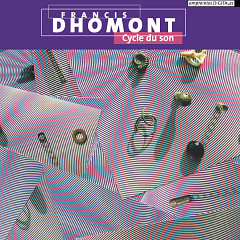
    Cycle du son in Ampersand Etcetera

    “Review”, Jeremy Keens, Ampersand Etcetera, no. 2002_8, June 20, 2002
    Thursday, June 20, 2002 Press

    Born in 1926, Dhomont is the oldest artist on the impressive empreintes DIGITALes catalog (most were born in the 50s and 60s). His experience and ease with the language of musique concrète/electroacoustic writing is demonstrated clearly on this understated but compelling collection of pieces from 1998, incorporating works from 1989 and 1996. As one of the founders of the field, he originally worked with magnetic wire (the original tape) and since 1963 has produced only works for tape. This combination of experience and medium creates a more measured music without some of the fragmented flourishes that computers can bring to the form.

    This disk is something of an homage to Pierre Schaeffer, and incorporates sounds from his Étude aux objets, amongst other musicians and ‘celebrates sound and musique concrète.’ My musical education is lacking, and I can’t recognise all the references, but it is a pleasure none the less. In Objets retrouvés we have a warm, analogue introduction that slowly flows as mysterious noises emerge in volleys, hovering on the edge of recognition. AvatArsSon is in six parts, and dedicated to ‘the inventors of the treasure’ (some of whom are named) and traverses ‘some of the stages of the sound odyssey.’ Each part is distinct in structure and method: Paysages opens with a naturalistic sampled village then shifts into manipulation, Voix is not surprisingly a complex voiced based piece while Avatars is buzzy dits and electronica and À suivre… takes long tones and buzzing. A fascinating journey which those more knowledgeable can mine. There seem to be two modes in Novars — one is lyrical ringing tones with washes and a pulsating cloud, while the other is more percussive, swirling, more effected. The two forms alternate, flirting with recognisability and dancing away in this light duet. Finally Phonurgie is more dense with hollow sounds, whistles, bleeps, fluttering wings and a darker feel created from similar sounds to those which have come before. Distorted strings, voices a light swirl and fade. A classic(al) musique concrète album, very listenable and endlessly satisfying.


    A classic(al) musique concrète album, very listenable and endlessly satisfying.

    Humeur de facteur, La limite du bruit in Vital

    “Review”, Frans de Waard, Vital, no. 329, June 20, 2002
    Thursday, June 20, 2002 Press

    ‘The Maker’s Humour’ is the translation of the title, and in this case the maker is Yves Beaupré. Not just the maker of this CD, but he’s also a professional builder of harpsichords, spinets and virginals. In the mid eighties Yves set up a small electronic studio, partly to do research for his instrument building, but also to create music. By using sounds from the instruments he builts, plus most likely from the process of building these, Yves crafts together six fine electroaoustic pieces. From this side of the musical spectrum we usually get all of these thumbling sounds which fall over each other, but Yves Beaupré treats his sounds in a rather fresh way. By looping, filtering and pitch changing, he builts very interesting collages of sound in the finest electroaoustic tradition, that will probably appeal also to pieces blend into each other and form one large work, rather then six smaller parts.

    From New Zealand hails John Young, who studied composition with Denis Smalley and worked in the UK for a while. He uses acousmatic sounds, ie environmental sounds and processes them. Unlike Beaupré he stays more in the classical sense of processing, even when at times the unprocessed field recordings shine through it. There scratches, wind blowing in microphones, rain falling on roofs and high peeps of metal scraped on glass. In general they are nice pieces, but at times a bit too long and a more accurate mix could have been possible and things would have hold their tension much better.

    Podweek, Oeuf Korreckt in Ampersand Etcetera

    “Review”, Jeremy Keens, Ampersand Etcetera, no. 2002_8, June 20, 2002
    Thursday, June 20, 2002 Press

    Third in the first series of No Type releases following the overwhelming compilation with which they burst out of cyberspace (see 03 for the compilation, 07 for the other two albums). Oeuf Korrekt (Frédérick Blouin) creates varied techno using obsolete software (Scream Tracker, Impulse Tracker) which creates ‘a kind of sequenced, robotic music devoid of fluff, but often complex and surprising’ (David Turgeon describing the computer music pioneers on the liner notes) and this album collects an overview that David considers important, created since 1995. The liner notes accurately describe the music contained here – the software provides a crisp clean sound, simple sounding elements layered and combined to create meaty beaty big and bouncy tracks which often have a kitschy retro sound that is complex and inventive. Simple melodies remind you of Kraftwerk or YMO and other early purveyors. Longer tracks such as King of the Elephants and A Ride in Elephant City demonstrate Oeuf’s skills – they are both meditations on the thudding techno of hardcore or trance, but through varying the surrounding beats, some finely judged breaks and a sense of playfulness, maintain an interest and intelligence. The mood had been set through Get Binary a futzy melodic piece combining the synth lines with some edge and beats, followed by a slower moody murmuring in We Have Arrived. The album then traverses a number of audiostrategies. There are some fine techno pieces like Pochacco, Byte the Funk, Before Bedtime and Podweek Theme which combine bright melodies (some displaying an eastern influence) with varied beats, taken to an edgy extreme in the fast Taco Fiesta. Another longer track Resem One has more of the choppy beats and breaks, and also tunes which sound quite baroque – Oeuf has quite a nice ear – and ends with an autobahn-ish buzzing. Screw my Samples creates a base of rhythm/melody loops with fragments of different sounds with slow and squelched tones plying over, and samples are taken further in Alright Well Okay where that phrase cycles irregularly through a slow stepping beat and synths, expanding to a short narration later on. Voices appear later in Osaka Commtech Nine, obviously Japanese, looping and sticking, leading to a strongly oriental sound in the second half. The Four Channels seem to be a fairly pedestrian beat, woozy scifi synth, piano and a gritty sound paralleling a synth guitar solo, combining to create complex layers. A contrast between more ambient tones and synths sets up Ruffly as a smooth piece, which encapsulates the balances throughout the album — rhythm/melody, fast/slow, simple/complex – which keep the ears alert where many techno albums slide past. An great collection to complete this first set of releases – No Type has successfully entered non-virtual reality.

    … meaty beaty big and bouncy tracks which often have a kitschy retro sound that is complex and inventive.
  • 529
  • 530
  • 531
  • 532
  • 533
  • 534
  • 535
  • 536
  • 537