electrocd

Blog

4252 results
  • 575
  • 576
  • 577
  • 578
  • 579
  • 580
  • 581
  • 582
  • 583
  • Traces, Adrian Moore in Voir

    “British Connection”, Réjean Beaucage, Voir, June 17, 2001
    Sunday, June 17, 2001 Press

    Ayant trouvé sa voie alors qu’il assistait à un concert de Denis Smalley, Adrian Moore a été l’élève de Jonty Harrison. Nous avons pu goûter son très grand talent pour la diffusion sonore lors de son passage à Montréal, au début avril, pour la neuvième édition de la série Rien à voir. On serait tenté ici de dire ici que l’élève dépasse ses maîtres. Ceux qui veulent comprendre les possibilités musicales qu’offre l’électroacoustique seraient avisés d’écouter sa pièce Study in Ink, où la seule source sonore est le frottement d’un crayon feutre sur un tableux blanc. Le genre d’étude qui n’exclut pas l’humour. Very British indeed!

    On serait tenté ici de dire ici que l’élève dépasse ses maîtres.

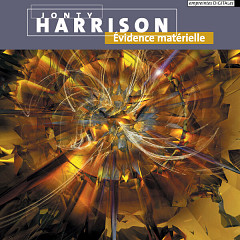
    Évidence matérielle in Voir

    “British Connection”, Réjean Beaucage, Voir, June 17, 2001
    Sunday, June 17, 2001 Press

    C’est par l’étiquette de disques bien de chez nous empreintes DIGITALes que nous arrive, après celles de Wolfe, des Beatles, des punks et de l’électronica une nouvelle «invasion britannique». Électroacoustique, celle-là. Deux disques lancés en avril nous ramènent les musiques de Denis Smalley et Jonty Harrison, tandis qu’un troisième nous fait découvrir celle d’Adrian Moore. Smalley et Harrison ont des approches du son assez semblables, qui produisent pourtant des résultats bien différents. Alors que le premier utilise des sons concrets pour les agrandir et leur donner la taille d’un paysage dans lequel l’auditeur peut pénétrer, le second se tient au plus près de l’objet et nous fait voyager à sa surface. C’est le deuxième disque chez empreintes DIGITALes pour ces deux compositeurs qui sont des piliers de l’école anglaise d’acousmatique. Le disque de Harrison nous permet d’entendre sa pièce Klang, récipiendaire en 1992 d’un Euphonie d’or au Concours international de musique électroacoustique de Bourges, et dont il a été dit qu’elle était l’une des œuvres les plus marquantes de l’histoire de cette compétition.

    … l’une des œuvres les plus marquantes de l’histoire…

    Évidence matérielle in Re:mote Induction

    “Review”, Peter Morrison, Re:mote Induction, June 17, 2001
    Sunday, June 17, 2001 Press

    Évidence materielle comes in one of the nicest card sleeves I’ve seen in some time, an outer slip sleeve with folded inlays. One inlay holds the CD nestled within the other one, which unfolds to reveal notes for each of the tracks included here in both French and English. There being 5 tracks all over 9 minutes in length, tending towards a 16 minute average — the pieces for the most part being sound works, summing up the artist’s acousmatic journey.

    Klang starts with chiming bell tones, a scrape of metal surface. Very tonal sound, but also in its construction playing +ve sound (strike) against -ve (stop). In some ways this becomes more pronounced as it expands into an exploration of chromatic percussion. Hints of electronic click and moment start to creep in, pulsing contrast to what has gone before, taking on a more synthetic form in the process. At times also more clangorous, though returning to chiming with a long exhalation — teasing out conclusion.

    With Sorties, voices echo in the gallery space, mixing with the constant motion of visitors. Dull echo of distant voices and struggling children. Clacks build into a more train like sound, the perceived gallery perhaps a large and busy train station. Emphasis changes as we follow our audio narrator — the progress along corridors, through doors and outside. Across gravel and pitter-patter of xylophone accompaniment. Sound disorients so that we have motion that suggests the interior of a car, but environmental impressions of something else. Arriving there is a chapping of a door, back step glance — is anyone home anyway? Chap again and electronic simulation opens the door, creak and the real door opens. Just in time as the rain comes from nowhere and thunder rumbles. Impressions continue, mixing with the hints of electronics and chimes that have an almost background role. The environmental weight of these pieces reminds me of Bexar Bexar, the last composition I heard along the same lines. Concluding in more of a sound extract.

    Surface Tension mixes a tumbling, awkward toy sound with an expansive wire swirl and a static glitch field. This allows a simpler construct than the previous piece, a narrower wavelength. But still a kinetic feel that balances in some way definitions of sound and noise. Hints of tones that suggest “music” flit through the back spaces. Again rain is present here, but only a passing in continuation.

    Splintering falls somewhere between percussive clacks and the tumbles of Surface Tension. A moment we hear a buzz of bee, reminding of Sorties. Scrape and tumble dominate — feeling more active than Surface Tension in sound forms, but still as contained. Crackle, snackle, fizz, plunge and ongoing tumble. The fire continues its crackle against an electric hum, surprising us with a moment of music snatched from elsewhere. The crackle grows, the wood popping — the fire almost becomes the patter of rain. Though manipulation lies ahead as does reprise.

    Blip. Gathering bubble. Plip and ripple. Fluid sounds expand in Streams, their tones offering suggestion of other sounds and perhaps of manipulation. Storm gathers, the windy lash of a jet, the flash of an oar through the choppy sea. Gravel tones lead away, departure. Then reprise the plip, adding gurgle and wallowing in tanks connected through piping. Rushing passage, and again manip. — leading to a crackle, pitter patter on the outside. Sudden over layering — ideas of sound bustling frenetically, then sliding off just as easy. Small sounds, clicks and taps, join to become familiar patterns within the context of this release.

    … one of the nicest card sleeves I’ve seen in some time…

    Sources / scènes in Outsight

    “Review”, Tom Schulte, Outsight, June 10, 2001
    Sunday, June 10, 2001 Press

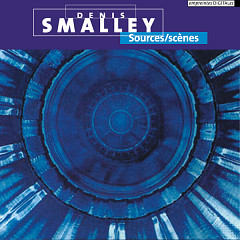
    Smalley employs subtle, base sound types in his compositions. Be it “metals,” “empty vessels” or “tides” as on this CD, these become the primary textures for his minimalist canvas. This monophonic minimalism creates bare, stark, alien environments where the listener sends forth an ear as a curious and eager explorer always to return with newfound discoveries. (4/5)

    … bare, stark, alien environments

    Traces in Outsight

    “Review”, Tom Schulte, Outsight, June 10, 2001
    Sunday, June 10, 2001 Press

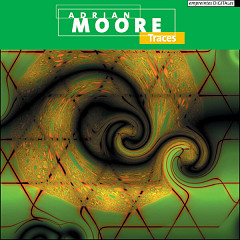
    For Adrian Moore the microphone is a microscope. He takes us to the minuscule “trace,” collaged together in an otherworldly patchwork for our exploration. Natural, commonplace sound objects become abstract art run through the Moore mind and studio. The sound of a marker pen is the sole source used for Study in Ink. But, after the transformation this simple act undergoes an apotheosis to the chirping of birds at play in imagined, digital worlds. (3,5/5)

    For Adrian Moore the microphone is a microscope.

    Évidence matérielle in Outsight

    “Review”, Tom Schulte, Outsight, June 10, 2001
    Sunday, June 10, 2001 Press

    Jonty Harrison is an artist that gets close to a fundamental isolate of sound and constructs an entire piece from it. This sound art is especially intimate, as if, as on Klang, the listener was diminished in size and experiencing first hand and on equal scale the sonic and mechanic effects of earthenware casseroles opening and closing. Elsewhere on Évidence matérielle liquids and splintering wood rise up to meet us, creating new sound worlds from the mundane physical event. (4/5)

    … creating new sound worlds from the mundane physical event.
  • 575
  • 576
  • 577
  • 578
  • 579
  • 580
  • 581
  • 582
  • 583