electrocd

Blog

4252 results
  • 578
  • 579
  • 580
  • 581
  • 582
  • 583
  • 584
  • 585
  • 586
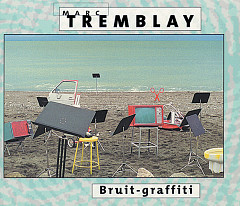
  • Bruit-graffiti in De:Bug

    “Kritik”, PP, De:Bug, May 1, 2001
    Tuesday, May 1, 2001 Press

    Sechs lange Achterbahnfahrten auf verschiedenen Terrains, die jeweils in Form von geräuschhaften Themenparks durch ein fein gesponnenes Soundnetz erschlossen werden. Ganz gleich ob es sich dabei um Fragmente aus der Klangwelt des Automobils oder solchen aus Western handelt, um Telekommunikationsschnipsel oder die unappetitlichen Geräusche, wie sie an öffentlichen WC’s anzutreffen sind, man merkt jedem Augenblick die Freude des Entdeckens mit anschließendem Arrangierens an, welches vermutlich zu einem nicht unerheblichen Teil auf später optimierten Zufällen basiert. Jeder Track umfasst mehrere Stationen, an denen die Parameter Effekteinsatz, Ereignisdichte und Tempo in verschiedenen Gewichtungen zu Buche schlagen. Sehr auf den Punkt gebrachte Arbeiten, die weit über eine bloße Zustandsbeschreibung hinausgehend Perspektiven eröffnen und denen nichts hinzuzufügen bleibt. Natürlich verlangt das alles nach einer hohen Aufmerksamkeit seitens des Hörers, je größer die kontemplative Grundstimmung jedoch ist, desto mehr Vergnügen sollte drin sein. 4/5

    4/5

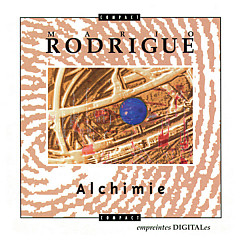
    Alchimie, Mario Rodrigue in SAN Diffusion

    “Review”, Alistair MacDonald, SAN Diffusion, May 1, 2001
    Tuesday, May 1, 2001 Press

    Another from the Québécois label empreintes DIGITALes, this CD was released in 1994. It’s one of their Compact Compact series — an excellent idea — about 40 minutes of music at half the price of a regular CD. This disk, however, is great value for money with five pieces by Mario Rodrigue composed between 1985 and 1993.

    First impressions? I must confess never to have heard this composer’s work before. I put the CD on without looking at the cover and found myself feeling pleasantly refreshed to be in a sound world which seemed a little old fashioned. So I reached for the cover — Tilt, the first track was made in 1986, and apparently, along with Qu’est–ce concert? (1987) and Fiano Porte (1985) was made with good old fashioned reel–to–reel tape recorders, varispeed, editing and filters. Aah yes, I remember it well! Rodrigue works in Montréal and the early pieces were made in the studios at the Université de Montréal where he studied with [Francis] Dhomont and [Marcelle] Deschênes. What I enjoyed most about all of the pieces on the disc was the layering of sounds, a sense of space and movement, and an effortless movement between real and surreal imagery. But the pre–digital pieces seemed somehow richer (no, I’m not going to write about analogue warmth). Perhaps the advantage of reels of tape over synths and samplers (certainly the samplers from the early 90s) was that you could use so much more sound — long sweeping gestures, no faking of sustained sounds with tiny loops because of the lack of memory, no MIDI limitation of dynamics, no equal tempered keyboard trying to tell you how to tune your sounds, better sounding distant transpositions with varispeed… OK, I’m biased, but I really don’t think that the beginning of Tilt would have been the same had Rodrigue been using the S1000 and Atari ST he used in the later pieces. Nevertheless, all five pieces inhabit rich, vivid sound worlds, and I was no less impressed with the later works.

    Tilt is an imaginary pinball machine. Rodrigue didn’t start with recordings of real pinball machines, but takes the idea and plays with it, travelling a long way from the simple initial idea and turning it into a dynamic piece of music. I was impressed by its shape and energy and loved the sounds.

    The track which follows, Cristaux liquides (Liquid Crystals, 1990), gained a well deserved Mention in the Bourges International Electroacoustic Music Competition in 1991. Stylistically it is a mixture of the abstract electroacoustic soundworld of Tilt, and a more pitchnrhythm based language. Rodrigue pulls it off, though, making a virtue out of some of the limitations of his sampler — the piece has layers made up of rhythmic loops and clearly pitched sounds (drones, chords) as well as longer sweeps of recorded sounds (particularly water). The piece is obviously his with the clarity of mixing which characterises all of the pieces on the disk.

    Qu’est–ce concert? plays with the idea of ‘concert’: it tips its hat to musique concrète in its opening spinning sound (the electroacoustic concert) and real soundscapes with references to concerts make appearances, including birdsong, a city, the sound of an orchestra tuning–up, applause and a string quartet. No simple catalogue of images though — the piece really flows and theres a constant stream of surprises, soundscapes appearing unexpectedly from within each other.

    I have to admit that it took a few listenings before I started to enjoy Le voyageur. Im too easily put off by notes by composers which try to explain music in terms of narrative. It seems to belittle the power of sound to suggest much more, to ignite the imagination and to suggest ideas which can’t easily be described, if a piece can be explained away so easily as a story. A personal hang–up, perhaps. Although all of the pieces on Alchimie have a narrative idea or image lurking in the background, there is always something else there, something more to listen to. But the note on Le voyageur is a short, simple narrative, and the piece seemed to realise the ‘story’ in a very literal way. However, the piece is no less skilfully composed, and once I had managed to forget the description in the CD booklet the piece started to make more sense.

    The final piece on the CD is also the oldest. Fiano Porte was made in 1985. Although the technique is not so developed it is fascinating to hear strands which are carried into later pieces. The looped fragments of voices are not so distant from the world of Cristaux liquides and the sense of space is all there along with a very natural feel for mixing.

    This is a CD well worth recommending, and I came away wanting to hear what Mario Rodrigue is doing now.

    … a sense of space and movement, and an effortless movement between real and surreal imagery.

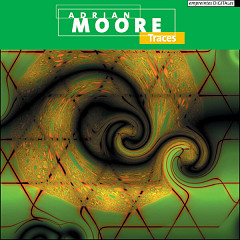
    Traces in Westzeit

    “Kritik”, Klaus Hübner, Westzeit, May 1, 2001
    Tuesday, May 1, 2001 Press

    Wiedergehörte Naturgeräusche sind ein wesentlicher Bestandteil der Audioarbeit des Hochschullehrers (Sheffield University) Adrian Moore. Eine rein akademisch ge-prägtes Soundscapeding ist trotzdem nicht zu enwrarten. Der Zutritt zum Werk erfordert einiges an Toleranz, denn es ist nicht jedermanns Sache, vor den Boxen zu sitzen und nur knarzende Geräusche natürlichen Geräuschen (Tierlaute, Vogelstimmen, Glocken, Straßenverkehr), die Moore elektronisch durch ein Sieb schickte und aus dem neuen Material eine Klangcollage intensivster Masse machte. Er selbst bezeichnet dieses Stück als einen Vorschlag: Damit umgehen und Rückschlüsse ziehen sollte der Hörer selbst.

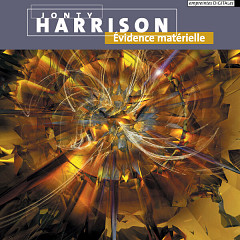
    Évidence matérielle in Heimdallr

    “Critique”, Stéphane Fivaz, Heimdallr, May 1, 2001
    Tuesday, May 1, 2001 Press

    Voilà une nouvelle réalisation du label canadien empreintes DIGITALes, spécialisé dans l’électroacoustique, qui ne va pas être aussi facile d’accès que les précedentes. Pourtant aucun des sons figurant dans cet album ne nous est inconnu. Jonty Harrison les a puisés en parcourant une rue, la rue Schaeffer, d’un côté comme de l’autre du trottoir, ou en s’installant dans une cuisine, dans une forêt, près d’une source d’eau, et a saisi au vol tous les sons qui l’intéressaient et l’intriguaient. On se plaît à reconnaître la source de cette banque sonore impressionnante, dans divers bruits très communs et banaux, auxquels on ne préte souvent pas attention, ou pas assez… Ce n’est qu’après avoir récolté tous ces sons que le travail de composition intervient, cherchant une entité sonore compatible avec l’ensemble, rendant cet amas diversifié et hétéroclite en une masse homogène et cohérente. Des paroles éparpillées, des casseroles, des freins, des voitures, des barres d’aluminium, des tiges de métal, des gouttes d’eau, etc… Tous ces sons que l’on ne pourra plus entendre de la même façon après avoir prété une oreille attentive à ce disque. Un travail impressionnant et fort intéressant!

    Un travail impressionnant et fort intéressant!

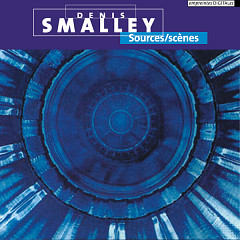
    Sources / scènes in Incursion Music Review

    “Review”, Richard di Santo, Incursion Music Review, no. 026, April 29, 2001
    Sunday, April 29, 2001 Press

    In what is referred to collectively as the British Connection, empreintes DIGITALes recently released these three discs featuring the works of three prominent electroacoustic composers from the UK. […] Lastly, electroacoustic pioneer Denis Smalley’s Sources/scènes documents five acousmatic compositions realised between 1974 and 2000, thus covering over 25 years of electroacoustic research and composition. The first three pieces (Base Metals, Empty Vessels and Tides) are exercises in utilising single sound sources (metal, garden pots and water respectively). The final piece, Pentes (meaning slopes, inclines, ascents), is an early composition from 1974. It begins as a bustling synthetic landscape of bizarre sounds, cut-ups and explosive clusters; and yet it suddenly shifts into a quiet movement, where a drone gives way to a haunting melody on the Northumbrian pipes, and leaves everything quiet and still. Smalley’s disc probably represents the most dynamic of the three reviewed here; the sounds open up before your senses, become tangible, and carry with them not only an incredible momentum but very strong moods as well. Missing from many acousmatic compositions is the presence of mood, making suggestions and appealing to the listener-spectator’s emotions as well as his senses or his academic interests in sonic structures. Smalley writes in his liner notes that “quite noticeable in all these works is the almost complete absence of a human presence in the sonic fabric: the listener-spectator is left to observe and experience the scenes and spaces, alone.” However, this statement by no means excludes the importance of the listener’s response, rather it emphasises and elevates its importance. He further writes: “between and beyond the loudspeakers, virtual, metaphorical worlds approach and encroach in sonic flow, and are revealed for imaginative contemplation.” Sources/scènes comes recommended for the adventurous.

    … recommended for the adventurous.

    Traces in Incursion Music Review

    “Review”, Richard di Santo, Incursion Music Review, no. 026, April 29, 2001
    Sunday, April 29, 2001 Press

    In what is referred to collectively as the British Connection, empreintes DIGITALes recently released these three discs featuring the works of three prominent electroacoustic composers from the UK. […] Adrian Moore’s Traces, documenting five electroacoustic compositions realised between 1994 and 1997, offers “a search for the hidden, both within the piece and within the sound”. In his liner notes, Moore rightly points out that “it is this hidden property in certain sounds that still excites the ear”. And so in each of these five pieces Moore dives right into his sound sources and opens them up for our perception and participation. In Study in Ink, for example, Moore takes his single sound source of a marker on whiteboard and creates a remarkable soundworld, filling me with wonder at his electroacoustic magic. In another example of Moore’s sonic ingenuity, Sieve is a “radiogenic” work dealing with natural sounds and the electronic manipulation of these sounds; all manner of found sounds (bird calls, rainfall, etc.), become a part of this hyper-collage, which is teeming with activity and minute noises. Excellent work, and an overall intriguing record.

    Excellent work, and an overall intriguing record.
  • 578
  • 579
  • 580
  • 581
  • 582
  • 583
  • 584
  • 585
  • 586