electrocd
  • This website is also available in English.

Blog

4252 results
  • 582
  • 583
  • 584
  • 585
  • 586
  • 587
  • 588
  • 589
  • 590
  • Traces in Ampersand Etcetera

    “Review”, Jeremy Keens, Ampersand Etcetera, no. 2001_6, April 1, 2001
    Sunday, April 1, 2001 Press

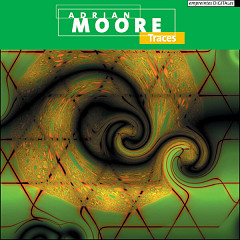
    A first for &etc — two disks from the renowned musique concrète/electroacoustic Québec label, in their unique cardboard constructed boxes. It also presented me with a challenge (which I hope I have achieved): to find a description appropriate to their work. It has struck me in the past when looking at ‘academic’ electroacoustic work (such as Philip Samartzis or some of the Metamkine) that these artists are working in an area which has its own theory and language, recognised across the ICAMs, departments they studied in and competitions that appear to be awarding prizes all the time (4 of the five tracks on Traces received ‘mentions’ or ‘places’). Yet my methodology of reviewing seems to me as even more inadequate than usual — the gestures and changes are so small, precise and rapid that the forest is lost for the pine needles. So I will immerse myself in them and try for a bigger picture. A quote from Moore seems appropriate — one of his tracks “reverts back to more abstract electroacoustic material, shaping form continuously and using gesture as the primary means of communication” which seems a pretty good description to me: and also leans towards some glitch/laptop artists. A great way in for me is Moore’s Study in Ink — as a lecturer I often enjoy dragging out the line of a whiteboard marker if it squeaks, and it seems that Moore noticed the sound as well, and applied his training. This track has one sound source — the marker pen. And what a web he weaves from it: generally you can hear the marker as it makes a gesture, but then the processing comes in to play — long echoed tones, pulsing beats, squeal, groans, trawls and sweeps, together with percussion and voices. There is an almost synaesthesia as you see a trail of movements follow and envelop the pen, sometimes hiding it all together, at others shrinking back into the image. Primarily entertaining, it demonstrates the possibilities available to the sound artist. The following track Foil-Counterfoil uses close-miked tin foil together with glasses, bottles and balloons: the whole thing shimmers and shifts, periods of intense small fragment activity, periods of relative stasis as things bubble away, streaming to the surface. Recognisable sounds shifting to manipulated echoes of themselves or pieces thrown together. A movement possibly discernable in the changes, a fascination in the drama. The first two pieces Junky and Dreamarena are both ‘abstract’ works — described with the quote above. Junky is more structured with “three main sections… and a more detailed structure… in each of the primary sections.” Electronic sounds (processed primary sources taken beyond recognition) play blippy, sqirly games (at times sounding like speech) over a sustained organ tone in the slow section, things speed up in the next section, the drone pulsing and the surface activity becoming denser, and finally an interchange between the two parts. The shifting structure works very nicely, giving an overall feel to the piece. Complex layered and drifting, Dreamarena lives up to its name and has that narrative feel you get from a dream — semirecognisable elements forming structured units which then slide into something else, providing some stability before sending you along new lines. It is not chaotic (in the original sense, though as with many pieces like this the fractal side of chaos science sometimes seems appropriate) but, to quote Robert Fripp (quoting Blake, I think) “resplendent in divergence.” And finally Sieve — a surreal soundscape. Sounds are taken from their natural environs, manipulated and thrown together: bird sounds and passing motors, complex swirling processed sounds, bells and horns layered and echoed against each other, breathing, coughing into a flushing, hubbling voices. The mind tries to extract a narrative, to ‘sieve’ out the main details, but is overwhelmed by the sheer volume; which nonetheless makes a dramatic auditory experience — sheer exhuberance, reflecting the feel of this disk. There is so much activity and all exciting and enticing.

    … sonically fascinating.

    Présence II in Chroma

    “Review”, Ross Bencina, Chroma, no. 30, April 1, 2001
    Sunday, April 1, 2001 Press

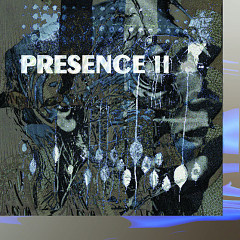
    Consisting of 34 works by 32 composers from 11 different countries, the Présence II double CD compilation represents a diversity of current electroacoustic practice. It is the second such compilation to be produced by PeP — the “arms length” production team of the CEC (Canadian Electroacoustic Community). The production quality on these discs is generally high, although on my copy, track one of disc one suffered from noticeable clipping artefacts.

    Disc one begins with Jorge AntunesLa beauté indiscrète d’une note violette (1995) which uses sustained tones punctuated by vocal events to articulate a short study on the color violet, organised according to the composers Chromophonic theory. Alastair Bannerman’s In th’air or th’earth (1997-99) is a peaceful flow of sustained enharmonic gestures peppered with processed voices and spectral implosions. Points of No Return (1997) by Chin-Chin Chen is a beautifully shaped series of interrupted tension building episodes articulated by a variety of processed percussive sounds. Peter Batchelor writes of his ballistic rollercoaster ride Velocity (1996): “this piece involves an exploration of ways in which speed (or, conversely, stagnancy) might be implied through the use of sound.”

    jef chippewa’s DUO (1997-98) explores a “correspondence of timbre and articulation” between the alto saxophone and analog synthetic sounds, Jef continues: “instead of a lethargic experience of linear continuity, and establishment of familiarity on a superficial level.” Ian Chuprun makes effective use of linear continuity in To many moments passed (1998), at one point a node of sustained tones warps through time, and erupts into an amazing pulsating rhythm, somewhat reminiscent of an idling Harley Davidson motorcycle. This is followed by Chuprun’s poignant etude Reading Allowed (PA 11) (1998) which processes the following spoken phrases “How do you want this read?” – “Am I supposed to read this like a child?” – “Let’s try this out here.”

    In Zipper Music II (1998) Gordon Fitzell explores the musical potential of zipper sounds in an active dialog of dynamic spatial gestures. Martin Alejandro Fumarola’s ARGOS (1988) and SET IN (1994) are slowly unfolding journeys though a world of sustained tones, synthetic bells and in the case of ARGOS, unusual modulated bird call like sounds. Éphémere (1997) by Yves Gigon makes subtle use of processing and deep resonant reverberation to treat recordings of the percussed ‘Primordium’ sound sculpture.

    I found the tracks on Présence II containing only mixed or minimally processed, recorded sound to provide an excellent contrast to the dense spectral masses of the more synthetic works. Steve Bradley’s fowl melody to trot combines domestic histrionics, french voice over and a variety of concréte hummings and tappings to address “the challenge of learning French growing up in a mediated psychic society.” Thomas Gerwin’s 6 Aphorisms (1998) presents a series of environmental snapshots, as does Pascale Trudel’s Ce n’est pas ici (1999.) Barbara Golden’s Whipping the Boys (1981-99) overlays pulsing analog tones with an informal discussion of recreational disciplinary activities. Spirit Wheels: Journey (part 1 of a puppet opera) (1997) by sylvi macCormac is an ethereal collage of voices, penny whistle, bells and bowed drones which I found to be one of the most striking works on these discs.

    Disc two contains 22 tracks, ten of which are excerpts or movements taken from larger works, in many cases I would have liked to hear the full compositions – in some cases the pieces are available in full on other releases. Few of the tracks on disk two exceed four minutes in duration, some are edited in such a way that it’s easy to imagine that you are listening to a single composition – at least that was my initial experience of the first five tracks of disc 2. The disc begins with A Palaver with Procrustes (1998) by Martin Gotfrit, which consists of a variety of synthetic tones modulated at different rates according to the Fibonacci series. Otto Joachim’s Three Electronic Sketches (1984) taken from a larger cycle of 7 are interesting sonic scenes rendered using randomly modulated voltage controlled synthesisers. The sequence of analogesque tracks concludes with Suk Jun Kim’s structured composition Sudden Cry (1998).

    Following sylvi macCormac’s previously mentioned Spirit Wheels: Journey (part 1 of a puppet opera), is Kevin MacLeod’s pacific (1998) in which pulsey and percussive textures slowly fade in and out to form a dialog. Climb to Camp One (1989) by Diana McIntosh is a slow performance from the inside of a piano – climbing equipment is used to percuss the piano’s body and excite its strings. Gritty pulse-like gestures articulate Dugal McKinnon’s Horizont im Ohr (1998), after which Adrian Moore’s Soundbodies: Bodypart (1998) congeals into a pulsating mass of vocal fragments, percussion and fast, syncopated melodies.

    David Prior’s fifth movement from Somewhere Submarine (1996) for piano and tape combines a paced jazz-angular piano score with long decaying resonances on tape. Jean Routhier’s brief Stereotyped Latter-Day Opinion (1999) has it all: a throbbing beat with synth drones, glitches, and cats meowing. B-Side (1998) by Antti Saario begins with a series of drum fills, interspliced with concrete sounds, somewhere in the middle guitar feedback becomes seagulls – in the end there’s a rock-band rehearsal. Dave Solursh’s We (1998) presents a coulorful narrative of processed water, modulated noise and harsh synthesised tones. Jørgen Teller’s H a e i o u y æ å part 2 (1997) is an exercise in extreme laughter processing.

    Ben Thigpen’s step, under (1998) features some intriguing comb-like resonances, which appear to bend in pitch as the amplitude of the excitation source changes. The cinematic Voices Part I (1997) by Todor Todoroff presents a subtle sequence of slow ambient resonances, punctuated at various times by voices and clunking metal. Hans Tutschku’s extrémités lointaines (1998) combines sounds collected from south-east Asia into an interesting scene sometimes involving stretched and processed dynamic gestures. Annette Vande Gorne’s Vox Alia: Amoroso (1998) is a subtle wash of heavily processed singing voices – a modal character with traces of sweeping filters. Chris Wand’s to be led (1993) presents a concise spoken text with accompaniment. Disc two concludes with Daniel Zimbaldo’s intense pulsating tone mass Au-delà du miroir.

    In summary, this is a mammoth compilation of contemporary electroacoustic music. A large number of styles are represented, and the quality of the works presented is excellent. If you want to hear what’s been happening recently in electroacoustic studios around the globe, go grab yourself a copy of Présence II.

    … current electroacoustic practice.

    Sources / scènes in The Wire

    “Classical”, Andy Hamilton, The Wire, no. 206, April 1, 2001
    Sunday, April 1, 2001 Press

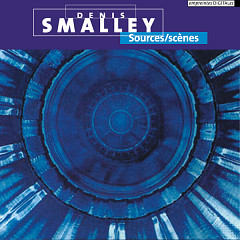
    The disc by New-Zealand born Smalley, student of Messiaen and GRM, shows the same oscillation between electroacoustic and soundscape traditions as Jonty Harrison. Base Metals abstract from the resonances of a family of metal sounds sculptures while Empty Vessels transforms recording of air resonating in large garden pots while also capturing environmental sounds. An enjoyable addition to empreintes DIGITALes acousmatic series.

    An enjoyable addition to empreintes DIGITALes acousmatic series.

    Traces in The Wire

    “Classical”, Andy Hamilton, The Wire, no. 206, April 1, 2001
    Sunday, April 1, 2001 Press

    A witty, frothy collection by Adrian Moore, associate of BEAST and student of Jonty Harrison. Study in Ink takes the single sound of a marker pen on whiteboard and develops it amusingly, while Foil-Counterfoil rehears tinfoil recorded with a close microphone. Junky is ‘electroacoustic Ambiant,’ and the album concludes with the ‘radiogenic’ and entertaining Sieve wich overloads information on the listener, forcing him/her to make connections between the different sound sources — vocal, mechanical and environmental.

    A witty, frothy collection…

    Évidence matérielle in The Wire

    “Classical”, Andy Hamilton, The Wire, no. 206, April 1, 2001
    Sunday, April 1, 2001 Press

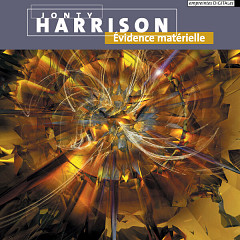
    Jonty Harrison is director of BEAST (Birmingham ElectroAcoustic Sound Theatre) and has worked with GRM and Ircam. His pieces appear on both sides of what he calls the “Schaeffer/Schafer division” — acousmatic music wich abstracts musical data from sound objects “without reference to their provenance in any anecdotal way” (as representd by Pierre Schaeffer) and soundscapes wich use natural sound art rather than purely musically (Canadian composer R Murray Schafer). Klang is an engaging example of the former, wich creates abstract structures with sounds from casserole dishes ground together. Sorties, in contrast, is a soundscape of door-slamming and other exits. Other pieces oscillates between the two approaches in what is a rewarding survey.

    … a rewarding survey.

    Connexion in The Wire

    “Classical”, Andy Hamilton, The Wire, no. 206, April 1, 2001
    Sunday, April 1, 2001 Press

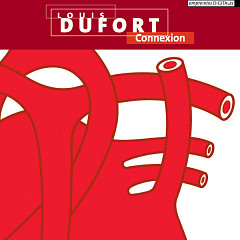
    The most coherent of the three empreintes DIGITALes discs reviewed here, and — a sign of times — the only one by a composer who’s not an academic. It’s also the only one with any suggestion of a groove — in this case industrial. Louis Dufort divides his time between composing for a contemporary danse company, and producing works of “unbridled musical experimentation,” such as these four dazzling dramatic compositions from 1996-2000.

    … four dazzling dramatic compositions…
  • 582
  • 583
  • 584
  • 585
  • 586
  • 587
  • 588
  • 589
  • 590