electrocd
  • This website is also available in English.

Blog

4252 results
  • 580
  • 581
  • 582
  • 583
  • 584
  • 585
  • 586
  • 587
  • 588
  • Traces in Equinoxe

    “Kritik”, Alexander Götzke, Equinoxe, no. 15, April 19, 2001
    Thursday, April 19, 2001 Press

    Eine echte Überraschung stellt für mich dieser Adrian Moore dar. Er studierte Musik und engagiert sich seit Jahren in Einrichtungen verschiedener Universitäten. So ist er unter anderem Direktor des Sound Studios Sheffield und komponiert seit geraumer Zeit elektronische Musik. Mit dieser Beschreibung kann man ihm aber nur bedingt gerecht werden, denn seine Arbeiten sind von besonderer Qualität, und lassen sich mit dem professionellen Stil von Coil und Robert Rich vergleichen. Auf Traces befinden sich fünf Soundscapes die es wahrhaft in sich haben. Selten habe ich so vielschichtige und gleichzeitig wohl aufeinander abgestimmte Klanglandschaften vernommen, die selbst abgebrühte Kenner des Genres hellauf begeistern können. Das Album ist mit seinen fünf Tracks in drei Bereiche eingeteilt: abstrakte Soundquellen, Wiederentdecken natürlicher Klangobjekte und elektronische Manipulation natürlicher Geräusche. Die einzelnen Sektionen fließen spielerisch ineinander und fügen sich zu einer abwechslungsreichen Veröffentlichung voller Energie und Esprit. Eine perfekte Synthese, organisch, zugleich abstrakt und einfach nur genial!

    Évidence matérielle in Sonoloco Record Reviews

    “Review”, Ingvar Loco Nordin, Sonoloco Record Reviews, April 15, 2001
    Sunday, April 15, 2001 Press

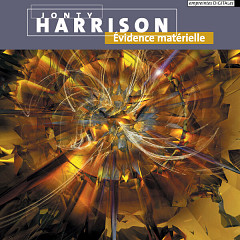
    Évidence matérielle is Jonty Harrison’s second CD on empreintes DIGITALes; the preceding one – Articles indéfinis (1996) – being very successful, and this one providing enough material evidence to forecast another electroacoustic chart-jumper!

    Klang (1992) is Harrison’s first entry. Some of the base material of the piece was recorded as early as 1981. This pertains particularly to two earthenware casseroles discovered in Denis Smalley’s kitchen… (Man, these guys go back a long time…)

    Suddenly, as I’m writing, my mind makes an involuntary jerky cross-reference that is completely unexpected even unto myself, but I think it holds some kind of truth of an intuitive kind: As I’m contemplating the atmosphere around this Jonty Harrison issue, as well as the other two components of The British Connection -concept that just arrived, I feel a similarity with what was happening on the British pop scene in the middle of the 1960’s, when some really sophisticated groups came along, carving out a certain niche for themselves, in a kind of intellectual and artistic splendor, which struck some of us with awe at the time, as we were completely elated with joy at the power of that which rose out of the darnest corners of the mind of the British Isles.

    Anyhow, the similarity would be that of a certain splendor, a certain timeless creativity of a loftier, nobler kind, a certain craftsmanship way above the average state of affairs, a flair of excellence – which in turn unfolds a tradition back to the bards and the sages of olden times, and beyond that, to Stonehenge, and beyond, beyond… The atmosphere is such… I believe Harrison, Moore and Smalley would have been poets at the court of the king, and that many a dear Lady would weep at their wordings and phrasings…

    Klang (1992) emerges like a glass world of gentle, brittle touches, swirling about you like the mist of a fairy’s airy dance, visible only in very rare lightings, when you’re in a serene state of mind, in and out of vision; now you see it, now you don’t! I can hear the lid being banged shut a few times in Smalley’s kitchen of 1981, but mostly it’s this hovering, circling dance of the fairies, gentle, careful, sensitive – wonderful; like the sunlight reflecting off the long hair of a beautiful long-legged female soaring down a London street (and there are four kinds of Sunsilk Shampoo; one is for you!). I’ve heard a few glass musics, like for instance Denis Dufour’s Bocalises (1977) and Annea Lockwood’s The Glass World (1970) – but this outshines the predecessor by sheer beauty, sheer breezy lightheartedness! It’s spatial, swift, candid! Soaring! Soaring like that one extended, breathtaking many-colored 1965 harmonica exhalation in Donovan Leitch’s Ballad of a Crystal Man

    Sorties (1995) gained Harrison some well-deserved international recognition back in 1996, when the piece was awarded Prix de la Musique Electroacoustique á Programme at the 23d International Electroacoustic Competition in Bourges, France, and consequently released on the double CD of the 9th edition of the releases from the competition; Cultures électroniques 9. From the title of the prize one might deduce that this is programmatic music. It was originally composed for an installation/sound sculpture, which was a collaboration between BEAST (Birmingham ElectroAcoustic Sound Theatre) and graphic artist Lorne Christie. It has to do with fleeing, escaping, from an entrapping interior to an exterior, which in turn turns out to be just another entrapping interior and so forth… (…are birds free from the chains of the skyway…? [Bob Dylan: Ballad in Plain D]). This is more of a concrete piece with original street sounds, footsteps tripping off in the gangways between supermarkets or in the subway stations, children’s voices, trains arriving and leaving, commotion, motion, cars, streets, traffic, squealing breaks, humming generators, slamming doors… and then in a sudden silence; private, close sounds, a door opened or shut… and now the electroacoustic wizardry kicks in, with minute events amply illustrating the inward thoughts of the person in flight, huddling away from one state of mind to another, inside a cab? There are two levels at play here; the interior of the mind, and the exterior through which you have to carry your body through all this weighing gravity of celestial bodies… your body and the celestial bodies and your very existence put to the test in a Russian doll type of world, where one kind of anxiety opens up into another kind of anxiety, and where the final aim can only be to find the right panic… Midway Sorties allows for some weather, and then for the shores of great waters, and birds, flies, bumble bees, voices of children carried on the wind, a single engine propeller plane passing in peace above; an illusion of domiciliary rights – but are these just the lonely sounds of homeliness reaching the thirsty ears of a destitute old-timer (ruined teeth…) on a park bench…? The electronics gradually take on a more vicious guise, and there is probably no mercy at hand… The mixture, the blending of concrete sounds, purely electronic sounds and transiting sounds – is magnificent, almost nauseating! Jonty Harrison knows his craft! He never does more than is needed, in a delicate and most tenderly application of binary film. In an all-encompassing tape-music gesture he lets the summery breeze comb through the leafy crowns of the trees of July, and you sit beneath one of the trees, your back against the trunk, a bottle of mineral water in your hand and lucid thoughts of loss in your mind, as your gaze levels out and locks in a hypnosis of horizons, as the winds blow… (… oh the winds blew high, and the trees did sway; not much from life was I asking… [Donovan Leitch: Ballad of Geraldine])

    Surface Tension (1996) utilizes garbage; all sorts of waste; containers etcetera — and tries to extract some significance… and wouldn’t you know it, it succeeds splendidly, as those empty milk cartons and other throw-aways from the garbage can take up position inside a work of high art, electroacoustically composed of decomposing material for the compost! I sort of see this maniac sticking his hands down into whatnot, his microphone protruding down cracks in the shit, collecting beautiful sonic waste products out of the smelly mess… Fantastic! Even here, inside the shit itself, Jonty Harrison manages a plastic, hollow, spatial feel of curves and angles and trajectories, as the genetic codes flare up and fall down like the soot of fire-crackers all around those little boxes, in the waste damp, little boxes made of ticitac, little boxes, little boxes, little boxes, all the same…

    Splintering (1997) is dedicated to Jonty Harrison’s parents. With its almost 20 minutes’ duration it is the longest work on the CD. The source material turns out to be wood. In the introductive text Harrison alleges environmental remorse, but also recognizes the deep-forest archetype of our subconscious, with weeping princesses, fire-breathing dragons and wolves disguised as grandmothers… We all share those images, don’t we? While I’m at I may as well make known my theory on the origins of the trolls, the giants and all those secret, somewhat dangerous, risky beings of the forest and the mountains. I think – without much doubt, really – that all our conceptions in that direction, about trolls and giants, are humanity’s memories of our brother race, the Neanderthals, who roamed these vast expanses up to at least 38 000 years ago, and that is almost until yesterday, in the perspective of the emergence and development of Homo Sapiens and the Neanderthals. The last remnants of them – dated to be 38 000 years old — were found in a cave in Brittany, so for endless periods we lived side-by-side with this other human race… Incredible. Now it’s just us left… However, the Neanderthals were bigger than us, sturdier, and in the memories seeping down through the millennia they have taken on the guises of trolls and giants. Remarkable but probable! They still live in the fairy-tales and the age-old legends! Certainly there must have been crossbreeds, but they in turn were probably not reproductive, which is why no Neanderthal traces can be detected in our genetic code. Harrison’s wood piece – piece of wood! – rumbles, rolls… and splinters! The music is sometimes percussive, sometimes gently cracking, always woodying! It goes from sparse brancheries to dense groves, and the naturally occurring and healthy forest fires burn through the piece too… if it isn’t Man again, burning down the forest to make space for cultivation of the land… You can hear the smallest of insects whizzing by and the faintest of creatures rustle a leaf… The nocturnal silence puts a misty damper on events, and there is time for reflection inside the composition of sounds… nose-tip introspection… long-last leg-rest of forest trekkers…

    The last piece on this tremendous Jonty Harrison release is Streams (1999). Harrison’s introduction is so well formulated that I’ll quote from it: “The image evoked most immediately is, of course, that of water – turbulent, troubled, restless, at the mercy of wind and terrain, flowing onward to the sea – itself turbulent and in constant motion. Evaporation, clouds and rainfall complete the cycle, which is always renewing, always moving… […] …Streams of data, of consciousness and, most importantly, of perception – the ability to link often disparate elements together and to understand, to ‘hear’, that they are part of one line, one ‘stream of thought’, distinct from other (possibly coexisting) parallel or contrapuntal streams.” That said, it’s not much for me to add, except a respectful bow to the mastery of Jonty Harrison, revealing itself in the masterpieces of electroacoustics herein presented. Good day, Sir! It has been a pleasure!

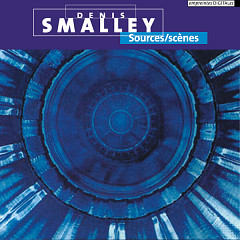
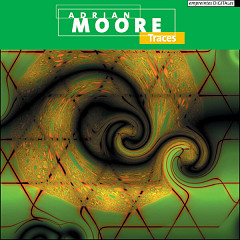
    A note on the packaging: empreintes DIGITALes’ packaging has always been inventive, and very beautiful, with an original idea for getting the CD out of the cover, among other features. Lately – as is evident with Harrison’s CD, but applying also to the two other CDs arriving in the triptych The British Connection; Adrian Moore’s Traces and Denis Smalley’s Sources/scènes (and maybe all other new CDs from the label?) – the format has shrunk somewhat, making it perfectly square, with even sides, making the whole look of the deal very neat and compact. I hold nothing against that. Earlier releases provided a booklet with the information, but now you fold out a guarded (folded) inlay made of high quality hard paper, with all the info.

    … sheer beauty, sheer breezy lightheartedness! It’s spatial, swift, candid! Soaring!

    Sources / scènes in Sonoloco Record Reviews

    “Review”, Ingvar Loco Nordin, Sonoloco Record Reviews, April 15, 2001
    Sunday, April 15, 2001 Press

    A new CD from Denis Smalley is in itself a real event; such is his reputation! This CD is one third of the new grand slam from empreintes DIGITALes: the British Connection – though Smalley really does originate in New Zealand… but he moved to the UK already in the 1970s. For a while there, though, I thought the old Empire burlesque (!) had started to brew again… Well, Smalley really initially came to Europe on the French Government Bursary in 1971 to study with Olivier Messiaen in Paris, but also achieved a diploma of electroacoustics at the renowned institution GRM; Groupe de recherches musicales.

    I’ve always held Smalley in the highest esteem, as one who continuously keeps on putting out high quality, high-art electroacoustics. The piece that really blew me away once upon a time was Wind Chimes (1987), released as part of a CD (WER 2025-2) in Wergo’s series Computer Music Currents – on CD 5 of that series (1990). I remember that I’d just set up the gear at home after a major up-grade of equipment. Wind Chimes was the first CD that I played through it – and I was stunned! They guy who helped me bring the gear home and set it up was unfamiliar with any kind of electroacoustic music, and looked completely helpless when the first loud chime cut through the room like a shining sword! So many intriguing sounds; so much imagination, beauty, playfulness, downright auditive obsession! Later on Wind Chimes was released on Smalley’s first CD on empreintes DIGITALes; Impacts intérieurs (IMED 9209). On that CD another piece, which Smalley first issued on Volume 6 of the aforementioned Wergo series – Clarinet Threads – was also reissued.

    So, this is his second CD on the label. I do not usually take much note of what the composer or the label has to say about the different pieces, since electroacoustic music in my view is to be compared with abstract art, I mean abstract, non-figurative painting — which it can be intellectually amusing to discuss the ins and out of, but… that’s that! It might be of interest to some to know what kind of software was used, or which machines – but ultimately it’s the resulting sound that constitutes the end to which the soft and hardware are the means. Only experts and conservators will want to find out the exact chemical make-up of a painter’s paint. Contradicting myself – not uncommon! – I nonetheless recommend the listener to read Smalley’s texts on his music, since they are unusually well formulated, taking on a sort of musical, spatial guise themselves.

    The first piece on this CD is Base Metals (2000). The title alone tells you what to expect; metallic sounds… but maybe this isn’t what you might think anyway, from the title. The events are extended, swooping, like running your hand or your mind along the curved surface of a parked Boeing 747, below and in front of the cockpit windows, down along the bulging nose section, and the sun is shining on a cold spring day, maybe up in Seattle. The metal is smooth, cool, almost sexy under the passage of your hand, and you feel the molecular make-up of the metal, you can sense the atomic jitter, and as you identify even further into the metal you feel, in bewilderment, the shooting trajectories of elementary particles… until you brace yourself, shake your senses and return back up through the worlds of matter, back to your good old self, with your hand almost perversely stroking the jet… and you realize that that’s not where it’s at either, because in real reality your just sitting there listening to Denis Smalley’s Base Metals

    Empty Vessels (1997) is the second entry. In this case it definitely pays off to read the composer’s introduction. Smalley has recorded the air resonating through some large garden pots from Crete and an empty olive jar from Turkey. The recordings took place in the composer’s garden in northern London, which explains why you can hear the sound of rain and passing airplanes, for example. Naturally Smalley has gone further with the resonating sounds, and developed certain aspects of them by the manipulations that are easily accessible to a shaman of sonics! At first you hear the thrushes of a wet garden, but it doesn’t take long for a mosquito and an airplane to arrive and pass at the same instant… The thrushes keep it up, so I suppose the recording was made no later than May. The next plane flies by above the roofs of London, but the resonance it causes in the jars hang on and develop into a murmur of its own, sporting a brilliance of overtones, when the rain starts coming down like miniscule explosions. The rain on the jars produces a rewarding noise, with many beautiful layers of sound that seem to be moving forward relentlessly, as the sound of the rain merges with the intense buzzing of a swarm of bees which perhaps seeks protection from the rain inside the jar, right at the microphone… It’s all seamless, streaming – streaming audio! When you feel too sedated as the environment gears down into a lazy day of leisure with a hypnotic backdrop, Smalley slaps you on the cheek with a sudden impact, which again introduces rain, birds, planes and the vibrating resonance of a rainy London day, when the smoke bends back to the ground and umbrellas make an aerial view of the streets look like mushroom marches of fungi causes. Even thunderclaps echo inside the jars in the garden. It’s a bit like a hidden-away feeling, as if you were curled up inside a drain pipe outside the factory, eating away at your sandwich as the rain pours down; a safe, cozy, secret feeling!

    On it goes. Number 3 is Tides (1984), with the subtitles Pools and Currents and Sea Flight. This was the first work in which Denis Smalley utilized computer transformations of source sounds. This quite much older piece brings us into a marine environment, title-wise, but is it, in context, mostly as an idea, a theoretical construction of relations between events…? Not really. Soon events occur that place you right at the shore of a woodland lake, as the gentle ripple of miniature waves taps the sand and pebbles, and you lie there by your canoe, resting, studying the light summer clouds. You feel all that gravity, but at the same instant you feel your mind letting go, to hover in suspended weightlessness and hypnotic introversion some distance out above the surface of the water. Piece! Rest! Many inner sounds! Visions on the loose! Body let alone! Pearls of sound, reflecting daylight thoughts. Bubbles of sound, emerging, popping. Much is going on here, of an intricate character, on a mystical level, and the piece is long, adding up to no less than 30 minutes; almost French durations! We like it! Leave it out there for a good while and let it brew. Then the fairytale quality is bound to seep up like methane through the marshes, as so often in works by Jacques Lejeune or François Bayle – and the procedure functions in Smalley’s piece! Nature becomes enchanted here, and the elves and the fairies gather around a gray, bearded sage, sitting on a moss laden rock in the meadow, as individual rays of light angle down through the greenish mist, lighting up the wrinkled features of the old magician’s thousand-year-face. Secrets are felt through the vibrating sonic transparence. The sea is never far away, and in the second movement the waves roll back and forth through your head, if you’re listening through earphones. Some chirping sounds call up visions of sea birds, while bell-sounds (without the attack) make me think of some pieces by Jean-Claude Risset (Sud in particular)

    In the last, and oldest, piece – Pentes (1974) – you may hear Northumbrian pipes. Smalley has transformed other instrumental sounds here as well, though without providing any hints as to their origins. Short and noisy events come charging in clusters, violently, and it is apparent that the music is older – but by no means inferior to newer stuff – just… older. Maybe Smalley’s electroacoustic identity hadn’t been thoroughly molded by 1974 either, which is why this piece could have been realized by a number of emerging composers of the time, like Rolf Enström, Tommy Zwedberg or Åke Parmerud. Nevertheless, it’s a massive piece, with dangerously sudden changes of moods and speed… and volume! Later slowly gliding processions of timbral drones let the Northumbrian pipes rise like mist out of the glens… Magnificent!

    Magnificent!

    Traces, Adrian Moore in Sonoloco Record Reviews

    “Review”, Ingvar Loco Nordin, Sonoloco Record Reviews, April 15, 2001
    Sunday, April 15, 2001 Press

    There is a new sophistication apparent in the brand new scoop of electroacoustics coming out of Britain — and from elsewhere too… That is plain to hear on a series of new releases from Canadian guru label empreintes DIGITALes, featuring three British sound wizards with already very famous names. This time we listen to Adrian Moore’s CD Traces.

    The sophistication reveals itself in that it now clearly is composition and absolutely nothing else that kicks electronic ventures sky high! A few years ago I was worried that all the new, easily obtained machinery and software would dilute the traditionally highly intoxicating electroacoustic beverage, which it also did, momentarily, but these days my worries are gone, blown away by some of the best stuff I’ve heard in decades from the shamans of electroacoustics.

    This means that the guys and dolls who mistook the machinery for the art now either have learned their lesson, or left the stage… The CDs I’ve received in recent months from labels in Sweden, France, Russia, Romania, Holland, Canada and other countries prove to be excellent productions. These artists master their software and hardware to such a degree that no machinery in the world can get in between them and the end result: the sounding work of art. These people are composers — again! — with compositional skills. The detour through the junkyards of binary tools is over. We’re back in business, and the composers are composers again. They are electroacoustic composers, using their machines and gadgets, but the driving force is imagination and visionary thinking — and intuition! — paired with an edgy compositional skill; and so the machines can be wonderful tools. This is what has happened as this sophistication has set in, and here we are with some highly tremendous stuff.

    Adrian Moore is one of these sophisticated wizards, balancing his compositional act on an array of hard drives filled with shamanistic software… but he lets his imagination seep down like honey through the imaginary netherworlds of the binaries, and in the process he evolves and refines images and impulses originating in a French tradition projected by people like Jean Schwarz, Bernard Parmegiani, François Bayle and others, not least the French-Canadian Maestro Françis Dhomont — and I’m talking about the earlier, analog groundbreaking actions of these guys (they’re still very active!), when they pushed the poetic and fairytale-like sound worlds of their inner visions to the forefront of electroacoustics.

    I’m not precisely new to Adrian Moore. I think the first piece I heard of his was Breaking… Glass! (1991), which was broadcast on Swedish radio in 1993, when a program (FIX) specializing in electroacoustic music ran a series on works coming out of the studio of the University of Birmingham (associated with the organization BEAST; The Birmingham ElectroAcoustic Sound Theatre). His Sieve (1994-1995) — presented here — was also originally found on a CD from the 4th Prix International Noroit Leonce-Petitot 1995 de Composition Musicale Acousmatique.

    Moore was introduced to electroacoustics at a concert with Denis Smalley in Nottingham. Later he studied with Jonty Harrison, and fate (?) has it that the three CDs with British composers that recently were released by empreintes DIGITALes feature these three sound painters.

    The first piece on Moore’s CD is Junky (1996). The sounds are extremely delicate, measured down to the most miniscule fraction of a slice, slashing through space in your senses like samurai swords… After a short while this frantic impression gives way to an otherworldly feeling of austere detachment, complete alienation, as if you were experiencing a spill-over from another dimension — a dimension of the utmost excommunication, as might be experienced by space travelers cut off from Earth by some disaster or other at the shores of foreign worlds… or by a father seeing his children disappear in an ugly divorce, or rather the calm feelings of resigned despair that follows, when you just sort of watch the horrid circumstances like a work of art at a dazed afternoon exhibition or like a movie late one rainy spring… There is a mental “Entfremdung” in the music, like you were hearing it through the locked and barred windows of an insane asylum…

    This music could also be a story told about events unimaginable by human Earthlings, tenderly told in this sound language, conveying feelings of something completely lost, like the introverted, calm despair of an alienated existence, extra-dimensional, far beyond the force of binary circuits, far beyond the illusion of Time, wrangling through the mineral world, which is a lonely place without points of reference — like the more frightful stages of the Bardo Thödol — or like a memory long lost in an overwhelming amnesia, in which just the gestures of meaning remain. It’s a very beautiful music…

    Dreamarena (1996) is the second entry. This piece too is very imaginative, spatial, inducing all kinds of weird feelings of a kind of alienation, but this time as if you were transferred to a kind of insect perspective… You feel an intense communication going on here, but you can’t tell between what kind of creatures — or if indeed the morphemes that sweep past, back and forth in your listening space, between your temples, are a kind of human communication that you just don’t understand, as if you’ve suffered a stroke and woken up in utter aphasia… The music is frustratingly communicative, but unintelligible to you, though apparently not to the alien intelligences — if they are… — who really do exchange frantic messages right through your brain… You can only sense the bare gestures of communication… or is it a communication beyond language itself? Could it be the thoughts of angels, the thoughts of spirits, that you’re tapping into, breaking all the laws, inducing the wrath of God? You were not supposed to hear… in the same manner that you were not supposed to tap into the core of Existence by tampering with genetic codes… The Tower of Babylon again!

    Or could these sounds be sonic representations of the insects’ communication by pheromones, across the vast summer meadows of an eternal June? For sure this communication has a magic quality, a surreal aspect, in the same way that the world would look very different if we suddenly could perceive other wavelengths of light than the limited spectra we usually can see.

    Study in Ink (1997) is a completely delightful little obsession! Adrian Moore has reached down into his pocket and got his whiteboard marker pen out, indispensable to anybody having to make presentations to boards of trustees or any other congregation of the 21st century… He uses the sounds the marker makes on the whiteboard in such imaginative ways that you can’t but smile… This singular-origin-sound business sometimes can be really elating, as in the case of Jonty Harrison’s Hot Air (1995) — also on empreintes DIGITALes; IMED 9627; Harrison’s first release on the label — in which a great deal of the sounding result stems from children’s balloons, or like in the very classical case of Pierre Henry’s rusty barn door in Variations pour une Porte et un Soupir (1963). Adrian Moore develops his sampling and manipulation of this darn marker pen’s frictional passages across the whiteboard to the extent that the sounds revealed push your associations in the direction of David Dunn’s magnificent hydrophonic recordings of the intricate sounds of underwater insects of North American and African freshwater ponds; Chaos & the Emergent Mind of the Pond (What Next WN 009). It’s amazing how much these completely different approaches — hydrophones in African ponds versus marker pens on British whiteboards — can resemble each other! The adventure is endless!

    Foil-Counterfoil (1997) involves — of course — tin foil, closely recorded to reveal hidden sounds, but also utilizes the sounds of glasses, bottles, balloons etcetera. The effect is dizzying at times, in its innovative, controlled madness, where Moore has to use all his power of will not to go completely berserk in the sonic shop of his mind! You name it, we like it! Moore’s music involves so many qualities, but movement — the spatial aspect — is always very apparent, as is an uncanny feel for alien beauty and ominous auditive backdrops, in a therapeutical kind of fashion, as if you were present at the core of a schizophrenia session with Ronald D Laing or a spirit-on-reel-to-reel meeting with almost forgotten Friedrich Jürgenson.

    The last piece is Sieve (1994-1995). This is the only piece on this set with a more obvious musique concrète leaning, since you can readily identify some sounds that — to begin with — are un-altered. The piece is very French, just picking up somewhere in the acousmatic tradition and taking it a bit further still. It is a wonderfully varied piece; a sort of variation on the moment, or variations on moments of reality, wrenched out of their natural passage-ways of causality, into the workshop of Adrian Moore, where the stolen moments are handled with binary pliers and deformed and re-shaped into lucid building-blocks for the composer’s almost metaphysical creation; Sieve .

    Let’s congratulate Adrian Moore! This CD is a remarkable gift to the connoisseurs of contemporary sound-art, and constitutes a lasting contribution to art itself. Wonderful! Adventurous!

    Wonderful! Adventurous!

    Évidence matérielle in Black

    “Kritik”, ST, Black, no. 23, April 11, 2001
    Wednesday, April 11, 2001 Press

    Zentraler Hintergrund dieser Veröffentlichung ist Mr. Harrison’s imaginärer Spaziergang durch eine Art Stralle, auf der einen Seite «Scundobjekte» in einer «musikalischen» Weise und auf der anderen natürli,che (Altags-) Geräusche. So wandelt man mit einem immer schiefer werdendem Grinsen brav Mr.Harrison hinterher’ der mit Topfdeckeln (!) sich wohl stundenlang beschäftigen kann, allerlei überaus profanes Gesumme und Gebrumme der alltäglichen GeschäRigkeit der Menschheit dazu montiert und uns folgerichtig seine «Tonerforschungen» auf CD Format präsentiert. Nun ist Jonty Harrison kein kleiner Dummer, schließlich studierte er in Sachen Musik und Kompositionstechnik an der altehnNürdigen Universität zu York, gibt Vorlesungen in Sachen Kompositionstechnik und elektroakustischer Musik und ist gar Direktor des BEAST (Birmingharn ElectroAcustic Sound Theatre). Seine elektroakustischen tnstallationen sind sicher sehr interessant und in einem gewissen Zusammenhang genauso sicher uberaus künstlerisch wertvoll. Würde ich persönlich mir sogar durchaus einmal antun. Ohne diesen Hintergrund allerdings, horen wir rnur “seine, Soundkreationen” auf dieser CD, und das ist anstrengend, um nicht zu sagen, enervierend, sorry! Bei aller Liebe zu jeglicher Form von Kunst, bin ich nicht lange hinter ihm seine Rue Schaeffer, oder von mir aus “Schaeffer Street” hinterhergezockelt. Nach nicht zu langer Zeit tauchte nämlich auf der»organischen Straßenseite eine Kneipe auf, in diese habe ich mich verdrückt und als allererstes, Geld in die Musicbox investiert. Hat da eben schon wieder jemand «Kunstbanause» gesagt…?

    Adrian Moore in Le Devoir

    “Un lancement particulièrement réussi”, François Tousignant, Le Devoir, April 11, 2001
    Wednesday, April 11, 2001 Press

    S’ouvrait lundi soir la neuvième édition de l’événement «d’électro» Rien à voir. Une tradition s’ancre et propose, quatre soirs de suite, une manifestation trifide à Ex-Centris. Conférence avec le compositeur invité (un par soir) à 18hl5. Suit, à 19h, un premier concert où l’invité fait entendre de la musique qu’il aime, où l’on découvre sa famille. Enfin, à 21h, c’est l’heure où le compositeur diffuse ses propres œuvres. Une formule bénie des dieux, dont on ne peut que déplorer qu’elle ne fasse encore se déplacer qu’une communauté encore trop restreinte.

    Après ce qui a été entendu lundi, on peut en effet souhaiter qu’un public plus large cesse de craindre le médium électroacoustique. Le Britannique Adrian Moore a proposé deux programmes qui ont de quoi convaincre les plus réfractaires. Tout d’abord parce que, oui, on entend bien de la musique faite par un musicien. Comme diffuseur de sons dans la salle Fellini, on assiste à l’œuvre d’un poète, c’est-à-dire quelqu’un qui sait faire entendre et saisir l’ailleurs des sons.

    Il maîtrise parfaitement la technique et l’orchestre de haut-parleurs mis à sa disposition. Cet espace que j’ai autrefois jugé ingrat montre maintenant toute sa merveilleuse potentialité. Ce jeune artiste reprend le flambeau qu’un Jonty Harrison avait laissé dans nos mémoires lors d’une précédente édition de l’événement, proclamant clairement toute la force et l’originalité — voire la personnalité! de l’école «anglaise» d’acousmatique.

    Du prernier concert, je retiens Scherzo, d’Andrew Lewis. Jeux intelligents où, si le travail sur le son est «évident», notamment avec les carillons enfantins et l’appel de la fillette, la technique et sa démonstration sont transcendées par l’idée consistant à créer un paysage sonore de l’enfance, un peu à la manière du Schumann des Kinderszenen.

    Encore mieux: Frictions, de Simon Emmerson. Le compositeur et son interprète nous emmènent en voyage sonore avec une sensualité que la frontière entre sons réels enregistrés (par exemple, les bâtons de pluie africains) et ceux d’origine synthétique est noyée dans la mouvance spatiale qui scelle l’unité. L’auteur y parle des quatre éléments; osons un parallèle avec le traitement des quatre instruments par un vrai bon quatuor à cordes inspiré et inspirant.

    Nous faire réentendre Klang, de Jonty Harrison, fut une bonne idee: malgré le changement de contexte, non seulement Klang reste toujours aussi beau mais, malgré ses presque vingt ans, il est vivifiant d’entendre que cela n’a pas pris une ride, ni technologique ni musicale.

    Une découverte

    De sa propre musique, parlons d’une découverte, de celles qu’on aime faire en ce genre d’endroit et que le disque ne saura jamais rendre malgré les meilleurs intentions. Ce qui frappe d’emblée chez Adrian Moore, c’est le sens de l’espace, la profondeur — dans tous les sens du mot — et la maturité du jeune homme. Oscillant entre humour et sérieux, effet et intériorité, il tombe toujours juste, à défaut de toujours convaincre pleinement. Ainsi, sa dernière œuvre, Superstrings, n’apporte rien au mix média piano et bande, dommage de complaisance passagère. Study in Ink montre avec sourire ce qu’on peut intelligemment tirer du simple bruit d’un crayon feutre sur un tableau de plastique, décelant tout ce qu’on peut puiser d’un son, sans ostentation.

    Ethereality temps fort de la soirée. Frisant le chef-d’œuvre, la musique tout court déploie grand ses ailes. Moore trouve une solution musicale personnelle irrévocable au délicat problème d’intégrer le discours parlé dans la trame électronique sans virer bêtement à l’anecdote (au contraire d’Arturo d’Elainie Lillios). Un petit opéra presque wagnérien, tient en quinze minutes de fascination totale. Un exploit? Non: simplement l’expression d’un talent hors du commun, d’un compositeur qui a quelque chose à dire et sait le dire, d’un interprète qui sait comment lui apporter vie.

  • 580
  • 581
  • 582
  • 583
  • 584
  • 585
  • 586
  • 587
  • 588