electrocd

Blog

4252 results
  • 579
  • 580
  • 581
  • 582
  • 583
  • 584
  • 585
  • 586
  • 587
  • Évidence matérielle in Incursion Music Review

    “Review”, Richard di Santo, Incursion Music Review, no. 026, April 29, 2001
    Sunday, April 29, 2001 Press

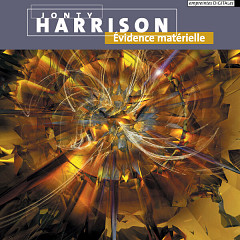
    In what is referred to collectively as the British Connection, empreintes DIGITALes recently released these three discs featuring the works of three prominent electroacoustic composers from the UK. Jonty Harrison’s Évidence matérielle is dominated by movement and concrete sounds. Never is there a standstill moment in these compositions, realised between 1982 and 1999. From the “klanging” of two earthenware casserole dishes to the sounds of wood splinters and turbulent streams of water, Harrison’s acousmatic works emphasise sounds in their pure states, assessing both sound “for what it is” as well as sound “for what it tells”. His compositions are intense and offer an exhaustive (and exhausting!) look at his particular sound sources (water, wood, earthenware pots, etc.). The only exception is on Sorties (1995), in which which he takes a step back in order to capture crowds, street scenes, urban movement. And yet still I get the sense that these are a series of aural snapshots; Harrison seems to quickly move his gear from one location to another, as if in a frantic state of mind, or as if he were chasing faeries or trying to capture something as obscure as phlogiston. His sound palette is indeed stunning (the sound engineering really shines on this release), but this particular restlessness in the compositions, the business and incessant activity of sounds, makes me a little uneasy and keeps me from embracing this record more fully.

    His sound palette is indeed stunning…

    Les méandres du rêve in AllMusic

    “Review”, François Couture, AllMusic, April 27, 2001
    Friday, April 27, 2001 Press

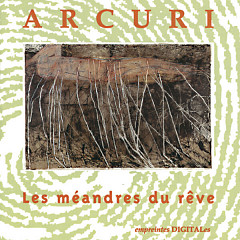
    Serge Arcuri’s Les méandres du rêve is an untypical release for the musique concrète label empreintes DIGITALes. Although the composer works with concrete sounds and creates tape music, his approach also includes lots of recorded keyboard parts and performed instruments. The resulting music belongs as much to mixed electroacoustics music as to new-age instrumental music. The first five pieces on this CD form a cycle, Les méandres du rêve (Dream’s Meanders), the musical part of a creation which also included choreography and scenography. After a short prelude, the listener dives head first into Arcuri’s dreamy world. La porte des sables, based on Tahar Ben Jelloun’s novel The Sand Child, includes electroacoustic sounds, oboe, English horn, and MIDI percussion. References to Arabic sonorities turn this piece into something a lot more evocative (and engaging) than what could be expected. If Murmure comes closer to a standard tape piece, Errances (for tape, oboe and harp) and Lueurs (for tape, French horn and percussion) cross over many genres, from 20th century classical to synthesizer music, both of them beautiful musical dreams. To complete the program, Arcuri added Résurgence and Chronaxie for tape and percussion), two earlier pieces. The first one is a traditional tape piece without any distinctive qualities, while the second consists of his first experience in mixed composition. Percussionist Trevor Tureski appears on a total of three tracks, but even when he does not contribute the music remains very rhythmical. Les méandres du rêve is not your average tape music album and will appeal more to synthesizer-based instrumental music lovers than musique concrète purists.

    Articles indéfinis in AllMusic

    “Review”, François Couture, AllMusic, April 27, 2001
    Friday, April 27, 2001 Press

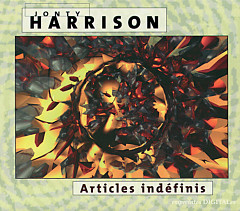
    Articles indéfinis (Indefinite Articles) is Jonty Harrison’s first CD. Here are collected five works of musique concrète spanning more than 15 years. The set begins with Pair / Impair, a piece created in 1978 but aging very well, based upon the notions of dynamic and static. The highlight of this CD is … et ainsi de suite…, which Harrison describes as a “French suite” in the purest musique concrète tradition. The 11 segments (mostly in the one-to-two-minutes range) present variations on the sound of wine glasses. Together with Aria, they illustrate Harrison’s fascination with movement and sound spatialization. Each segment comes back to the glasses and push their sound into another direction. Aria and Hot Air both use the prime element of air as their main sound source. The latter contains a wide range of dynamics. The composer would later create two more pieces (included on Évidence matérielle) using prime elements, wood and water, fuller and better constructed. Unsound Objects is clearly weaker: it lacks focus and poetry. Articles indéfinis proved there was serious research on musique concrète going on in England and that Harrison deserved a place among the leading figures of the genre, but his second CD would be stronger.

    Harrison deserved a place among the leading figures of the genre

    Évidence matérielle in Rumore

    “Recensione”, Walter Rovere, Rumore, April 26, 2001
    Thursday, April 26, 2001 Press

    Tra i soundscapes di Schafer e le manipolazioni della musique concrète sta l’inglese Jonty Harrison in Évidence matérielle, che elabora un po’di più i suoi materiali base (casseruole di terracotta e metallo, legno di varie dimensioni, rifiuti e sacchetti di plastica), anche con un subliminale uso dell’elettronica.

    Évidence matérielle in Ici Montréal

    “Critiques”, Catherine Perrey, Ici Montréal, April 26, 2001
    Thursday, April 26, 2001 Press

    Cet enregistrement est en fait une compilation de plusieurs œuvres de Harrison créées entre 1982 et 1999. Avec un mérite principal, celuide nous faire entrer dans deux des «branches» de l’acousmatique. En effet, les son manipulés peuvent être en quelque sorte des objets sonores, sons sans distinction de source (ça, c’est le point de vue de Schaeffer) ou des sons provenant de la nature (c’est le point de vue de Schafer). Les pièces ont des dominantes très marquées: Klang (sons métalliques, de cloches ou autres), Splintering (travail du bois), Streams (eau). Sorties, une pièce destinée à faire partie d’une installation sonore, reflète bien l’impossibilité de sortir d’une impasse sans se remettre dans un autre! Un intéressant panorama didactique. (7/10)

    7

    L’ivresse de la vitesse, L’ivresse de la vitesse 1, L’ivresse de la vitesse 2 in Sztuka Fabryka

    “Review”, Geert De Decker, Sztuka Fabryka, April 19, 2001
    Thursday, April 19, 2001 Press

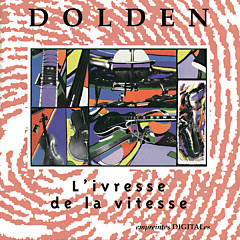
    2 CDs in this CD box, on the first one there are 5 tracks on the 2nd one 6 tracks. Listening to the 1st track (CD 1) it seems as I am listening to a jazz-band or a symphony orchestra in overdrive, fast music. The booklet learns us that Paul Dolden is the high priest of crash music. Music where speed is an important part, so our first impression is a good one. Nothing less the music is not always fast it can be symphonic also, as there are tranquil moments when the music has the usual common speed of musical tunes. The style is different sometimes jazzy sometimes symphonic. And even when the music is fast it never starts to become one big mess of sounds. There is in each track a balance between fast and slow moments and a superb use of instruments. Some tracks are build around one specific instrument such as harpsichord, cello, saxophone, electric guitars and other instruments. Yet a complete set of different instruments are used in all tracks. We might call it contemporary jazz symphony. The tracks on CD 2 are somehow different from CD 1, they are more atmospheric. What especially can be said about the last 3 tracks which are atmospherically ambient tracks, thanks to specific recording techniques of acoustic instruments no electronic effects at all.

  • 579
  • 580
  • 581
  • 582
  • 583
  • 584
  • 585
  • 586
  • 587