electrocd

Blog

4252 results
  • 617
  • 618
  • 619
  • 620
  • 621
  • 622
  • 623
  • 624
  • 625
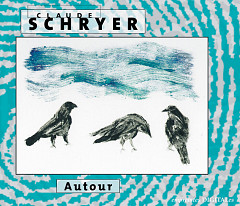
  • Autour in Henry Schneider

    “Review”, Henry Schneider, Henry Schneider, May 1, 1999
    Saturday, May 1, 1999 Press

    For those ot you unfamiliar with the genre, Claude Schryer composes electroacoustic and environmental music focusing on the spiritual, artistic, and social aspects of sound. If you accept the definition ot music as sound events in time and space, then Claude Schryer is the maestro. Armed with his tape recorder he roams the world capturing the sonic essence ot each location. Then back in his studio Claude assembles these tapes to create some unusual and tascinating sonic environments. Autour contains three such compositions (Musique de l’Odyssée sonore, El medio ambiente acústico de México, and Vancouver Soundscape Revisited) plus a fourth composition (Autour d’une Musique portuaire) recorded live on 3 March 1996 in Montréal. Musique de l’Odyssée sonore is a sonic portrait of Quebec in seven parts incorporating sounds ot water, insects, trains, horse and cart, church bells, car horns, seagulls, Native American chanting, etc. El medio ambiente acústico de México is a six-part soundscape incorporating similar elements as well as a Mexican shepherd and a man selling Chiclets in a Mexico City subway. Vancouver Soundscape Revisited is a seven part impressionistic portrait of the musicality and poetry of past, present, and future soundscapes of Vancouver. Claude uses hundreds of sounds in these three compositions to create his environments. The sound is crystal clear and the movements flow seamlessly as if you are strolling through them. The final composition, Autour d’une musique portuaire, is an environmental composition for six boats frozen in the port of Montréal, two trains in motion, and the bells of the Notre-Dame Basilica all conducted by Claude Schryer via walkie-talkies. This is truly a three-dimensional expenence that is difficult to capture in stereo. You can feel the boat and train horns as they reverberate, yet to be in the middle of it must have been quite an experience! Autour is music for the adventurous listener. Be brave, take a chance, and explore the world of electroacoustic soundscapes.

    Autour is music for the adventurous listener.

    21 situations in Downtown Music Gallery

    “Review”, Downtown Music Gallery, May 1, 1999
    Saturday, May 1, 1999 Press

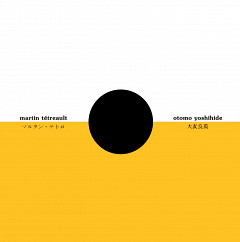
    Both Martin from Montréal & Otomo from Japan are turntable innovators whose unique sounds collide and connect in all sorts of weird but focused ways. Martin often plays & takes apart his turntables, hence the sounds of technology breaking down, often without the use of records. Otomo also plays sampler & cds in addition to turntables usually with records. Each of these 21 pieces are short and seem to deal with a few areas of sound at a time. Still, each piece is fascinating as it explores different terrains one at a time. Obviously both of these wizards have developed their own worlds of sound, sometimes twisted and chaotic, sometimes recognizable sound bytes emerge — is that Eye or David Moss I hear in there? One day when the evil music industry has finally gotten rid of records for good, we will be nostalgic for the sounds of scratchy records, skipping pops & repeats and the warmth that only a good virgin vinyl lp can provide. Those days are not so far off. My young niece of about seven years recently asked her father what a record is/was!?! How sad. An enchanting art form that is slowly disappearing. Available only on cd.

    Les corps éblouis in N D - Magazine

    “Review”, N D - Magazine, no. 21, April 1, 1999
    Thursday, April 1, 1999 Press

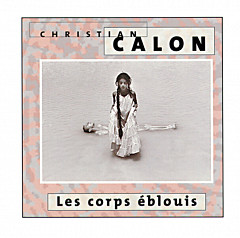
    A beautiful electroaoustic work using only guitar as sound material wich was then processed, transformed and evolved. Rich, engaging and powerful work wich slowly evolves with increasing itensity.

    Rich, engaging and powerful work…

    Rendu visible in N D - Magazine

    “Audio Reviews”, Jeff Filla, N D - Magazine, no. 21, April 1, 1999
    Thursday, April 1, 1999 Press

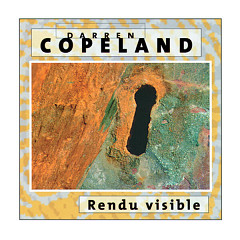
    Much layered environmental sound here — stylistically typical for this Canadian label. Pristine field recordings of multiple wildernesses are combined with the more intermittent presence of other highly processed (electronic?) textures. Rushing wind is heard echoing from the horizon..or is a automobiles? Rainfall, crickets, a waterfall? Flood currents sweep you into the sewer drain. Moments later, amongst the hiss of thecurrents, you ear the submerged moans of other victims. It’s dramatic stuff even if your imagination is less morbid than mine. Recommended, especially to those with adequate stereos.

    Autour in Hurly Burly

    “Review”, Jesús Gutierrez, Hurly Burly, no. 9, April 1, 1999
    Thursday, April 1, 1999 Press

    In this recording the influence of R Murray Schafer, and particularly of the idea of an acoustic ecology ideology, is thoroughly present. In it, the experience of listening is a holistic one, arising from the different sources which are brought together into a series of continuous soundscape. As with any ecological music, this totality is seen as representing the diversity, complexity and symbiosis of natural soundscapes. Here then is a music of a truly ecological nature.

    Esta es pues una música cuya naturaleza es verdaderamente ecológica.

    Miniatures concrètes in Stridernews

    “Review”, Garth Cheddar, Stridernews, no. 8, April 1, 1999
    Thursday, April 1, 1999 Press

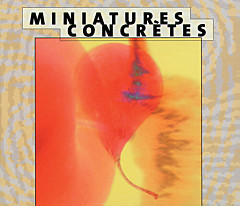
    The logical ‘in honor of the fiftieth anniversary of musique concrète’ follow-up to 1994’s Électro clips CD, Miniatures concrètes contains three-minute long musique concrète compositions by 24 different composers. The name recognition quotient of this one is similar to that of your average techno sampler, with the only names I can remember having ever been mentioned aloud being Jocelyn Robert and Åke Parmerud, but then again I suspect most ‘big name’ electroacoustic composers probably aren’t in much danger of being mobbed by throngs of adoring fans when they go to the mall, even in France. Miniatures concrètes thus serves as a fine young persons guide to what (and who) is new in electroacoustics throughout the western world at the end of the century. While not-too-many years ago it was forgivable to believe that all ‘serious’ electroacoustic music was confined to the French-speaking world, a whole 3/4 (!) of the artists included here reside outside of France and Québec. Also, the fact that a good share of the composers here are not tenured faculty should hopefully help dispel the idea that musique concrète is purely an academic art form. Heck it even includes two artists associated with the ambiguous music ‘underground’ including Ios Smolders of the acclaimed (by somebody) Dutch group THU20; and, bless my soul, Roger Doyle, who will no doubt be remembered by corporate historians of the future as Bono’s piano teacher, and to the rest of us as the mastermind behind the excellent sound collage album Rapid Eye Movements released by United Dairies all the way back in 1981-under the moniker ‘Operating Theatre’ (it was the ‘industrial’ era after all). Good to see him still alive and releasing numerous unheard-by-anyone albums in the interim.

    If there is any sort of unifying thread to Miniatures concrètes (other than the musique concrète thing), it appears that each artist was given three sound sources to manipulate in the realization of their piece, though they were allowed to use any additional sound sources. In at least one case, these sounds were the sole source of the work (Katharine Norman’s oddly clunky Squeaky Reel) and in other cases they sound as though they were tacked on as an afterthought (as in Ned Bouhalassa’s piece, where they appear, unmanipulated, following a short period of silence at the end). Given the cut-and-paste nature of the genre, this compilation has a high degree of continuity (if that is important to you), and on a casual listen it is hard to pick out individual pieces, but the outstanding feature of this collection is its diversity. Miniatures concrètes serves as a fascinating primer of the electroacoustic world as it is today.

    The first few pieces are fairly busy sound collage which vary in density and development, and at times gives the impression of some kind of strange, undanceable alien techno. Jacques Tremblay’s opening Le vidoir is particularly dense and nearly as manic as a Carl Stallings cartoon soundtrack. Other memorable pieces include Daniel Toussaint’s La chasse au pougablunk boumeu, an imaginary short film for the ear documenting the ritual hunt of a cruel tarmac-devouring bird, and Robert’s Prélude à «des dieux en conserves», a humorous collage of stock sound clips which is probably the high point of the first quarter of the disc.

    The pieces on the second quarter are more spacious, take a little longer to develop, and to me are slightly more satisfying. At times, this stuff approaches what we used to call ‘industrial ambient’ 15 or so years ago, without the cultural baggage that term implies. All are uniformly excellent, though the eerie vibe of Elainie Lillios’s Au deuxième étage and Natasha Barrett’s unsettling Racing Through, Racing Unseen are particularly tasty.

    The second half of Miniatures concrètes becomes more abstract and ungraspable and consequently difficult to describe. Textures and moods vary from the dense and noisy (Doyle’s The First Spirit Level) to dark and somber (Sylvia Eckermann & Mathias Fuchs’s Bad Room) to Trente oiseaux-like subtle acoustics and silence (SmoldersManga pour l’oreille). The album concludes with the unique nearly song-like A Man is a Delicate Flame by Justice Olsson, which sounds vaguely like a remixed Wyatt-era Soft Machine tape cut into a thousand pieces and scotch-taped back together.

    All are uniformly excellent…
  • 617
  • 618
  • 619
  • 620
  • 621
  • 622
  • 623
  • 624
  • 625