electrocd
  • This website is also available in English.

Blog

4252 results
  • 621
  • 622
  • 623
  • 624
  • 625
  • 626
  • 627
  • 628
  • 629
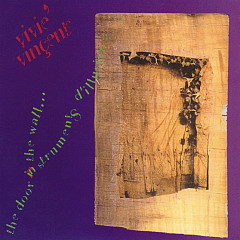
  • the door in the wall… instrumentS d’illusion? in Musicworks

    “A New Vision of the Harpsichord”, Tim Brady, Musicworks, no. 73, March 1, 1999
    Monday, March 1, 1999 Press

    The contrast is remarkable and the results utterly convincing: take late twentieth-century digital multi-track-recording and sound-processing technology, apply it to an instrument that had its heyday 350 years ago, and produce a program of thirteen highly original works by composers from Canada, the United Kingdom, France, and Greece. What you get is a brilliant double CD by Canada’s leading new-music harpsichordist vivie’ vinçente.

    Next to the invention of music notation around 1100, the invention of sound-recording seems to me to be the most fundamental technological shift in the history of music. In many ways it has had an even more profound effect on music because it is an “open” technology, not based on a specific artistic content (Western music is so intimately bound to its notation that it is at times hard to distinguish between the two), but rather on the basic material of music – sound and silence. The elaboration of sound recording into multi-track studio technique by electric guitarist Les Paul in the late 1940’s, followed by recent developments in computer hard-disc recording, have created a new “virtual” instrument, capable of transforming any musical performance or sonic event into a sequence of sounds that is totally convincing as a musical gesture, yet bears only a tangential relationship to the original source. In short, silence has become a blank canvas on which to paint sounds, unfettered by the technical weakness (or brilliance) of musicians.

    With the notable exception of electroacousticians, new music performers and composers have only slowly warmed to the enormous artistic potential of the recording studio – in contrast to the rock world, which would literally be unimaginable without t he multi-track studio. Harpsichordist vinçente, whose work is deeply indebted to Glenn Gould’s studio work of the 60’s and 70’s, shows remarkable vision in her approach to the studio, and in her recorded interpretations of the thirteen works on the CD. Rather than using the studio to essentially record live performances, editing to get rid of those pesky mistakes that we humans are prone to, she conceives each work as a distinct sonic entity, designed to be realized in the studio and to be listened to in one’s home. Editing and mixing become an inherent part of the performance, rather than just a way of correcting errors. This is a remarkable creative leap for a performer to make, especially one whose instrument has been ignored by the musical mainstream for almost three centuries.

    But I think the harpsichord’s peculiar historical and technical limitations are the strength of this record. The instrument is largely free of the tyranny of the mainstream repertoire that a pianist or a violinist have to contend with – no Mozart, Beethoven, Brahms, or Schönberg here. And the limited dynamic range of the instrument, along with its rich palette of timbral variations, make it ideal for electronic treatment, with the studio used to enhance t he performance with elements other wise unattainable.

    The most obvious examples of this approach are the three pieces on the CD on which three separate pairs of stereo microphones are used to capture the sound of the instrument from three different acoustic perspectives, the focus then moved back and forth among them to emphasize the works’ structures and create timbral variation – a technique used by electric guitarists for decades, and one that brings new life to the harpsichord.

    The most successful of these pieces is à perte d’espace by François Rose. The work uses highly effective 9th and 11th chord voicings and strong rhythmic gestures to create an almost jazzy sense of energy and forward momentum. The musical space alternates between distance and extreme close-up several times during the work, always in order to underline the inherent musical structure of the piece, never just to create gratuitous sonic effect. This type of imaginative composition, combined with vinçente’s spirited and creative performance, will win new listeners for the harpsichord.

    Brian Cherney’s déploration sets up an intriguing compositiona l and recording process, evolving via rapid-fire cross-cuts (both in the writing and the recording) between dense, virtuosic clusters and atonal passages – played with much bravura by vinçente – and more tranquil, tonal music taken from a motet by Josquin des Près. vinçente’s use of a dynamic mix, with the acoustic space constantly evolving, rather then being fixed at a single, static point of view, is brilliantly suited to this work – it would be hard to achieve such a convincing performance in a live setting. Though the piece is overly long (once the process is set in motion, we know where it is going, and there are no surprises), it shows how vinçente’s concept of the studio can add another dimension to a composer’s work. And the final minute of the work is an inspired use of technology: using a studio fade-out (no, not a diminuendo; remember a harpsichord can’t do that) to achieve the sense of the music disappearing into silence – which is clearly Cherney’s intention, but which would be unrealizable (given the harpsichord’s limitations) without the intervening recording process. This is technology in the service of art.

    Of somewhat less interest is Rodney Sharman’s five-minute miniature, kore. The work revolves around a series of pleasant harmonies and arpeggios, but seems to lack any fundamental direction, any musical argument. The subtle use of microphony helps create a sense of some movement in the performance, but cannot overcome the overall static nature of the composition.

    With Simon Emmerson’s points of departure, we are shown another side of the harpsichord. The lack of acoustic volume and resonance of the instrument, as compared to the piano, has always been viewed as a weakness, but Emmerson takes a different perspective. By using live electronics to enhance and manipulate the harpsichord’s limited resonant capabilities, he creates a fascinating sense of dialogue between the acoustic sound and the electronic artefacts, which would be very difficult to handle in a work for piano and electronics. Delays, flangers, phasers, chorus, and reverb move in and out of the harpsichord sound as vinçente plays Emmerson’s essential linear musical argument at full tilt. This piece opens the door on a Pandor’s box of musical possibilities for harpsichord and live electronics and, given the success of this piece, I would love to hear more of this type of work from vinçente and her composer collaborators in the future.

    The curious (to modern ears) timbre of the harpsichord at times makes me think of its roots in a distant European past, when the musical hegemony of Western classical music had not yet been canonized by royalties, publishers, academics, and record companies, and the sense of tone colour, attack, and tuning was more open and flexible – perhaps somewhat closer to the folk music that surrounded it. To my ears, the sound often evokes elements of African or Asian music. Muted notes, micro-intervals, and percussive effects make me think of the cora, the kalimba, the koto, or the pipa, in a way no other modern Western musical instrument could.

    vinçente explores this part of the instrument’s nature with several fascinating works involving alternate tunings, either in quarter-tones or in the “agricola” tuning – a microtonal tuning, named for German musician Martin Agricola (1545) that uses a series of asymmetrical pitch adjustments (ranging from +20 cents to –17 cents), based around the note A (440). Bruce Mather’s saumur at times sounds more Byzantine than contemporary, with its highly seductive quarter-tone melismas and evocative use of microtonal harmony. The alternate tuning is used here as a fundamental part of the work’s architecture, not just as a colouristic effect, to create a work of striking beauty. John Beckwith’s on the other hand is somewhat more conventional. He uses the quarter-tones playfully at times, but never really gives himself over to the tuning, always placing the quarter-tones in reference to our modern intonation system. Calliope Tsoupaki’s piece, common passion, is performed in the agricola tuning. Though at times a bit over-long in its thematic elaborations, it is impressively performed by vinçente. Also, the piece emphasizes the subtlety of intonation the harpsichord can achieve and the expressive capabilities of the instrument.

    The remaining works on these two CD’s fall more squarely into the modernist camp, while still exploring the instrument’s potential. Wendy Prezament’s 2 pieces for harpsichord and David Eagle’s toccare share a common concern for timbral variation, using the harpsichord’s multiple stops and muting possibilities to create kaleidoscopic textures, which brings forth dramatic performances from vinçente. The opening work on the CD, Barbara Pentland’s ostinato and dance, suffers from the composer’s somewhat academic approach to the instrument, leaving one wishing that she had really let loose and given the performer something to dance about!

    Pierre Schaeffer’s two-and-a-half-minute miniature, bilude (for harpsichord and tape), does give us something to dance about — specifically, the second Prelude from Bach’s fifth French Suite. A dialogue between the harpsichord (playing the Bach score) and tape (starting out with a piano rendition of the Bach, but evolving into solos for car horns and scissors), the work has a relentless drive and a sophisticated sense of the absurd that makes it truly one of the outstanding moments on this recording. Pierre Desrocher’s eudoxia exhibits a similar sense of drive, using repeated arpeggios and cascading harmonies to create an exhuberant tour de force, which vinçente performs with the kind of carefully considered reckless abandon that the work requires.

    The final seven minutes of the record are given over to a conceptual work entitled …the idea of silence…, the title clearly paying homage to Glenn Gould’s radio work The Idea of North. Consisting largely of recorded silence, with very few quiet noises in the middle, the piece follows directly after the fade-out of the Cherney work, acting as an extended coda to the disc, giving the listener time to consider what she: has just listened to. Like most purely conceptual works, the practical realization is imperfect (my normally very quiet NAD CD player was cranked so high to hear the sounds on the record that the most noticeable noise was the electronic pre-amp noise…), but then, I guess, that isn’t the point.

    But my point is this: vivie’ vinçente has created a very ambitious and very powerful double CD that convinces us not only of her considerable talents as a harpsichordist, but of her new and original vision of the instrument and its relationship with contemporary technology.

    … a remarkable creative leap…

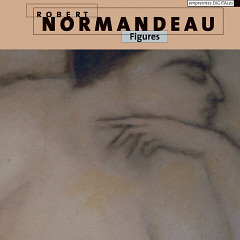
    Figures in Aufabwegen

    “Kritik”, Yves, Aufabwegen, no. 28, March 1, 1999
    Monday, March 1, 1999 Press

    Das vorzügliche kanadische Elektroakustik-Label empreintes DIGITALes stellt in einer Serie neuere Komponisten vor, die in ausführlichen Beiheften ihrc Arbeit erläutem und deren Biographie/Werdegang ebenfalls mitgeliefert wird. Robert Normandeau ist vornehmlich am klanglichen Potential menschlicher Stimmen interessiert. Le renard et la rose beginnt mit einem Gelächter, welches sich langsam in ein fieses Sauggeräusch steigert, um dann von brodelnden Gesprächsfetzen dunkler Männerstimmen weggewischt zu werden. Mit ähnlichen Spannungsbögen arbeiten Normandeau auf der ganzen Platte: Gegensätze werden geschaffen und durch überraschende Wendungen in der Formgebung der Stücke aufgelöst. Ohne Zwang oder den Druck der Veränderung. Clevere Musik ist immer dann gut. wenn man garnicht merkt, wie clever sie ist. Garantiert in keinem Tesco-Katalog!

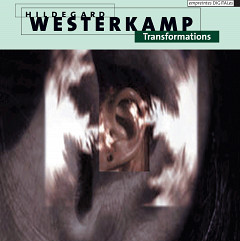
    Transformations in Array Online

    “Review”, Katharine Norman, Array Online, March 1, 1999
    Monday, March 1, 1999 Press

    The pieces on this CD provide a powerful retrospective of Westerkamp’s work with environmental sound sources. And it is ‘work’ that we hear: these are not unadulterated soundscapes—pristine aural documents of time and place—but carefully wrought sonic forms in which the composer performs a subtle non-invasive surgery on our listening. Sometimes her intervention is more overt; as in Kits Beach Soundwalk where her speaking voice becomes the guide that leads us through a transforming world, suggesting her own sonic dreamscapes and depicting them in sounds along the way. Here we travel together through the shimmering chatter of barnacles to birds, beeps, watery tricklings and even a ghostly thread of Mozart before the low-pitched ‘monster’ of the city returns. This is perhaps the most didactic journey on the CD, but in the most forgiving and imaginative sense of that word.

    Another piece, A Walk Through The City also includes speech, but this time as a poem spoken by its author, Norbert Ruebsaat. His voice, sometimes confined in short-wave radio timbres, sometimes real and reciting, sometimes whispering in the listener’s ear, is the central all-knowing presence in this tale of urban sounds. Westerkamp did not record all the original sounds herself (many are from the World Soundscape Project’s admirable collection) and it sometimes shows in some obviously ‘archival’ recording perspectives. But perhaps this kind of distancing is appropriate in a piece which veers from personal to impersonal, taking the listener on a swooping flight above the real city, where layered children’s voices, reminiscent of Gesang der Jünglinge or evocative mouth-organ strains, emerge unexpectedly from evolving traffic sounds and sliding drones and glissandi. The closing gesture, three separated descents—a tough and final punctuation—is inspired, while the use of spoken poetry in conjunction with such a rich sonic world makes for challenging and ultimately rewarding listening. This is a piece that asks, and deserves, to be heard again and again.

    An earlier piece Fantasie for Horns II, dating from 1979, is for live horns (Brian G’Froerer) and tape; the tape using the sounds of other horns: cars, trains and whistles. An harmonic world characterized by slow drones and filtered timbres becomes the background for a surprisingly Mahlerian horn part.

    Cricket Voice begins with looped rhythmic patterns that are almost minimalist in character, but soon the layered sounds, derived from the cricket’s call, weave a peculiarly tactile fabric. This is a composer who loves beautifully sculpted timbres, often focussing on high frequency and carefully ‘hand-tinted’ spectra, or using low and high pitched sounds in an almost metaphorical sense. Many of the sounds have the clear, crisp hyper-reality of the acousmatic world, but Westerkamp has different stories to tell.

    The final piece on the CD, Beneath the Forest Floor is the most recent, dating from 1992. This forest grows from a low-pitched rhythmic drone and blooms as a primeval world in which birds cross the densely populated space suddenly and without warning. In the other pieces Westerkamp seems, to me at least, present and accompanying the listener: her words, or her musical processes, travel with us. Here, I felt comfortably lost—abandoned in an only occasionally familiar world which rose into an ecstatic sunlit reiteration of piping tones, birdsong and watery oscillations. Just when kitsch-ness was on the cards the music shifted a gear upwards and became a more abstract, transcendent encounter. Reading the liner notes I see this work is, for Westerkamp, about peace and the ‘inner forest’ in each listener. As with all the pieces here, she suggests a signposted listening path. But one gets the feeling that it’s fine to walk around in the woods awhile.

    … carefully wrought sonic forms…

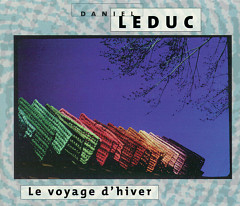
    Le voyage d’hiver in Aufabwegen

    “Kritik”, Guido Sprenger, Aufabwegen, no. 28, March 1, 1999
    Monday, March 1, 1999 Press

    Daniel Leduc ist von Geburt Frankokanadier, im Stil der französischen Elektroakustik nahe und vom Hazen her Impressionist; wenn nicht gar Romantiker. Seine Vatonung der „Winterreise˝ des romantischen Dichters Wilhelm Müller — die wohl bekannter durch Schumanns Lieder ist — ist unmittelbar und illustrierand: Da feuchl der Wind und knirscht der Schritr, Im Dorfe hörl man Hunde bellen, und Auf dem Flusse gluckst es munter. Um Erwin Potitts amste und stets deulliche Sprechstimme spinnt Leduc filigrane Almosphärne von glasklarer Kalte. Liebeskummer und Herzensschwere, von denen die Texie baichten, sleigert er zu klammer Angst und scharfa Vazweiflung. Das könnte ieicht neiv erscheina’, doch die Romantiker waren selbst der Ansicht, daß in der reinen Naturbetrachtung der Weg zu Transzendenz und Innerlichkeit liegt. Daher evoziert die Kombination von Wort und Geräusch jene Landschaflsgemälde von MüllersZeitgenossen (wie Caspar David Friedrich). die mit dem Bild der Naturzugleich tiefstes Empfinden vamitteln woilten; nur sporadisch schleichl sich ein anachronistisches Telefontulen oder Fliegergebrumm hinein. Neben zwei kurzen Zusatzstockan enthält die Scheibe noch Troposphere, wo Leduc sich mil der Frage befasst: We klingen Wolken? Urwaldschnartemd im Bodennebel, donnerkrachend cine Etage höher, und im außerirdischen Geschwurps der höchsten Sphären hört man einen Engel singen. Ganz schön süß, aber dennoch: Bei Leduc verbindet sich der reinc Ganuß des atmosphärisch genau gesetzten Geräuschs mit unverkopfterZugänglichkeit zu wunderschöner Musik.

    Robert Normandeau in CEC, Sur le vif / Quick Takes

    “Interview”, Ned Bouhalassa, CEC, Sur le vif / Quick Takes, March 1, 1999
    Monday, March 1, 1999 Press

    Ned Bouhalassa: You’ve been composing for nearly ten years pieces for multi–track diffusion. What was your original set–up?

    Robert Normandeau: It was very simple: a Mac IIx computer, an Akai S–1000 sampler, a 16–track analog Fostex recorder and multi–effects units. I also used the same monitoring system as today, with 8 speakers placed around me in the studio.

    NB: How would you compare your present compositional method with that which you used to create Éclats de voix?

    RN: Clearly the biggest difference lies in the format (support) of the completed work. With analog tape, the recording levels of the individual tracks had to be worked out in advance. I had decided that during concert presentations, I didn’t want to play with the levels or the eqs. Today, with a digital format such as Pro Tools, I can set the levels as I go along, and make changes when I add new elements. When I used analog tape, if I perturbed the balance of a mix by adding a new element to a track, I would have to re–write the other tracks that had already been recorded.

    NB: If I compare the works that you realized in the 80’s with those that you composed for a multi–track diffusion system, I find that the later seem to be more abstract, less anecdotal, and that these contain many examples of sound in movement. Would you agree?

    RN: It depends on the Cycle. Tangram, my first real multi–track piece, has referential qualities, and it belongs to a cycle of “Cinema for the ear” works, like Rumeurs (Place de Ransbeck) or Jeu. Other cycles, like the Onomatopoeia Cycle (Eclats de voix, Spleen and Le renard et la rose) and the Citations Cycle (Mémoires vives, Tropes, and Venture) are more abstract. As for my use of movement, to appreciate it fully you have to be in a multi–channel listening environment. The stereophonic collapse of the tracks takes away a great deal.

    NB: Do you think that the ability to hear 8 individual sound sources in your studio increases the polyphonic aspect of your writing?

    RN: Completely. It is essential to true multi–track composition. This aspect of the compositional process is not just an extra element. Otherwise, anyone who transfers a Pro Tools session onto ADAT is realizing a multi–track composition. It’s more complex than that. I’m referring to a specific way of composing that extends the musique concrète way of writing by adding an additional dimension, that of a real space, not the simulated one like the stereophonic soundstage. Stereo was a good idea, a good simulation of our binaural hearing, but this process has reached its end.

    NB: In what other ways has your compositional writing been affected by your set–up?

    RN: The writing itself has changed considerably. When everything has to be thought out with the final format in mind, when mixing technique is no longer part of the writing, the way in which of our intentions are permanently presented becomes a determining factor during the realization of the work. In the course of composing, since nothing can be left to chance or to a latter stage, I must find the proper place for each sound element as I go along. As paradoxical as this may seem, this brings the work of an electroacoustic composer closer to that of an instrumental composer, in that one has to write the definitive musical elements as they come to mind. One aspect that remains different is that the studio composer hears what he or she is doing while composing; a composer writing a score will only get this opportunity in the rehearsal hall, with the musicians present, and only once the work is completed.

    NB: Your works are regularly presented in concert around the world. Do you often have the opportunity to present multi–track versions of your works?

    RN: More and more. Tangram, a work which dates from 1992 and which has rarely been performed, had three multi–track presentations last year alone! I think that this has to do with the fact that this kind of diffusion is now accepted, particularly because the equipment is readily available. I remember that in 1994, the GRM had invited me to present Tangram during their Acousmatic Cycle. When I proposed the multi–track version, they replied that it would be too complicated. This year, five years later, their entire Cycle is called Multiphonie (Multiphonia)!

    NB: With the growing popularity of the DVD format, the average listener will soon be able to hear multi–channel versions of your work in their living room. What do you think of this technology, and do you intend to realize a surround version of one of your works?

    RN: The DVD format is very promising. We’re only waiting for the companies to agree to an audio standard. When that’s done, you can be sure that I’ll be on the front lines, preparing my pieces for this format. It’ll be great when the average listener, as you’ve named him or her, can appreciate multi–track pieces – this presents us with an incredible opportunity to have these works presented in conditions that are even better than those found today.

    Corazón Road in AllMusic

    “Review”, François Couture, AllMusic, February 23, 1999
    Tuesday, February 23, 1999 Press

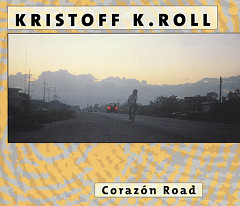
    Corazón Road is an audio travelogue. Carole Rieussec and Jean-Christophe Camps traveled to Central America in December 1990-January 1991. During their pilgrimage in Mexico, Belize, and Guatemala, they recorded street sounds, testimonies, and the daily life of the friends they made. Back in France they worked together to create this electroacoustic suite. Field recordings, treated sounds, speech and snippets of real instruments come together to evoke their trip more than actually narrate it. Corazón Road is a set of memories blurred by elapsed time and the discrepancies found between two subjectivities. This, Kristoff K.Roll’s first album, can be considered as a rehearsal for Le petit bruit à côté du cœur du monde, their next major project following a trip to Western Africa. But where Le petit bruit will be developed both on stage and in the studio, Corazón Road is a studio-only affair and thus feels more conventional in terms of technique and discourse. It remains a gripping, immersive tale. The three main suites (Aquí en Yucatán, Belize City, and Guatemala) are separated by short interludes that bring back the spoken theme established in the prologue Danse de Corazón Road. The cycle ends with the recapitulative Le Pacifique, in which timpani and cymbals evoke the turmoils of the sea. The album was first released in 1993 on SONARt and reissued in 1999 on empreintes DIGITALes.

    … a gripping, immersive tale.
  • 621
  • 622
  • 623
  • 624
  • 625
  • 626
  • 627
  • 628
  • 629